
Boost your mental health through puzzles by incorporating them into your daily routine. Start with easy puzzles like jigsaw or crosswords, gradually increasing difficulty as you progress. Set aside dedicated time in a quiet space with good lighting. Engage in various puzzle types to exercise different cognitive skills and maintain interest. Puzzles can reduce stress, improve focus, and enhance problem-solving abilities. For added benefits, try social puzzling with friends or family, fostering connections and shared accomplishments. Track your progress and celebrate completed puzzles to stay motivated. By making puzzles a regular part of your life, you'll reveal a world of mental well-being and cognitive growth.
Benefits of Puzzles for Mental Health
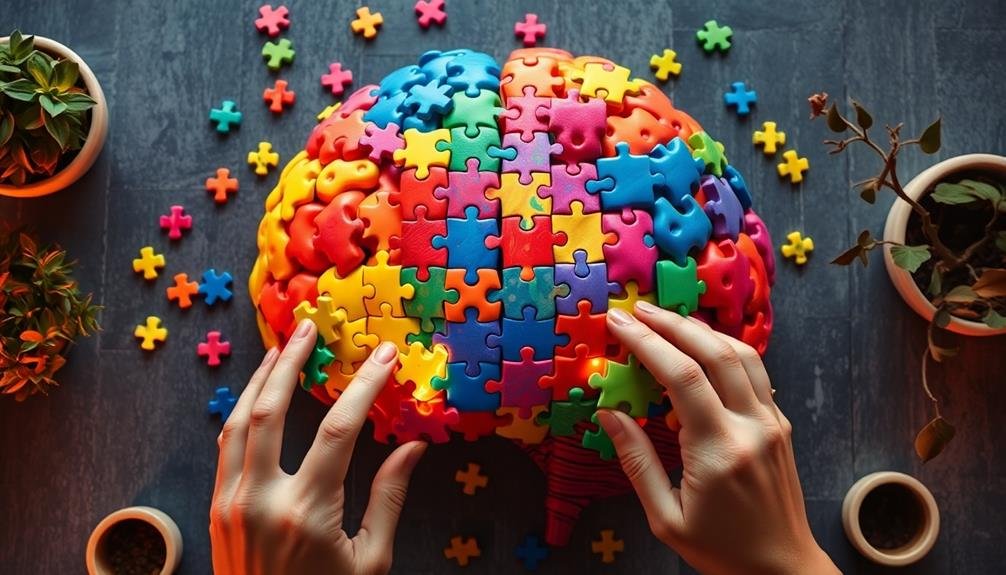
Puzzles are more than just a fun pastime; they're a powerful tool for boosting mental health. When you engage in puzzle-solving activities, you're actively exercising your brain, which can lead to improved cognitive function and mental well-being.
One of the primary benefits of puzzles is stress reduction. As you focus on solving a puzzle, your mind shifts away from daily worries, promoting relaxation and reducing anxiety. This mental break can help you recharge and approach challenges with a clearer mindset.
Puzzles also enhance problem-solving skills and critical thinking. By working through complex patterns or logic problems, you're training your brain to approach difficulties more effectively in various aspects of life. This improved cognitive flexibility can boost your confidence and overall mental resilience.
Moreover, puzzles can slow cognitive decline associated with aging. Regular puzzle-solving activities have been linked to a reduced risk of dementia and improved memory function in older adults. By incorporating puzzles into your routine, you're investing in your long-term mental health.
Lastly, puzzles offer a sense of accomplishment. Completing a challenging puzzle releases dopamine, a feel-good neurotransmitter that boosts mood and motivation.
Types of Brain-Boosting Puzzles
When it comes to boosting your brain power, there's a wide array of puzzles to choose from. Crosswords are a classic option that enhance vocabulary and language skills while testing your general knowledge.
Sudoku, a number-placement puzzle, sharpens your logical thinking and problem-solving abilities. For visual-spatial skills, try jigsaw puzzles, which also improve short-term memory and attention to detail.
Word searches can boost pattern recognition and concentration, while cryptograms challenge your decoding skills and language proficiency. If you're looking to enhance your strategic thinking, chess puzzles are an excellent choice. They'll improve your ability to plan ahead and anticipate outcomes.
For a more modern approach, try brain-training apps that offer a variety of mini-games targeting different cognitive skills. These often include memory games, speed challenges, and pattern recognition exercises.
Don't forget about logic puzzles like riddles or lateral thinking problems, which encourage creative problem-solving and outside-the-box thinking.
Lastly, consider three-dimensional puzzles like Rubik's Cube or tangrams to boost your spatial reasoning and hand-eye coordination. By incorporating a mix of these puzzle types into your routine, you'll give your brain a thorough workout.
Jigsaw Puzzles: A Calming Escape
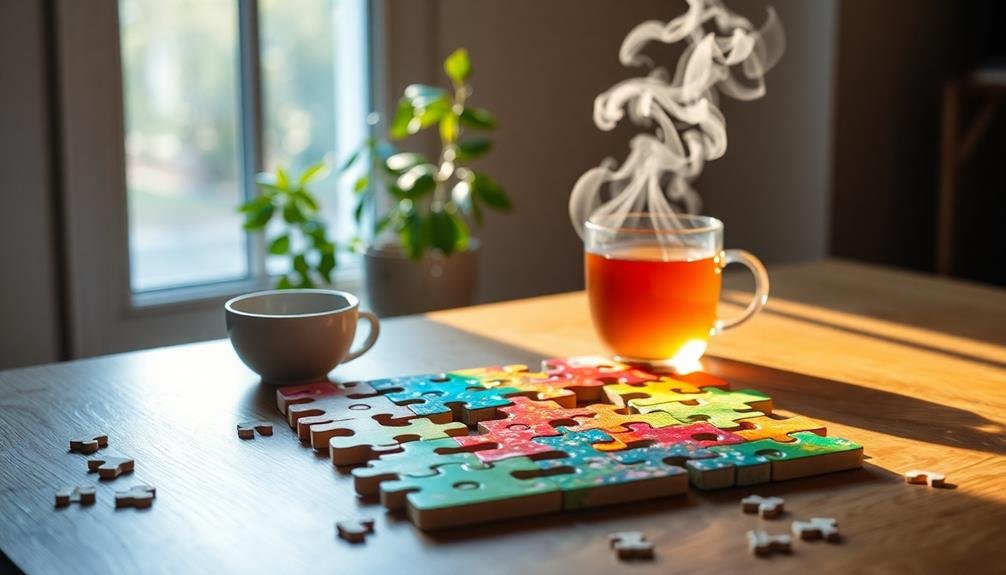
Among the various types of puzzles, jigsaw puzzles stand out as a particularly soothing activity. When you engage with a jigsaw puzzle, you're transported into a world of shapes and colors, focusing your mind on a single, achievable goal. This meditative process can greatly reduce stress and anxiety, offering a much-needed respite from daily worries.
To get started, choose a puzzle with an image that appeals to you and a difficulty level that matches your experience. Find a comfortable, well-lit space and spread out the pieces on a flat surface. Begin by sorting the pieces, typically starting with the edge pieces to create a frame. As you work, you'll notice your breathing slowing and your mind clearing.
Jigsaw puzzles also improve your cognitive function. They enhance your visual-spatial reasoning, short-term memory, and problem-solving skills. You'll develop better concentration and patience as you search for the right pieces.
Don't rush; the joy is in the process. For an added challenge, try puzzles with unique shapes or 3D designs. Remember, completing a jigsaw puzzle isn't just a pastime—it's a journey of mental rejuvenation and accomplishment.
Sudoku: Numbers for Mindfulness
Moving from the visual domain of jigsaw puzzles, we enter the world of numbers with Sudoku. This Japanese logic-based puzzle challenges you to fill a 9×9 grid with digits so that each column, row, and 3×3 sub-grid contains all numbers from 1 to 9.
It's a perfect exercise for mindfulness, as it requires your full attention and focus.
To get started with Sudoku, choose a difficulty level that suits you. Beginners should opt for easier puzzles with more pre-filled numbers. As you solve, use pencil marks to note possible numbers for each cell. This technique, called "pencil marking," helps you visualize potential solutions and eliminate impossibilities.
Look for patterns and use logical reasoning to deduce the correct numbers. Pay attention to "hidden singles" – numbers that can only go in one specific cell within a row, column, or sub-grid. Don't guess; instead, work through the puzzle methodically.
Regular Sudoku practice can improve your concentration, problem-solving skills, and memory. It's also an excellent way to reduce stress and anxiety, as it occupies your mind with a structured task.
You'll find yourself entering a flow state, where time seems to slip away as you focus on the numbers before you.
Crosswords: Words Against Worry

Crosswords have been a beloved pastime for over a century, offering a unique blend of linguistic challenge and mental stimulation. They're not just entertaining; they're also powerful tools for reducing anxiety and improving your mental well-being.
When you engage with crosswords, you're actively redirecting your thoughts away from worries and onto the puzzle at hand. This shift in focus can help break the cycle of anxious thinking, giving your mind a much-needed respite. As you solve clues and fill in words, you're also boosting your cognitive skills, particularly in areas like vocabulary, general knowledge, and problem-solving.
To make the most of crosswords for mental health, start with easier puzzles and gradually increase difficulty. Set aside dedicated time each day for puzzling, treating it as a form of self-care.
Don't be afraid to use resources like dictionaries or thesauruses; learning new words is part of the benefit. If you get stuck, take a break and return with fresh eyes. Remember, the goal isn't just completion but the process of engaging your mind in a positive, constructive way.
Rubik's Cube: Focus and Persistence
While crosswords challenge your linguistic skills, the Rubik's Cube offers a different kind of mental workout. This colorful 3D puzzle demands intense focus and persistence, qualities that can greatly boost your mental health.
To start solving the Rubik's Cube, familiarize yourself with its mechanics. Learn the basic algorithms for rotating layers and memorize common patterns. As you practice, you'll develop spatial awareness and improve your problem-solving abilities. Don't get discouraged if you can't solve it immediately; persistence is key.
Set aside dedicated time each day to work on the cube. Start with small goals, like solving one face, and gradually increase the difficulty. You'll find that the concentration required pushes other worries out of your mind, providing a form of active meditation.
As you progress, you'll experience a sense of accomplishment with each milestone. This boosts self-esteem and reinforces a growth mindset.
The skills you develop through cube-solving – patience, focus, and logical thinking – will transfer to other areas of your life, helping you tackle challenges with renewed confidence and mental clarity.
Logic Puzzles: Analytical Anxiety Relief
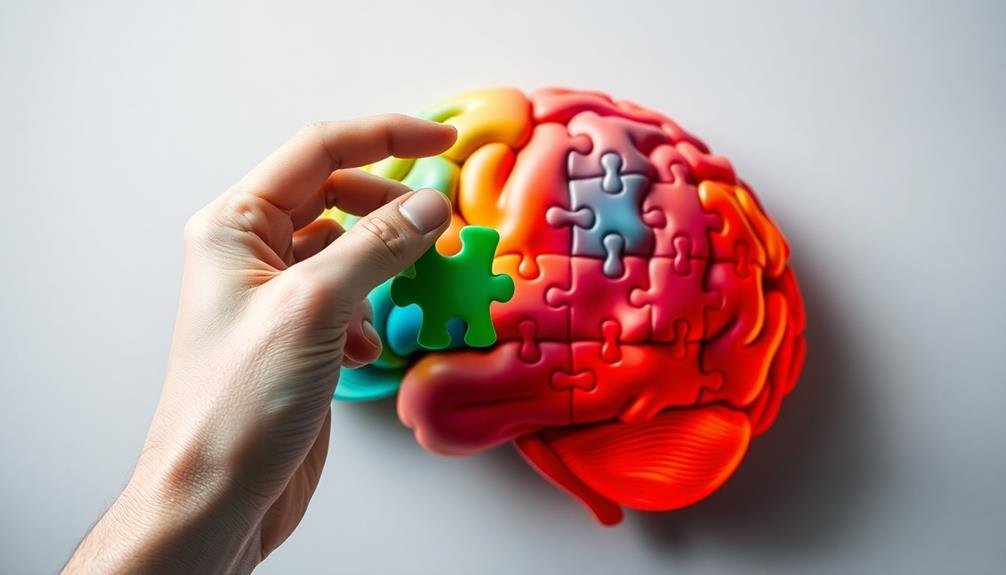
Logic puzzles offer a unique form of mental exercise that can greatly reduce anxiety through analytical thinking. When you engage with logic puzzles, you're forced to focus on the task at hand, diverting your mind from anxious thoughts. These puzzles come in various forms, such as sudoku, crosswords, or grid-based deduction games.
To get started, choose a puzzle type that intrigues you. Begin with easier levels and gradually increase difficulty as you improve. Set aside dedicated time for puzzle-solving, creating a routine that allows your brain to anticipate this calming activity.
As you work through each puzzle, pay attention to how your anxiety levels decrease while your focus sharpens. Logic puzzles help train your brain to approach problems systematically, which can translate to better problem-solving skills in daily life. They also boost your confidence as you successfully complete each challenge.
Don't get discouraged if you can't solve a puzzle immediately; persistence is key. Remember, the goal isn't just to finish the puzzle but to enjoy the process of analytical thinking. By regularly incorporating logic puzzles into your routine, you'll develop a powerful tool for managing anxiety and improving overall mental well-being.
Creating a Puzzle-Friendly Environment
Creating an ideal environment for puzzle-solving can greatly enhance your mental health benefits. Start by designating a specific area in your home for puzzles, preferably a quiet space with good lighting. Confirm you have a comfortable chair and a flat surface, like a table or desk, large enough to accommodate your puzzles.
Organize your puzzle collection by type, difficulty level, and size. Keep them easily accessible in labeled containers or shelves. Invest in puzzle accessories such as sorting trays, magnifying glasses, and puzzle mats to make the process more enjoyable and efficient.
Minimize distractions by turning off notifications on your devices or using noise-canceling headphones. Consider playing soft background music or nature sounds to create a calming atmosphere. Keep a water bottle nearby to stay hydrated during long puzzle sessions.
Set up a rewards system to motivate yourself, such as treating yourself to a favorite snack after completing a challenging puzzle. Display finished puzzles or take photos to celebrate your accomplishments.
Incorporating Puzzles Into Daily Routine
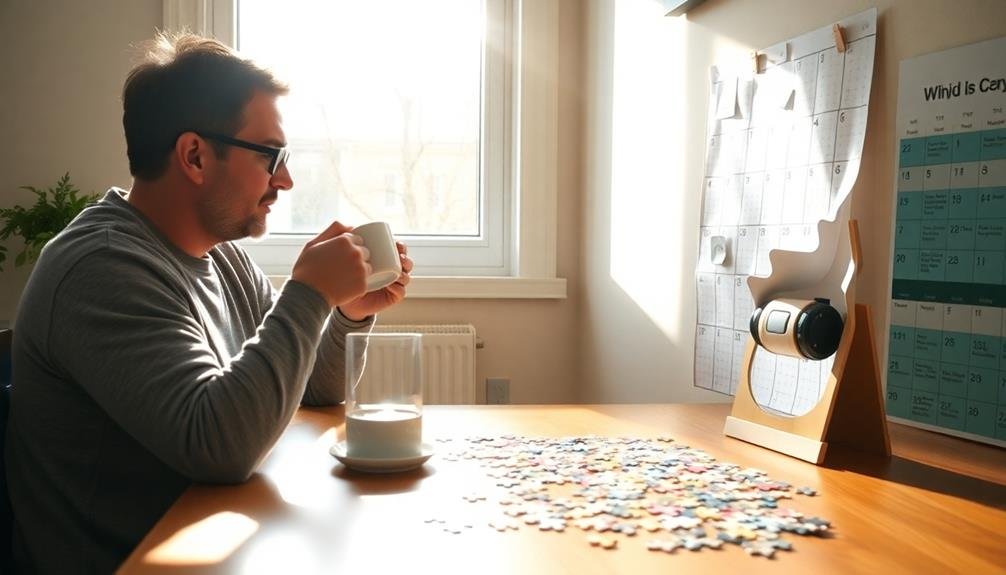
Now that you've set up the perfect puzzle-solving space, it's time to make puzzles a regular part of your daily life. Start by setting aside a specific time each day for puzzle-solving, whether it's during your morning coffee, lunch break, or before bed. Choose a consistent time that works best for your schedule and stick to it.
Begin with shorter puzzles, like Sudoku or crosswords, that you can complete in 10-15 minutes. As you build your puzzle habit, gradually increase the difficulty and time commitment. Try incorporating puzzle apps on your phone for quick mental stimulation during idle moments, like waiting in line or commuting.
Mix up your puzzle types to keep things interesting and challenge different cognitive skills. Alternate between word puzzles, number games, and visual challenges. Consider joining online puzzle communities or subscribing to puzzle magazines for fresh content and inspiration.
Track your progress and celebrate small victories to stay motivated. Set achievable goals, like completing one puzzle daily or mastering a new puzzle type each month.
Social Puzzling: Connecting Through Challenges
Engaging in group puzzle-solving activities can strengthen your social bonds and improve communication skills.
You'll find that tackling challenges together fosters teamwork and creates a shared sense of accomplishment.
Online multiplayer puzzle games offer a convenient way to connect with friends or meet new people who share your interests, providing mental stimulation and social interaction from the comfort of your home.
Group Puzzle Solving Benefits
Puzzle solving isn't just a solitary pursuit; it can be a powerful social activity that brings people together. When you engage in group puzzle solving, you're not only exercising your brain but also strengthening social bonds and improving communication skills.
Working on puzzles as a team encourages collaboration and fosters a sense of shared accomplishment. You'll learn to delegate tasks, listen to others' perspectives, and combine diverse problem-solving approaches. This cooperative environment can boost your confidence and social skills, especially if you're typically introverted or struggle with social interactions.
Group puzzle solving also promotes healthy competition, pushing you to think faster and more creatively. You'll develop patience and persistence as you work through challenges together, celebrating small victories along the way. This shared experience can create lasting memories and inside jokes, deepening your connections with friends, family, or colleagues.
Moreover, puzzle groups can be a great way to meet new people with similar interests. You'll expand your social circle while engaging in a mentally stimulating activity, potentially leading to new friendships and networking opportunities.
Online Multiplayer Puzzle Games
In the digital age, group puzzle solving has evolved beyond face-to-face interactions. Online multiplayer puzzle games offer a unique opportunity to engage with others while sharpening your mental skills. These games provide a platform for collaborative problem-solving, fostering social connections across geographical boundaries.
When you participate in online multiplayer puzzle games, you'll experience several benefits:
- Enhanced cognitive abilities: Tackle complex challenges that stimulate your brain and improve critical thinking skills.
- Social interaction: Connect with like-minded individuals from around the world, building friendships and expanding your network.
- Stress relief: Immerse yourself in engaging puzzles that help you unwind and reduce anxiety.
- Improved communication: Develop better teamwork and communication skills as you collaborate with others to solve puzzles.
To get started, explore popular platforms like Steam, mobile app stores, or dedicated puzzle game websites. Look for games that offer multiplayer modes or community features.
Don't hesitate to join online forums or Discord servers related to your favorite puzzle games. These communities can provide valuable tips, strategies, and opportunities to find puzzle-solving partners.
Frequently Asked Questions
Can Puzzles Replace Professional Mental Health Treatment?
While puzzles can boost cognitive function and provide stress relief, they can't replace professional mental health treatment. You shouldn't rely on them alone for serious mental health issues. Always consult a qualified therapist or doctor for proper care and guidance.
Are Digital Puzzles as Effective as Physical Ones for Mental Health?
You'll find both digital and physical puzzles can benefit your mental health. While digital puzzles offer convenience, physical ones provide tangible engagement. It's best to mix them up, as variety keeps your brain stimulated and challenged.
How Long Should I Spend on Puzzles Daily for Optimal Benefits?
You'll benefit from 15-30 minutes of daily puzzle time. It's enough to challenge your mind without overwhelming you. Don't worry if you can't do it every day; consistency matters more than duration. Adjust based on your schedule.
Can Puzzles Help With Specific Mental Health Conditions Like Depression or Anxiety?
Yes, puzzles can help with depression and anxiety. They'll engage your mind, provide a sense of accomplishment, and offer a healthy distraction. You'll find that solving puzzles can reduce stress, improve mood, and boost your cognitive function.
Are There Any Potential Negative Effects of Doing Too Many Puzzles?
While puzzles can be beneficial, overdoing them might lead to eye strain, headaches, or neglecting other important activities. You're also at risk of becoming obsessive or using puzzles to avoid real-life problems. Balance is key in puzzle-solving.
In Summary
You've now got a toolbox of puzzles to boost your mental health. Whether you prefer jigsaw, Sudoku, crosswords, or logic puzzles, there's something for everyone. Remember, it's not about solving them quickly; it's about enjoying the process. Set up a cozy puzzle corner, make it part of your daily routine, and don't forget to share the fun with others. Your brain will thank you for the workout and the stress relief.


Leave a Reply