
Unleash the power of relaxation with therapeutic puzzles, a scientifically proven method for stress relief. As you engage in puzzle-solving, your brain releases dopamine, inducing a pleasurable flow state that calms your mind and body. Choose puzzles that balance challenge and achievability to maintain engagement while reducing stress. Create a soothing environment with soft lighting, comfortable seating, and minimal distractions to enhance your puzzle experience. Incorporate mindfulness techniques, like focused breathing, to deepen your relaxation. Whether you prefer digital or physical puzzles, both offer unique benefits for stress reduction and cognitive stimulation. Discover how puzzles can transform your daily routine and unleash a world of tranquility.
The Science Behind Puzzle Therapy
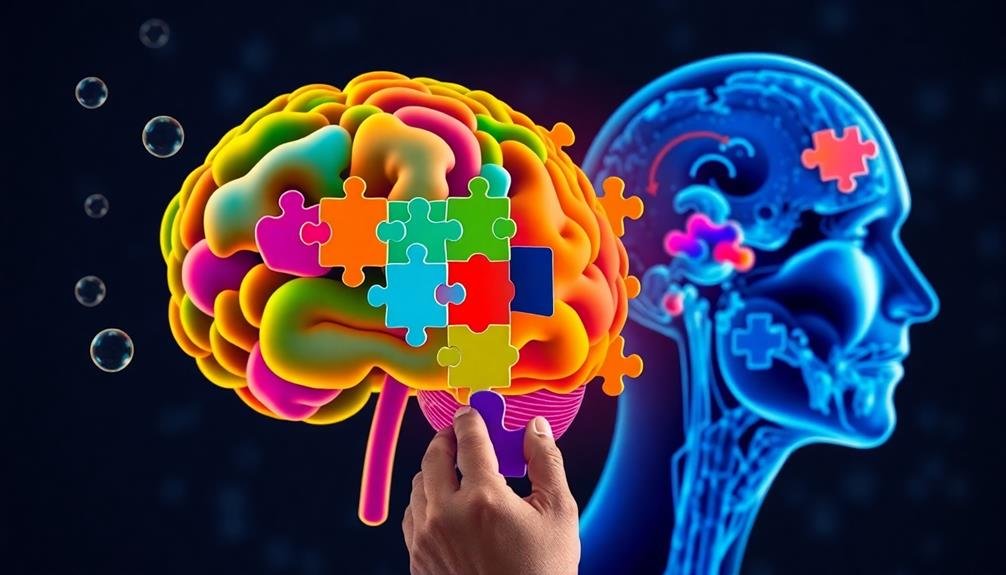
Curiosity drives us to unravel the mysteries behind puzzle therapy's effectiveness. When you engage in solving puzzles, your brain activates multiple cognitive processes simultaneously. This mental workout triggers the release of dopamine, a neurotransmitter associated with pleasure and reward, creating a sense of accomplishment and well-being.
Puzzle therapy taps into the concept of "flow state," where you're fully immersed in a task, losing track of time and external worries. This state of focused concentration can notably reduce stress levels and promote relaxation. Additionally, puzzles stimulate both hemispheres of your brain, enhancing problem-solving skills and creativity.
Research has shown that regular puzzle-solving can improve memory, increase attention span, and even slow cognitive decline in older adults.
It's not just about mental benefits; the act of manipulating puzzle pieces can also improve fine motor skills and hand-eye coordination.
Furthermore, puzzle therapy offers a non-pharmacological approach to stress management, making it an attractive option for those seeking natural remedies.
Choosing the Right Puzzle Difficulty
With the science supporting puzzle therapy's benefits clear, selecting the right puzzle difficulty becomes key to maximizing its stress-relieving potential.
You'll want to strike a balance between challenge and achievability to guarantee a rewarding experience. Start by evaluating your current skill level and emotional state. If you're feeling particularly stressed or overwhelmed, opt for an easier puzzle to build confidence and create a sense of accomplishment.
As you progress, gradually increase the difficulty to maintain engagement and stimulate cognitive growth. Remember, the goal is to find a "flow state" where you're fully absorbed in the task without feeling frustrated or bored.
Pay attention to how different puzzle types and difficulties affect your stress levels and adjust accordingly.
Consider these factors when choosing puzzle difficulty:
- Your current mood and energy level
- The amount of time you have available
- Your previous experience with similar puzzles
- Your personal goals (relaxation, cognitive challenge, or both)
Creating a Relaxing Puzzle Environment
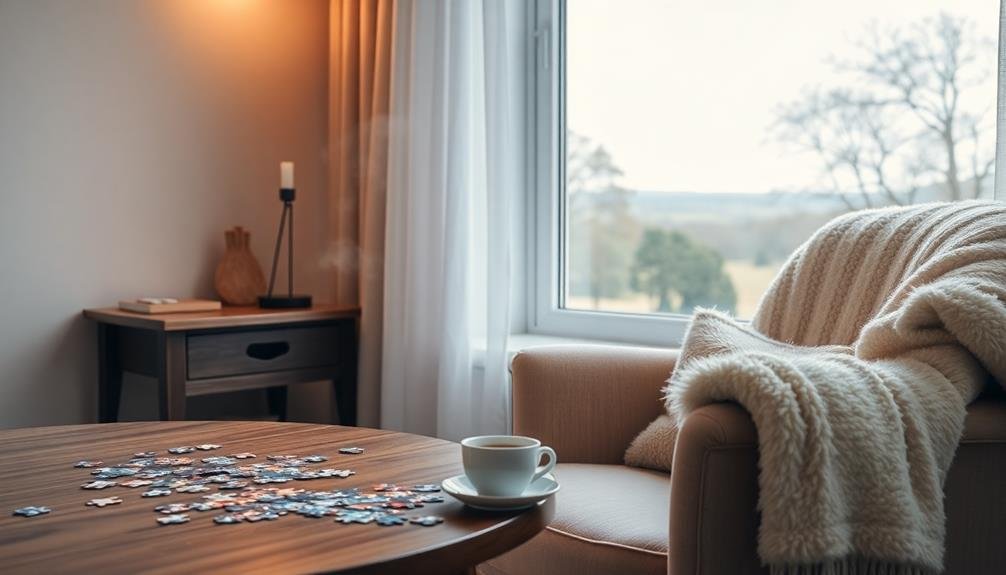
To maximize the stress-relieving benefits of puzzle-solving, you'll want to create an environment conducive to relaxation.
Start by setting up a calming space with minimal distractions, incorporating ambient lighting that soothes your eyes and mind.
Don't forget to choose a comfortable seating option that supports good posture and allows you to focus on your puzzle for extended periods.
Calming Space Setup
Before diving into your puzzle, it's essential to create a soothing environment that promotes relaxation and focus. Choose a quiet space in your home where you won't be disturbed. This could be a cozy corner in your living room, a dedicated puzzle table, or even a peaceful spot outdoors.
Make certain you have comfortable seating and good lighting to prevent eye strain. Set the mood by incorporating elements that appeal to your senses. Consider playing soft, instrumental music or nature sounds in the background. Use aromatherapy with calming scents like lavender or eucalyptus to enhance relaxation.
Keep the room temperature comfortable, and if possible, let in some natural light and fresh air. To create your ideal puzzle sanctuary, include these elements:
- Comfortable seating with proper back support
- Adjustable lighting, preferably natural or warm LED
- A clutter-free surface large enough for your puzzle
- Easy access to water and healthy snacks
Remember to minimize distractions by turning off notifications on your devices and informing others that you'll be unavailable during your puzzle time. This dedicated space will help you fully immerse yourself in the therapeutic benefits of puzzle-solving.
Ambient Lighting Choices
Proper lighting plays an essential role in creating a relaxing puzzle environment.
You'll want to avoid harsh overhead lights that can cause eye strain and increase tension. Instead, opt for soft, warm lighting that creates a cozy atmosphere. Consider using table lamps with adjustable brightness levels, allowing you to customize the light intensity to your preference.
Natural light can be incredibly soothing, so if possible, set up your puzzle area near a window. Use sheer curtains to diffuse sunlight and reduce glare on your puzzle surface.
For evening puzzling, try incorporating salt lamps or flameless candles to add a warm glow to your space.
Color temperature is important for relaxation. Choose bulbs with a warm white hue (2700-3000K) rather than cool white or daylight bulbs.
You might also experiment with colored LED strips to create a calming ambiance – soft blues and greens can be particularly soothing.
Don't forget task lighting. A small, adjustable desk lamp can provide focused illumination on your puzzle without disturbing the overall relaxing atmosphere.
Comfortable Seating Options
While the right lighting sets the mood, comfortable seating is key to fully enjoying your puzzle-solving experience.
You'll want a chair that supports your back and allows you to maintain good posture for extended periods. Consider ergonomic options that can be adjusted to suit your body type and preferences.
Don't forget about the surface where you'll be working on your puzzles – a sturdy table at the right height is essential.
For maximum relaxation, you might opt for a cozy armchair or even a recliner, especially if you're working on smaller puzzles or using a lap desk.
Whatever seating you choose, make sure it's in a quiet area of your home where you can focus without distractions.
To create the perfect puzzle-solving haven, consider these elements:
- A supportive chair with adjustable height and lumbar support
- A soft, plush throw pillow for added comfort
- A side table for your beverage and puzzle accessories
- A footrest to promote circulation during long solving sessions
Mindfulness Techniques While Puzzling
Incorporating mindfulness techniques into your puzzling routine can enhance the stress-relieving benefits of this therapeutic activity. As you engage with your puzzle, focus on your breath, taking slow, deep inhalations and exhalations. This simple practice can help calm your mind and reduce anxiety.
Pay attention to the sensations in your body as you handle puzzle pieces. Notice the texture, weight, and temperature of each piece. This tactile awareness can ground you in the present moment, preventing your mind from wandering to stressful thoughts.
Practice non-judgmental observation of your thoughts and emotions while puzzling. If frustration arises, acknowledge it without criticism and gently redirect your focus to the task at hand. This helps develop emotional resilience and patience.
Use the puzzle as a visual anchor for meditation. Choose a specific area or piece to concentrate on, allowing other thoughts to pass by like clouds in the sky. This technique can improve your ability to maintain focus and reduce mental clutter.
Lastly, cultivate gratitude for the peaceful moments spent puzzling. Regularly remind yourself of the joy and relaxation this activity brings, fostering a positive mindset that extends beyond your puzzling sessions.
Benefits of Jigsaw Puzzles
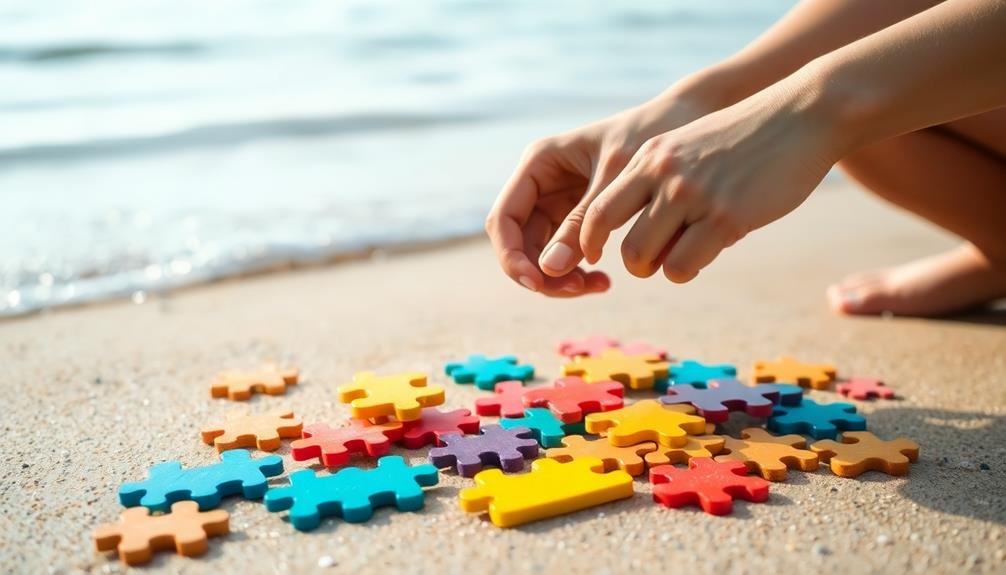
Jigsaw puzzles offer a multitude of benefits for mental health and cognitive function. As you engage in this activity, you're giving your brain a workout while simultaneously relaxing your mind. The act of piecing together a puzzle can improve your short-term memory, problem-solving skills, and spatial reasoning abilities.
When you're focused on finding the right pieces and creating a complete image, you're practicing mindfulness without even realizing it. This concentration can help reduce stress and anxiety, allowing you to escape from daily worries.
Jigsaw puzzles also provide a sense of accomplishment as you progress, boosting your self-esteem and mood.
Here's what you might experience while working on a jigsaw puzzle:
- A sense of flow as time seems to slip away
- Improved hand-eye coordination as you manipulate small pieces
- Enhanced visual perception as you analyze shapes and colors
- A meditative state that calms your mind and body
Whether you're working alone or collaborating with others, jigsaw puzzles can be a fulfilling and therapeutic activity. They're an excellent way to unwind after a long day or spend quality time with loved ones while reaping cognitive benefits.
Puzzle Accessories for Enhanced Relaxation
To elevate your puzzle-solving experience and maximize relaxation, you'll want to explore various accessories designed specifically for jigsaw enthusiasts. A puzzle mat or roll-up felt mat is vital, allowing you to work on your puzzle anywhere and easily store it when not in use. These mats often come with inflatable tubes to keep pieces from sliding off.
Invest in a set of sorting trays to organize your pieces by color or shape, reducing frustration and enhancing focus. Puzzle glue and a specially designed spreading tool can help you preserve your completed masterpieces. For better visibility, consider a magnifying glass or an adjustable desk lamp with multiple brightness settings.
Ergonomic considerations are important for extended puzzle sessions. A tilting puzzle board can reduce neck strain, while a comfortable chair with proper back support guarantees you maintain good posture.
Don't forget about ambiance – a small Bluetooth speaker for soothing music or nature sounds can further enhance your relaxation.
Lastly, puzzle piece tweezers and a mini vacuum can help you handle small pieces and keep your work area clean, promoting a sense of order and calm as you immerse yourself in the therapeutic world of puzzles.
Incorporating Puzzles Into Daily Routine
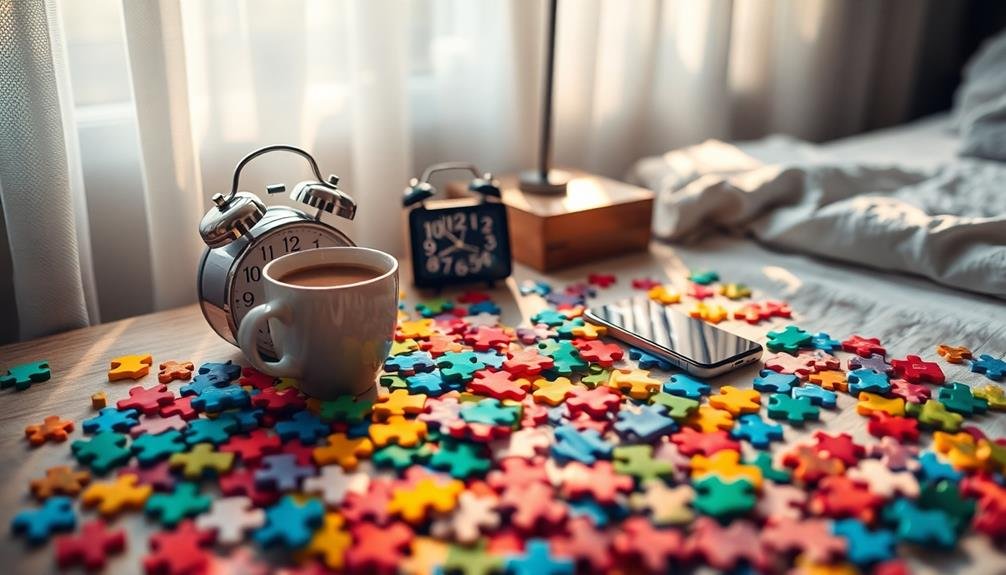
How can you seamlessly weave puzzles into your daily life for maximum stress relief? Start by identifying pockets of time in your routine where you can incorporate puzzle-solving. Consider replacing mindless scrolling on your phone with a quick puzzle session during your commute or lunch break.
Set up a dedicated puzzle area in your home, making it easily accessible for short bursts of relaxation throughout the day. Choose puzzles that match your available time and energy levels. Opt for smaller, portable puzzles for on-the-go stress relief, and save larger, more complex ones for evenings or weekends.
Gradually increase the difficulty of your puzzles to keep your mind engaged and challenged. To make puzzling a consistent habit, try these strategies:
- Schedule puzzle time as you'd any other important activity
- Use puzzles as a reward after completing tasks or chores
- Involve family or friends in puzzle-solving sessions for social bonding
- Alternate between different types of puzzles to maintain interest
Group Puzzling for Social Anxiety
Group puzzling offers a unique approach to managing social anxiety. It provides a structured social activity with a shared focus, allowing you to interact with others without the pressure of constant conversation. You'll find that working together on a puzzle creates a natural icebreaker and reduces awkward silences.
To get started, try joining a local puzzle club or organizing a small group with friends or family. Choose puzzles that match your group's skill level and interests. As you work together, you'll develop teamwork skills and build connections through shared accomplishments.
Here's a table showcasing the benefits of group puzzling for social anxiety:
| Benefit | How It Helps | Example |
|---|---|---|
| Shared Focus | Reduces self-consciousness | Concentrating on puzzle pieces |
| Structured Interaction | Provides conversation starters | Discussing puzzle strategies |
| Teamwork | Builds social confidence | Collaborating on difficult sections |
| Accomplishment | Boosts self-esteem | Completing a challenging puzzle |
| Relaxed Environment | Decreases social pressure | Casual, low-stakes setting |
Digital Puzzles vs. Physical Puzzles
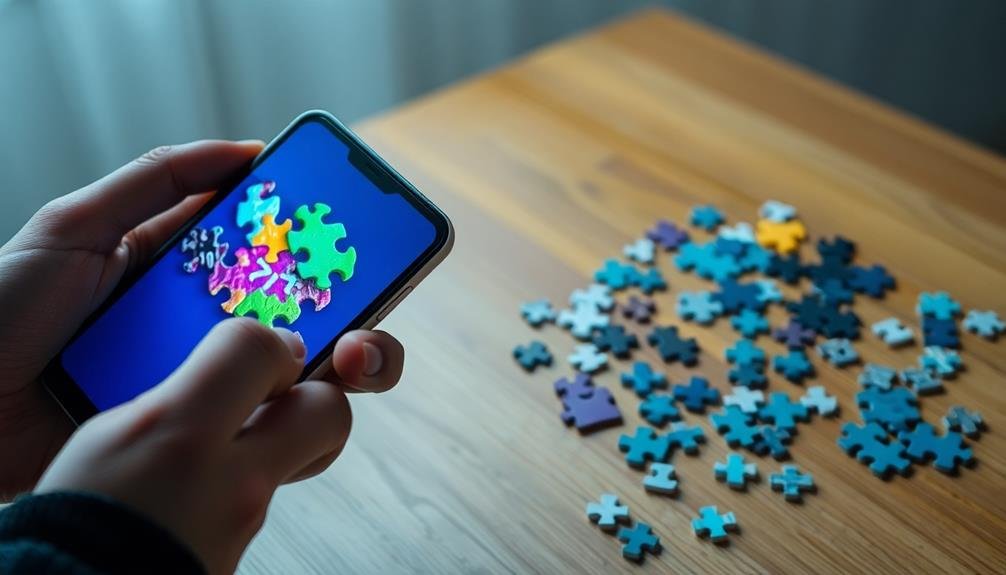
You'll notice distinct differences between digital and physical puzzles in your stress-relief journey.
While digital puzzles offer unmatched portability and accessibility on your devices, physical puzzles provide a tangible, screen-free experience that many find more satisfying.
Your choice between the two may also impact social interactions, as physical puzzles often encourage face-to-face engagement, while digital puzzles can connect you with a global community of fellow enthusiasts.
Tactile vs. Screen Experience
The puzzle-solving experience differs markedly between digital and physical formats. When you engage with a physical puzzle, you're interacting with a tangible object, feeling the pieces in your hands and physically manipulating them. This tactile experience can be soothing and grounding, offering a break from screen time.
Digital puzzles, on the other hand, provide a different type of engagement. You're interacting with a screen, using your fingers or a mouse to move pieces virtually. While this lacks the physical touch of traditional puzzles, it offers advantages like easy storage, portability, and instant access to a wide variety of puzzles.
Consider these aspects when choosing between tactile and screen experiences:
- Sensory input: Physical puzzles engage your sense of touch
- Eye strain: Digital puzzles may contribute to more screen time
- Space requirements: Physical puzzles need storage, digital ones don't
- Accessibility: Digital puzzles are often more readily available
Ultimately, both formats can provide stress relief. Your preference may depend on factors like your lifestyle, available space, and personal sensory preferences.
Experiment with both to find which type of puzzle experience helps you unwind most effectively.
Portability and Accessibility Comparison
When evaluating therapeutic puzzles for stress relief, portability and accessibility play significant roles in your choice between digital and physical formats.
Digital puzzles offer unparalleled convenience, allowing you to carry thousands of puzzles on a single device. You can access them anytime, anywhere, without worrying about losing pieces or damaging the puzzle. They're ideal for travel, commutes, or quick stress-relief sessions during work breaks.
Physical puzzles, while less portable, offer a unique tactile experience. You can easily set them up on a table and return to them later, making them perfect for home or office use. However, they're not as convenient for on-the-go puzzle solving. You'll need to evaluate space and transportation when choosing physical puzzles.
In terms of accessibility, digital puzzles often have a lower barrier to entry. You can download apps or access websites instantly, often for free or at a low cost.
Physical puzzles require more upfront investment and storage space. However, they're accessible to those who prefer to limit screen time or lack digital devices.
Ultimately, your lifestyle and preferences will determine which format best suits your stress-relief needs.
Social Interaction Opportunities
Puzzle enthusiasts often overlook the social interaction opportunities that both digital and physical puzzles can provide. While digital puzzles offer online communities and multiplayer options, physical puzzles create in-person bonding experiences.
With digital puzzles, you can:
- Join online forums to discuss strategies
- Participate in global leaderboards
- Collaborate with players worldwide
- Share achievements on social media
Physical puzzles, on the other hand, encourage face-to-face interactions. You'll find yourself gathered around a table with friends or family, working together to solve a jigsaw puzzle. Board game nights featuring puzzle-based games can become regular social events, strengthening relationships and creating shared memories.
Digital puzzles allow for instant connectivity with puzzle lovers across the globe, but they may lack the personal touch of physical interactions. Conversely, physical puzzles might limit your social circle to those in your immediate vicinity but offer a more intimate and tactile experience.
Both formats have their merits when it comes to social opportunities. Digital puzzles excel in connecting you with a broader community, while physical puzzles shine in fostering deeper, local connections.
Ultimately, the choice depends on your preferred style of social interaction and the type of relationships you want to build through your puzzle-solving experiences.
Frequently Asked Questions
Are There Age Restrictions for Therapeutic Puzzling?
There aren't typically age restrictions for therapeutic puzzling. You can enjoy these activities at any age. They're beneficial for children, adults, and seniors alike. You'll find puzzles tailored to various skill levels and cognitive abilities.
Can Puzzle Therapy Help With Specific Mental Health Conditions?
Yes, puzzle therapy can help with various mental health conditions. You'll find it beneficial for anxiety, depression, and ADHD. It can improve your cognitive function, reduce stress, and boost your mood. Try it as a complementary treatment approach.
How Long Should a Puzzle Therapy Session Last?
You'll find puzzle therapy sessions typically last 30 minutes to an hour. However, it's flexible and can be tailored to your needs. Start with shorter sessions and gradually increase duration as you become more comfortable with the practice.
Are Certain Puzzle Themes More Effective for Stress Relief?
You'll find certain puzzle themes more effective for stress relief. Nature scenes, abstract patterns, and calming landscapes can be particularly soothing. Choose themes that resonate with you personally, as your enjoyment enhances the stress-reducing benefits.
Can Puzzle Therapy Be Combined With Other Relaxation Techniques?
Yes, you can combine puzzle therapy with other relaxation techniques. Try incorporating deep breathing exercises while solving puzzles, or listen to calming music. You might also pair puzzling with aromatherapy or practice mindfulness during puzzle breaks.
In Summary
You've now unsealed the power of therapeutic puzzles for stress relief. Remember, it's not just about completing the puzzle, but enjoying the journey. Whether you're piecing together a jigsaw or solving a digital brainteaser, you're giving your mind a much-needed break. Make puzzling a part of your daily routine, and you'll soon notice reduced anxiety and improved focus. So go ahead, pick up a puzzle, and let your worries melt away.

Leave a Reply