
Assembling images piece-by-piece through jigsaw puzzles can effectively calm your anxiety. This soothing activity engages both hemispheres of your brain, promoting a meditative state similar to mindfulness practices. As you focus on finding and fitting pieces, you'll shift into a relaxed mental state, reducing stress hormones and increasing dopamine. Puzzles improve your cognitive skills while providing a healthy distraction from anxious thoughts. They also foster a sense of accomplishment, boosting your mood and motivation. To maximize benefits, create a dedicated puzzle area and incorporate this activity into your daily routine. Discover how this simple pastime can transform your approach to managing anxiety.
Understanding Anxiety and Coping Mechanisms
Anxiety can creep up on you, affecting your daily life in unexpected ways. It's a natural response to stress, but when it becomes overwhelming, it's vital to understand its roots and develop effective coping strategies.
Recognize that anxiety often stems from fear of the unknown or perceived threats, triggering your body's fight-or-flight response.
To manage anxiety, you'll need a toolbox of coping mechanisms. These can include deep breathing exercises, mindfulness meditation, and physical activity.
It's important to identify your anxiety triggers and work on challenging negative thought patterns. Cognitive-behavioral therapy techniques can help you reframe anxious thoughts and develop more balanced perspectives.
Don't underestimate the power of self-care in managing anxiety. Prioritize sleep, maintain a balanced diet, and limit caffeine and alcohol intake.
Building a support network of friends, family, or professionals can provide valuable emotional assistance.
Remember, coping with anxiety is a skill that improves with practice. Be patient with yourself as you learn to navigate your emotions and implement these strategies.
With time and effort, you'll develop resilience and better control over your anxiety symptoms.
The Science Behind Jigsaw Puzzles
Countless studies have shown that jigsaw puzzles offer more than just entertainment—they're a powerful tool for mental health and cognitive function. When you engage in puzzle-solving, your brain releases dopamine, a neurotransmitter associated with pleasure and reward. This chemical boost can help reduce stress and anxiety, creating a sense of calm and accomplishment.
The act of piecing together a puzzle engages both hemispheres of your brain. The left hemisphere, responsible for logic and analysis, works to sort pieces by color and shape. Meanwhile, the right hemisphere, which handles creativity and intuition, helps you visualize the bigger picture and make connections between pieces.
Jigsaw puzzles offer several cognitive benefits:
- Improved short-term memory
- Enhanced problem-solving skills
- Increased spatial awareness
- Better hand-eye coordination
As you focus on finding the right pieces, your mind enters a meditative state, similar to mindfulness practices. This state can help quiet racing thoughts and reduce anxiety.
Additionally, the repetitive nature of puzzle-solving can create a soothing rhythm, further promoting relaxation and stress relief.
How Puzzles Affect Brain Chemistry
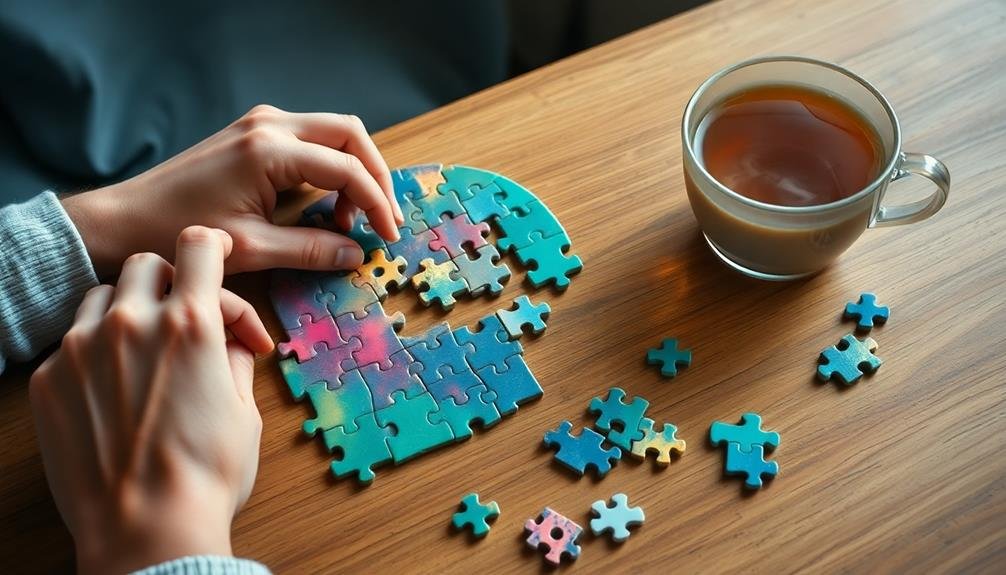
When you engage in puzzling activities, your brain undergoes significant chemical changes.
You'll experience a release of dopamine, the "feel-good" neurotransmitter, which can boost your mood and motivation.
Additionally, puzzle-solving can reduce stress hormones and alter your brain wave patterns, potentially inducing a calmer, more focused state.
Dopamine Release During Puzzling
Puzzles offer more than just entertainment; they're a powerful tool for altering brain chemistry. When you engage in puzzle-solving activities, your brain releases dopamine, a neurotransmitter associated with pleasure and reward. This dopamine release creates a sense of accomplishment and motivation, encouraging you to continue solving puzzles and seeking that "aha" moment.
The dopamine surge during puzzling has several benefits:
- Increased focus and concentration
- Enhanced mood and reduced stress
- Improved cognitive function and memory
- Boosted self-esteem and confidence
As you work through a puzzle, your brain continuously releases small amounts of dopamine, keeping you engaged and motivated. When you finally solve the puzzle, you experience a larger dopamine rush, reinforcing the positive feelings associated with the activity.
This cycle of anticipation and reward can be particularly beneficial for those dealing with anxiety, as it provides a healthy distraction and a sense of control. By regularly engaging in puzzles, you're training your brain to seek out these positive experiences, potentially reducing anxiety symptoms and improving overall well-being.
Stress Hormone Reduction Effects
While dopamine release contributes to the positive effects of puzzling, it's not the only way these activities influence brain chemistry. Puzzles also play a significant role in reducing stress hormones, particularly cortisol. As you engage in solving puzzles, your brain shifts its focus from stressors to the task at hand, effectively lowering cortisol levels.
This reduction in stress hormones has several benefits for your mental well-being. You'll likely experience a sense of calm and relaxation as cortisol levels decrease. Your mind becomes less cluttered with anxious thoughts, allowing for clearer thinking and improved decision-making.
Additionally, the lowered stress response can lead to better sleep quality, which is essential for managing anxiety.
The repetitive nature of puzzling, whether it's fitting pieces together or solving word games, can induce a meditative state. This state further enhances the stress-reducing effects, promoting a sense of mindfulness and present-moment awareness.
As you continue to puzzle regularly, you may notice a cumulative effect on your stress levels, with long-term benefits for your overall anxiety management and emotional regulation.
Brain Wave Pattern Changes
As you engage in puzzle-solving activities, your brain experiences significant changes in its wave patterns. These alterations can have a profound impact on your anxiety levels and overall mental state.
When you focus on assembling puzzles, your brain shifts from beta waves, associated with active thinking and stress, to alpha waves, which promote relaxation and calmness.
The brain wave changes induced by puzzle-solving contribute to anxiety reduction in several ways:
- Increased alpha wave activity: This promotes a state of relaxed alertness, reducing anxious thoughts and promoting mental clarity.
- Decreased beta wave activity: Lowering these waves helps quiet the mind and reduce overthinking, a common anxiety trigger.
- Enhanced theta wave production: These waves are associated with creativity and deep relaxation, further reducing anxiety.
- Improved gamma wave synchronization: This leads to better cognitive function and emotional regulation.
Mindfulness Through Puzzle Assembly
When you assemble a puzzle, you're naturally drawn into the present moment, focusing intently on the pieces before you.
This activity engages both your hands and mind, leaving little room for anxious thoughts to intrude.
As you work on fitting pieces together, you'll notice a reduction in mental chatter, allowing for a meditative-like state of mindfulness.
Focus on Present Moment
One effective way to calm anxiety is by focusing on the present moment through puzzle assembly. As you engage in this activity, you're naturally drawn into the here and now, leaving little room for anxious thoughts about the past or future.
The act of piecing together a puzzle requires your full attention, effectively grounding you in the present.
When you're working on a puzzle, you're concentrating on:
- Finding the right pieces
- Matching colors and patterns
- Fitting pieces together correctly
- Slowly revealing the complete image
This process helps you practice mindfulness, as you're fully immersed in the task at hand.
You'll notice your breathing becoming steadier and your mind clearing as you focus solely on the puzzle before you. The repetitive nature of searching for and placing pieces can be meditative, further enhancing your sense of calm.
Engaging Hands and Mind
Puzzle assembly engages both your hands and mind, creating a powerful mindfulness experience. As you search for pieces and fit them together, you're forced to focus on the present moment, pushing anxious thoughts aside. This activity requires concentration, problem-solving, and spatial awareness, which can effectively distract you from worries.
Start by choosing a puzzle that interests you, whether it's a scenic landscape, intricate artwork, or a favorite character. Find a comfortable space and spread out the pieces. As you begin sorting and connecting pieces, pay attention to their shapes, colors, and patterns. Notice the satisfaction of finding a perfect fit and the gradual emergence of the image.
If you find your mind wandering, gently redirect your focus to the puzzle. The tactile nature of handling pieces can be grounding, while the visual aspect keeps your eyes engaged.
As you progress, you'll likely experience a sense of accomplishment and reduced anxiety. Remember, it's not about finishing quickly but enjoying the process. Puzzle assembly can be a meditative practice that helps calm your mind and provides a welcome respite from anxiety.
Reducing Mental Chatter
Incessantly buzzing with thoughts, an anxious mind can feel overwhelming. Puzzle assembly offers a unique way to quiet this mental chatter. As you focus on finding and fitting pieces together, your mind naturally shifts away from anxious thoughts. This process of engaging with the puzzle creates a meditative state, allowing you to be present in the moment.
To reduce mental chatter through puzzle assembly:
- Choose a puzzle that's challenging but not frustrating
- Set up a dedicated space for puzzling
- Start with the edge pieces to create a framework
- Focus on one section at a time, letting other thoughts fade
As you immerse yourself in the puzzle, you'll notice your racing thoughts begin to slow. The act of searching for specific shapes and colors requires your full attention, leaving little room for worry.
You're training your brain to focus on a single task, which can help manage anxiety in other areas of your life. This mindfulness practice through puzzle assembly can become a valuable tool in your anxiety management toolkit, offering a calming respite from the constant mental noise.
Choosing the Right Puzzle Difficulty
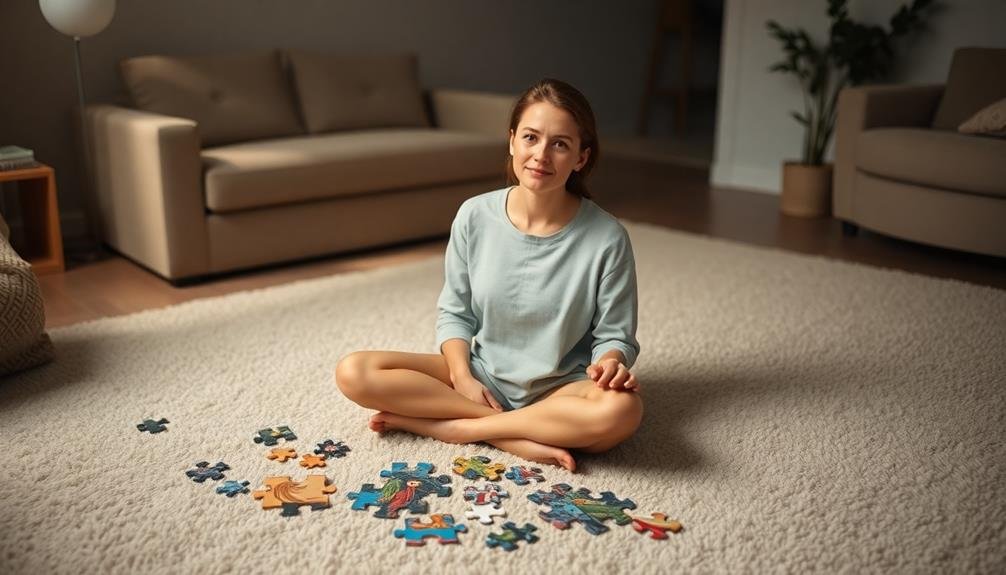
When selecting puzzles to calm anxiety, it's important to find the right difficulty level. You'll want a challenge that engages your mind without causing frustration. Start with easier puzzles and gradually increase the complexity as you become more comfortable.
Consider these factors when choosing puzzle difficulty:
| Factor | Easy Puzzle | Challenging Puzzle |
|---|---|---|
| Piece Count | 100-300 | 500+ |
| Image Complexity | Simple, solid colors | Detailed, intricate |
| Time Commitment | 1-3 hours | 5+ hours |
Begin with puzzles that have larger pieces and simpler images. As you progress, try puzzles with more pieces and complex designs. Pay attention to how you feel during and after puzzle sessions. If you're feeling overwhelmed, scale back the difficulty. On the other hand, if you're breezing through puzzles, it's time to step up the challenge.
Creating a Calming Puzzle Environment
Your puzzle-solving space plays an essential role in reducing anxiety. Set up a dedicated area where you can focus on your puzzle without distractions. Choose a quiet room or corner of your home where you feel comfortable and relaxed. Confirm you have good lighting to prevent eye strain and maintain a pleasant atmosphere.
Create a soothing environment by incorporating calming elements:
- Soft, ambient music or nature sounds
- Aromatherapy with lavender or chamomile scents
- Comfortable seating with proper back support
- Gentle, warm lighting or natural sunlight
Keep your puzzle supplies organized and within reach to minimize frustration. Use a puzzle mat or board to easily store and transport your work-in-progress.
Consider adding a small side table for your beverage and snacks, allowing you to stay hydrated and energized during longer puzzle sessions.
Eliminate potential sources of stress by turning off notifications on your devices and informing others that you need uninterrupted time.
Incorporating Puzzles Into Daily Routine
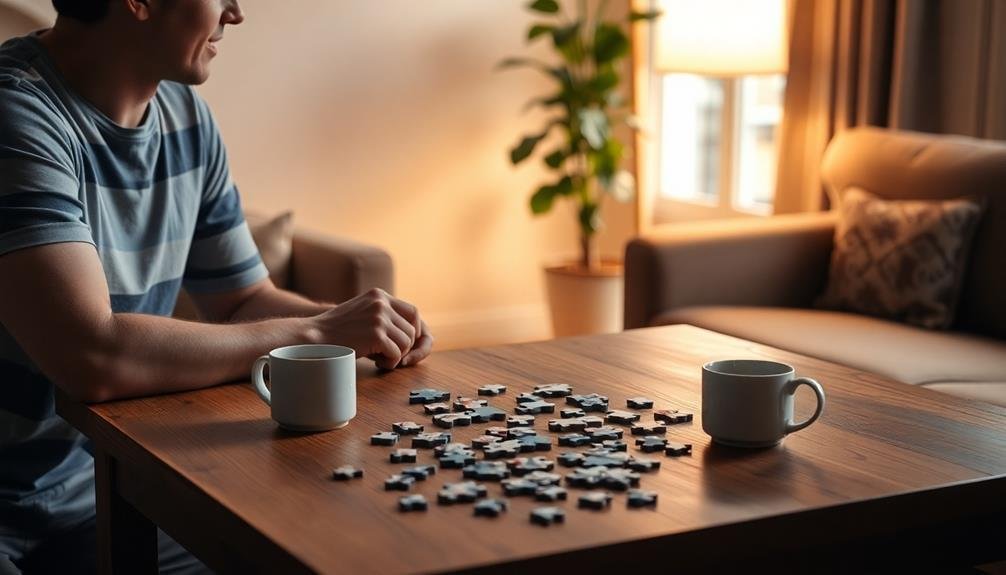
Integrating puzzles into your daily routine can lead to consistent anxiety relief and improved mental well-being. Start by setting aside a specific time each day for puzzle-solving, such as during your morning coffee or before bed.
Choose a puzzle type that suits your schedule and preferences, whether it's a quick crossword, a daily Sudoku, or a few pieces of a larger jigsaw puzzle.
Keep puzzle materials easily accessible in high-traffic areas of your home or workspace. This visibility will serve as a reminder and make it more likely for you to engage with them regularly.
You can also use digital puzzle apps on your smartphone for on-the-go anxiety management.
Gradually increase the difficulty level of your puzzles to maintain engagement and challenge your mind. Consider joining online puzzle communities or local clubs to share your progress and connect with like-minded individuals.
This social aspect can provide additional support and motivation.
Remember to approach puzzle-solving as a form of self-care rather than a chore. If you're feeling overwhelmed, it's okay to take a break or switch to a simpler puzzle.
The goal is to create a sustainable habit that consistently helps manage your anxiety.
Alternative Image-Based Anxiety Relief Activities
While puzzles offer excellent cognitive engagement, other image-based activities can also effectively alleviate anxiety. These alternatives provide similar benefits, allowing you to focus on visual tasks that calm your mind and reduce stress.
Consider trying these image-based anxiety relief activities:
- Adult coloring books: Use intricate designs to promote mindfulness and relaxation.
- Paint-by-numbers: Follow a structured approach to create beautiful artwork while reducing anxiety.
- Diamond painting: Place tiny resin diamonds on a canvas to form detailed pictures, fostering concentration.
- Digital pixel art: Create images pixel by pixel using smartphone apps or computer software.
These activities engage your visual senses and fine motor skills, helping to redirect your focus away from anxious thoughts.
They're often portable, making them convenient for anxiety relief on-the-go. You'll find that as you immerse yourself in these tasks, your mind becomes absorbed in the process, leaving less room for worry.
The sense of accomplishment you'll feel upon completing an image can boost your mood and self-esteem.
Experiment with different image-based activities to discover which ones resonate with you and provide the most effective anxiety relief.
Frequently Asked Questions
Can Jigsaw Puzzles Help With Specific Types of Anxiety Disorders?
Jigsaw puzzles can help with various anxiety disorders. You'll find them particularly useful for generalized anxiety, social anxiety, and panic disorders. They provide a calming focus, boost your self-esteem, and offer a sense of control and accomplishment.
Are Digital Puzzle Apps as Effective as Physical Jigsaw Puzzles?
You'll find digital puzzle apps can be effective for anxiety relief, but they may lack the tactile experience of physical jigsaws. Both can engage your mind, but physical puzzles offer a unique sensory element that some find more soothing.
How Long Should One Engage in Puzzling for Optimal Anxiety Relief?
You'll find that puzzle duration for ideal anxiety relief varies. Aim for 15-30 minutes daily, but listen to your body. If you're feeling calmer, you've hit the sweet spot. Adjust as needed for your schedule and stress levels.
Can Puzzle-Solving Skills Transfer to Real-Life Problem-Solving Situations?
Yes, puzzle-solving skills can transfer to real-life problem-solving. You'll develop patience, pattern recognition, and logical thinking. You're likely to approach complex issues more systematically, breaking them down into manageable parts, just like you do with puzzles.
Are There Any Potential Negative Effects of Using Puzzles for Anxiety Relief?
While puzzles can help with anxiety, you might become overly reliant on them. You could neglect other coping strategies or avoid addressing underlying issues. They're also time-consuming, potentially interfering with daily responsibilities or social interactions.
In Summary
You've discovered a powerful tool for managing anxiety through puzzle assembly. By engaging in this mindful activity, you're actively redirecting your focus and calming your mind. Remember, it's not just about completing the puzzle; it's about the journey. Start small, create a soothing environment, and make puzzling a regular part of your routine. Don't forget to explore other image-based activities that might work for you. Embrace this simple yet effective method to find peace amidst chaos.