
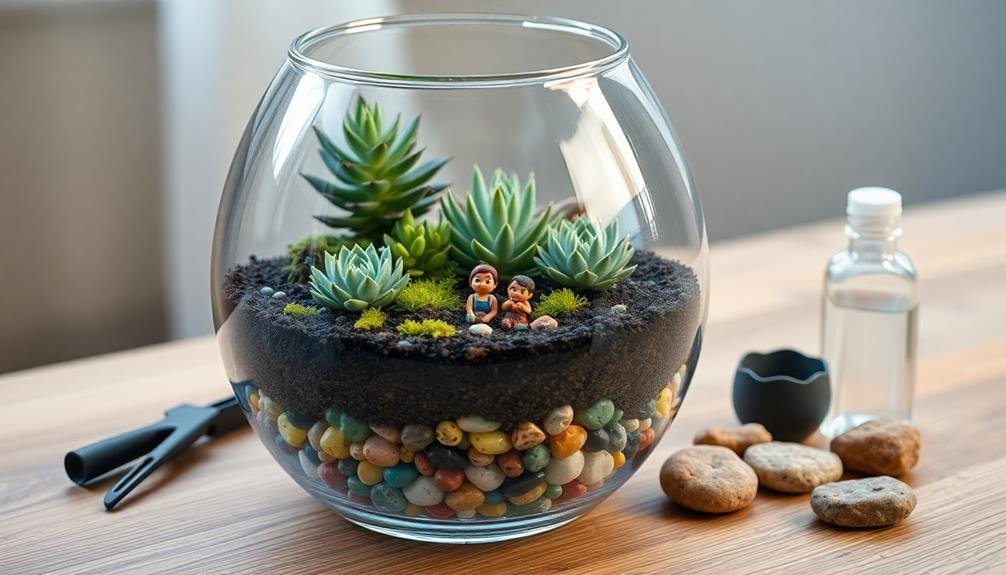
Building a terrarium can be a soothing activity to relieve anxiety. You'll start by gathering supplies like a glass container, pebbles, soil, and suitable plants. Choose a container that fits your space and select plants that thrive in enclosed environments. Layer your terrarium with pebbles for drainage, activated charcoal to keep it fresh, and potting soil for planting. Arrange your plants creatively, mixing textures and heights for visual interest. Add decorative elements to personalize your miniature ecosystem. Regular maintenance, including minimal watering and pruning, will keep your terrarium thriving. By incorporating this calming green space into your daily life, you'll cultivate mindfulness and find a natural remedy for stress.
Key Takeaways
- Choose a suitable glass container and gather essential supplies like pebbles, activated charcoal, and potting soil.
- Select compatible, slow-growing plants that thrive in terrarium environments, considering humidity and light requirements.
- Create a layered base with drainage materials, activated charcoal, and well-draining potting mix for plant health.
- Arrange plants aesthetically, considering height and texture, and add decorative elements for personalization.
- Engage in mindful observation and care of your terrarium to foster a connection with nature and reduce anxiety.
Understanding Terrariums and Anxiety Relief
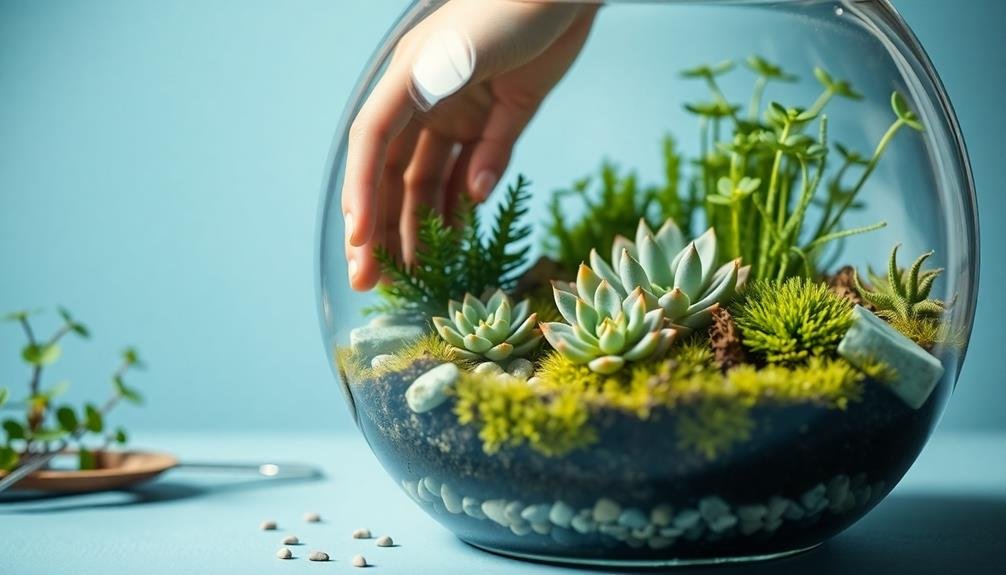
Creating a terrarium can be a soothing and therapeutic experience, offering a unique way to manage anxiety. Terrariums are miniature ecosystems enclosed in glass containers, allowing you to bring a piece of nature indoors. These self-contained gardens require minimal maintenance, making them ideal for those seeking a low-stress hobby.
The process of building a terrarium engages your senses and promotes mindfulness, helping to alleviate anxiety symptoms. As you carefully select plants, arrange layers of soil and decorative elements, you'll find yourself focused on the present moment, temporarily setting aside worries and stressors.
The act of caring for living plants can also foster a sense of purpose and accomplishment.
Terrariums serve as a visual reminder of nature's calming influence, even in urban environments. Their presence in your home or workspace can help create a tranquil atmosphere, reducing stress levels throughout the day.
The lush greenery and natural elements within the terrarium can also improve air quality and provide a focal point for relaxation exercises or meditation.
Gathering Supplies and Materials
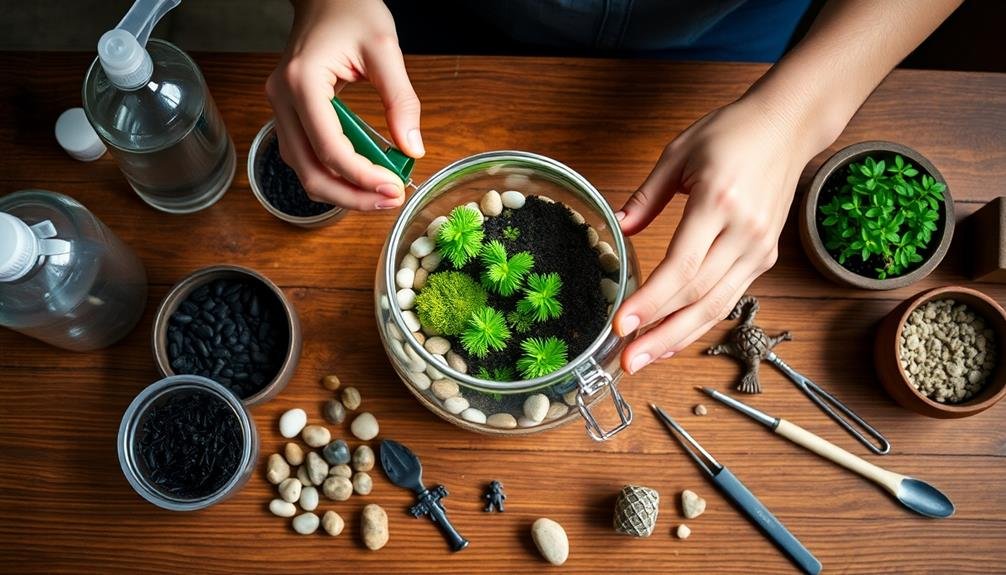
Now that you understand the benefits of terrariums for anxiety relief, it's time to gather the necessary supplies and materials.
You'll need a glass container, which can be any shape or size you prefer. Opt for one with a wide opening for easy access.
Next, collect small pebbles or gravel for drainage, activated charcoal to prevent mold growth, and potting soil suitable for your chosen plants.
Select plants that thrive in terrarium environments, such as ferns, mosses, and small tropical varieties. Choose 3-5 different species for visual interest.
You'll also need decorative elements like rocks, figurines, or driftwood to personalize your terrarium.
Don't forget essential tools: long tweezers for precise plant placement, a small spray bottle for misting, and a soft brush for cleaning glass surfaces.
You may also want gloves to keep your hands clean while working.
For maintenance, have a watering can with a narrow spout and pruning scissors on hand.
Finally, consider adding a small fan for air circulation if you're creating a closed terrarium.
With these supplies ready, you're prepared to start building your anxiety-relieving terrarium.
Choosing the Right Container
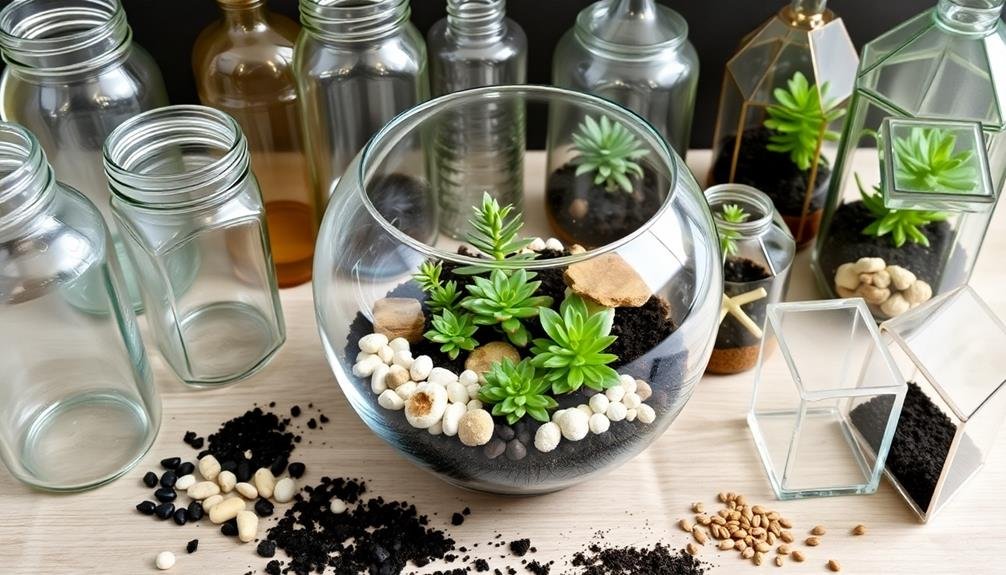
Your terrarium's container serves as its foundation, so choosing the right one is crucial. Look for a clear glass or plastic container that allows light to reach your plants. Consider shapes like jars, bowls, or even fish tanks, depending on the size you want. Confirm the container has a wide opening for easy planting and maintenance.
For closed terrariums, select a container with a lid or cover to create a self-sustaining ecosystem. Open terrariums work well for plants that prefer less humidity and more air circulation. The container's size should match your space and the types of plants you'll be using.
When selecting your container, check for any cracks or chips that could compromise its integrity. If you're upcycling a container, clean it thoroughly and remove any labels or residue.
Consider the container's weight, especially if you plan to move it frequently.
Don't forget about drainage. While most terrariums don't have drainage holes, you'll need to create a drainage layer using materials like pebbles or activated charcoal. This helps prevent water from pooling and causing root rot.
Selecting Suitable Plants
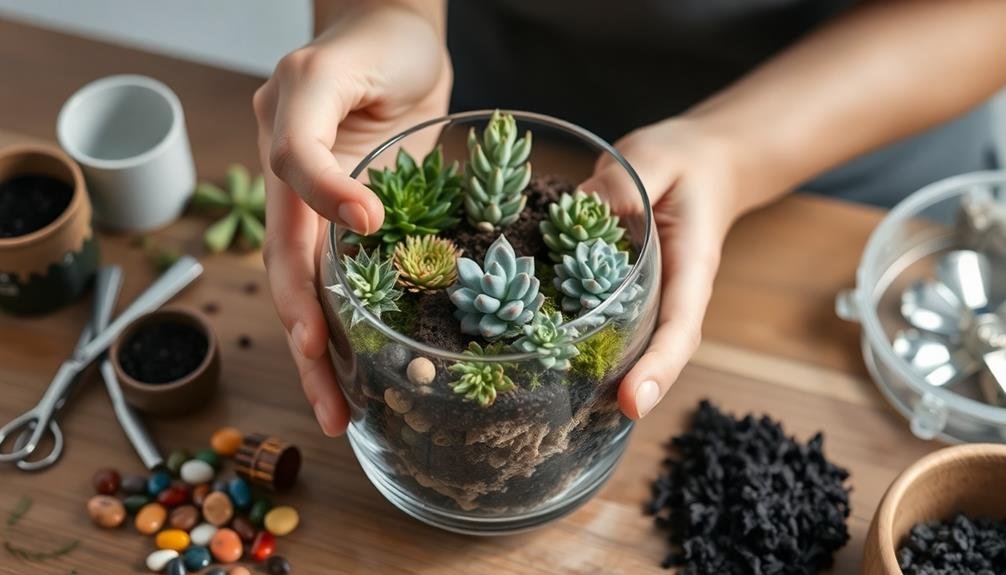
Selecting the right plants is essential for a thriving terrarium. You'll want to choose species that thrive in high humidity and can adapt to enclosed environments. Opt for slow-growing plants that won't outgrow your container quickly.
For tropical terrariums, consider ferns, mosses, and small-leaved plants like Fittonia, Peperomia, and Pilea. These plants love moisture and create a lush, green atmosphere.
If you're building a desert terrarium, succulents and cacti are your best bet. They require less water and can withstand higher temperatures.
When selecting plants, factor in their mature size and growth habits. Mix plants with different textures and heights to create visual interest. Avoid using plants that require different care routines in the same terrarium.
Don't forget to include some air plants or tillandsia for added dimension. These plants don't need soil and can be attached to rocks or driftwood.
Lastly, guarantee all your chosen plants are non-toxic, especially if you have pets or children. This precaution will keep your anxiety-relief project safe and worry-free.
Creating the Terrarium Base
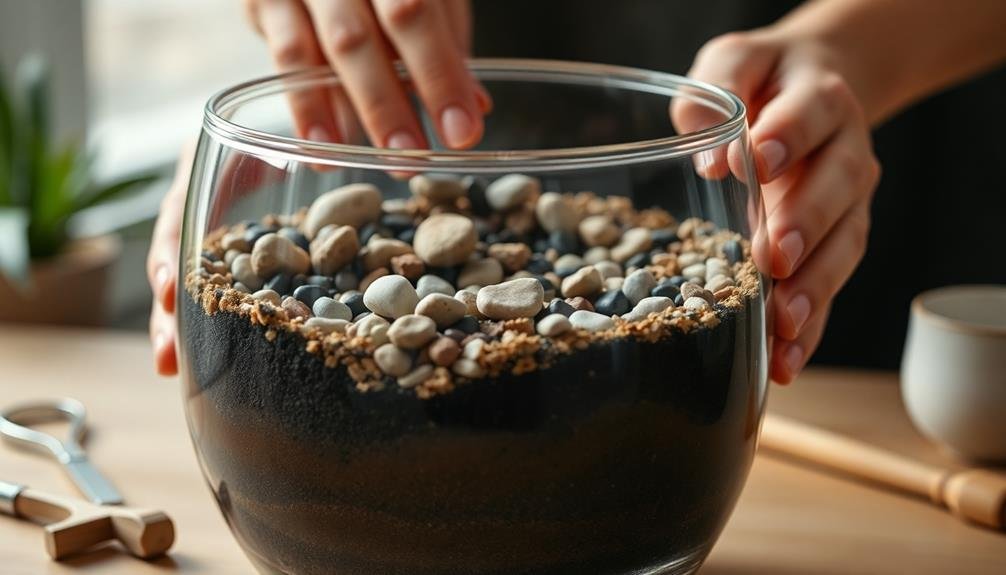
With your plants selected, it's time to lay the foundation for your terrarium. Begin by cleaning your chosen container thoroughly to prevent any contaminants from affecting your plants.
Next, add a layer of small pebbles or gravel to the bottom, about 1-2 inches deep. This layer serves as drainage, preventing water from pooling and potentially rotting your plants' roots.
Over the pebbles, place a thin layer of activated charcoal. This helps filter the water and keeps the terrarium fresh.
Then, add a layer of sphagnum moss to separate the drainage layers from the soil, preventing soil from sifting down into the pebbles.
Now, it's time for the potting mix. Use a well-draining soil suitable for the types of plants you've chosen. Fill the container about one-third full with soil, creating small hills and valleys to add visual interest.
Gently pat down the soil to remove air pockets, but don't compact it too tightly. This base provides a stable foundation for your plants and guarantees proper drainage and nutrient distribution.
Planting and Arranging
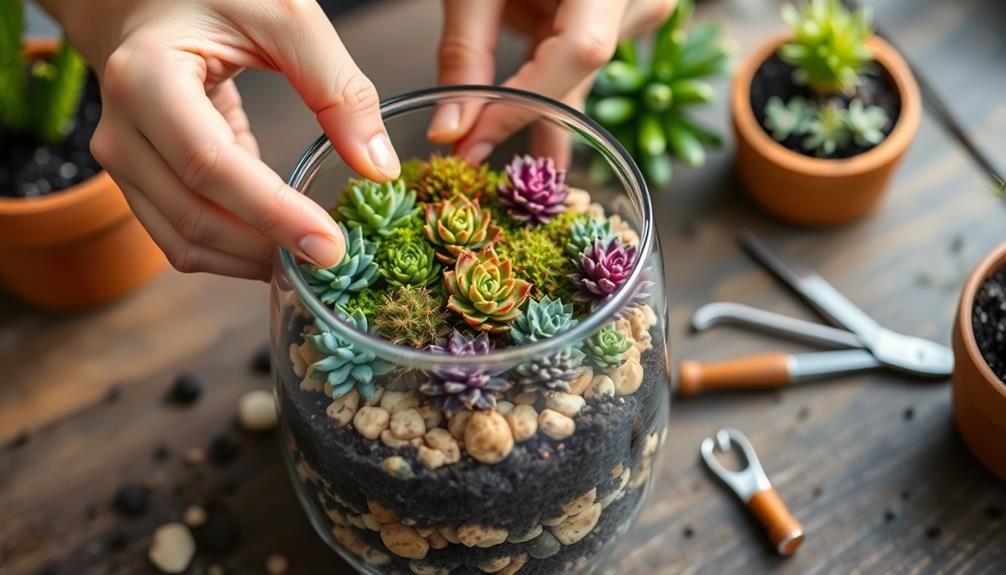
Now that you've prepared the base, it's time to focus on planting and arranging your terrarium.
You'll need to select plants that thrive in enclosed environments and complement each other visually.
As you layer the elements, consider positioning taller plants towards the back and shorter ones in the foreground to create depth and visual interest.
Choosing Suitable Plant Species
Which plants are best suited for your anxiety-relieving terrarium? When selecting plants, focus on low-maintenance species that thrive in enclosed environments. Succulents and air plants are excellent choices, as they require minimal care and can withstand fluctuations in humidity.
Consider adding Echeveria, Haworthia, or Sedum varieties for their compact growth and attractive rosette shapes. Ferns and mosses can create a lush, calming atmosphere. Try incorporating small ferns like the Button Fern or Rabbit's Foot Fern, which adapt well to terrarium conditions.
Mood moss or Sheet moss can add a soft, green carpet effect. For pops of color, include miniature African Violets or colorful Fittonias.
Don't overlook the benefits of aromatherapy in your anxiety-relieving terrarium. Incorporate small herbs like mint, lavender, or rosemary to engage your sense of smell. These plants not only look beautiful but also release calming scents when gently touched.
Remember to choose plants with similar light and water requirements to guarantee they'll coexist harmoniously. Aim for a variety of textures, colors, and heights to create a visually appealing and soothing miniature landscape.
Layering and Positioning Elements
Once you've selected your plants, it's time to start layering and positioning elements in your terrarium.
Begin with a foundation layer of small pebbles or activated charcoal to promote drainage and prevent root rot. Next, add a layer of sphagnum moss to act as a barrier between the drainage layer and the soil. Finally, add your potting mix, ensuring it's deep enough to accommodate your plants' root systems.
When positioning your plants, consider their growth habits and light requirements. Place taller plants towards the back or center, with smaller ones in front. Create depth by varying plant heights and textures. Use tweezers or long-handled tools to carefully place plants and avoid disturbing the soil layers.
After planting, add decorative elements like rocks, crystals, or miniature figurines to enhance the terrarium's aesthetic appeal. These elements can serve as focal points and contribute to the overall calming effect of your creation.
- Feel the stress melt away as you carefully arrange each plant in its perfect spot
- Experience a sense of accomplishment as your miniature ecosystem takes shape
- Embrace the tranquility that comes from creating a living work of art
Decorating Your Terrarium
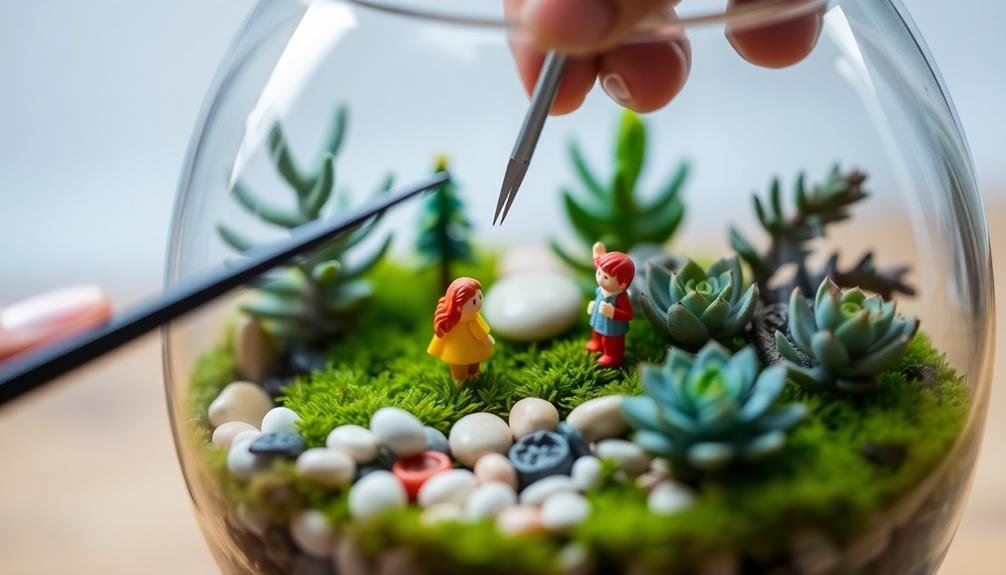
The fun part of creating your terrarium begins with decorating. You'll want to choose elements that not only look appealing but also contribute to a calming atmosphere. Consider adding small figurines, colorful stones, or miniature garden ornaments to create focal points and visual interest.
Natural elements like driftwood, bark, or interesting rocks can add texture and depth to your terrarium. Don't forget to include items that hold personal meaning or evoke positive emotions, as these can enhance the anxiety-relieving effects of your miniature garden.
Here's a quick guide to decorating elements and their benefits:
| Element | Visual Impact | Anxiety-Relieving Benefit |
|---|---|---|
| Crystals | Sparkle and color | Believed to promote healing |
| Miniature animals | Whimsy and charm | Can evoke feelings of companionship |
| Tiny Buddha statue | Serenity and focus | Encourages mindfulness |
| Colored sand | Texture and contrast | Creating patterns can be meditative |
Remember to maintain balance in your design. Don't overcrowd your terrarium; leave some open spaces to allow your eyes to rest and your plants to breathe. As you decorate, take your time and enjoy the process – it's an excellent opportunity for mindfulness and stress relief.
Maintenance and Care Tips
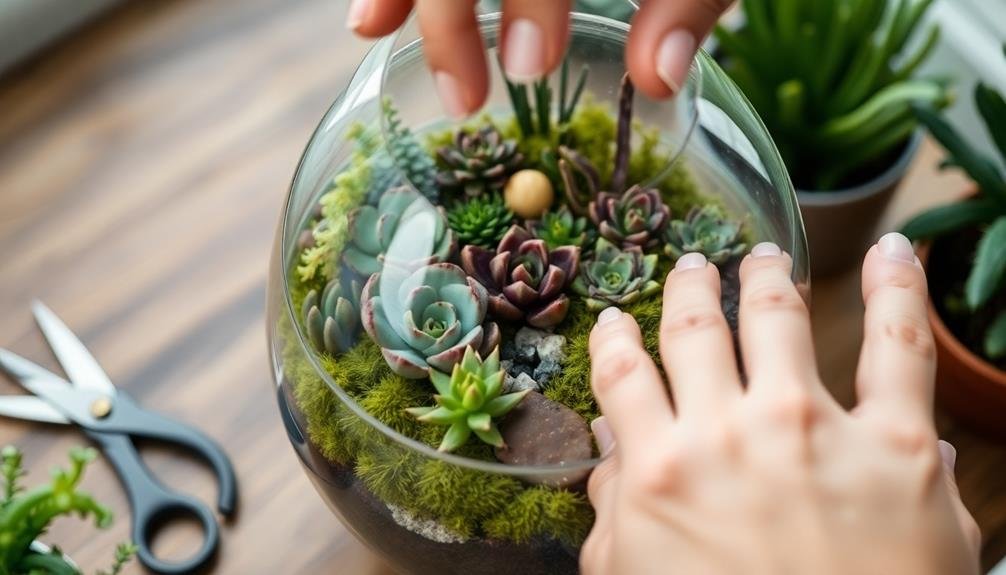
After creating your beautifully decorated terrarium, you'll need to maintain it properly to secure its longevity and effectiveness as an anxiety-relief tool. Regular care guarantees your terrarium remains a thriving, calming space.
Water your terrarium sparingly, as excess moisture can lead to mold growth. For closed terrariums, you'll only need to water every 4-6 months, while open terrariums require more frequent watering, typically every 1-2 weeks.
Prune your plants as needed to maintain their shape and prevent overcrowding. Remove any dead leaves or stems promptly to keep your terrarium looking fresh and vibrant.
Place your terrarium in a spot with indirect sunlight to promote healthy plant growth without scorching the delicate foliage.
To maximize the anxiety-relieving benefits of your terrarium, consider these emotional connections:
- Mindful observation: Take a few minutes each day to carefully examine your terrarium, noticing new growth and changes.
- Gratitude practice: Express thankfulness for the life within your terrarium and its calming presence in your space.
- Breathing exercise: Use your terrarium as a focal point during deep breathing exercises to center yourself and reduce stress.
Incorporating Terrariums Into Daily Life
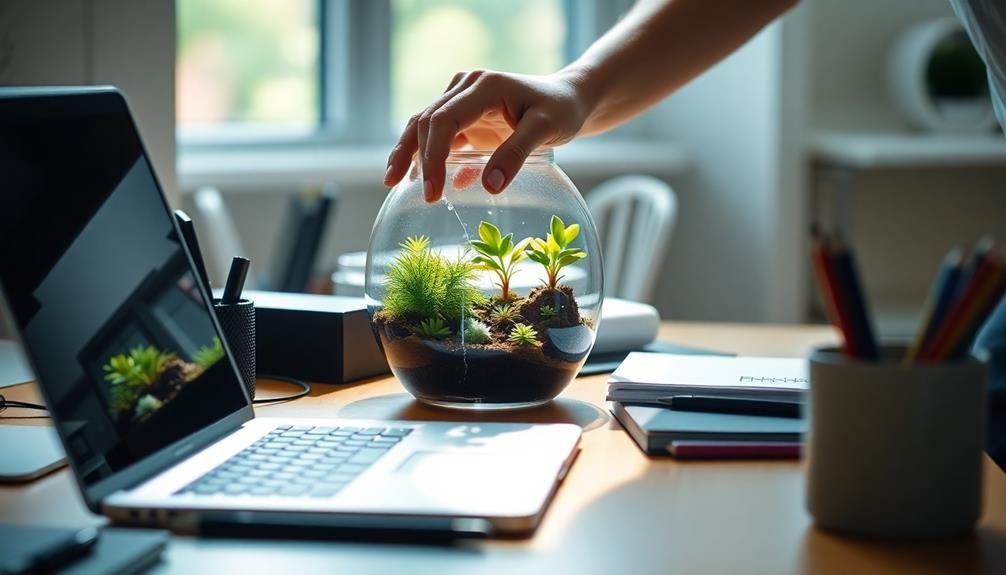
Your terrarium can become an integral part of your daily environment, offering moments of calm throughout your day.
Consider placing a small terrarium on your desk as a green oasis, providing a natural focal point during work hours.
In your living room, a larger terrarium can serve as a conversation piece and a visual anchor, bringing life and tranquility to your shared spaces.
Desk-Side Green Oasis
While you're busy working at your desk, a small terrarium can serve as a calming presence and natural stress reliever. It's a miniature ecosystem that brings a touch of nature to your workspace, providing a visual break from screens and paperwork.
Creating a desk-side green oasis is simple and effective for managing anxiety throughout your workday. Choose a container that fits comfortably on your desk without obstructing your work area. Opt for low-maintenance plants like succulents, air plants, or small ferns that thrive in enclosed environments.
Add decorative elements such as colorful pebbles, miniature figurines, or tiny landscape features to personalize your terrarium. Your desk-side terrarium can:
- Provide a focal point for brief meditation breaks
- Offer a sense of accomplishment as you nurture living plants
- Create a natural barrier between you and workplace stressors
Position your terrarium where you can easily see it throughout the day. Take short breaks to observe its intricate details, breathe deeply, and reconnect with nature.
This tiny ecosystem will become a constant reminder to pause, relax, and refocus, helping you manage anxiety more effectively in your daily work routine.
Living Room Focal Point
Moving from the workplace to the home environment, terrariums can play a significant role in your living room as well. As a focal point, a larger terrarium can become a mesmerizing centerpiece on your coffee table or side console.
Choose a glass container with an interesting shape or design to complement your existing decor. Consider incorporating multiple terrariums of varying sizes and heights to create a visually appealing grouping.
When selecting plants for your living room terrarium, opt for species that thrive in low to moderate light conditions, such as ferns, mosses, and small tropical plants. Add decorative elements like miniature figurines, colorful stones, or driftwood to enhance the aesthetic appeal.
Position your terrarium where it'll receive indirect sunlight and be easily visible from your favorite seating areas.
Caring for your living room terrarium can become a calming ritual. Take a few moments each day to observe its growth, mist the plants if needed, and adjust any elements.
This daily interaction with your miniature ecosystem can help ground you, providing a moment of tranquility amidst the bustle of home life.
Frequently Asked Questions
Can I Use Artificial Plants in My Anxiety-Relief Terrarium?
Yes, you can use artificial plants in your anxiety-relief terrarium. They're low-maintenance and won't die, which may reduce stress. However, live plants offer additional benefits like air purification and the therapeutic experience of caring for them.
How Long Does It Take for a Terrarium to Establish Itself?
Your terrarium's establishment time varies. It'll typically take 2-4 weeks for plants to root and adjust. You'll notice growth and a balanced ecosystem developing. Keep an eye on moisture levels and be patient as it settles in.
Are Terrariums Safe for Households With Pets or Small Children?
You should exercise caution with terrariums if you have pets or small children. While they're generally safe, some plants can be toxic if ingested. Always research your chosen plants and keep the terrarium out of reach.
Can I Add Small Animals Like Insects to My Terrarium?
You can add small insects to your terrarium, but be careful. Choose species that won't outgrow the space or harm plants. Stick to isopods, springtails, or small beetles. Always research their care needs before introducing them.
What Are Some Creative Alternatives to Traditional Glass Terrarium Containers?
You can use creative alternatives like mason jars, fishbowls, old light bulbs, coffee pots, or teacups for terrariums. Don't limit yourself to glass; try clear plastic containers, vintage tins, or even hollowed-out books for unique displays.
In Summary
You've now created your own miniature oasis for anxiety relief. As you care for your terrarium, you'll find it becomes a soothing ritual. Watch your plants thrive and let the process ground you. Remember, there's no perfect terrarium – it's about the journey and the peace it brings. Keep experimenting with new designs and plants. Your terrarium's a living reminder to breathe, slow down, and find calm in life's small wonders.


Leave a Reply