
Origami offers a unique pathway to stress relief for anxious minds. As you fold paper, you'll engage in a mindful practice that promotes present-moment awareness. The repetitive motions induce a meditative state, calming your mind and reducing anxiety. You'll focus on precise folds, cultivating patience and perseverance. This portable craft serves as an accessible stress-management tool, allowing you to redirect your attention from worries to creativity. As you complete each model, you'll experience a sense of accomplishment, boosting your self-esteem. The tangible results provide immediate gratification and serve as reminders of your capabilities. Unfolding the benefits of origami reveals a world of tranquility and personal growth.
The Mindful Art of Folding
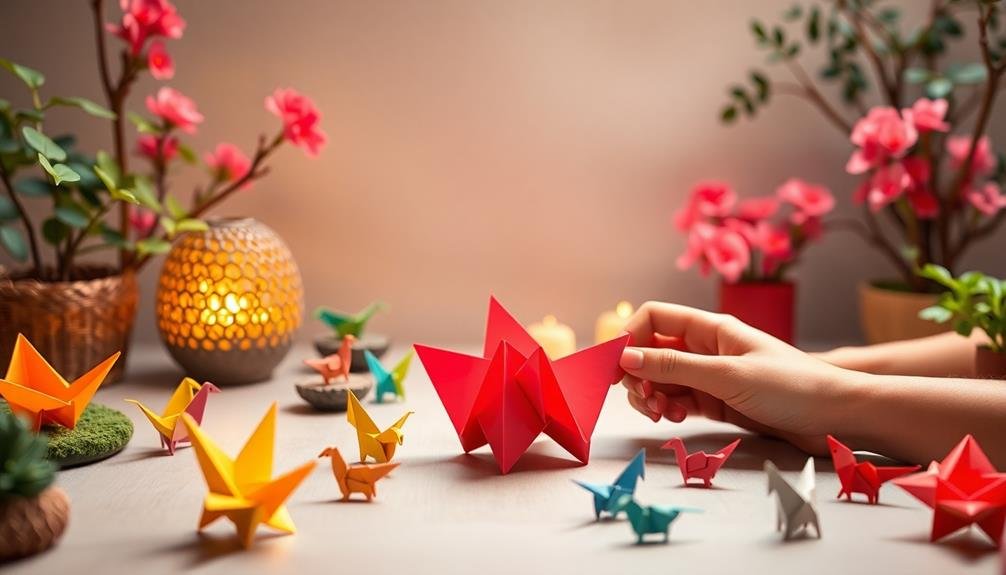
When you pick up a sheet of paper to begin folding origami, you're starting on a journey of mindfulness. This ancient Japanese art form demands your full attention, drawing you into the present moment. As you crease and fold, your mind naturally shifts away from worries and stress, focusing solely on the task at hand.
The repetitive motions of origami create a meditative state. You'll find yourself concentrating on each precise fold, the texture of the paper beneath your fingertips, and the gradual transformation of a flat sheet into a three-dimensional form. This intense focus acts as a form of active meditation, calming your mind and reducing anxiety.
Origami also cultivates patience and perseverance. Complex models may require multiple attempts, teaching you to embrace imperfection and learn from mistakes. As you progress, you'll develop a sense of accomplishment with each completed piece, boosting your self-esteem and confidence.
The mindful practice of origami can become a powerful tool in your stress-management toolkit. It's portable, requires minimal materials, and can be done anywhere, making it an accessible form of relaxation and creative expression.
Origami's Calming Repetitive Motions
Many people find solace in the repetitive motions of origami folding. As you create crisp folds and precise creases, your mind enters a state of focused calm. The rhythmic nature of folding paper engages your hands and occupies your thoughts, leaving little room for anxiety or stress to creep in.
You'll notice that each fold requires your full attention, forcing you to concentrate on the present moment. This act of mindfulness naturally pushes away worries about the future or regrets about the past. The predictable patterns in origami provide a sense of control and order, which can be particularly soothing when life feels chaotic.
As you progress through a project, you'll experience small victories with each successful fold. These moments of accomplishment release dopamine, the "feel-good" neurotransmitter, further enhancing your mood.
The repetitive actions also induce a meditative state, slowing your breathing and heart rate.
Focusing the Mind on Creation
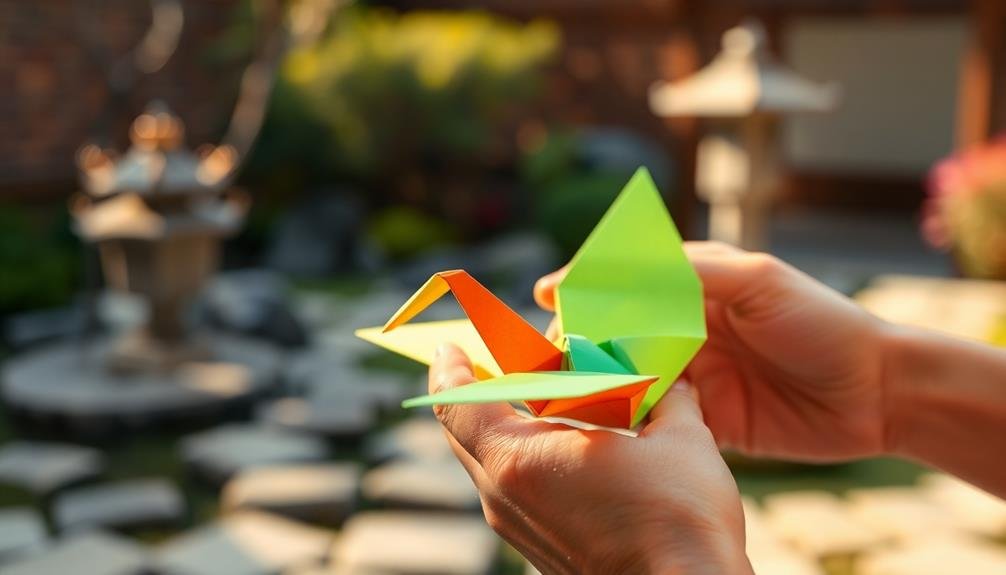
How does origami shift your mental focus? When you engage in origami, you're actively redirecting your attention from stressors to the creative process. You'll find yourself fully immersed in the task at hand, concentrating on each fold and crease. This intense focus acts as a form of mindfulness, anchoring you in the present moment.
As you work through an origami project, your mind becomes absorbed in problem-solving. You're constantly making decisions about the next step, interpreting instructions, and visualizing the final product. This cognitive engagement leaves little room for anxious thoughts or worries to intrude.
The act of creation itself is inherently rewarding. You're transforming a flat piece of paper into a three-dimensional object, watching your efforts materialize before your eyes. This tangible progress provides a sense of accomplishment and purpose, boosting your mood and self-esteem.
Moreover, origami encourages you to embrace imperfections. As you learn to accept and work with minor flaws in your creations, you're developing a more flexible, forgiving mindset that can extend to other areas of your life, further reducing stress and anxiety.
Tangible Results Boost Self-Esteem
Completing an origami project yields a tangible, physical result that you can hold in your hands. This concrete outcome provides immediate gratification and a sense of accomplishment. As you transform a flat sheet of paper into a three-dimensional object, you're creating something unique and beautiful. This process can greatly boost your self-esteem and confidence.
Each successful fold reinforces your ability to follow instructions and master new skills. As you progress from simple designs to more complex ones, you'll witness your own growth and improvement. This visible progress can be particularly empowering, especially when you're feeling stressed or anxious.
The finished origami piece serves as a reminder of your capabilities. You can display your creations, give them as gifts, or simply keep them as personal tokens of achievement. Over time, you'll build a collection that showcases your developing skills and creativity.
Moreover, the act of creating something from scratch can be deeply satisfying. In a world where many tasks feel intangible or incomplete, origami offers an invigorating sense of closure and accomplishment. This tangible success can spill over into other areas of your life, fostering a more positive self-image overall.
Portable Anxiety Management Tool
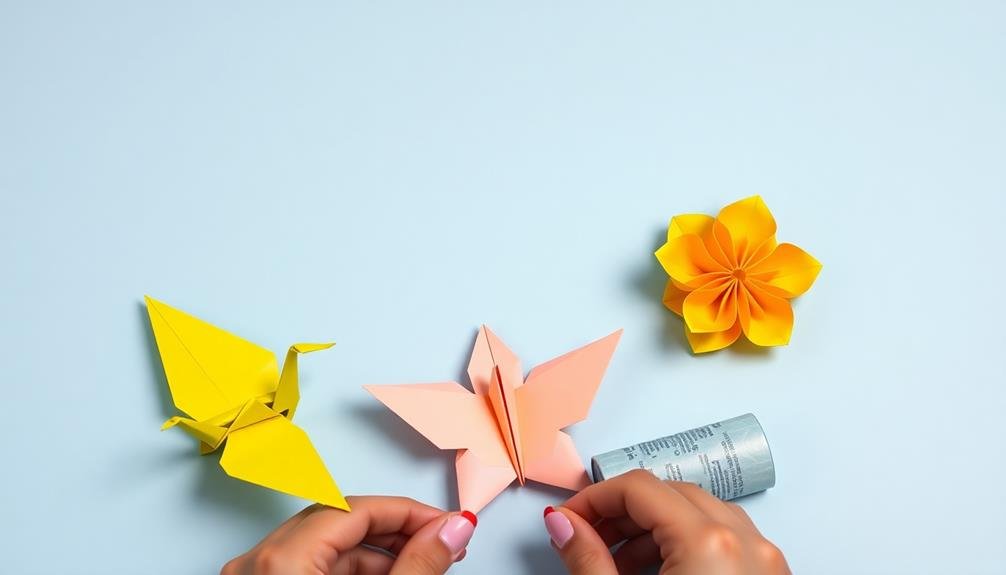
One of origami's greatest advantages as a stress-relief tool is its portability. You can carry a few sheets of paper in your pocket, bag, or wallet, ready to fold whenever anxiety strikes. This accessibility means you're never without a coping mechanism, whether you're at work, on public transport, or in a waiting room.
When you feel stress building, simply pull out a sheet and start folding. The act of creating something with your hands can quickly redirect your focus away from anxious thoughts. As you concentrate on the precise folds and creases, your mind naturally shifts into a more meditative state.
You don't need special equipment or a specific environment to practice origami. It's a silent activity that won't disturb others, making it ideal for use in public spaces.
You can even fold under your desk during a tense meeting or in a crowded train carriage.
Frequently Asked Questions
Is Origami Suitable for People With Arthritis or Limited Hand Mobility?
You can still enjoy origami with arthritis or limited hand mobility. Try larger paper, simpler designs, or adaptive tools. You'll find many accessible projects and techniques tailored to your needs. Don't let limitations stop you from exploring this art form.
Can Origami Be Therapeutic for Children With ADHD or Autism?
Yes, origami can be therapeutic for children with ADHD or autism. You'll find it helps improve focus, patience, and fine motor skills. It's a calming activity that can reduce anxiety and provide a sense of accomplishment for these children.
How Long Does It Take to See Stress-Relief Benefits From Origami?
You'll likely experience stress relief from origami almost immediately. As you focus on folding, you'll feel calmer within minutes. However, it's best to practice regularly for a few weeks to see lasting benefits in stress management.
Are There Specific Origami Designs That Are More Effective for Anxiety Relief?
You'll find that simple, repetitive designs like cranes or butterflies are particularly soothing for anxiety relief. However, any design you enjoy can be effective. It's the process of folding, not the specific model, that's most beneficial.
Can Origami Be Combined With Other Stress-Relief Techniques for Enhanced Benefits?
You can definitely combine origami with other stress-relief techniques. Try pairing it with deep breathing, mindfulness meditation, or calming music. You'll enhance the relaxation benefits and create a more immersive, anxiety-reducing experience. It's a great way to amplify your stress relief.
In Summary
You've discovered a powerful yet simple tool for managing anxiety through origami. As you fold paper into intricate shapes, you're also reshaping your mental state. You're engaging in a mindful practice that calms your nerves and focuses your thoughts. With each crease, you're creating not just art, but a sense of accomplishment. Remember, this portable stress-buster is always at your fingertips. So next time anxiety strikes, unfold your worries by folding paper.