
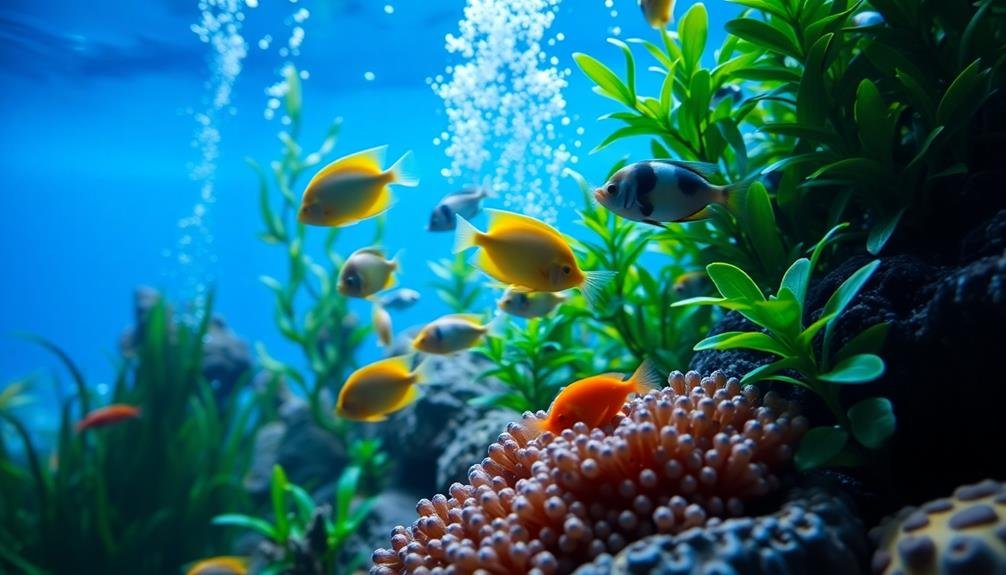
Immerse yourself in the calming world of fish breeding to alleviate anxiety. Try guppy breeding for colorful tranquility or witness the intricate bubble nest building of bettas. Experience the bond between angelfish pairs or enjoy the peaceful propagation of platies. Swordtails offer spawning serenity, while corydoras catfish provide cave breeding adventures. Meditate with rainbowfish egg scattering or observe discus parental care. Explore the seasonal spawning cycles of killifish for a natural rhythm. These projects not only soothe your mind but also connect you with the wonders of aquatic life. Dive deeper to discover the therapeutic benefits of each unique breeding experience.
Guppy Breeding: Colorful Tranquility
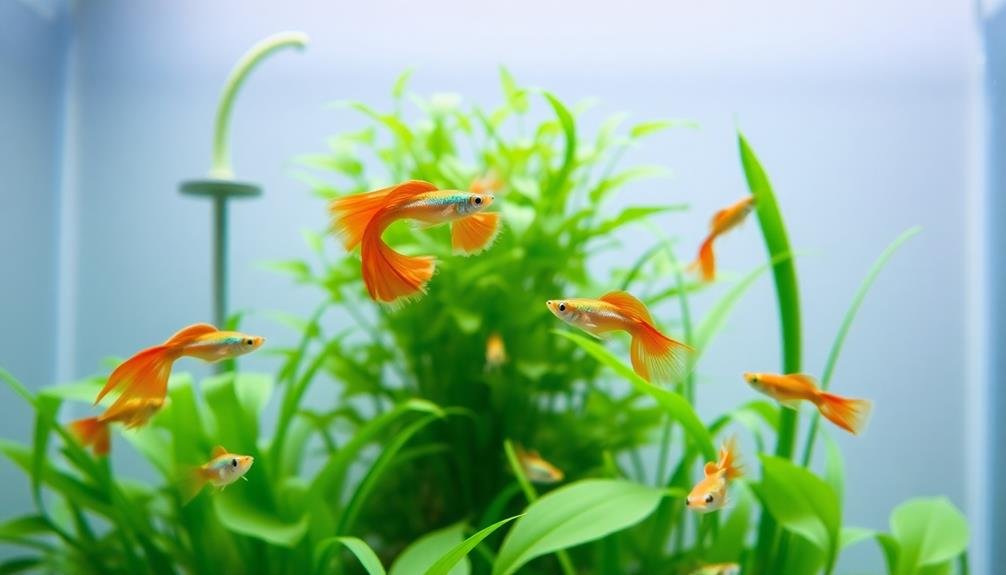
Guppy breeding enthusiasts often find solace in the vibrant world of these small, colorful fish. You'll discover that guppies are suitable for beginners, as they're hardy, easy to care for, and prolific breeders.
To start your guppy breeding project, you'll need a well-maintained aquarium with proper filtration and water parameters. Select healthy, vibrant guppies with desirable traits you'd like to propagate. You can focus on specific color patterns, fin shapes, or size.
Provide a balanced diet of high-quality flakes, live foods, and vegetable matter to guarantee peak health and breeding conditions. Guppies typically give birth every 4-6 weeks, with each female producing 20-50 fry per brood.
To protect the fry, use a breeding box or heavily planted areas in your tank. As you watch the tiny fish grow and develop their unique colors, you'll find the process both rewarding and calming.
Experiment with different color combinations and selective breeding to create your own unique guppy strains. This engaging hobby offers a perfect blend of creativity and tranquility, providing a soothing escape from daily stressors.
Betta Bubble Nest Building
The fascinating process of betta bubble nest building can be an enchanting and stress-relieving spectacle for fish enthusiasts. You'll find yourself mesmerized as your male betta fish creates intricate bubble nests at the water's surface. These nests are essential for the betta's breeding process and showcase their natural instincts.
To encourage nest building, provide your betta with a calm environment and floating plants or leaves. You'll notice the male betta gulping air and releasing tiny bubbles, carefully arranging them into a foamy structure. This behavior indicates he's ready to mate and can be triggered by changes in temperature or the presence of a female.
As you observe this delicate construction, you'll likely experience a sense of tranquility. The repetitive nature of the betta's actions can have a meditative effect, helping to reduce anxiety and promote relaxation.
You might find yourself losing track of time as you watch your fish meticulously tend to its nest, adding and rearranging bubbles. This soothing activity offers a peaceful retreat from daily stressors, allowing you to focus on the present moment and find solace in nature's simple wonders.
Angelfish Pair Bonding
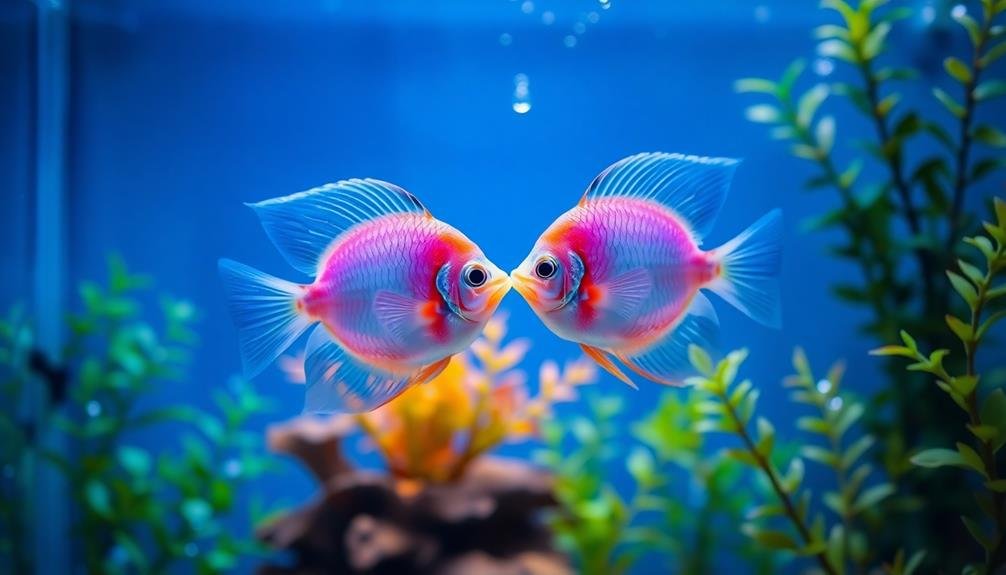
You'll find angelfish pair bonding to be a fascinating process to observe and facilitate.
Start by carefully selecting compatible pairs and creating an ideal environment with plenty of vertical space and suitable spawning surfaces.
As you watch your angelfish interact, you'll notice telltale bonding behaviors like synchronized swimming, gentle fin touching, and collaborative territory defense.
Selecting Compatible Pairs
Selecting compatible angelfish pairs is a significant step in successful breeding. You'll need to choose healthy, mature fish that are at least 6-8 months old. Look for individuals with well-developed fins, clear eyes, and smooth scales. It's best to select fish of similar size to prevent bullying or aggression.
To increase the chances of compatibility, you can introduce a group of 6-8 young angelfish and allow them to pair off naturally. This method mimics their behavior in the wild and often results in stronger bonds. As pairs form, you'll notice them swimming together, defending territory, and engaging in courtship behaviors.
If you're purchasing an established pair, observe their interactions closely. They should swim together harmoniously and display minimal aggression towards each other. It's essential to quarantine new fish before introducing them to your main tank to prevent disease transmission.
Once you've identified a compatible pair, provide them with a dedicated breeding tank. This environment should include flat surfaces for egg-laying, such as broad-leaved plants or breeding slates.
Maintain ideal water conditions and a consistent feeding schedule to encourage spawning.
Creating Ideal Environments
Creating an ideal environment for angelfish pair bonding is crucial for successful breeding. You'll need to set up a spacious tank with at least 20 gallons of water per pair. Verify the water temperature remains between 78-82°F and maintain a pH level of 6.8-7.8. Install a gentle filtration system to keep the water clean without creating strong currents.
Decorate the tank with plenty of hiding spots and vertical surfaces for egg-laying. Use broad-leaved plants, driftwood, and flat rocks to create a natural habitat. Dim lighting will help reduce stress and encourage breeding behavior.
| Element | Purpose |
|---|---|
| Plants | Shelter, egg-laying surfaces |
| Rocks | Territory markers, hiding spots |
| Caves | Safe spaces for pair bonding |
Feed your angelfish a varied diet of high-quality flakes, frozen foods, and live foods to promote health and breeding readiness. Gradually increase their food intake as they prepare to spawn.
Monitor the pair's behavior closely. You'll notice increased interactions, fin displays, and cleaning of potential spawning sites as they bond. Be patient, as it may take several weeks for the pair to establish a strong bond and begin breeding.
Observing Bonding Behaviors
Once you've set up the ideal environment for your angelfish pair, it's time to watch for signs of bonding. Observing these behaviors can be a calming and rewarding experience, offering a soothing distraction from anxiety.
Look for your angelfish swimming side by side, often with their fins touching. This synchronized movement is a strong indicator of a developing bond. You'll also notice them cleaning each other, particularly around the gills and fins. This mutual grooming strengthens their connection and helps maintain their health.
As the pair becomes more comfortable, they'll start to defend their territory together. You might see them chasing away other fish or guarding a specific area of the tank. This collaborative effort showcases their growing partnership.
During breeding season, watch for the pair selecting and cleaning a flat surface for egg-laying. They'll work together to prepare the site, often a leaf or smooth rock. The male will follow the female closely as she deposits eggs, fertilizing them immediately after.
Peaceful Platy Propagation
Among the many fish species suitable for breeding projects, platies stand out as a peaceful and rewarding choice. These colorful livebearers are easy to care for and breed readily in captivity, making them ideal for beginners and experienced aquarists alike. You'll find their gentle nature and vibrant personalities both calming and engaging.
To start your platy breeding project, set up a spacious tank with plenty of plants and hiding spots. Maintain a balanced male-to-female ratio of 1:2 or 1:3 to reduce stress on females. You'll soon notice courtship behaviors and, if successful, pregnant females with swollen bellies.
| Breeding Stage | Emotional Impact | Time Frame |
|---|---|---|
| Courtship | Excitement | 1-2 days |
| Pregnancy | Anticipation | 4-6 weeks |
| Fry Birth | Joy | 1-2 hours |
As the fry emerge, you'll experience a sense of accomplishment and wonder. Watching these tiny fish grow and develop their unique colors can be incredibly soothing. Remember to provide plenty of hiding places for the fry and feed them appropriately sized food to guarantee their survival and healthy growth.
Swordtail Spawning Serenity
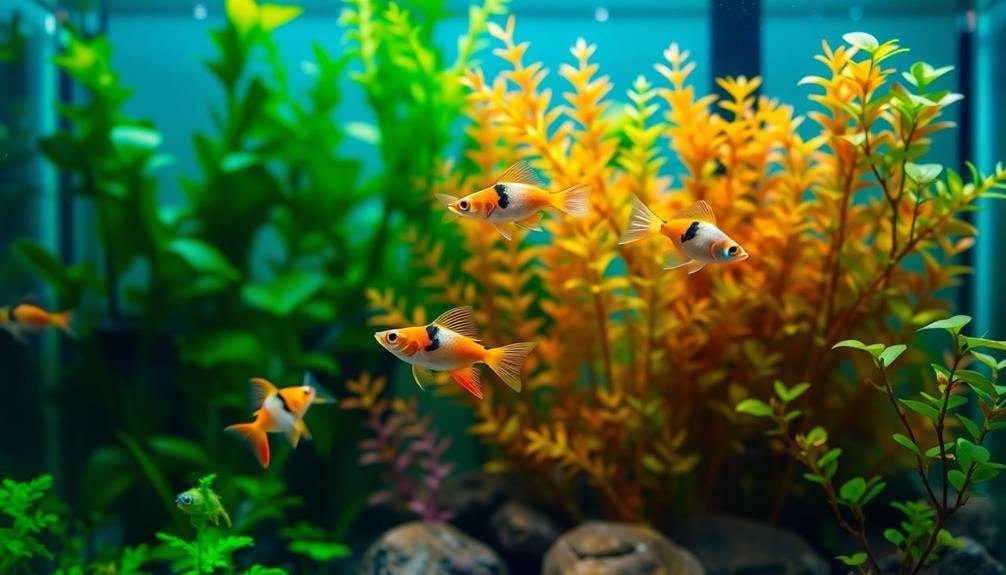
Swordtails, close cousins to platies, offer another serene breeding experience for aquarium enthusiasts. These vibrant fish are livebearers, meaning they give birth to fully-formed fry rather than laying eggs.
To breed swordtails, you'll need a spacious tank with plenty of hiding spots for the young. Start with a ratio of one male to two or three females. You'll recognize males by their distinctive sword-like tail extension.
Provide a varied diet of high-quality flakes, frozen foods, and fresh vegetables to encourage breeding. Maintain water temperatures between 72-79°F (22-26°C) and keep the water clean with regular partial changes.
When a female is ready to give birth, you'll notice her enlarged belly. You can either leave the fry in the main tank or transfer the pregnant female to a separate breeding box.
Once born, the tiny fry will need frequent feedings of specially formulated fry food or finely crushed flakes.
Watching your swordtail population grow can be a calming and rewarding experience. As you observe the gentle courtship behaviors and witness new life emerging, you'll find yourself immersed in a tranquil underwater world.
Molly Fry Nurturing
While swordtails offer a serene breeding experience, molly fry nurturing can be equally rewarding for anxiety relief. Mollies are livebearers, meaning they give birth to fully-formed young rather than laying eggs.
When you're ready to start, set up a separate breeding tank with plenty of hiding spots for the fry. You'll know your molly is pregnant when her belly swells and develops a dark "gravid spot." As the birth approaches, move her to the breeding tank.
Once she's given birth, return the mother to the main tank to avoid her eating the fry. Now, your nurturing journey begins.
Feed the tiny fry crushed flakes or specially formulated fry food several times a day. Keep the water clean with frequent partial changes, and maintain a stable temperature around 78°F.
Watch as your fry grow and develop, their unique personalities emerging. This process can be incredibly calming, providing a sense of purpose and achievement.
As the fry mature, you'll need to decide whether to keep them or find new homes. This cycle of life and growth can be a soothing distraction from anxiety, offering a peaceful focus for your mind.
Corydoras Catfish Cave Breeding
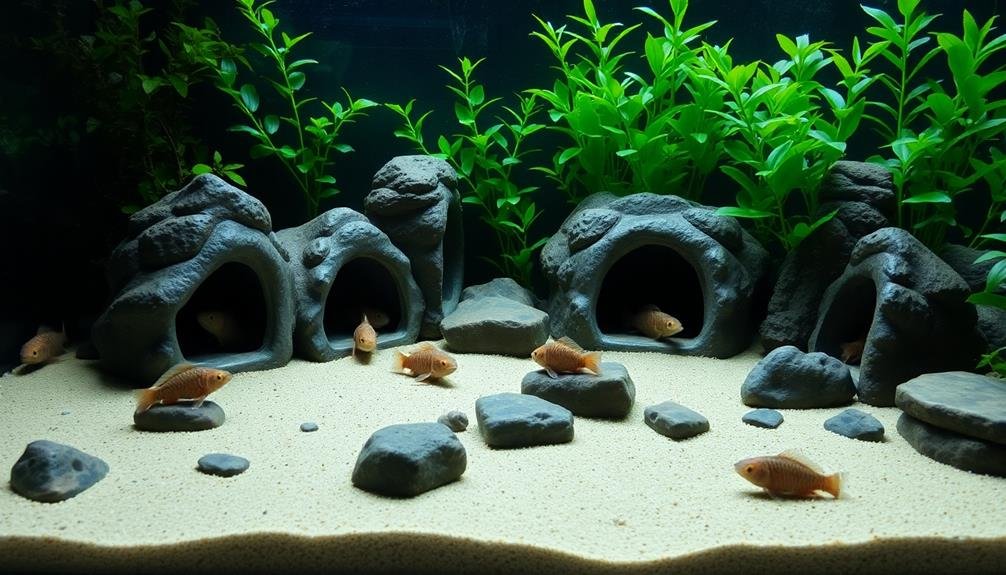
Caves and crevices play an essential role in Corydoras catfish breeding. These bottom-dwelling fish prefer secluded spots to lay their eggs, making cave-like structures vital for successful breeding. You'll need to create a comfortable environment that mimics their natural habitat to encourage spawning.
To set up a breeding tank for Corydoras catfish, include:
| Item | Purpose | Recommended Amount |
|---|---|---|
| PVC pipes | Hiding spots | 2-3 per pair |
| Ceramic caves | Egg-laying sites | 1-2 per female |
| Fine-leaved plants | Cover and oxygenation | 30% tank coverage |
| Smooth gravel | Substrate | 1-2 inches deep |
Maintain water parameters within the species' preferred range, typically slightly acidic with temperatures between 72-78°F. You'll notice increased activity and courtship behavior when conditions are right. Males will chase females, and spawning often occurs in the early morning hours. After laying eggs, remove the adults to prevent egg consumption. The eggs will hatch in 3-5 days, and you'll soon have a tank full of adorable Corydoras fry to care for.
Rainbowfish Egg Scattering Meditation
You'll find rainbowfish egg scattering to be a meditative process as you gently release the eggs into your aquarium.
The technique involves careful observation and patient waiting, allowing you to focus your mind and reduce anxiety.
As the colorful fry hatch and develop, you'll experience a sense of accomplishment and joy while watching their vibrant hues emerge.
Gentle Egg Release Technique
The Gentle Egg Release Technique, also known as Rainbowfish Egg Scattering Meditation, offers a calming and mindful approach to fish breeding. This method focuses on creating a serene environment for both you and your rainbowfish during the egg-laying process. You'll need a separate breeding tank with fine-leaved plants or spawning mops to provide a safe space for the eggs.
To practice this technique, follow these steps:
- Observe your female rainbowfish carefully, noting signs of readiness to spawn.
- Gently transfer the breeding pair to the prepared tank in the evening.
- Dim the lights and sit quietly near the tank, focusing on your breath and the fish's movements.
As you watch the fish scatter their eggs among the plants, allow yourself to become fully present in the moment. The rhythmic movements of the fish can help quiet your mind and reduce anxiety.
After the spawning is complete, carefully remove the adult fish to prevent egg predation. This process not only supports successful breeding but also provides a meditative experience that can help alleviate stress and promote a sense of calm in your daily life.
Colorful Fry Observation Benefits
After the gentle egg release process, your next rewarding experience awaits in observing the colorful fry that emerge. As you watch these tiny, vibrant creatures dart around their nursery tank, you'll find yourself captivated by their development and behavior. The rainbow of colors displayed by the fry can have a calming effect on your mind, helping to reduce anxiety and stress.
Set up a comfortable viewing area near the fry tank where you can sit quietly and observe. Focus on their graceful movements and the way light reflects off their iridescent scales. This mindful observation can serve as a form of meditation, allowing you to practice being present in the moment and letting go of worries.
As the fry grow, you'll notice changes in their size, coloration, and behavior. Keeping a journal to document these observations can be both therapeutic and educational.
You'll gain a deeper understanding of the fish life cycle while engaging in a soothing, anxiety-reducing activity. This process of nurturing and watching new life develop can provide a sense of purpose and accomplishment, further contributing to your overall well-being.
Discus Parental Care Observation
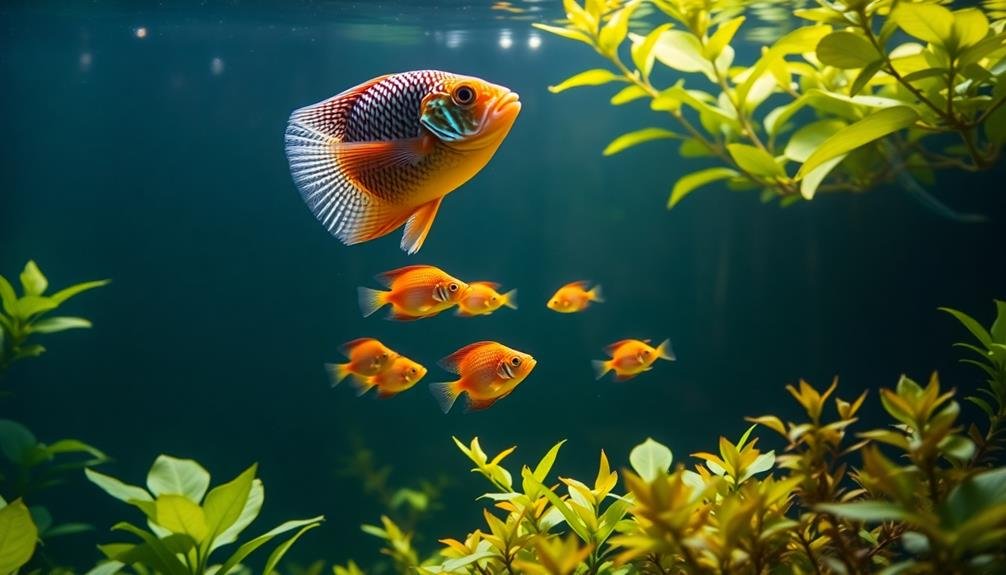
During your discus breeding project, observing parental care can be an incredibly calming experience. As these beautiful fish tend to their young, you'll witness a remarkable display of nature that can help ease anxiety and promote relaxation.
Discus parents are known for their devoted care, which includes secreting a nutritious mucus for their fry to feed on.
To fully appreciate this soothing spectacle, focus on these key aspects:
- Watch how the parents take turns guarding the eggs, fanning them with their fins to guarantee proper oxygenation.
- Observe the gentle way adult discus allow their fry to feed on their slime coat, providing essential nutrients.
- Notice how the parents protect their young from potential threats, keeping them close and secure.
As you watch this nurturing behavior unfold, you'll likely find yourself becoming more present and mindful. The rhythmic movements of the discus and their fry can create a meditative atmosphere, helping to quiet racing thoughts and reduce stress.
This unique form of fish-keeping therapy offers a natural way to unwind and reconnect with the calming aspects of aquatic life.
Killifish Seasonal Spawning Cycles
Moving from the continuous care of discus parents, we'll explore another intriguing aspect of fish breeding: killifish seasonal spawning cycles.
Killifish are known for their unique reproductive strategies, often tied to seasonal changes in their natural habitats.
You'll find that many killifish species have evolved to lay drought-resistant eggs. These eggs can survive dry periods, hatching when conditions become favorable again.
To recreate this cycle at home, you'll need to mimic the seasonal changes. Start by preparing spawning mops or peat moss as a substrate for egg collection.
During the "wet season," you'll keep the fish in well-maintained aquariums, encouraging them to spawn. Once eggs are laid, you'll remove and store them in slightly damp peat moss. This simulates the drying period, which can last weeks to months, depending on the species.
When it's time to "hatch" the eggs, you'll rehydrate them by adding water. Watch closely as the fry emerge, ready to start the cycle anew.
This process not only provides an engaging breeding project but also offers a rhythmic, calming activity that can help alleviate anxiety.
Frequently Asked Questions
How Do Fish Breeding Projects Impact Water Quality in Home Aquariums?
When you breed fish, you'll notice increased waste production and nutrient levels in your aquarium. You'll need to monitor water parameters closely, perform more frequent water changes, and upgrade filtration to maintain ideal water quality for your fish.
What Are the Ethical Considerations of Breeding Fish for Anxiety Relief?
You should consider the welfare of bred fish, potential overpopulation, and the ethics of using animals for human therapy. It's essential to guarantee proper care, avoid exploitation, and question if there are alternative anxiety relief methods.
Can Fish Breeding Projects Be Combined With Other Forms of Stress Relief?
You can definitely combine fish breeding with other stress relief methods. Try pairing it with meditation, aromatherapy, or gentle music. You'll find that these activities complement each other, creating a more relaxing and immersive experience for your overall well-being.
Are There Any Potential Allergies or Health Risks Associated With Fish Breeding?
You should be aware of potential allergies to fish proteins or mold spores. There's also a risk of zoonotic diseases from handling fish or water. Always practice good hygiene and consult a doctor if you have concerns.
How Does Fish Breeding Compare to Other Pet-Related Anxiety Relief Activities?
You'll find fish breeding uniquely calming compared to other pet activities. It's less demanding than dog walking or cat grooming. You're creating life in a serene aquatic environment, which can be more meditative and less physically taxing.
In Summary
You've explored a range of calming fish breeding projects that can help ease your anxiety. From watching guppies give birth to observing discus parents care for their young, these activities offer a peaceful escape from daily stresses. As you immerse yourself in these aquatic worlds, you'll find your worries fading away. Remember, breeding fish isn't just about reproduction; it's a therapeutic journey that can bring tranquility to your life. Plunge into and enjoy the soothing effects of these underwater adventures.