
Clay sculpting can be a powerful tool to ease anxiety, offering a range of projects to soothe your mind. You can create calming mandala tiles, craft mindful mini landscapes, or express emotions through face sculptures. For tactile stress relief, try making texture exploration balls or personalized worry stones. Shaping therapeutic animal figurines can provide comfort and emotional support. If you're looking for a meditative experience, coil pots offer a repetitive, grounding activity. These projects engage your senses, promote mindfulness, and allow for creative expression. By exploring these clay techniques, you'll discover new ways to manage anxiety and find inner calm.
Soothing Mandala Clay Tiles
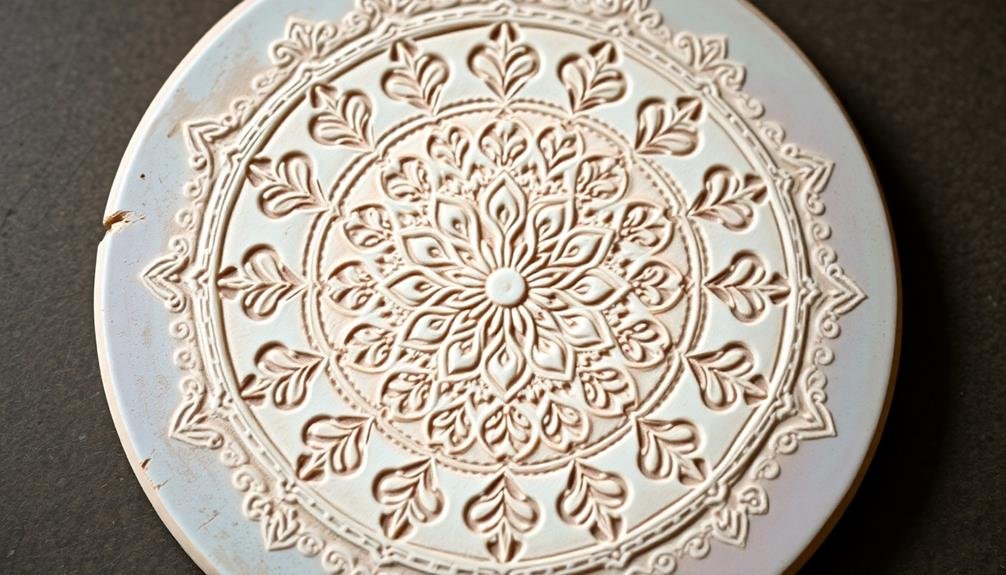
Three key elements make Soothing Mandala Clay Tiles an ideal project for both beginners and experienced sculptors. First, the repetitive nature of creating intricate patterns promotes mindfulness and relaxation.
Second, the tactile experience of working with clay grounds you in the present moment.
Third, the finished product serves as a beautiful reminder of your creative journey.
To start, roll out a circular clay slab about 1/4 inch thick. Smooth the surface with a rolling pin or your hands.
Next, use various tools like pencils, toothpicks, or clay sculpting tools to create concentric circles and radial patterns. Begin from the center and work your way outward, allowing your intuition to guide the design.
As you carve, focus on the sensations in your hands and the visual patterns emerging. Don't worry about perfection; embrace the organic nature of your creation.
Once you're satisfied with your design, let the clay dry completely. You can then paint or glaze your tile to add depth and color.
Display your finished mandala tile as a meditation aid or decorative piece, reminding you to find moments of calm in your daily life.
Mindful Mini Landscapes
Moving from intricate patterns to miniature scenes, Mindful Mini Landscapes offer a different approach to clay sculpting as a meditative practice.
You'll create small-scale natural environments using clay, focusing on the present moment and your connection to nature.
Begin by choosing a base for your landscape, like a small wooden board or ceramic plate. Select clay colors that represent elements of nature: browns for earth, blues for water, and greens for vegetation.
As you sculpt, pay attention to the texture and feel of the clay in your hands.
Start with the terrain, shaping hills, valleys, or flatlands. Add water features like rivers or lakes, then build up vegetation using small clay pieces for trees, bushes, or grass.
Include miniature details like rocks, flowers, or even tiny animals to bring your scene to life.
Throughout the process, concentrate on each element you're creating. Let your mind wander through the landscape, imagining the sounds and smells of nature.
This practice combines the calming effects of sculpting with the grounding power of nature visualization, helping to reduce anxiety and promote mindfulness.
Expressive Face Sculptures
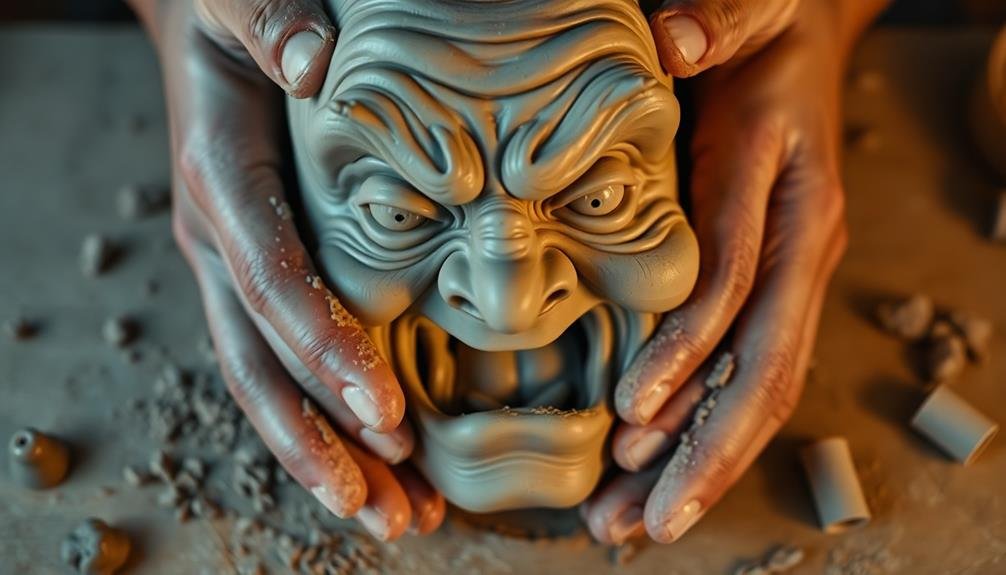
In your next clay project, focus on creating expressive face sculptures that capture raw emotions.
You'll learn to exaggerate facial features, emphasizing key elements that convey feeling and personality.
Whether you're crafting a self-portrait or an imaginary character, you'll discover how to bring clay to life through emotive expressions and intricate details.
Capturing Raw Emotions
Creating expressive face sculptures allows you to capture raw human emotions in clay. As you mold and shape the features, you'll find yourself delving into the depths of human expression.
Focus on exaggerating key facial elements to convey intense feelings like joy, anger, sorrow, or fear. Pay close attention to the eyes, eyebrows, and mouth, as these are the primary indicators of emotion.
Don't be afraid to experiment with different textures and techniques to enhance the emotional impact. You can use tools to create wrinkles, creases, or smooth surfaces that reflect the mood you're trying to convey.
Remember, it's not about creating a perfect replica of a face, but rather capturing the essence of the emotion.
To help you get started, consider these raw emotions to explore in your sculptures:
- Unbridled ecstasy
- Deep-seated anguish
- Paralyzing fear
- Uncontrollable rage
As you work, let your own emotions guide your hands. You'll find that this process not only creates powerful art but also serves as a therapeutic outlet for your own feelings.
Embrace the imperfections and allow the raw emotion to shine through your clay creation.
Exaggerating Facial Features
Exaggerating facial features is key to creating truly expressive face sculptures. When you're working on your clay project, focus on amplifying the most distinctive aspects of the face.
Start by identifying the emotions you want to convey, then exaggerate the corresponding features. For a joyful expression, sculpt an oversized smile with deep laugh lines and crinkled eyes. To portray anger, furrow the brow dramatically and create a pronounced scowl. Sadness can be emphasized through downturned lips and heavy, drooping eyelids.
Don't be afraid to stretch proportions beyond reality – that's where the true expressiveness lies. Pay special attention to the eyes, as they're often considered the windows to the soul. Experiment with different sizes, shapes, and positions to convey various emotions.
Enlarge nostrils for surprise or disgust, or elongate the chin for a contemplative look.
Self-Portrait Clay Heads
Self-portrait clay heads offer a unique opportunity to apply exaggerated facial features to your own likeness. As you sculpt, you'll explore your facial structure and expressions, gaining a deeper understanding of your appearance. This process can be both introspective and therapeutic, allowing you to confront and embrace your physical characteristics.
Start by creating a basic head shape, then gradually add details like the nose, eyes, and mouth. Don't worry about perfect realism; instead, focus on capturing your essence. Exaggerate features that stand out to you or represent aspects of your personality. This creative freedom can lead to surprising and insightful results.
Consider these elements when crafting your self-portrait:
- Emotional state: Reflect your current mood or a range of emotions
- Personal symbolism: Incorporate objects or textures that represent you
- Artistic style: Experiment with different sculpting techniques or art movements
- Time periods: Depict yourself at various ages or life stages
As you work, you'll find that the act of sculpting can be meditative and calming. The tactile nature of clay and the focus required can help ease anxious thoughts, allowing you to express yourself freely through this three-dimensional self-portrait.
Calming Texture Exploration Balls
Squeeze, roll, and explore with calming texture exploration balls, a tactile clay project that engages your senses.
Start by dividing your clay into small, palm-sized portions. Roll each piece into a smooth sphere, then begin adding various textures to the surface. Use tools like toothpicks, forks, or textured rollers to create patterns. Press small objects like buttons, beads, or pebbles into the clay for added sensory interest.
Experiment with different techniques: carve lines, make indentations, or add raised bumps. You can even embed natural materials like leaves or flower petals for unique textures.
As you work, focus on the sensations in your hands and fingers. Notice how the clay feels as you manipulate it, and how the textures change under your touch.
Once you're satisfied with your designs, let the balls air dry or bake them according to your clay type. You'll end up with a set of personalized stress balls that you can use anytime you need a moment of calm.
Keep them on your desk or in your pocket for easy access during anxious moments.
Worry Stone Creation
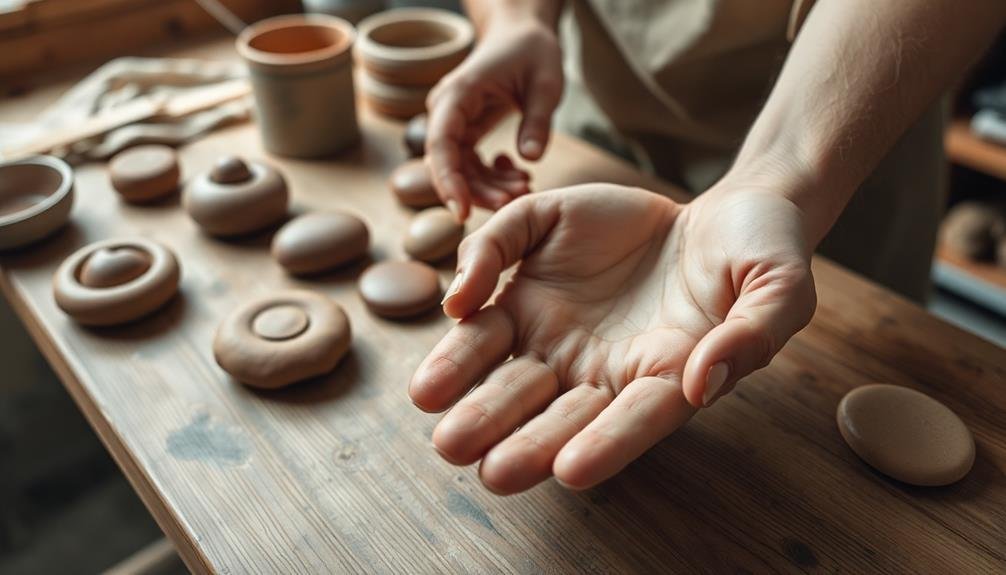
With a gentle touch, create your own worry stone—a smooth, pocket-sized clay piece designed for comfort and stress relief.
Begin by rolling a small amount of clay into a circular or oval shape, fitting comfortably in your palm. As you work, focus on the sensations of the clay, allowing your mind to quieten.
Smooth the surface with your fingers, paying attention to every curve and contour. You can add a simple indentation for your thumb to rest in, enhancing its soothing properties. Consider personalizing your worry stone with subtle textures or meaningful symbols.
Once you're satisfied with the shape, let your creation air dry or bake it according to the clay's instructions. When finished, carry your worry stone with you, using it as a tactile anchor during moments of stress or anxiety.
Benefits of creating and using a worry stone:
- Encourages mindfulness through focused crafting
- Provides a discreet, portable stress-relief tool
- Offers a personalized object for emotional comfort
- Serves as a grounding technique during anxious moments
Therapeutic Animal Figurines
Sculpting therapeutic animal figurines allows you to shape soothing companions from clay.
You'll create creatures that embody comfort and calm, serving as tangible representations of emotional support.
As you mold these animal forms, you're also expressing your own feelings and inner world through the characteristics and postures you give your clay creatures.
Shaping Calming Animal Companions
Creating calming animal companions out of clay can be a therapeutic and rewarding experience. As you mold the clay with your hands, you'll find yourself focusing on the present moment, letting go of stress and anxiety.
Choose an animal that brings you comfort, whether it's a loyal dog, a purring cat, or a gentle rabbit.
Start by forming the basic shape of your animal companion. Pay attention to the proportions and details that make the creature unique. As you work, imagine the calming presence this clay friend will bring to your space.
Add texture to fur or feathers using various tools, and don't forget to include expressive eyes that seem to offer silent support.
Here are some benefits of crafting clay animal companions:
- Promotes mindfulness and reduces stress
- Encourages creativity and self-expression
- Provides a tangible reminder of comfort
- Serves as a focus object during anxious moments
Once you've finished sculpting, allow your creation to dry completely. You can leave it natural or paint it to add personality.
Place your new clay companion in a spot where you'll see it often, serving as a constant source of comfort and calm in your daily life.
Expressing Emotions Through Creatures
Clay creatures come to life as powerful emotional mirrors when you sculpt therapeutic animal figurines. These expressive creations allow you to externalize and process complex feelings through tangible forms.
Start by identifying an emotion you'd like to explore, then choose an animal that embodies that feeling for you. As you mold the clay, focus on exaggerating features that represent your chosen emotion. For anger, you might create a snarling wolf with sharp teeth and furrowed brows. To express sadness, sculpt a drooping elephant with heavy limbs and downcast eyes. Joy could manifest as a leaping dolphin with an upturned mouth and playful curves.
Pay attention to the creature's posture, facial expressions, and overall energy as you work. Add textures and details that enhance the emotional impact, like ruffled fur for frustration or smooth, flowing lines for calm.
Don't aim for perfection; instead, let your hands intuitively shape the clay as you connect with your feelings. Once finished, your animal figurine serves as a physical representation of your emotional state, offering a tangible way to acknowledge and process your inner world.
Meditative Coil Pots
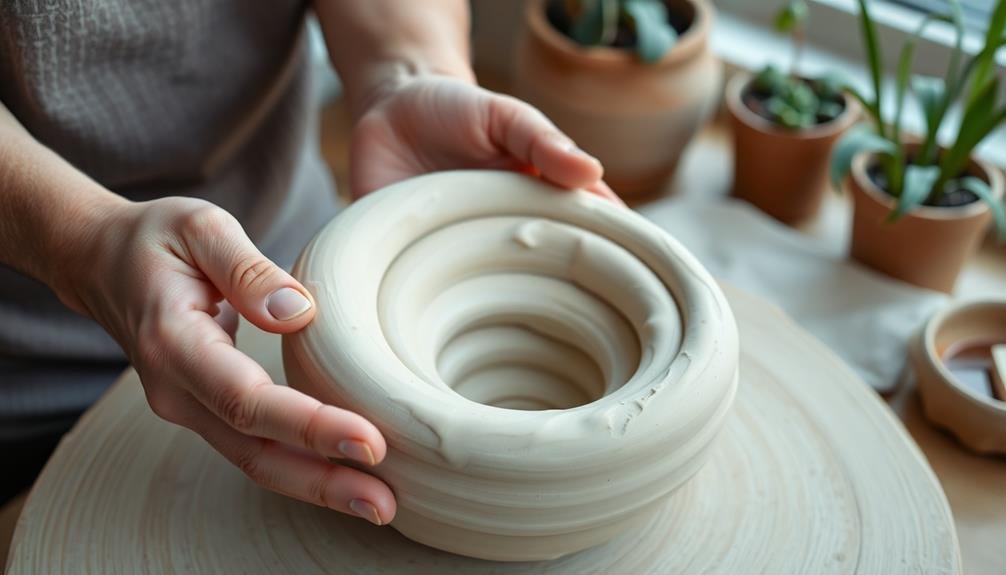
Have you ever found yourself in need of a calming, meditative activity? Creating coil pots might be just the solution you're looking for. This ancient pottery technique isn't just about crafting beautiful vessels; it's a soothing process that can help ease your anxious mind.
To begin, you'll need a ball of clay and a smooth surface. Start by rolling the clay into a long, thin coil. As you build your pot, focus on the repetitive motion of adding each coil, smoothing it into place. This rhythmic process can help quiet your thoughts and bring you into the present moment.
Here are some tips to enhance your meditative coil pot experience:
- Choose a quiet, comfortable space to work
- Play soft, ambient music in the background
- Take deep breaths as you shape each coil
- Embrace imperfections as part of the process
As you continue to build your pot, you'll likely find your mind becoming clearer and more focused. The tactile sensation of working with clay can be grounding, helping to alleviate stress and anxiety.
Frequently Asked Questions
What Clay Types Are Best for Beginners in Therapeutic Sculpting?
You'll find air-dry clay, polymer clay, and earthen clay ideal for beginners in therapeutic sculpting. They're easy to work with, forgiving, and don't require special tools. Start with these to explore your creativity and calm your mind.
How Long Does It Take to See Anxiety-Reducing Benefits From Clay Sculpting?
You'll likely notice anxiety-reducing benefits from clay sculpting within your first session. It's immediate for some, while others may need a few weeks of regular practice. Everyone's different, so be patient with yourself and enjoy the process.
Can Clay Sculpting Be Combined With Other Anxiety Management Techniques?
You can definitely combine clay sculpting with other anxiety management techniques. Try pairing it with deep breathing exercises, mindfulness meditation, or calming music. You'll enhance the relaxation benefits and create a more holistic approach to managing your anxiety.
Are There Any Risks or Precautions Associated With Therapeutic Clay Sculpting?
You should be aware of potential risks like skin irritation or allergies to clay materials. It's important to use non-toxic clay and wash your hands after sculpting. Don't ingest clay or use it near your eyes.
How Can I Incorporate Mindfulness Practices Into My Clay Sculpting Sessions?
You can incorporate mindfulness into clay sculpting by focusing on the present moment. Pay attention to the texture, temperature, and sensations as you work. Take deep breaths, observe your thoughts without judgment, and stay fully engaged in the process.
In Summary
You've now explored seven clay sculpting projects designed to ease anxious minds. Whether you've created soothing mandalas, mindful landscapes, or expressive faces, you've engaged in a tactile, grounding activity. Remember, it's not about perfection but the process. As you mold and shape the clay, you're also shaping your thoughts and emotions. Keep these projects in your self-care toolkit, and don't hesitate to return to them whenever you need a calming creative outlet.