
Clay sculpting offers a unique path to mental wellness through its tactile and creative nature. As you mold and shape clay, you'll engage in a soothing, grounding experience that promotes relaxation and mindfulness. The malleability of clay allows for endless possibilities, fostering control and creativity while releasing tension. You don't need a full studio setup; even small, daily clay sessions can provide stress relief and improve focus. Whether you're creating abstract forms to express emotions or crafting meaningful objects, clay work encourages self-expression and emotional exploration. Discover how this versatile medium can transform your mental well-being and reveal your inner artist.
The Therapeutic Benefits of Clay
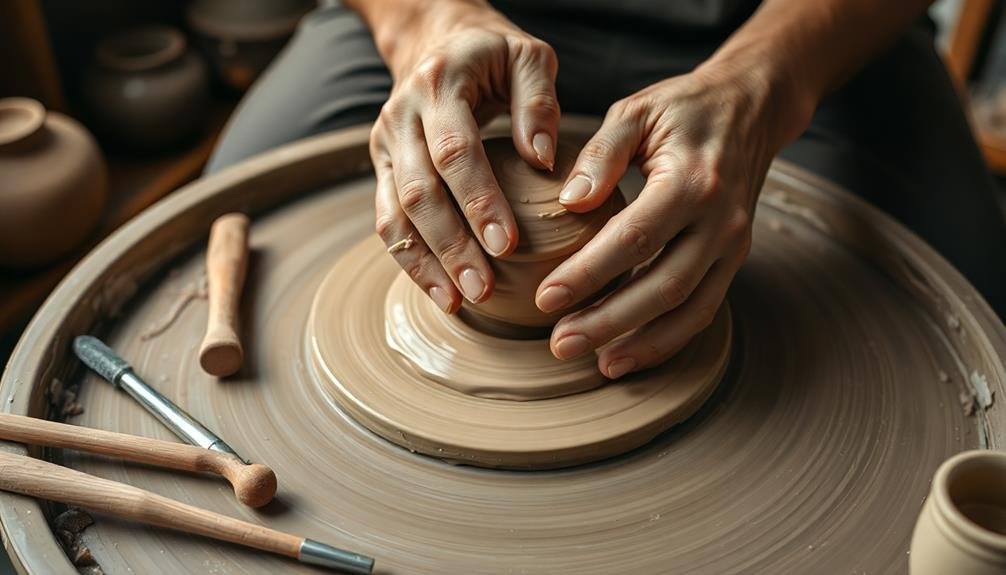
Out of all the artistic mediums, clay stands out as a uniquely therapeutic material. When you work with clay, you're engaging in a tactile experience that can be deeply soothing and grounding. The malleability of clay allows you to shape and reshape it endlessly, providing a sense of control and creativity that's particularly beneficial for managing stress and anxiety.
As you knead and mold the clay, you're not just creating art; you're also releasing tension from your body. The physical act of manipulating clay can help reduce muscle tension and promote relaxation. It's a form of kinesthetic learning that engages multiple senses, enhancing your mind-body connection.
Clay work also encourages mindfulness. As you focus on the texture and form of the clay, you're naturally drawn into the present moment, which can help quiet racing thoughts and reduce worry.
The process of clay sculpting often induces a state of flow, where you become fully immersed in the activity, losing track of time and external concerns. This meditative state can greatly improve your mental well-being and provide a much-needed respite from daily stressors.
Getting Started With Clay Sculpting
Starting on your clay sculpting journey requires just a few key items to get started.
You'll need clay, basic sculpting tools, a work surface, and a willingness to explore your creativity. Choose a clay type that suits your needs, such as air-dry clay for beginners or polymer clay for more advanced projects.
Gather essential tools like wooden modeling tools, wire cutters, and a rolling pin to shape and texture your creations.
Set up a dedicated workspace with good lighting and a sturdy table. Cover your work surface with a smooth, non-porous material to protect it and make cleanup easier.
Before diving in, take some time to familiarize yourself with basic sculpting techniques:
- Pinching: Form small shapes by pinching the clay between your thumb and fingers
- Coiling: Create long, rope-like structures by rolling clay into thin cylinders
- Slab building: Roll out flat sheets of clay and join them to form structures
- Carving: Use tools to remove clay and add intricate details to your work
Start with simple projects to build your skills and confidence.
As you progress, you'll discover your own unique style and preferred techniques.
Essential Tools and Materials
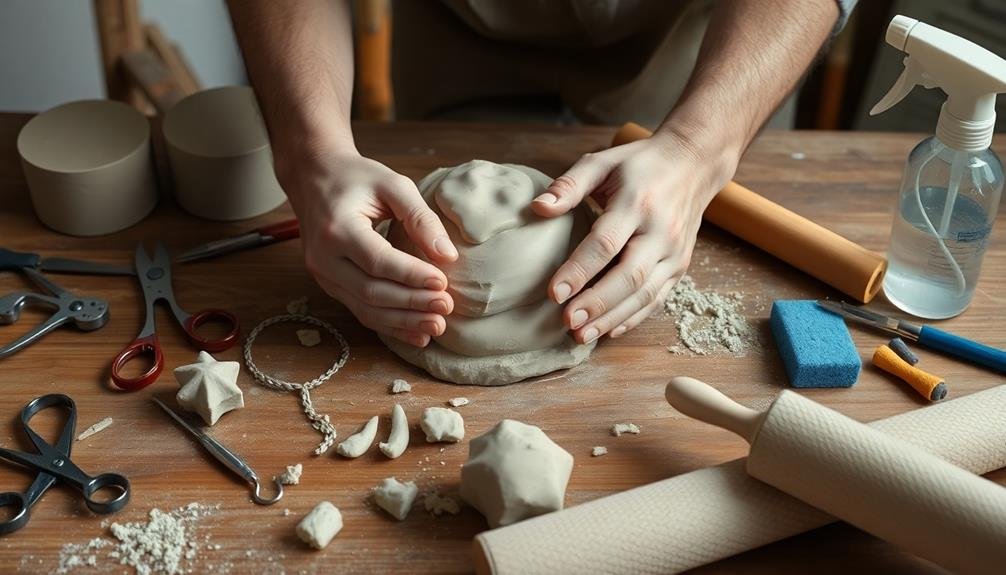
Several essential tools and materials form the foundation of any clay sculpting practice.
You'll need to start with clay, of course. Choose from options like earthenware, stoneware, or polymer clay, depending on your project and skill level. Each type has unique properties and requires different firing methods.
Next, invest in a set of sculpting tools. These include wire tools for cutting and smoothing, loop tools for carving and hollowing, and ribbon tools for creating texture.
Don't forget a rolling pin for flattening clay and a scoring tool for joining pieces together.
You'll also need a sturdy work surface, such as a wooden board or a dedicated clay mat. Keep a spray bottle handy to moisten your clay as needed.
For finishing touches, consider brushes for applying slip or glaze, and sponges for smoothing surfaces.
If you're working with air-dry or polymer clay, you might need a craft knife and sandpaper for refining your sculptures.
For kiln-fired clay, you'll eventually need access to a kiln and glazing materials.
Start with these basics, and you'll be well-equipped to begin your clay sculpting journey.
Basic Clay Sculpting Techniques
Once you've gathered your tools and materials, it's time to plunge into basic clay sculpting techniques. Start by conditioning your clay, kneading it to remove air bubbles and achieve a workable consistency. Form a basic shape using your hands or tools, then refine it with more detailed manipulations.
To create texture and depth, you'll want to master these fundamental techniques:
- Pinching: Use your thumb and fingers to thin and shape the clay, perfect for creating bowls or organic forms.
- Coiling: Roll clay into long snakes and stack them to build taller structures or vessels.
- Slab building: Roll out flat pieces of clay and join them together to form geometric shapes or architectural elements.
- Carving: Use loop tools or needle tools to remove clay and add intricate details or patterns.
Remember to keep your clay moist as you work by misting it with water or covering it with plastic when not in use.
Experiment with combining these techniques to create more complex forms. As you practice, you'll develop your own style and find which methods resonate most with your creative process and mental wellness goals.
Mindfulness Through Clay Manipulation
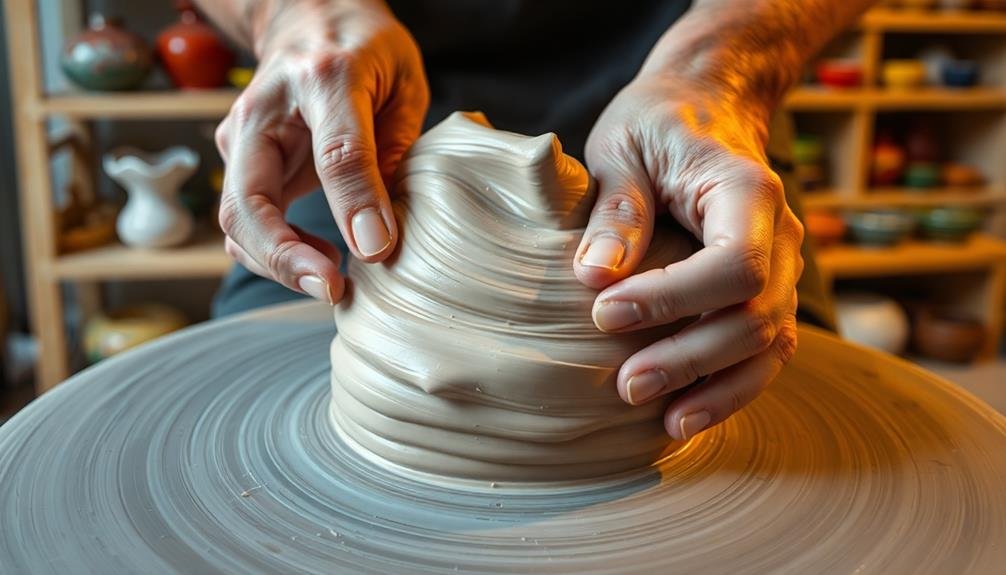
How can manipulating clay lead to mindfulness? When you work with clay, you're engaging in a tactile experience that demands your full attention. This focus on the present moment is the essence of mindfulness. As you knead, shape, and mold the clay, you'll find your mind quieting, allowing you to concentrate solely on the sensations in your hands and the form taking shape before you.
Clay manipulation offers various mindfulness benefits:
| Benefit | Description | Effect |
|---|---|---|
| Grounding | Physical connection to earth | Reduces anxiety |
| Sensory focus | Heightened awareness of touch | Improves concentration |
| Flow state | Absorption in the creative process | Relieves stress |
To practice mindfulness through clay, start by closing your eyes and feeling the texture of the clay. Notice its temperature, moisture, and malleability. As you begin to work, pay attention to the pressure of your fingers and the clay's resistance. Observe your thoughts without judgment, gently redirecting your focus to the clay whenever your mind wanders. This practice can help you develop a deeper sense of presence and calm in your daily life.
Exploring Emotions Through Sculpting
You can transform abstract emotions into tangible forms through clay sculpting.
As you mold the clay, you're giving shape to your feelings, creating a physical representation of your inner experiences.
This tactile process allows you to express emotions that might be difficult to verbalize, offering a unique outlet for self-expression and emotional processing.
Shaping Feelings Into Form
Through the act of molding clay, you can bring your innermost feelings out into the physical world. As you knead and shape the material, you're literally giving form to your emotions. This tactile process allows you to explore and express feelings that might be difficult to put into words.
Start by choosing a feeling you want to work with. It could be joy, anger, fear, or any other emotion you're experiencing. Then, let your hands guide you as you manipulate the clay. Don't worry about creating a specific object; instead, focus on translating your emotion into physical form.
To help you get started, consider these techniques:
- Use texture to represent intensity
- Experiment with size to show importance
- Play with shapes to convey complexity
- Incorporate color to reflect mood
As you sculpt, pay attention to how your body responds. You might notice tension releasing from your shoulders or a sense of calm washing over you. This physical engagement with your emotions can lead to greater self-awareness and provide a cathartic release.
Tactile Emotional Expression
Three key aspects of tactile emotional expression through clay sculpting make it a powerful tool for exploring and processing emotions.
First, the physical act of manipulating clay engages your sense of touch, creating a direct connection between your hands and your emotions. As you knead, mold, and shape the clay, you're literally giving form to your feelings, making them tangible and easier to confront.
Second, clay's malleability allows you to continuously reshape your creation, mirroring the fluid nature of emotions. You can smooth out rough edges, add layers, or completely transform your sculpture, just as you might work through complex feelings. This process helps you visualize emotional shifts and growth.
Lastly, the three-dimensional nature of clay sculptures enables you to explore emotions from multiple angles. You can turn your creation, examining it from different perspectives, which can lead to new insights about your feelings.
This multifaceted approach encourages a more thorough understanding of your emotional state, helping you to process and express feelings that might be difficult to articulate verbally.
Creating Meaningful Clay Objects
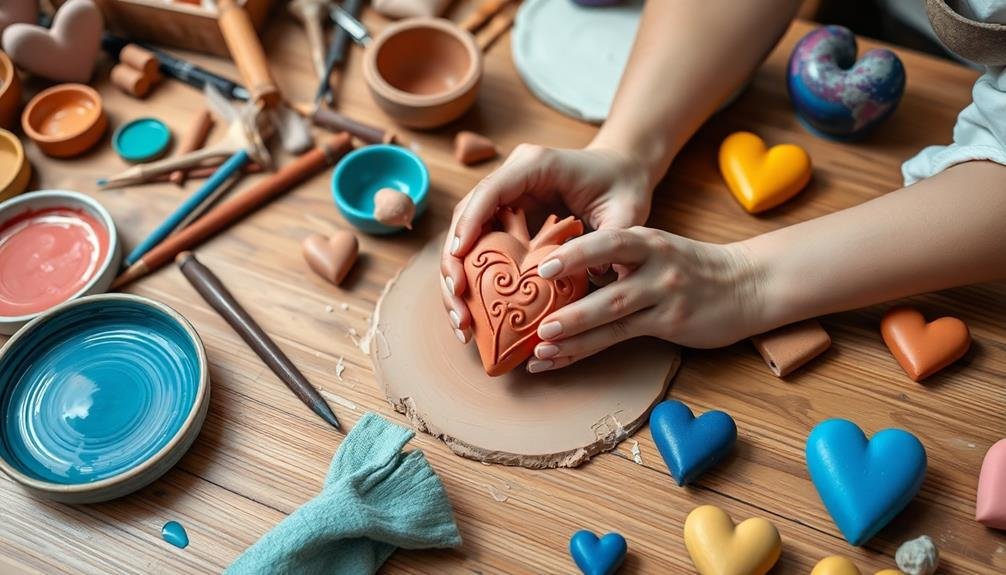
Often, the most therapeutic aspects of clay sculpting arise when you create objects that hold personal significance. By shaping clay into forms that represent your emotions, memories, or aspirations, you're engaging in a powerful form of self-expression and introspection.
This process can help you externalize internal thoughts and feelings, making them more tangible and easier to process.
When creating meaningful clay objects, consider focusing on:
- Symbols of personal growth
- Representations of cherished memories
- Manifestations of future goals
- Expressions of complex emotions
As you work with the clay, let your hands guide you intuitively. Don't worry about perfection; instead, concentrate on the emotions and thoughts you're channeling into your creation.
You might find yourself crafting a miniature representation of a childhood home, molding a figure that embodies a personal challenge you're facing, or shaping an abstract form that captures a feeling you've struggled to express in words.
Clay Sculpting as Stress Relief
While creating meaningful objects can be deeply therapeutic, clay sculpting also serves as an excellent stress-relief technique. As you work with clay, you'll find that the tactile experience engages your senses and draws your focus away from daily stressors. The act of kneading, shaping, and molding clay can be incredibly soothing, helping to release tension in your muscles and calm your mind.
You'll discover that clay sculpting offers a meditative quality, allowing you to enter a state of flow where time seems to slow down. This mindful practice encourages you to stay present in the moment, reducing anxiety about the future or rumination about the past. The rhythmic motions of working with clay can lower your heart rate and blood pressure, promoting overall relaxation.
Moreover, clay sculpting provides a healthy outlet for expressing emotions. You can channel frustration, anger, or sadness into your creations, transforming negative feelings into something tangible and potentially beautiful.
This process of emotional release through creativity can be incredibly cathartic, leaving you feeling lighter and more balanced after each sculpting session.
Group Clay Therapy Sessions
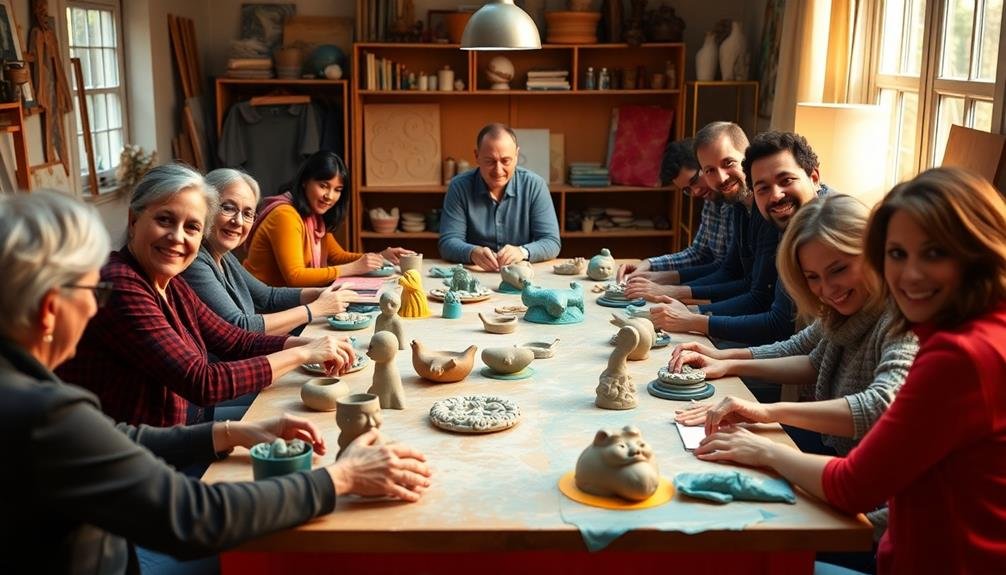
You'll find that group clay therapy sessions offer unique benefits beyond individual practice.
As you shape and mold alongside others, you're building social connections through shared artistic experiences.
These collective sessions not only foster creativity but also provide a communal avenue for stress relief, enhancing the overall impact on your mental wellness.
Social Bonding Through Art
Group clay therapy sessions provide a unique opportunity for social bonding through artistic expression. As you work alongside others, you'll find yourself naturally engaging in conversations, sharing ideas, and offering encouragement. This collaborative environment fosters a sense of community and belonging, which can be especially beneficial for those struggling with isolation or social anxiety.
Through clay sculpting, you'll discover new ways to connect with others:
- Shared experiences: Working on similar projects creates common ground for discussion and mutual understanding.
- Non-verbal communication: Observing others' techniques and expressions can lead to unspoken connections and empathy.
- Collaborative projects: Partnering on larger sculptures encourages teamwork and compromise.
- Supportive feedback: Offering and receiving constructive criticism builds trust and strengthens relationships.
As you mold and shape the clay, you're also shaping new friendships and support networks. The act of creating together breaks down barriers and allows for authentic interactions.
You'll find that the shared vulnerability of trying something new or expressing yourself through art can lead to deeper, more meaningful connections. These bonds formed through creative expression can extend beyond the therapy session, enriching your social life and overall mental well-being.
Shared Creative Experiences
Three key elements make group clay therapy sessions a powerful shared creative experience.
First, you'll find yourself in a supportive environment where everyone's working towards similar goals. This shared purpose creates an instant connection, allowing you to feel less isolated in your struggles and more open to creative expression.
Second, you'll experience the power of collective inspiration. As you observe others molding their clay, you'll gain new ideas and techniques. This cross-pollination of creativity can push you beyond your comfort zone, leading to unexpected artistic breakthroughs and personal insights.
Lastly, you'll benefit from real-time feedback and encouragement. Your peers and the therapist will offer constructive comments, helping you refine your work and boost your confidence. This immediate support system can accelerate your progress and deepen your emotional healing.
Collective Stress Relief
Collective stress relief is a powerful benefit of group clay therapy sessions. When you join others in molding clay, you're not just creating art; you're building a supportive community. As you work alongside peers, you'll find that the shared experience of manipulating clay can help reduce anxiety and tension.
In these group sessions, you'll discover that:
- Synchronized movements create a sense of unity
- Shared laughter over clay mishaps lightens the mood
- Collaborative projects foster teamwork and connection
- Observing others' techniques inspires creativity
You'll notice that as you focus on your clay, your worries fade into the background. The rhythmic kneading and shaping become a form of collective meditation, allowing everyone in the group to enter a state of flow together. This shared mindfulness experience can notably lower stress levels for all participants.
Group clay therapy also encourages open communication. As you discuss your creations and processes, you're building bonds and developing a support network. This social aspect enhances the stress-relieving benefits, creating a holistic approach to mental wellness that extends beyond the individual to the entire group.
Overcoming Perfectionism in Clay Art
While perfectionism can stifle creativity, it's particularly challenging in clay art where imperfections often add character. You might find yourself obsessing over every detail, aiming for flawless symmetry or smooth surfaces.
However, this perfectionist mindset can hinder your progress and enjoyment of the craft.
To overcome perfectionism in clay art, start by embracing the unique qualities of hand-crafted pieces. Recognize that slight irregularities and textures contribute to the authenticity of your work.
Set realistic expectations and focus on the process rather than the outcome. Allow yourself to experiment with different techniques without fear of failure.
Practice mindfulness while sculpting, paying attention to the sensations of the clay and the movements of your hands. This can help shift your focus away from critical thoughts.
Challenge yourself to create quick, spontaneous pieces without editing or refining them. Over time, you'll learn to appreciate the beauty in imperfection and develop a more relaxed approach to your craft.
Integrating Clay Work Into Daily Life
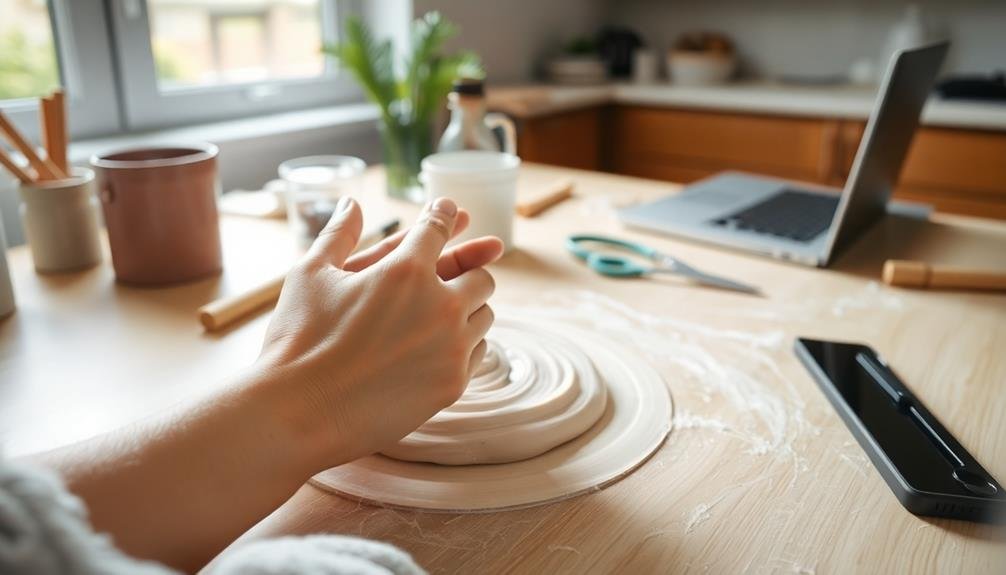
You don't need a full studio setup to enjoy the benefits of clay work daily.
Consider keeping a small lump of clay and basic tools on your desk for quick, stress-relieving sculpting sessions during breaks.
With portable clay tools, you can practice your craft anywhere, turning idle moments into opportunities for creative expression and mindfulness.
Quick Desktop Clay Sessions
Busy professionals can easily integrate clay sculpting into their daily routine with quick desktop sessions. Keep a small container of air-dry clay in your desk drawer and set aside 5-10 minutes during breaks or lunch to engage in this mindful activity.
You'll find that these short bursts of creativity can help reduce stress, improve focus, and boost your overall mood throughout the workday.
To make the most of your desktop clay sessions:
- Choose a simple project: Focus on basic shapes or small objects you can complete quickly.
- Use minimal tools: Your hands are often enough, but consider keeping a plastic knife or toothpick nearby.
- Set a timer: This helps you stay on track and avoid getting too absorbed in your creation.
- Display your work: Keep your finished pieces on your desk as a reminder of your creative moments.
Don't worry about perfection; the goal is to engage your senses and give your mind a break from work-related tasks.
As you practice regularly, you'll notice improvements in both your sculpting skills and your ability to manage workplace stress.
Clay Tools for Anywhere
Frequently, the key to incorporating clay work into your daily life lies in having the right tools readily available. You don't need an extensive collection to get started. A few essential items can transform any space into a mini clay studio.
Begin with a portable clay kit. Include a small block of air-dry clay, which doesn't require firing. Pack a set of basic sculpting tools: a wire cutter, a needle tool, and a few wooden modeling tools. Add a small spray bottle to keep your clay moist and workable. Don't forget a rolling pin or a smooth cylindrical object for flattening clay.
For surface protection, carry a plastic placemat or a small piece of canvas. These provide a clean work area and are easy to roll up and store. Include resealable plastic bags to keep unused clay fresh. Consider adding texture tools like a toothbrush, small sponge, or even natural items like leaves or shells.
With this compact kit, you're ready to sculpt anywhere. Keep it in your bag, desk drawer, or car. You'll find opportunities to engage in clay work during lunch breaks, while waiting for appointments, or even during your daily commute.
Frequently Asked Questions
Can Clay Sculpting Help With Specific Mental Health Conditions Like Depression or Anxiety?
Yes, clay sculpting can help with depression and anxiety. It's a tactile, engaging activity that promotes mindfulness and self-expression. You'll find it reduces stress, boosts mood, and provides a creative outlet for processing emotions.
Are There Any Age Restrictions for Practicing Therapeutic Clay Sculpting?
You'll find no age restrictions for therapeutic clay sculpting. It's beneficial for all ages, from children to seniors. You can start at any time, as it's a versatile activity that adapts to your skill level and needs.
How Long Does It Typically Take to See Mental Health Benefits From Clay Sculpting?
You'll likely notice some immediate stress relief when working with clay. However, consistent practice over several weeks can lead to more significant mental health benefits. Everyone's experience is unique, so be patient with your progress.
Can Clay Sculpting Be Combined With Other Forms of Art Therapy?
Yes, you can combine clay sculpting with other art therapies. You'll find it pairs well with painting, drawing, or collage. Try integrating these techniques in your sessions for a more diverse and enriching therapeutic experience.
Are There Any Risks or Side Effects Associated With Clay Sculpting Therapy?
You're unlikely to face major risks with clay sculpting therapy. However, you might experience minor issues like skin irritation or allergic reactions. Always wash your hands after sessions and inform your therapist of any sensitivities you have.
In Summary
You've now explored the world of clay sculpting and its potential for mental wellness. Remember, it's not about creating perfect art, but about the therapeutic process. Whether you're working alone or in a group, clay can be your tool for stress relief and mindfulness. Don't hesitate to get your hands dirty – embrace the tactile nature of clay and let it mold your path to better mental health. Keep sculpting, keep growing.