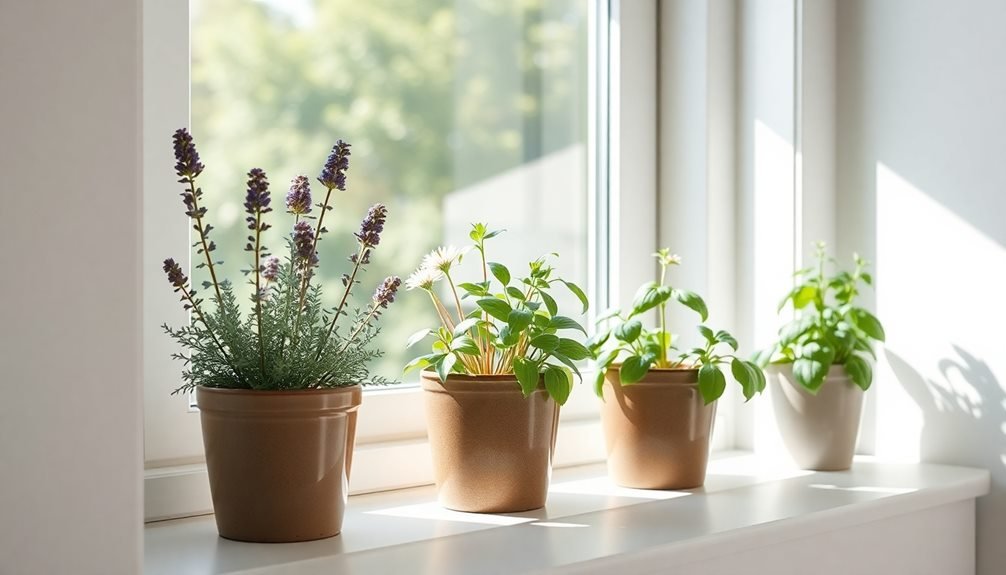
Creating an indoor herb garden can help reduce your anxiety while providing fresh, calming herbs for tea and aromatherapy. Start with stress-relieving plants like lavender, chamomile, holy basil, and lemon balm in well-draining containers near a sunny window. You'll need basic tools including quality potting soil, containers with drainage holes, and a watering can. Transform a quiet corner into your therapeutic retreat by incorporating mindful practices during daily plant care – from morning misting to evening harvesting. The simple act of tending to these fragrant plants can become a soothing ritual, and there's so much more to discover about this healing hobby.
Understanding Herbs and Mental Wellness
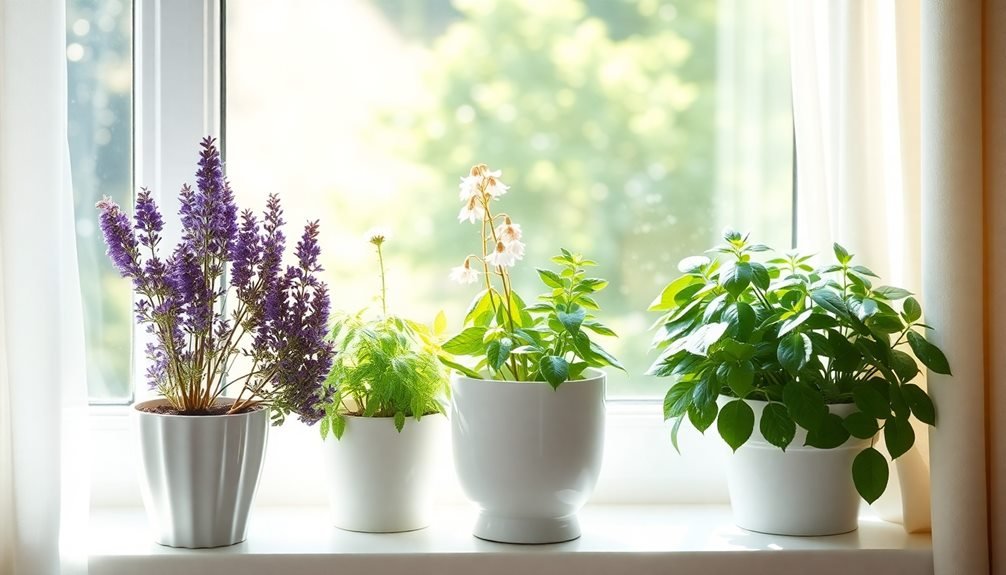
The connection between herbs and mental wellness dates back thousands of years, with traditional medicine systems recognizing certain plants' ability to calm the mind and soothe anxiety. You'll find that specific herbs like lavender, chamomile, and lemon balm contain natural compounds that interact with your brain's neurotransmitters, helping to reduce stress and promote relaxation.
When you're dealing with anxiety, your body's stress response can become overwhelming. Certain herbs work through multiple pathways to help restore balance. Basil contains adaptogenic properties that help your body manage stress, while rosemary's active compounds can improve mental clarity and reduce cortisol levels.
Mint's invigorating aroma has been shown to boost mood and reduce feelings of frustration.
Beyond their biochemical effects, the act of tending to herbs itself can be therapeutic. You're engaging in mindful activity when you care for these plants, which helps ground you in the present moment.
The sensory experience of touching, smelling, and nurturing these plants creates a connection to nature that's proven to lower anxiety levels and promote emotional well-being.
Essential Tools for Indoor Growing
You'll need just a few basic items to start your anxiety-relieving herb garden: quality potting soil, drainage-equipped containers, and basic gardening tools like a trowel and watering can.
Your containers should be at least 6 inches deep and can range from traditional clay pots to repurposed mason jars, as long as they've proper drainage holes.
Choose a lightweight, well-draining potting mix specifically formulated for herbs, avoiding heavy garden soil that can become compacted in containers.
Basic Starter Equipment Needed
Successfully starting an indoor herb garden requires just a handful of essential tools that won't break the bank.
You'll need containers with drainage holes, preferably 6-8 inches deep, and matching saucers to catch excess water. Choose a high-quality potting mix specifically formulated for herbs, as regular garden soil won't provide adequate drainage and nutrients.
A basic set of hand tools will serve you well: get a small trowel for transplanting, pruning shears for harvesting, and a watering can with a gentle spray nozzle.
You'll also need plant markers to identify different herbs and a spray bottle for misting. If your growing space lacks natural light, invest in a simple LED grow light that provides full-spectrum illumination.
Don't forget to grab a moisture meter to help you avoid over or under-watering your herbs. A basic kitchen timer can help you track watering schedules, and a small notebook will prove invaluable for recording your plants' progress.
Consider adding a humidity tray filled with pebbles if you're growing moisture-loving herbs like basil or mint.
Containers and Growing Mediums
Along with proper lighting, choosing the right containers and growing mediums forms the foundation of a thriving indoor herb garden.
You'll need containers with adequate drainage holes and saucers to catch excess water. Choose pots that are 6-8 inches deep and at least 6 inches wide to give your herbs' roots room to grow. Terra cotta pots work well because they're porous and help prevent overwatering, while plastic containers are lightweight and retain moisture longer.
For growing mediums, you'll want a well-draining potting mix specifically formulated for herbs. Standard potting soil often retains too much moisture and can lead to root rot. Look for mixes containing perlite, vermiculite, and peat moss, which provide both drainage and moisture retention.
You can also create your own mix by combining equal parts potting soil, perlite, and compost.
Don't forget to elevate your containers slightly using pot feet or small blocks, ensuring proper airflow and preventing water from pooling beneath them. This setup helps maintain ideal moisture levels and reduces the risk of fungal growth.
Best Calming Herbs to Plant
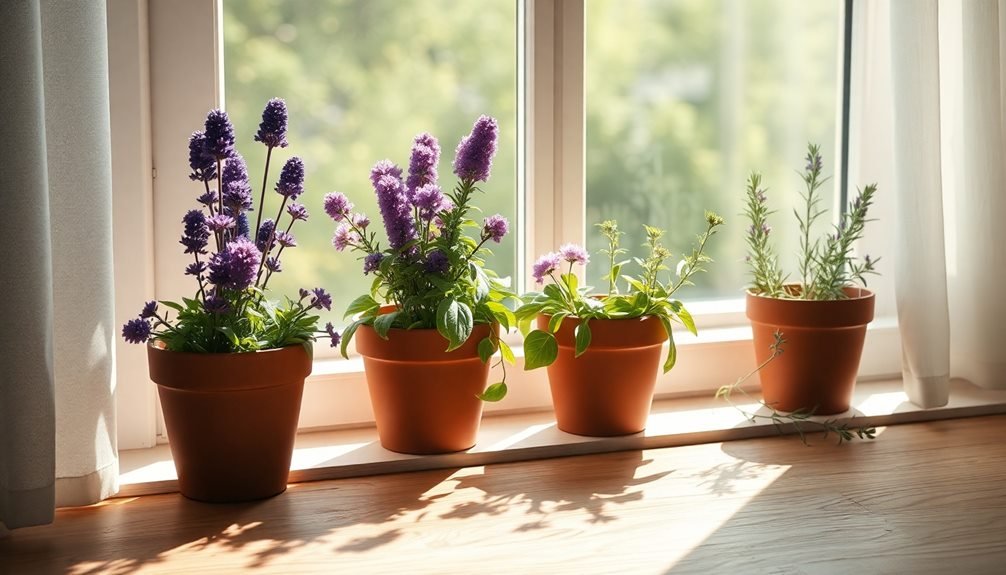
Several powerful anxiety-reducing herbs can thrive in an indoor garden, making them perfect choices for creating your own calming oasis. You'll find these herbs not only help ease stress but also add beautiful greenery and pleasant aromas to your space.
| Herb | Benefits |
|---|---|
| Lavender | Reduces stress, promotes sleep, calms nerves |
| Chamomile | Eases anxiety, aids sleep, soothes tension |
| Holy Basil | Lowers cortisol, improves mood, reduces stress |
| Lemon Balm | Calms nervousness, enhances focus, lifts spirits |
| Peppermint | Relieves tension, boosts energy, clears mind |
When selecting your calming herbs, you'll want to start with 2-3 varieties that resonate with you most. Lavender and chamomile are excellent choices for beginners, as they're relatively easy to grow and offer quick results. Holy basil requires more attention but provides powerful stress-relief benefits. If you're dealing with racing thoughts, lemon balm can help quiet your mind while providing a fresh citrus scent. For an energizing yet calming effect, peppermint's invigorating aroma can help you stay focused without feeling jittery.
Creating Your Peaceful Garden Space
To start creating your indoor herb garden sanctuary, you'll need to select a dedicated corner that feels special and protected from household traffic.
Your chosen space should receive adequate natural light and allow for proper air circulation, which are both essential for herb growth and creating a peaceful atmosphere.
Keep the area's design clean and simple with minimal decor, letting your herbs become the focal point while maintaining a sense of calm.
Choose Your Sacred Corner
Peace begins with a dedicated space, and your indoor herb garden deserves a thoughtful location that nurtures both plants and tranquility.
When selecting your garden's location, consider not just the practical needs of your herbs, but also how the space will serve your mental well-being during moments of anxiety.
Your sacred corner should align with these essential criteria:
- Natural light exposure: Choose a spot that receives 4-6 hours of sunlight daily, ideally near a south or west-facing window
- Accessibility: Position your garden where you'll interact with it daily, making it easier to maintain and appreciate
- Temperature stability: Keep your herbs away from drafts, heating vents, and air conditioning units that can stress the plants
- Privacy level: Select a location where you can tend to your garden without interruption, allowing for mindful moments
- Spatial harmony: Confirm there's enough room for both plant growth and your presence during meditation or gardening sessions
Consider creating a small seating area nearby, where you can observe your herbs while practicing breathing exercises or simply unwinding after a stressful day.
This thoughtful placement transforms your herb garden into a therapeutic retreat within your home.
Light and Air Flow
Natural elements work together harmoniously in a well-designed indoor herb garden, with light and air flow serving as the foundation for both plant health and anxiety relief.
Position your herbs in a spot that receives 4-6 hours of direct sunlight daily, typically near south or west-facing windows. If natural light isn't sufficient, supplement with full-spectrum grow lights positioned 6-12 inches above your plants.
Proper air circulation prevents mold growth and strengthens your herbs' stems, while also creating a gentle rustling that can help calm your mind.
You'll want to maintain steady airflow without causing drafts that could harm your plants. Place a small fan nearby on its lowest setting, or position your garden where it can benefit from natural air currents. Don't place herbs directly in front of heating vents or air conditioners.
Monitor your herbs' response to their environment. If leaves appear pale or stretched, they're likely seeking more light.
Yellowing leaves might indicate too much direct sun. When leaves droop or stems grow leggy, adjust your air flow.
These environmental factors don't just affect plant health—they'll influence your garden's effectiveness as a calming space.
Minimalist Design Elements
Simplicity serves as the cornerstone of a calming indoor herb garden design. When creating your anxiety-reducing herb garden, embrace minimalist principles that eliminate visual clutter and promote a sense of order.
Choose clean lines, neutral colors, and purposeful spacing between plants to create a harmonious environment that won't overwhelm your senses.
Select containers and design elements that follow these minimalist principles:
- White or earth-toned planters with simple geometric shapes
- Clear glass containers that showcase the herbs' natural beauty
- Single-material stands or shelving units without ornate details
- Matching pots in varying sizes for visual rhythm
- Natural materials like bamboo, ceramic, or brushed metal
Your herb garden shouldn't compete with your existing décor but rather complement it.
Keep maintenance tools hidden in sleek storage solutions, and limit decorative elements to essential items that serve a purpose. If you're using plant markers, opt for simple wooden or metal tags rather than colorful plastic ones.
Daily Care as Mindful Practice
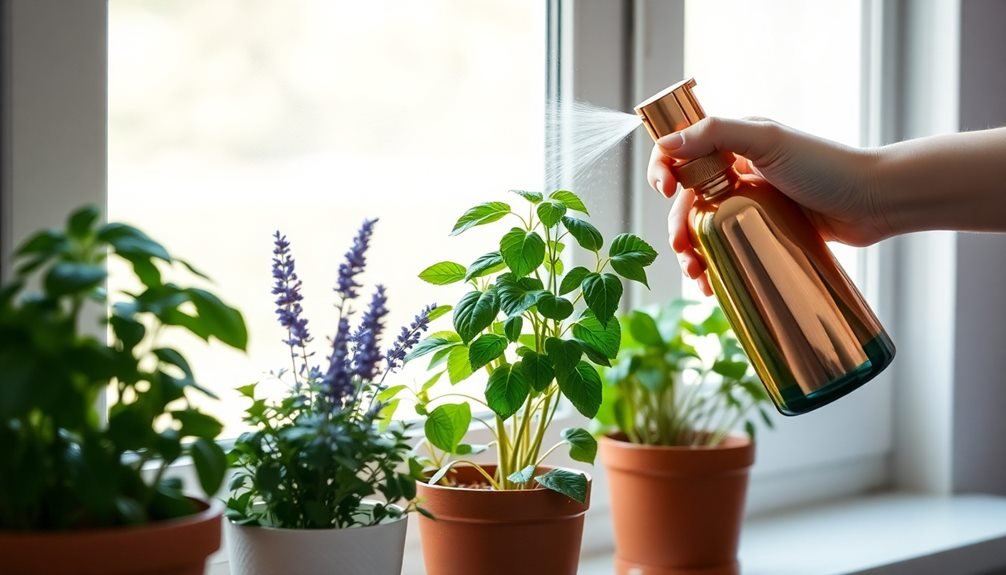
Tending to your indoor herb garden transforms routine plant care into meditative moments that can ease anxiety. Each morning, take a few mindful minutes to check your herbs, focusing solely on their needs while letting other thoughts drift away. You'll find that these small moments of plant connection can ground you during stressful days.
Create a daily care ritual that aligns with your natural rhythm. Notice how water droplets catch the morning light, breathe in the aromatic oils released when you prune basil leaves, and feel the soil's moisture between your fingers when checking for watering needs.
| Task | Mindful Focus | Anxiety Benefit |
|---|---|---|
| Watering | Water flow sound | Calming sensory input |
| Pruning | Leaf texture | Present moment awareness |
| Misting | Moisture patterns | Rhythmic breathing practice |
Turn plant maintenance into micro-meditation sessions by staying present with each task. When you're feeling overwhelmed, redirect your attention to your herbs' simple needs: light, water, and care. These living plants respond to your attention, creating a nurturing cycle that benefits both gardener and garden.
Harvesting and Using Anxiety Herbs
Beyond daily care, your indoor herb garden offers therapeutic benefits through mindful harvesting and purposeful use. When harvesting anxiety-relieving herbs, focus on the present moment and engage your senses in the process. You'll want to cut stems in the morning when the plant's essential oils are most concentrated.
Your home-grown herbs can be used in several calming ways:
- Create soothing tea blends by combining dried chamomile flowers with fresh lemon balm or mint leaves.
- Make lavender sachets for your pillow to promote restful sleep.
- Infuse fresh rosemary or sage in warm bath water for aromatherapeutic benefits.
- Blend fresh basil or oregano into olive oil for mindful cooking sessions.
- Add fresh mint or lemon balm to water for a naturally calming drink.
Store your harvested herbs properly to preserve their therapeutic properties. Hang bundles upside down in a dark, dry space for drying, or use them fresh within a week when kept in the refrigerator.
Remember to harvest no more than one-third of the plant at a time to guarantee its continued growth and your ongoing supply of anxiety-relieving herbs.
Garden Meditation Techniques
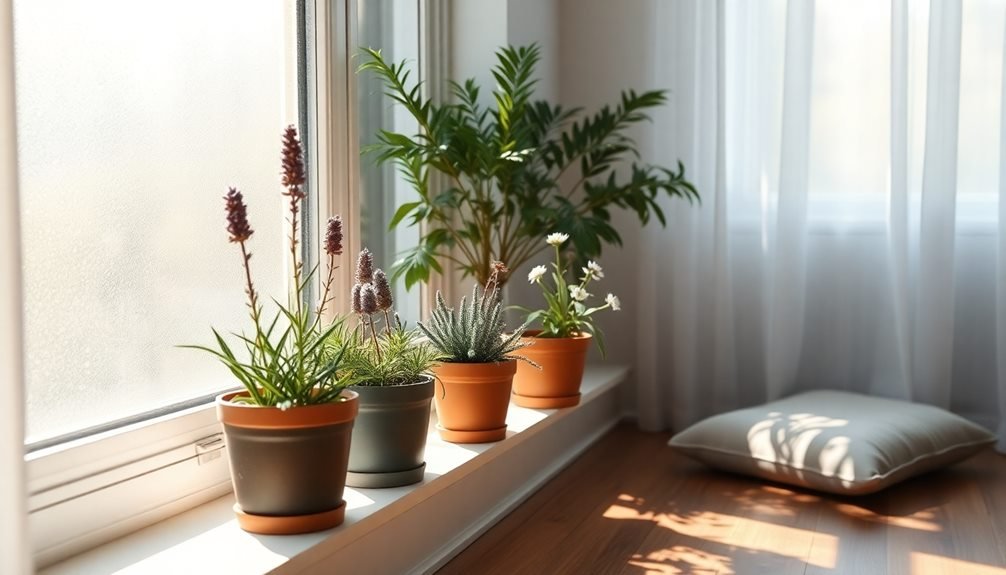
Your indoor herb garden serves as a perfect sanctuary for meditation practice, offering a mindful escape from daily stressors. By incorporating simple meditation techniques while tending to your herbs, you'll deepen both your connection to the plants and your sense of calm.
Begin with mindful observation: sit comfortably near your garden and focus on one plant at a time. Notice the texture of leaves, the subtle movements, and the unique characteristics of each herb. As you maintain your garden, transform routine tasks into meditation opportunities.
| Activity | Meditation Focus | Benefit |
|---|---|---|
| Watering | Water flow and soil absorption | Promotes presence and patience |
| Pruning | Precise, intentional movements | Develops focus and control |
| Misting | Water droplets and plant response | Enhances sensory awareness |
| Harvesting | Gratitude for plant's gifts | Builds appreciation and connection |
Practice deep breathing while working with your herbs – inhale their calming scents and exhale tension. You'll find that even five minutes of garden meditation can reset your nervous system and reduce anxiety levels. Make it a daily ritual, preferably in the morning or evening when you're less likely to be interrupted.
Frequently Asked Questions
Can Indoor Herb Gardens Attract Unwanted Pests Into My Living Space?
Yes, your indoor herbs can attract pests like aphids, spider mites, and fungus gnats. But you'll prevent most issues by monitoring plants, maintaining good airflow, avoiding overwatering, and using well-draining soil.
How Do I Prevent My Cats From Eating or Damaging Anxiety-Relieving Herbs?
You'll need to keep cats away by placing herbs in hanging baskets, using bitter apple spray, creating physical barriers, or dedicating a separate room. You can also grow cat-safe alternatives like catnip in a different area.
Will Growing Multiple Calming Herbs Together Affect Their Individual Properties?
You can safely grow calming herbs together – they won't lose their individual properties. Just guarantee they have similar growing requirements for water and sunlight, and you'll get the full benefits from each plant.
Do Herbs for Anxiety Lose Potency When Grown Under Artificial Light?
You won't lose significant potency when growing anxiety-relieving herbs under proper artificial lights. Just guarantee they receive full-spectrum LED lighting for 12-16 hours daily to maintain their therapeutic properties and essential oils.
Can Anxiety-Relieving Herbs Interact With Prescription Medications for Mental Health?
You'll need to talk with your doctor before using anxiety-relieving herbs with prescriptions, as they can interact dangerously with medications. Some herbs may reduce or increase your medication's effectiveness.
In Summary
You'll find that growing an indoor herb garden isn't just about cultivating plants – it's about nurturing your own peace of mind. As you tend to your calming herbs daily, you're creating a mindful sanctuary that supports both mental wellness and natural healing. Let this green space become your retreat when anxiety strikes, and remember that like your garden, inner peace grows stronger with patient, consistent care.