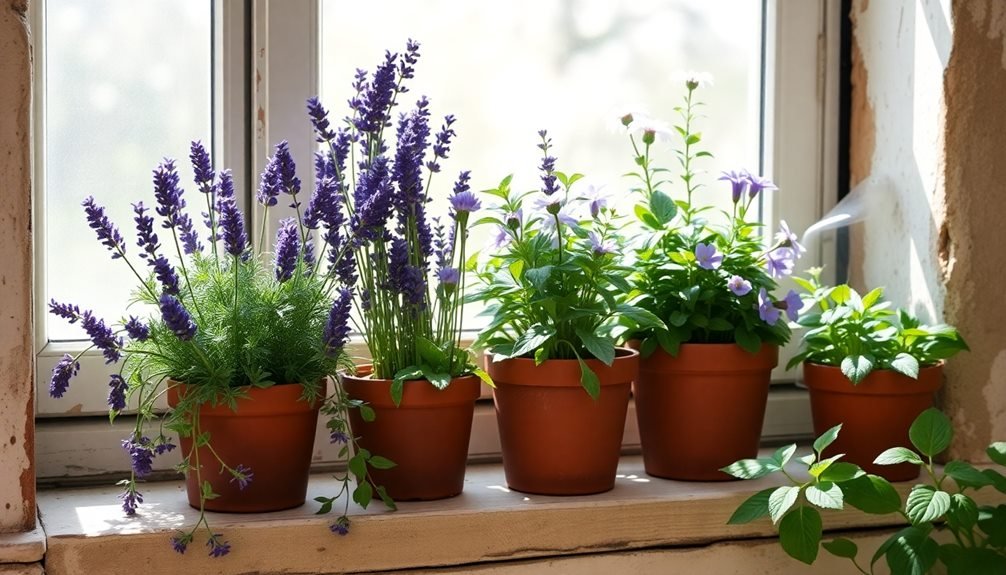
Create your own natural stress-relief station by growing these five calming herbs on your windowsill. Lavender's soothing fragrance thrives in sunny spots, while chamomile provides gentle flowers perfect for relaxing teas. Lemon balm offers a bright, citrusy aroma that can lift your spirits, and holy basil (Tulsi) delivers both spiritual and physical comfort with its spicy-sweet scent. Don't forget peppermint, which grows vigorously and provides an instant pick-me-up when you need it. You'll only need basic supplies, well-draining soil, and some sunshine to start your journey toward homegrown tranquility.
Soothing Lavender for Your Windowsill
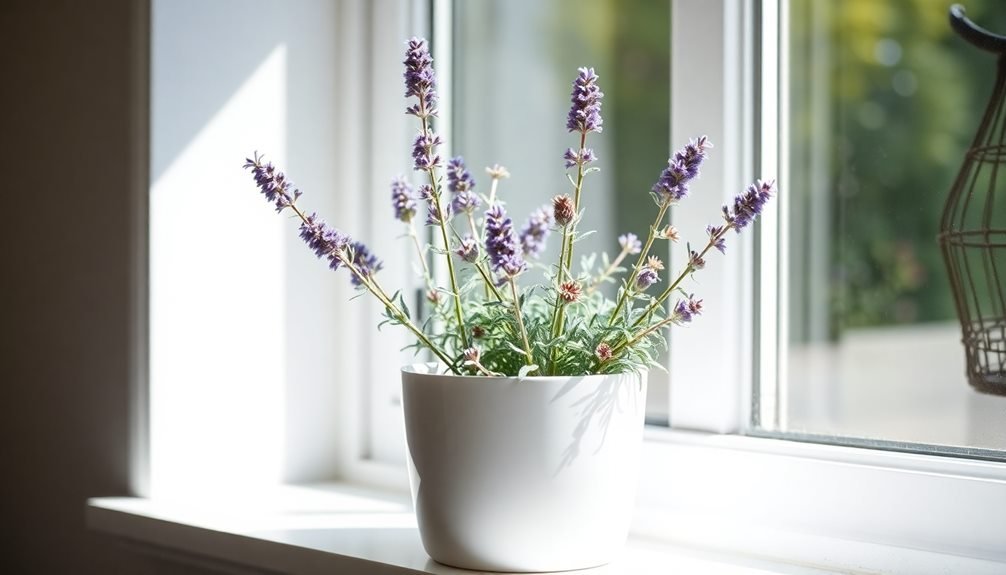
Tranquility finds a natural home in lavender, making it an ideal choice for indoor stress relief. This Mediterranean herb thrives on sunny windowsills and rewards you with calming purple blooms and a signature fragrance that's proven to reduce anxiety levels.
You'll need well-draining soil, a pot with drainage holes, and at least six hours of direct sunlight daily to succeed with indoor lavender.
Start with English lavender (Lavandula angustifolia), as it's the most adaptable to indoor conditions. Plant it in a terracotta pot using a mix of regular potting soil and coarse sand for maximum drainage.
Don't overwater – let the top inch of soil dry between waterings to prevent root rot. You'll know you're doing it right when the plant develops silvery-green foliage and compact growth.
Harvest lavender sprigs just as the buds begin to open for the strongest fragrance. Place fresh stems in a small vase by your desk, or dry them to make sachets for your pillowcase.
Regular pruning encourages bushier growth and more blooms, so don't hesitate to snip stems for your stress-relief routine.
Growing Chamomile at Home
Serenity flows from a cup of homegrown chamomile tea, and you'll find this gentle herb surprisingly easy to grow indoors. Your indoor chamomile garden starts with choosing between German or Roman varieties – both offer calming properties, though German chamomile typically yields more flowers.
| Growing Phase | Light Needs | Care Requirements |
|---|---|---|
| Seedling | Bright, indirect | Mist daily |
| Early Growth | 6 hours direct | Water when top soil dries |
| Flowering | Full sun | Fertilize monthly |
| Harvesting | Morning sun | Pick flowers when fully open |
You'll want to plant your chamomile seeds in well-draining potting soil, keeping them about 1/4 inch deep. Once your plants reach 6 inches tall, pinch back the tops to encourage bushier growth. Look for flowers to appear within 6-8 weeks after planting. When harvesting, pick the flowers in the morning when they're fully open but before they start to droop. You'll know they're ready for tea when the petals are horizontal and the center is domed. Dry your harvest on a screen in a warm, dark place for about a week before storing.
Fresh Lemon Balm
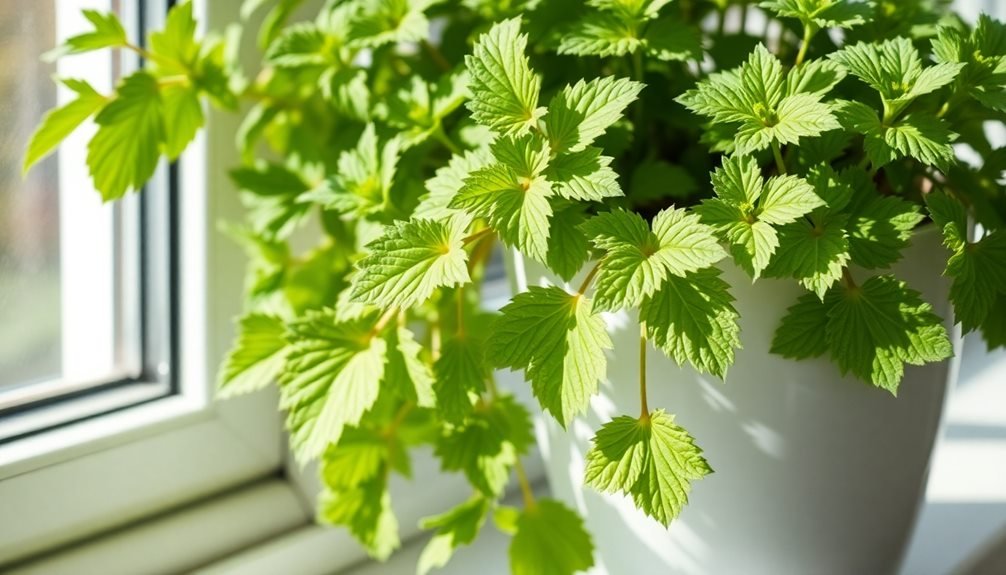
Another calming herb that deserves a place beside your chamomile is lemon balm, known scientifically as Melissa officinalis. This invigorating herb produces a gentle lemony scent that can help reduce anxiety and promote better sleep.
You'll find it's one of the easiest herbs to grow indoors, as it adapts well to container gardening and doesn't require extensive care. To grow lemon balm successfully, place your pot in a spot that receives partial sunlight, and keep the soil consistently moist but not waterlogged. The plant thrives in average room temperatures between 65-70°F (18-21°C).
You'll know you're doing things right when you notice these key signs of a healthy plant:
- Bright green, wrinkled leaves with serrated edges
- Strong citrus fragrance when leaves are touched
- Bushy, compact growth pattern
- Vigorous stem development
Harvest the leaves regularly to encourage bushier growth and prevent the plant from becoming leggy. You can use fresh leaves to make calming teas, add them to salads, or simply crush them between your fingers when you need an aromatic pick-me-up during stressful moments.
Sweet Holy Basil Basics
Sacred in many cultures and revered for its stress-relieving properties, Holy Basil (Ocimum sanctum) stands out as one of the most powerful aromatic herbs you can grow indoors.
Also known as Tulsi, this adaptogenic herb helps your body manage stress while providing a spicy, clove-like scent that'll instantly calm your senses.
You'll find Holy Basil surprisingly easy to grow in a sunny windowsill. Plant it in well-draining potting soil and water when the top inch feels dry.
It thrives in temperatures between 65-80°F (18-27°C), making it perfect for your home environment. The plant needs at least six hours of direct sunlight daily, though you can supplement with grow lights during darker months.
To harvest, pinch off the top leaves regularly to encourage bushier growth. You can use fresh leaves for tea, or dry them for later use.
When brewing tea, steep 2-3 leaves in hot water for 5 minutes. Don't worry if your plant flowers – the blossoms are edible and make beautiful garnishes.
With proper care, your Holy Basil plant will provide stress relief and aromatic benefits for months to come.
Calming Peppermint Care Tips
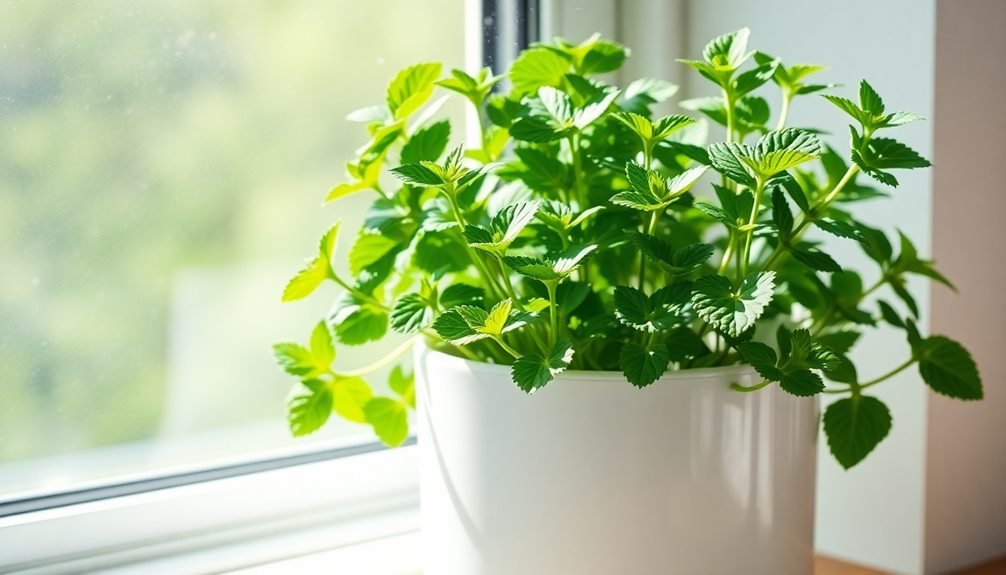
Peppermint's cooling aroma offers instant stress relief while being one of the most vigorous herbs you can grow indoors.
You'll need to manage its aggressive growth by planting it in a separate container, as it can quickly overtake other herbs through its spreading roots. Choose a pot that's at least 12 inches deep with good drainage holes.
Your peppermint will thrive in bright, indirect sunlight and prefers temperatures between 65-70°F. Keep the soil consistently moist but not waterlogged, and mist the leaves occasionally to maintain humidity.
You'll notice the most robust growth and strongest aromatic oils when you provide these ideal conditions.
Key care requirements for healthy peppermint:
- Prune regularly to prevent legginess and encourage bushier growth
- Fertilize lightly every 4-6 weeks with balanced, water-soluble fertilizer
- Harvest leaves before flowering for the best flavor and medicinal properties
- Replace plants every 2-3 years to maintain vigor and prevent woody stems
If you notice yellowing leaves, you're likely overwatering.
Reduce watering frequency and guarantee good air circulation to prevent fungal issues.
When harvesting, cut stems close to the base to promote fresh growth.
Frequently Asked Questions
Can Indoor Stress-Relieving Herbs Interact With Prescription Medications?
Yes, herbs can interact with your prescription medications, so you'll need to check with your doctor before using any herbs medicinally. Even common herbs like St. John's Wort can affect your medications' effectiveness.
How Long Do Dried Stress-Relieving Herbs Retain Their Calming Properties?
Your dried calming herbs will generally keep their soothing properties for 6-12 months when properly stored in airtight containers away from light and moisture. You'll notice they're losing potency if their scent weakens.
Which Stress-Relieving Herbs Are Safe for Homes With Cats?
You'll want to stick with German chamomile, catnip, and lemon balm – they're safe for cats. Skip lavender, valerian, and rosemary since they're toxic. Always place herbs where your feline friends can't reach them.
Do Stress-Relieving Herbs Work Better Fresh or in Tea Form?
You'll get benefits from both fresh and dried herbs, but fresh herbs contain higher levels of active compounds. For stress relief, you can enjoy them either way – try fresh in cooking or steeped as tea.
Can Indoor Herbs Release Too Much Fragrance and Cause Headaches?
You won't need to worry about indoor herbs causing headaches, as they release mild fragrances. If you're sensitive to scents, just keep plants further from your workspace or bedroom areas.
In Summary
You'll find these five herbs bring both beauty and tranquility to your indoor space while requiring minimal effort to maintain. Whether you're seeking better sleep with lavender, digestive comfort from peppermint, or anxiety relief from holy basil, these plants work double duty as natural remedies and attractive home decor. Start with just one or try all five – you're only a few seeds away from growing your own stress-relief garden.