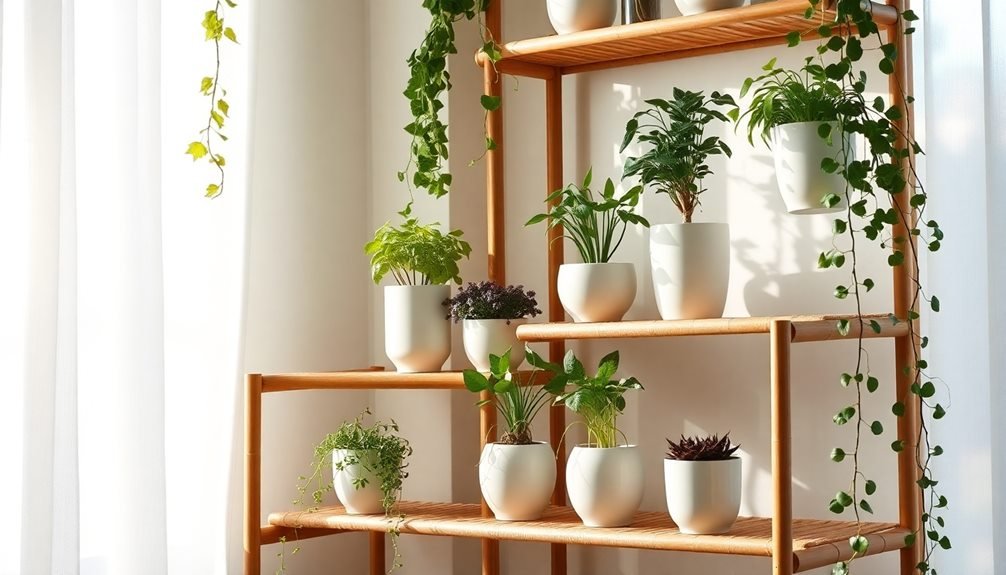
To create a serene indoor herb garden, you'll want to focus on strategic layouts that combine form and function. Consider vertical arrangements like tiered shelves or living walls to maximize space while maintaining visual harmony. Sacred geometry patterns, such as circular layouts or Fibonacci spirals, can foster a sense of balance and tranquility. Place aromatic herbs in specific zones based on their scent properties – calming lavender near rest areas and invigorating mint in workspaces. Adding small water features among your herbs enhances the peaceful atmosphere through gentle sounds and increased humidity. The deeper you explore these design principles, the more your indoor sanctuary will flourish.
Vertical Arrangements for Small Spaces
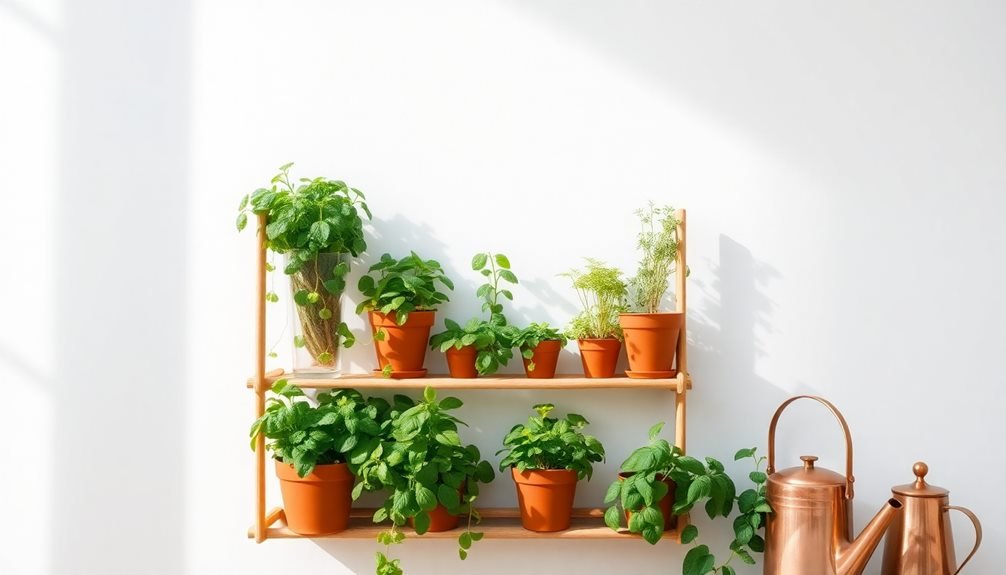
Three key vertical arrangements transform tiny spaces into thriving indoor herb gardens.
The tiered shelf system maximizes natural light exposure by positioning herbs at different heights, with sun-loving plants like basil and oregano on top shelves and shade-tolerant mint and parsley below.
You'll need to secure the shelves to your wall and guarantee they're within arm's reach for easy maintenance.
A living wall grid system creates a stunning focal point while saving floor space.
You'll attach small containers to a metal grid using hooks or brackets, allowing you to grow up to 12 different herbs in a 3×4 foot area.
This setup works best near a south-facing window where herbs receive adequate light throughout the day.
Hanging mason jar planters offer a space-efficient solution for growing compact herbs like thyme and chives.
You'll mount wooden boards to your wall, attach pipe clamps, and secure the jars within them.
Be sure to drill drainage holes in the jar lids and place small stones at the bottom for proper water flow.
This arrangement lets you grow six to eight herbs while adding rustic charm to your indoor space.
Sacred Geometry Garden Patterns
Sacred geometry brings ancient wisdom to your indoor herb garden through purposeful patterns that promote harmony and growth.
You'll find balance in circular layouts where herbs radiate from a center point, while Fibonacci spiral arrangements let you position plants in nature's perfect sequence.
Triangular growing grids offer an efficient use of space and create visual intrigue as your herbs reach different heights within the geometric framework.
Circle Gardens Create Balance
Throughout history, circular garden designs have embodied nature's perfect balance and harmony. When you create a circular herb garden indoors, you're tapping into this ancient wisdom while establishing a focal point that draws the eye naturally to your plants.
You'll want to position taller herbs like sage and rosemary in the center of your circle, then work outward with progressively shorter plants. This creates a mandala-like effect where each ring complements the others. Place creeping herbs like thyme and oregano along the outer edge to soften the circle's boundary.
A circular design lets you access your herbs from all angles, making maintenance and harvesting easier. You can divide your circle into pie-shaped sections, with each wedge dedicated to different herb families or uses. For example, dedicate one section to culinary herbs, another to medicinal plants, and a third to aromatic varieties.
To enhance the circle's calming effect, use odd numbers of plants in each ring and maintain proportional spacing.
You'll find that this balanced arrangement not only looks aesthetically pleasing but also creates an efficient growing space that maximizes your indoor garden's potential.
Fibonacci Spiral Plant Placement
Nature's elegant mathematics comes alive in the Fibonacci spiral garden layout, where each curve follows the divine proportions found in nautilus shells and unfurling ferns.
You'll create a compelling visual flow by arranging your herbs in an outward-spiraling pattern that mirrors these sacred ratios. This layout isn't just aesthetically pleasing – it's also practical for maximizing your growing space while maintaining easy access to each plant.
To create your Fibonacci spiral herb garden, follow these key steps:
- Place your tallest herbs like rosemary or sage at the spiral's center, where they'll serve as an anchor point.
- Position medium-height plants like basil and oregano along the spiral's middle curves.
- Arrange low-growing herbs such as thyme and creeping varieties near the outer edges.
- Space plants according to the golden ratio (1:1.618) as you move outward.
You'll find this arrangement naturally draws your eye inward, creating a meditative focal point in your indoor space.
The spiral pattern also promotes efficient airflow between plants, reducing the risk of fungal issues while making harvesting more intuitive.
Triangular Growing Grid Designs
Triangular growing grids tap into the fundamental strength and stability of three-sided shapes, offering an elegant way to maximize your indoor herb garden's potential. By arranging herbs in equilateral triangular patterns, you'll create efficient use of space while establishing visual harmony that promotes tranquility.
Start with a base triangle of three anchor plants, typically placing taller herbs like sage, rosemary, or basil at each point. You'll want to position shorter herbs like thyme, oregano, or chives in the spaces between these focal points, forming smaller triangles within the larger framework. This tiered approach guarantees proper light distribution and airflow while making maintenance more manageable.
To implement this design, measure equal distances between each plant, typically 8-12 inches apart depending on mature plant size. You can expand the pattern outward by adding new triangular formations, creating a honeycomb-like structure that's both practical and visually appealing.
Using raised platforms or multi-level containers enhances the dimensional aspect, allowing you to create depth within your indoor garden space while maintaining the sacred geometric principles that inspire serenity.
Aromatic Herb Placement
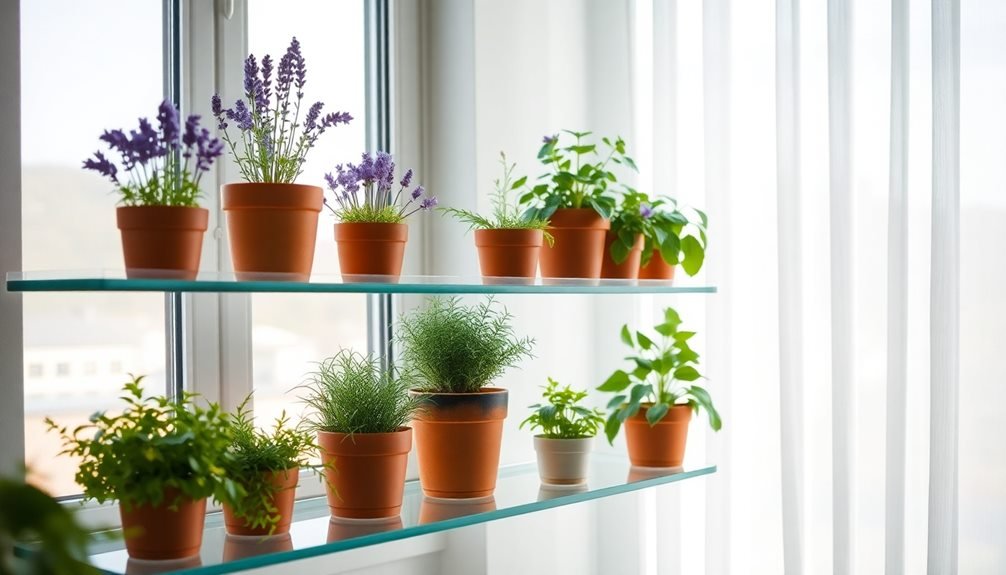
You'll want to arrange your indoor herbs in graduated heights, placing taller varieties like rosemary and sage toward the back while keeping compact herbs like thyme and oregano in front for a natural, flowing aesthetic.
Creating distinct scent zones throughout your home lets you match herbs to each room's purpose – lavender and chamomile for bedrooms, while mint and basil work well in kitchen areas.
Layered Height For Flow
Creating layers of varied heights in your indoor herb garden maximizes both visual appeal and aromatherapy benefits. By arranging herbs in ascending heights, you'll create a natural flow that draws the eye upward while guaranteeing each plant receives adequate light and air circulation.
Start your layered design with these height-based groupings:
- Ground level (0-6 inches): Place creeping thyme, chamomile, and low-growing mint varieties on the lowest tier, using shallow containers or herb wheels.
- Mid-level (7-12 inches): Position parsley, cilantro, and sage in medium-height pots, creating a shifting layer that bridges your design.
- Tall layer (13-24 inches): Grow rosemary, lavender, and dill in deeper containers, allowing their natural height to create visual interest.
- Vertical accent (24+ inches): Train climbing herbs like nasturtiums or tall basil varieties using trellises or wall-mounted planters.
Consider using tiered shelving, hanging baskets, or window boxes at different levels to achieve this layered effect.
You'll want to rotate your containers periodically to guarantee even growth and prevent plants from reaching too far toward light sources.
Scent Zones By Room
Strategic placement of aromatic herbs throughout your home can transform each room into a distinct sensory experience. You'll want to match each herb's therapeutic properties with your daily activities and the room's purpose. Consider how different scents can enhance your mood and productivity as you move through your space.
| Room | Recommended Herbs | Benefits |
|---|---|---|
| Kitchen | Basil, Thyme, Rosemary | Stimulates appetite, improves focus |
| Bedroom | Lavender, Chamomile, Lemon Balm | Promotes relaxation, better sleep |
| Home Office | Peppermint, Sage, Lemongrass | Enhances concentration, mental clarity |
| Bathroom | Eucalyptus, Tea Tree, Mint | Natural air freshening, antimicrobial |
Place stronger scents like rosemary and sage in larger rooms where they won't overwhelm the space. You'll find that mint and citrus herbs work best in areas where you need to stay alert, while calming herbs like lavender are perfect for relaxation zones. Position your containers near natural light sources, but be mindful of drafts that can carry scents between rooms. Remember to rotate your herbs periodically to guarantee even growth and maintain their aromatic impact.
Water Features Among Herbs
Among the calming elements of an indoor herb garden, a well-placed water feature can transform your growing space into a tranquil retreat.
You'll find that combining flowing water with aromatic herbs creates a multi-sensory experience that enhances your indoor sanctuary. The gentle sound of trickling water helps mask urban noise while maintaining ideal humidity levels for your herbs.
When incorporating water features among your herbs, you'll want to take into account these placement strategies:
- Position tabletop fountains near moisture-loving herbs like mint, watercress, and parsley to create a naturally humid microclimate.
- Install wall-mounted water features behind climbing herbs such as nasturtiums or trailing thyme for a living water wall effect.
- Place small bubble fountains in corners where Mediterranean herbs grow, allowing the water's movement to circulate their essential oils.
- Set up tiered water features that can double as herb planters, with different levels supporting various herb varieties.
Remember to choose water features with adjustable flow rates, as you don't want water splashing directly onto herb foliage, which could lead to fungal issues.
The key is creating harmony between your herbs and water elements while maintaining proper growing conditions.
Mindful Growing Zones
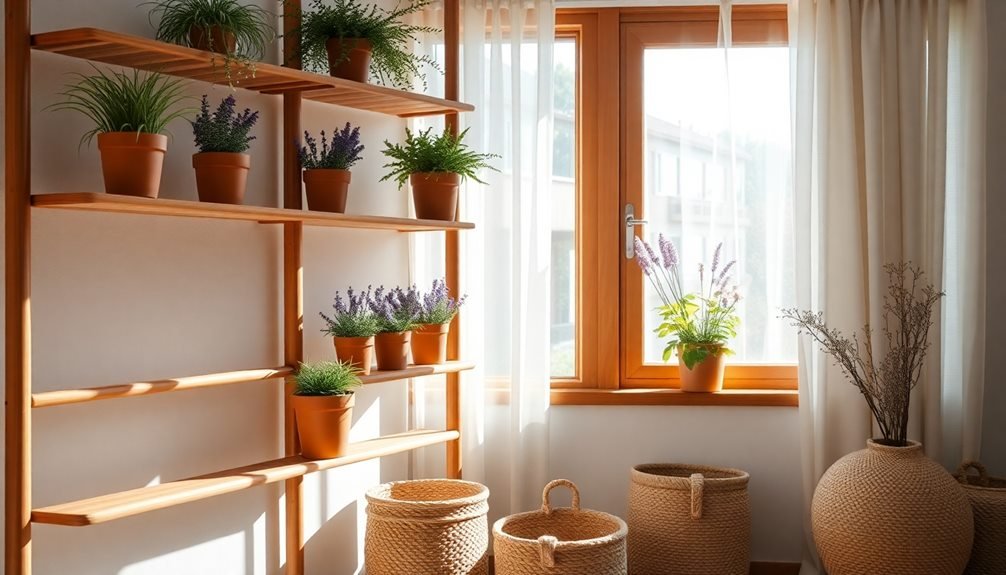
In harmony with your indoor space, mindful growing zones help you organize herbs based on their care requirements and your daily routines.
Create distinct areas that align with your herbs' light, water, and temperature needs while considering how you'll interact with them throughout the day.
Position moisture-loving herbs like mint, parsley, and basil in your kitchen's humidity zone, where you'll naturally tend to them while cooking.
Place Mediterranean herbs such as rosemary, thyme, and sage in sunny windowsills where they'll thrive in drier conditions.
You'll want to establish a meditation zone with calming lavender and chamomile near your reading nook or yoga space.
Consider vertical zones too – stack herbs according to height, with shorter varieties like creeping thyme at eye level and taller ones like dill toward the back.
Don't forget to group herbs with similar watering schedules together to streamline your care routine.
If you're working with limited space, use wall-mounted planters or hanging baskets to maximize your growing zones while maintaining easy access for harvesting and maintenance.
Natural Light Flow Design
Light patterns throughout your home serve as a natural blueprint for positioning herbs successfully. By observing how sunlight moves across your living spaces, you'll discover ideal spots for different herb varieties. South-facing windows provide the strongest light intensity, while east-facing locations offer gentle morning rays perfect for tender herbs.
To maximize natural light flow in your indoor herb garden:
- Place sun-loving herbs like basil, sage, and rosemary within 6 inches of south-facing windows, using tiered stands to prevent taller plants from shading shorter ones.
- Position moisture-loving herbs like mint and parsley near east-facing windows where they'll receive softer light and maintain consistent soil moisture.
- Install adjustable shelving that lets you modify heights as seasons change and sun angles shift throughout the year.
- Use reflective surfaces or light-colored walls behind your herbs to bounce light back onto the plants, especially in corners or areas with limited direct sunlight.
When your herbs aren't getting enough light, they'll tell you through leggy growth or pale leaves. You can supplement natural light with grow lights during darker months, positioning them to mimic the sun's natural path.
Frequently Asked Questions
How Often Should Indoor Herb Gardens Be Fertilized for Optimal Growth?
You'll want to fertilize your indoor herbs every 2-4 weeks during growing season with diluted liquid fertilizer. Scale back to monthly feedings in winter when growth slows. Don't overfeed or you'll harm them.
Which Herbs Repel Common Indoor Pests Naturally?
You'll find basil, lavender, rosemary, and mint effectively repel flies and mosquitoes indoors. Place pungent herbs like catnip and lemongrass near windows, while sage and thyme help deter moths and spiders.
Can Indoor Herb Gardens Affect Household Humidity Levels?
Yes, your indoor herb garden can increase room humidity through plant transpiration. You'll notice higher moisture levels especially around basil, mint, and oregano. Consider this benefit when placing herbs in dry rooms.
What Containers Prevent Herb Roots From Becoming Waterlogged?
You'll prevent waterlogged herb roots by using containers with drainage holes, terracotta pots, or self-watering planters. Add a layer of gravel at the bottom and choose well-draining potting soil for best results.
How Do Electromagnetic Fields From Appliances Impact Indoor Herb Growth?
You'll find most household electromagnetic fields don't noticeably affect herbs' growth. However, keep your plants away from microwaves and large appliances that generate heat, as these can dry out soil and stress plants.
In Summary
You'll find your indoor herb garden becomes a sanctuary when you thoughtfully combine these design elements. Position your vertical gardens to maximize natural light, arrange herbs in sacred geometric patterns, and let aromatic plants guide your senses. Add a small water feature for gentle ambient sound. By creating mindful growing zones and maintaining proper spacing, you're cultivating not just herbs, but a serene living space.