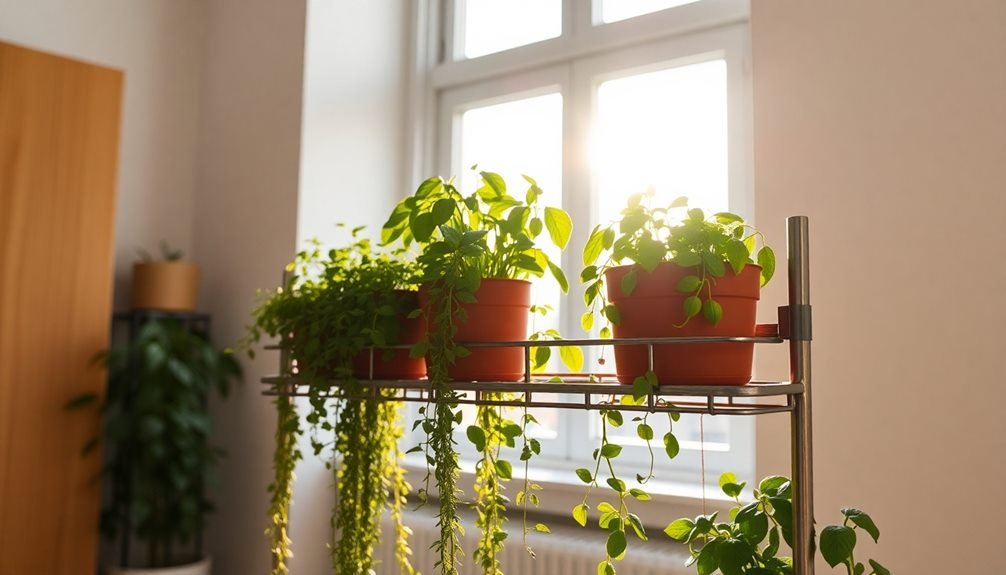
Growing vertical herbs in your cozy apartment maximizes limited space while giving you fresh ingredients at your fingertips. You'll produce 3-4 times more plants than traditional container gardens, as a simple 2×4-foot vertical setup can house 12-15 thriving herbs. Beyond saving space, tending to your vertical garden reduces stress and promotes mindfulness through daily care rituals. Your apartment's air quality improves, and the living wall adds a stunning aesthetic element to any room. Plus, you'll save money on groceries while enjoying the therapeutic benefits of bringing nature indoors. Let's explore how to create your own vertical herb oasis.
Space-Saving Benefits of Vertical Gardens
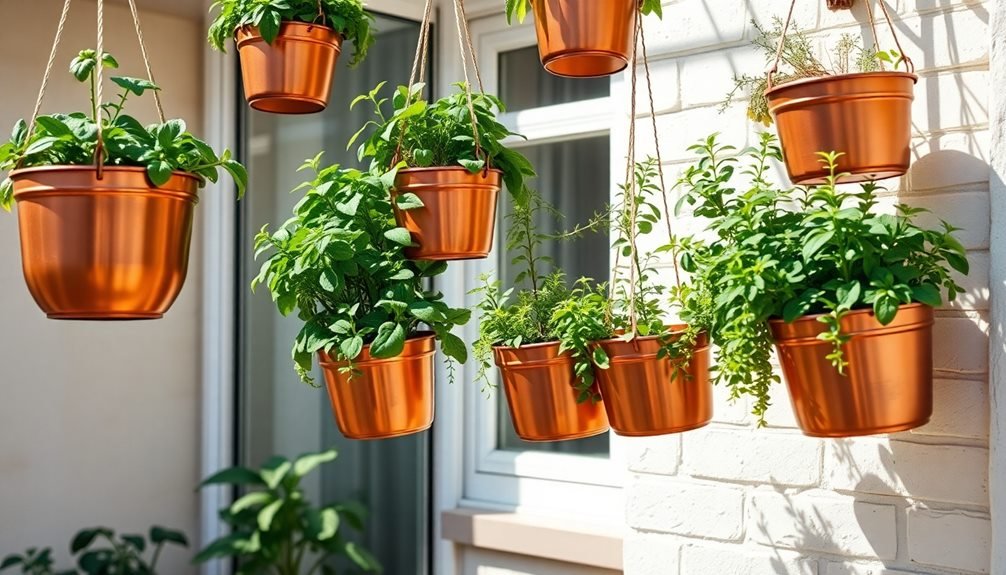
Most apartment dwellers face the challenge of limited gardening space, but vertical herb gardens offer an ingenious solution. By growing upward instead of outward, you'll maximize your available square footage while creating a living wall of fresh herbs.
You can install vertical gardens on balconies, windowsills, or any unused wall space, turning these areas into productive growing zones.
Vertical gardens let you grow 3-4 times more plants than traditional horizontal gardens. You'll find that a 2×4-foot vertical system can easily accommodate 12-15 herb plants, compared to just 4-5 plants in a standard container garden.
These space-efficient setups work perfectly in small spaces like kitchen corners or beside sliding doors.
You won't need to sacrifice precious counter or floor space since vertical gardens extend upward. They're particularly effective when using tiered planters, pocket systems, or modular wall units that stack multiple growing levels.
Therapeutic Effects on Mental Health
Taking care of your vertical herb garden can naturally reduce stress levels as you nurture living plants and watch them thrive in your home.
You'll find that the daily ritual of tending to your herbs creates moments of mindfulness, pulling your attention away from life's worries and into the present moment.
The simple acts of watering, pruning, and harvesting your herbs provide therapeutic breaks throughout your day, helping you maintain better mental well-being.
Natural Stress Relief Benefits
Nurturing an indoor vertical herb garden offers powerful stress-relieving benefits that extend far beyond the kitchen. When you tend to your herbs, your body naturally releases stress-reducing hormones while lowering cortisol levels. The simple act of caring for living plants can help you decompress after a long workday.
| Herb | Aroma Effect | Stress Relief Benefit |
|---|---|---|
| Lavender | Calming | Reduces anxiety and promotes sleep |
| Basil | Uplifting | Boosts mood and mental clarity |
| Mint | Invigorating | Eases tension and mental fatigue |
| Rosemary | Energizing | Improves focus and memory |
You'll find that the aromatic properties of herbs create a natural form of aromatherapy in your living space. Simply brushing your fingers against the leaves releases essential oils that can instantly shift your mood. The repetitive nature of watering, pruning, and harvesting creates a mindful routine that helps ground you in the present moment. Plus, watching your herbs flourish under your care provides a sense of accomplishment and control, especially valuable during stressful times when other aspects of life feel overwhelming.
Mindful Plant Care Impact
While many seek therapy through traditional means, mindful plant care offers a uniquely accessible form of mental health support right at home. When you tend to your vertical herb garden, you're engaging in a mindful practice that requires presence, focus, and gentle attention – similar to meditation. This daily ritual of caring for living things can help ground you in the present moment and reduce racing thoughts.
You'll find that the simple acts of watering, pruning, and monitoring your herbs' growth create a sense of purpose and responsibility. These small, achievable tasks provide immediate satisfaction and build self-confidence. As you observe your plants respond to your care, you'll experience a sense of accomplishment that can boost your mood and self-esteem.
The routine of plant care also helps establish healthy patterns in your daily life. You'll develop patience as you wait for seeds to sprout and leaves to unfurl, teaching you valuable lessons about timing and personal growth.
This mindful interaction with your vertical herb garden isn't just about growing plants – it's about nurturing your own mental well-being through consistent, purposeful actions.
Fresh Herbs Within Arm's Reach
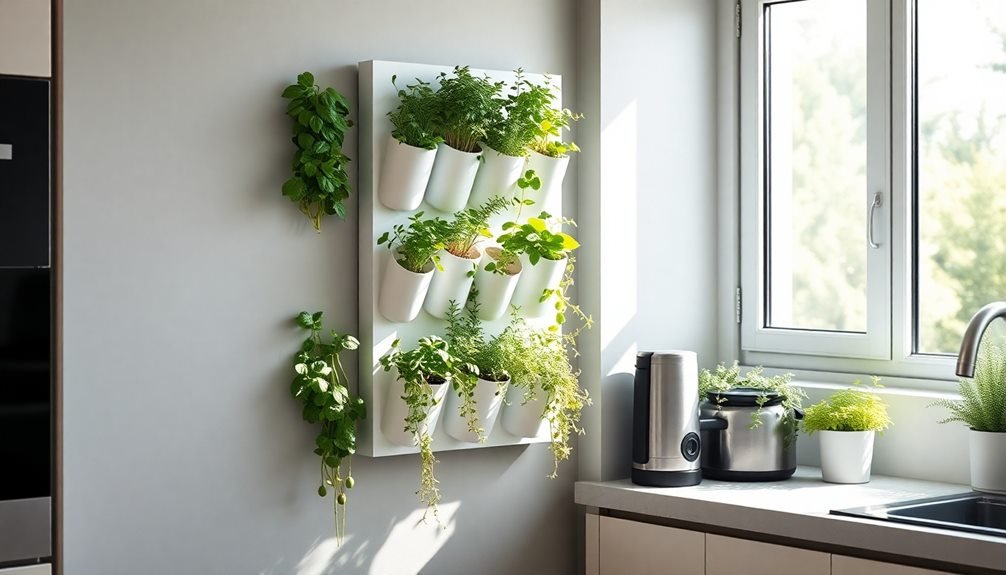
Three key benefits make vertical herb gardens perfect for apartment kitchens. First, you'll save precious counter space by growing upward instead of outward. Second, you can position your herbs right where you need them most – within arm's reach of your cooking area. Third, you'll always have fresh ingredients ready for your culinary creations.
Your vertical herb garden transforms cooking from a routine task into an engaging experience. When you're preparing meals, you can easily:
- Snip fresh basil leaves for your pasta sauce without breaking your cooking rhythm
- Pluck aromatic thyme sprigs to enhance your roasted vegetables
- Harvest cilantro leaves for garnishing your tacos or curry dishes
The proximity of fresh herbs encourages you to experiment with flavors and expand your cooking repertoire. You'll find yourself reaching for fresh herbs more often, elevating simple dishes into gourmet experiences.
Plus, having herbs nearby means you'll waste less, as you can harvest exactly what you need when you need it. No more forgotten herb bundles wilting in your refrigerator or dealing with dried alternatives that lack the vibrant flavors of fresh herbs.
Year-Round Indoor Growing Success
Indoor herb gardens offer year-round growing potential, regardless of outdoor weather conditions. You'll have fresh herbs at your fingertips even during winter months when outdoor gardening isn't possible.
By controlling temperature, light, and humidity levels inside your apartment, you can create an ideal growing environment that outdoor gardens can't match.
To guarantee success throughout the year, you'll need to maintain temperatures between 65-70°F (18-21°C) and provide 6-8 hours of direct sunlight or supplemental grow lights daily. Your herbs will thrive with proper air circulation from a small fan and consistent moisture levels using well-draining soil and containers with drainage holes.
Different herbs have varying seasonal growth patterns, so you can rotate your plantings accordingly. Fast-growing herbs like basil and cilantro can be harvested every 3-4 weeks, while slower-growing varieties like rosemary and thyme provide yields throughout the year.
You'll also need to prune regularly to prevent leggy growth and encourage bushiness. By implementing these practices, you can maintain a productive vertical herb garden that provides fresh harvests in every season.
Easy DIY Vertical Garden Options
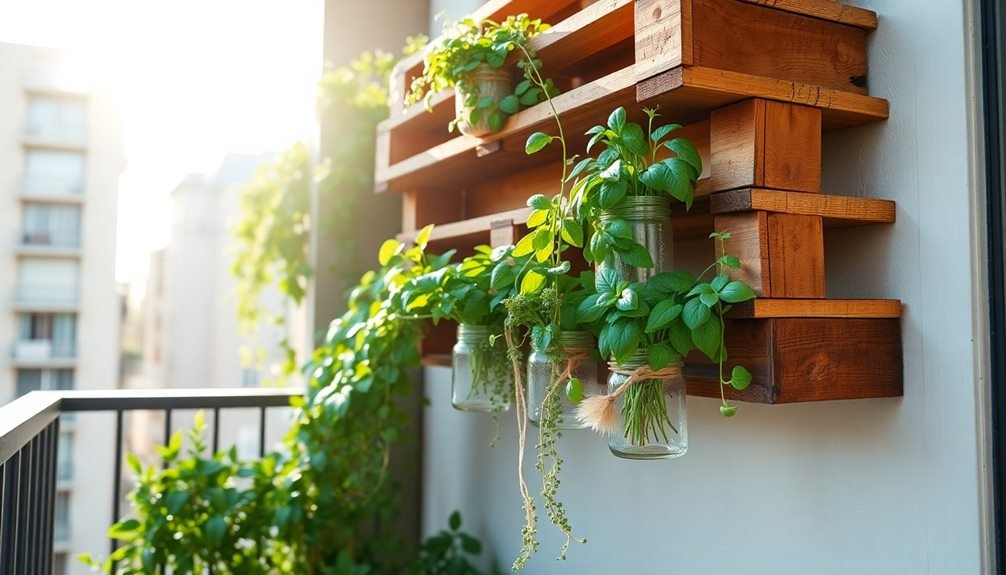
Several budget-friendly DIY options let you create a vertical herb garden without specialized equipment. You can transform everyday items like shoe organizers, mason jars, or wooden pallets into thriving herb gardens. A pocket shoe organizer mounted on a wall or door provides individual compartments for different herbs, while proper drainage holes prevent water accumulation.
Repurposed wooden pallets make excellent vertical gardens when mounted securely and lined with landscape fabric. You'll need to sand rough edges and verify the wood hasn't been chemically treated before planting.
Mason jar wall gardens create an industrial-chic look using pipe clamps or leather straps to secure the jars. Remember to add drainage layers of gravel at the bottom of each jar.
PVC pipe gardens offer a modern solution, where you'll cut holes for plants along the length of the pipe and mount it horizontally or at an angle.
When creating your vertical garden, you'll want to position containers where they'll receive adequate light while remaining accessible for watering and harvesting.
Consider weight distribution and secure mounting to prevent accidents, especially if you're renting your apartment.
Apartment-Friendly Herbs to Grow
Once you've set up your vertical garden system, choosing the right herbs will make a big difference in your success. Focus on herbs that thrive in indoor conditions and don't require extensive root systems or maintenance.
Basil, mint, and parsley are excellent starter herbs that adapt well to vertical gardens. They'll grow successfully in limited light conditions and don't need deep containers.
Chives and oregano also perform well indoors and can handle varying temperatures common in apartments.
For vertical spaces near sunny windows, consider rosemary and thyme. These Mediterranean herbs love direct sunlight and won't mind if you forget to water them occasionally.
Cilantro and dill can also flourish in your indoor setup, though they'll need frequent replanting as they complete their growth cycle.
If your apartment tends to be humid, Vietnamese coriander and lemon balm will thrive. These herbs don't mind moisture and can handle lower light conditions.
For tight spaces, micro-greens and compact varieties of sage work perfectly. They'll provide fresh flavors without taking up much room, and you can harvest them frequently without damaging the plants.
Proper Lighting and Temperature
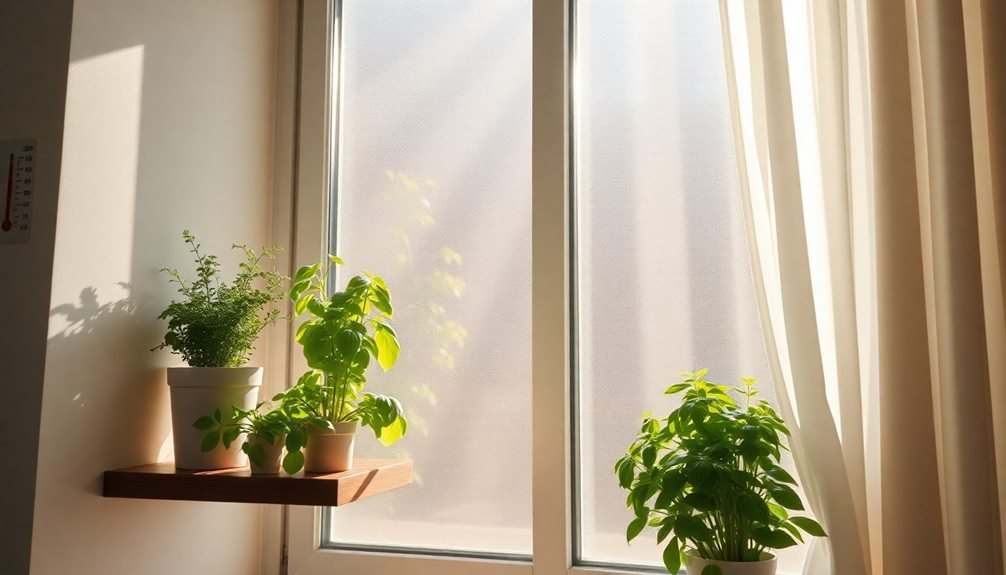
Successful herb growing depends heavily on getting the right balance of light and temperature in your vertical garden. Most herbs need at least 6 hours of direct sunlight daily, so position your vertical setup near a south-facing window if possible.
If you're dealing with limited natural light, consider investing in LED grow lights, which you can mount directly onto your vertical structure.
Temperature control is equally essential for your herbs' survival. You'll want to maintain temperatures between 65-70°F (18-21°C) during the day and slightly cooler at night.
Keep your herbs away from drafty windows and air conditioning vents that could create temperature fluctuations.
Key factors to monitor for ideal growth:
- Light intensity: Observe your herbs for signs of light deficiency, such as leggy growth or pale leaves
- Seasonal adjustments: Rotate your vertical garden periodically as the sun's angle changes throughout the year
- Heat management: Use a thermometer to track temperatures, especially if your herbs are close to windows that can amplify heat
When artificial lighting is necessary, position grow lights 6-12 inches above your plants and adjust the height as they grow taller.
Essential Tools and Materials
You'll want to start with basic containers that have drainage holes, high-quality potting soil, and plant markers to keep track of your herbs.
For mounting your vertical garden, gather wall anchors, brackets, and a sturdy frame or trellis system that can support the weight of your containers.
Essential support tools include cable ties, garden twine, or adjustable straps to secure your containers and guarantee they stay firmly in place as your herbs grow.
Basic Container Setup Needs
Setting up a vertical herb garden requires a straightforward collection of essential tools and materials before you begin planting.
You'll need containers that provide adequate drainage and enough space for root growth. Choose pots at least 6 inches deep with drainage holes, or create your own using upcycled containers. The right soil mix is vital – opt for a well-draining potting mix specifically designed for herbs.
Your basic container setup should include these fundamental components:
- A mounting system or vertical structure that can support the weight of your containers, soil, and fully grown plants
- A collection of containers that match your space and chosen mounting system, preferably with built-in drainage solutions
- A water collection system or drip trays to prevent water damage to your floors and walls
Remember to position your containers where they'll receive adequate light, typically near a window with at least 6 hours of sunlight daily.
If natural light is limited, you'll want to incorporate grow lights into your setup. Consider the weight capacity of your chosen wall or mounting area, and verify your containers are securely fastened to prevent accidents.
Mounting and Support Systems
Building a sturdy mounting system starts with gathering the right tools and materials for your vertical herb garden. You'll need mounting brackets, wall anchors, and screws that can support your chosen containers' weight when fully loaded with soil and mature plants.
| Tool/Material | Purpose | Estimated Cost |
|---|---|---|
| Wall Brackets | Support containers | $15-25/pair |
| Wall Anchors | Secure to drywall | $8-12/pack |
| Mounting Screws | Attach brackets | $5-10/pack |
| Level | Confirm alignment | $10-15 |
| Drill/Driver | Install hardware | $30-50 |
Select brackets rated for at least 1.5 times your containers' expected weight to guarantee safety. You'll want to mount them directly into wall studs whenever possible, using a stud finder to locate secure mounting points. If you can't hit studs, use heavy-duty wall anchors rated for the total weight of your setup. Space your mounting points adequately to distribute the load evenly across your wall. Don't forget to measure twice before drilling, and use your level to confirm your containers will sit perfectly horizontal when installed.
Daily Care and Maintenance
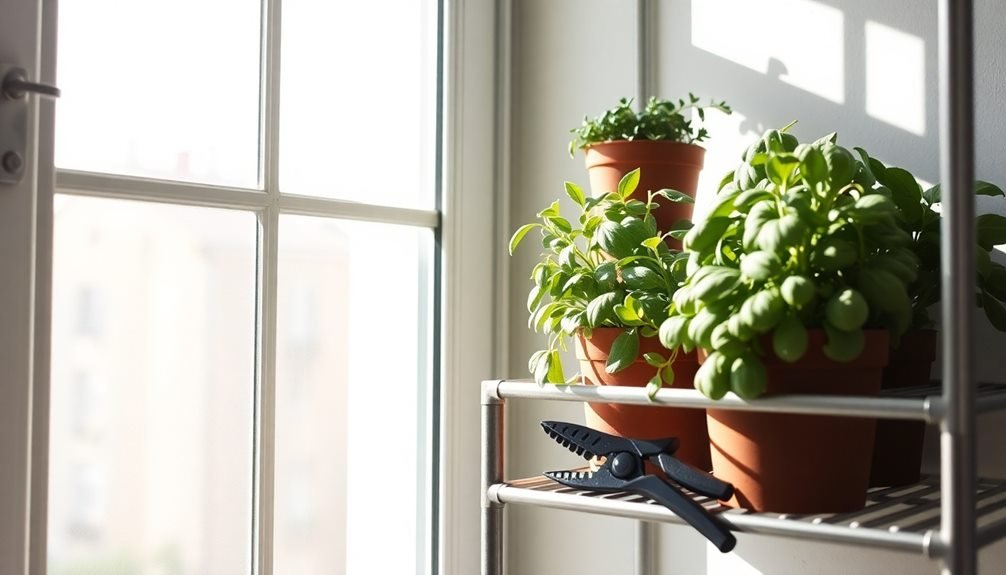
Successful vertical herb gardens require consistent daily attention to thrive in apartment settings. You'll need to monitor your plants' health, water needs, and growth patterns to maintain a productive indoor garden.
Regular pruning prevents overcrowding and promotes bushier growth, while checking soil moisture helps prevent both overwatering and underwatering issues.
Your daily maintenance routine should include these essential tasks:
- Check soil moisture by inserting your finger about an inch deep – water only when the top layer feels dry, and guarantee proper drainage to prevent root rot.
- Remove any yellowed or damaged leaves, pinch off flower buds to maintain leaf production, and harvest herbs regularly to encourage new growth.
- Rotate your vertical garden weekly to guarantee even light exposure, and dust leaves with a damp cloth to maintain photosynthesis efficiency.
Keep an eye out for common indoor pests like spider mites and aphids, treating any infestations promptly with organic solutions.
Fertilize your herbs every 4-6 weeks during growing season using a balanced, water-soluble fertilizer at half strength. Maintain consistent room temperatures between 65-75°F (18-24°C) for peak growth.
Creative Display Ideas
Transform your vertical herb garden into living wall art by arranging plants in geometric patterns or creating a textured mosaic effect with different herb varieties.
You'll maximize your limited apartment space by mounting floating shelves in a zigzag pattern or installing pocket planters that double as decorative elements.
Consider grouping herbs by color or height to create visual interest, while ensuring each plant remains accessible for harvesting and care.
Living Wall Art Ideas
Your vertical herb garden can double as stunning living wall art when displayed creatively. Transform your apartment's walls into a functional masterpiece by arranging herb planters in geometric patterns or cascading designs.
Consider using modular wall-mounted systems that allow you to adjust and rearrange your herbs as they grow, creating an ever-changing display of textures and colors.
Mix different herb varieties to create visual interest while maintaining practicality. Combine trailing herbs like thyme and oregano with upright varieties such as basil and sage. Frame your living wall with LED grow lights to guarantee healthy growth while adding an ambient glow to your space.
- Install a floating shelf system with integrated planters, allowing you to layer herbs at different heights for a dynamic display.
- Create a symmetrical grid using identical containers filled with contrasting herbs, forming a modern, organized appearance.
- Use magnetic planters on a metal board, enabling easy rearrangement and maintenance while achieving an industrial-chic look.
Frame your herb wall with a simple border or incorporate it into existing artwork to seamlessly blend function with aesthetics.
Remember to position your living wall where it's easily accessible for harvesting and maintenance.
Small Space Display Solutions
Even the smallest apartments offer creative opportunities for displaying vertical herb gardens. You'll find that window-mounted herb shelves, over-the-sink racks, and floating corner units maximize your limited space while keeping herbs within easy reach for cooking.
Transform unused door space by installing an over-the-door organizer with adjustable pockets specifically designed for plant containers.
Make use of your kitchen backsplash by mounting magnetic planters or installing a slim pegboard system that holds individual herb pots. If you've got a bare wall, consider installing tiered rope shelving that can be easily adjusted as your herbs grow.
For counter space optimization, try a multi-level carousel planter that rotates for easy access to all your herbs.
Don't overlook unconventional spaces like the sides of kitchen cabinets, where you can mount slim rail systems with hanging planters. If you have a radiator cover, its flat surface makes an excellent spot for a compact hydroponic system.
Use vertical tension rods between floor and ceiling to create adjustable growing spaces, perfect for hanging lightweight herb containers at various heights.
Frequently Asked Questions
Can Vertical Herb Gardens Attract Unwanted Insects Into My Apartment?
You won't typically attract many unwanted insects with indoor herb gardens. If you're concerned, you can prevent pests by maintaining good air circulation, avoiding overwatering, and regularly inspecting your plants' leaves.
How Do Vertical Herb Gardens Affect Apartment Humidity Levels?
Your indoor herb garden can slightly increase room humidity through plant transpiration. You'll notice this effect more in small spaces, but it's usually beneficial since most apartments are too dry anyway.
Will Strong-Smelling Herbs Impact My Apartment's Air Conditioning System?
Your strong-smelling herbs won't harm your AC system. While their scents might briefly circulate through vents, they won't affect functionality or maintenance. You'll just enjoy natural fragrances when your AC's running.
Are Vertical Herb Gardens Allowed in Rental Properties?
You'll need to check your lease agreement and talk with your landlord first. Most rentals allow removable gardens that don't damage walls. Just make certain you're using proper mounting systems and waterproof barriers.
Can Herb Gardens Trigger Allergies When Grown in Confined Apartment Spaces?
You'll want to be careful if you're allergy-prone. Indoor herbs can trigger reactions, especially in confined spaces. Keep your garden small, choose low-allergenic varieties, and guarantee good ventilation to minimize risks.
In Summary
You'll find that growing vertical herbs transforms your apartment into a lush, aromatic haven while maximizing limited space. Whether you've chosen a window-mounted system or a DIY pallet garden, you're not just cultivating fresh ingredients – you're creating a living piece of decor that boosts your mood and connects you to nature. Start small, learn as you grow, and you'll soon have a thriving indoor herb garden to enjoy year-round.