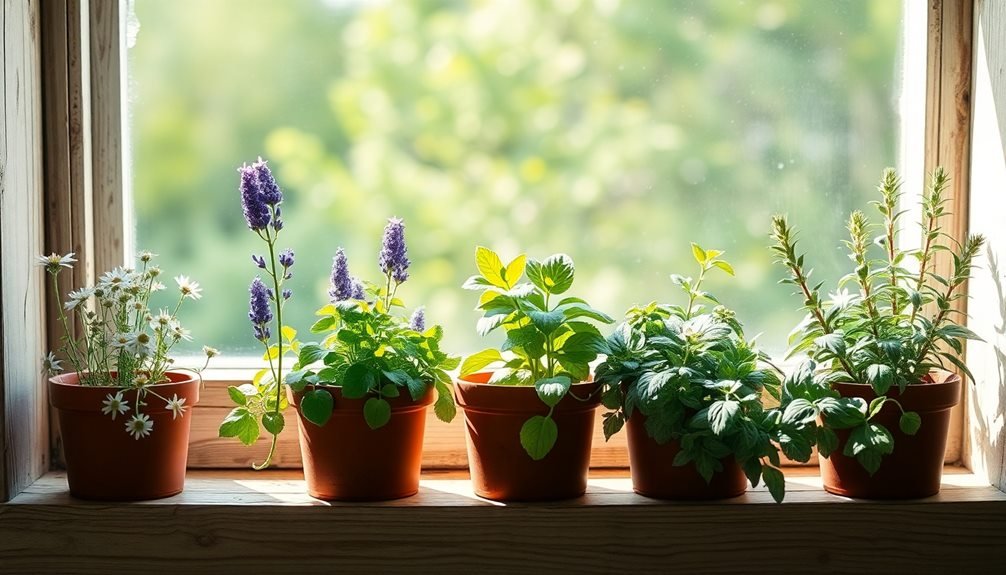
Growing these five calming herbs indoors gives you a personal wellness garden right at your fingertips. You'll have fresh chamomile flowers for bedtime tea, lavender's soothing fragrance for natural aromatherapy, and holy basil's stress-fighting properties whenever you need them. Lemon balm and peppermint add bright, uplifting scents while providing leaves for relaxing beverages year-round. These versatile plants don't just beautify your space – they create a living pharmacy of natural remedies that can help ease anxiety, promote better sleep, and enhance your daily wellness routine. Let's explore how each herb can transform your indoor sanctuary.
Calming Chamomile for Kitchen Gardens
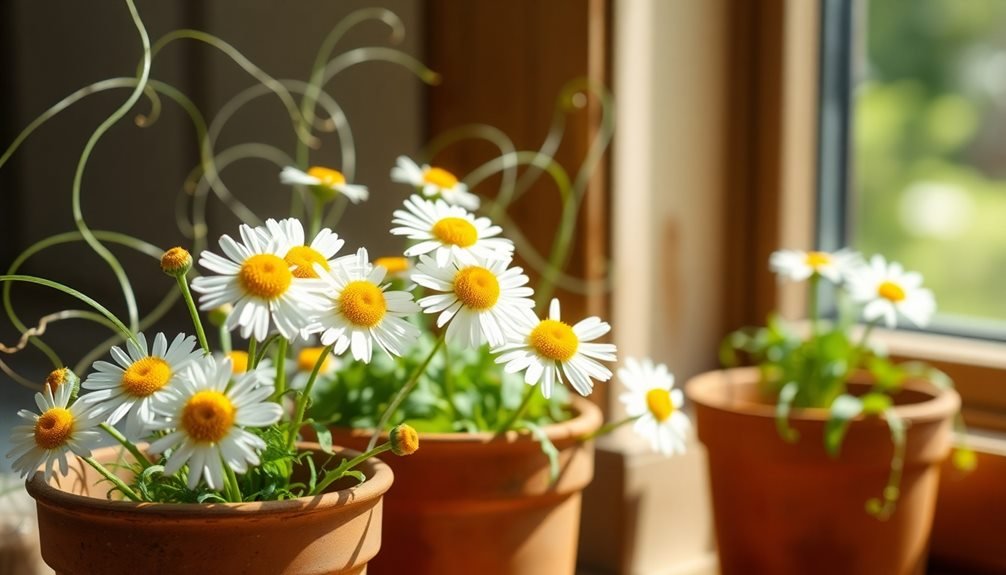
Many gardeners treasure chamomile as a must-have herb for indoor growing, thanks to its gentle floral scent and renowned calming properties.
You'll find two main varieties suitable for indoor cultivation: German chamomile (Matricaria recutita) and Roman chamomile (Chamaemelum nobile). German chamomile grows as an annual, reaching heights of 24 inches, while Roman chamomile stays compact as a perennial.
To grow chamomile indoors, you'll need a container at least 6 inches deep with adequate drainage holes. Place your pot in a sunny spot that receives 4-6 hours of direct sunlight daily. The plant thrives in well-draining potting soil with a pH between 6.0 and 7.0.
Water only when the top inch of soil feels dry.
You can harvest the flowers once they're fully open, typically 6-8 weeks after planting. Simply pinch off the flower heads and dry them for tea. The dried flowers will keep for up to a year when stored in an airtight container.
Don't forget to deadhead regularly to encourage continuous blooming and prevent self-seeding, which helps maintain a tidy indoor herb garden.
Lavender's Year-Round Indoor Benefits
Three standout qualities make lavender an exceptional choice for indoor herb gardens: its soothing fragrance, ornamental value, and versatile uses. You'll find that growing lavender indoors lets you enjoy its calming benefits throughout the year, regardless of outdoor weather conditions.
The plant's silvery-green foliage and purple blooms can transform any windowsill into a stunning focal point while providing natural aromatherapy.
To maximize your indoor lavender's potential, you can harvest and use it in multiple ways:
- Create dried sachets for drawers and closets to naturally freshen linens and clothing while deterring moths
- Add fresh or dried flowers to homemade bath products, including soaps, salts, and aromatherapy oils
- Incorporate the edible blooms into baked goods, teas, and cocktails for a subtle floral flavor
Your indoor lavender requires bright sunlight and well-draining soil to thrive. Place it near a south-facing window and water only when the top inch of soil feels dry.
Holy Basil's Stress-Fighting Powers
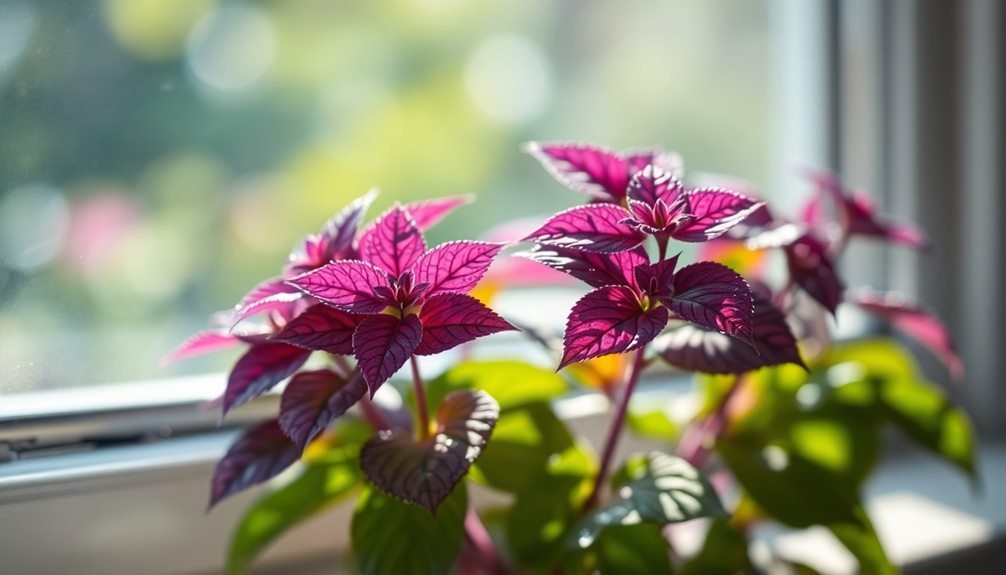
Holy basil, also known as Tulsi, stands as one of nature's most potent stress-fighting herbs you can grow indoors. This sacred plant from India contains adaptogenic compounds that help your body manage stress, anxiety, and mental fatigue.
You'll find it's surprisingly easy to maintain in a sunny windowsill with well-draining soil and consistent watering.
To harness holy basil's calming benefits, you can harvest the leaves regularly and brew them into a soothing tea. The plant releases eugenol, a natural compound that reduces inflammation and promotes mental clarity.
You'll notice it gives off a distinctive spicy-sweet aroma that can help create a peaceful atmosphere in your home.
When you're growing holy basil indoors, keep the temperature between 65-80°F and provide at least 6 hours of direct sunlight daily.
Pinch off flower buds to encourage bushier growth and more leaf production. You can start harvesting leaves once the plant reaches 6-8 inches tall, but remember to never take more than one-third of the plant at once.
This guarantees your holy basil continues producing fresh, stress-relieving leaves throughout the year.
Growing Lemon Balm at Home
Lemon balm ranks among the most rewarding herbs you can grow indoors, offering both aromatic benefits and easy maintenance. This member of the mint family thrives in containers and doesn't need much attention to flourish.
You'll find that it grows best in well-draining potting soil with moderate watering, preferring temperatures between 65-75°F.
To start your indoor lemon balm garden, choose a spot that receives partial sunlight, as direct sun can scorch the leaves. The plant will grow up to 2 feet tall indoors, so select a container that's at least 6 inches deep with drainage holes.
You'll want to harvest the leaves regularly to encourage bushier growth and prevent the plant from becoming leggy.
- Pinch off leaves before flowering begins to maintain the best flavor and prevent the plant from going to seed
- Water when the top inch of soil feels dry, but don't overwater as this can lead to root rot
- Fertilize sparingly – once every six weeks with a balanced, water-soluble fertilizer is sufficient
Keep your lemon balm pruned and shaped by trimming it back by one-third when it reaches 8 inches tall. This helps maintain a compact, healthy plant that'll provide fresh leaves year-round.
Peppermint's Natural Anxiety Relief
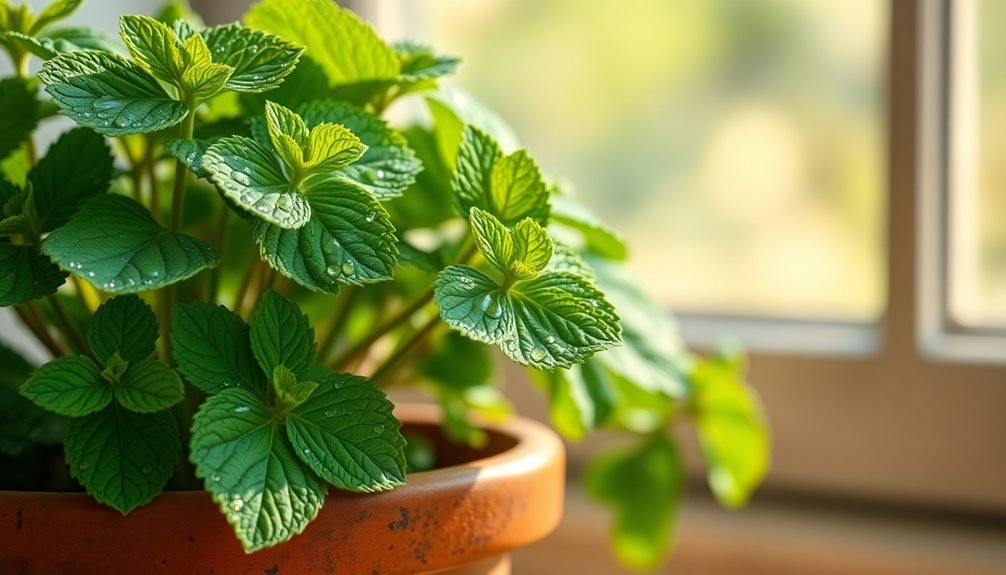
While lemon balm offers calming properties, peppermint stands out as a powerhouse for natural stress relief. You'll find that growing peppermint indoors provides you with a readily available remedy for anxiety and tension. The menthol in peppermint relaxes your muscles and eases mental strain, making it an excellent choice for your indoor herb garden.
Growing peppermint indoors isn't difficult. You'll need a container with drainage holes, well-draining potting soil, and a spot that receives partial sunlight. The plant thrives in temperatures between 65-70°F and requires consistent moisture.
Don't let the soil dry out completely, but avoid overwatering to prevent root rot.
When you're feeling anxious, you can harvest a few fresh leaves to make a soothing tea or simply crush them between your fingers to release their calming aroma. You'll notice that the scent alone can help reduce stress levels and improve focus.
The plant's natural compounds interact with your body's stress response system, helping to lower cortisol levels and promote a sense of calm. Remember to pinch back the growing tips regularly to encourage bushier growth and prevent the plant from becoming leggy.
Frequently Asked Questions
Can These Herbs Be Grown Together in the Same Indoor Container?
You can grow multiple herbs together if they share similar water and light needs. However, it's best to give each herb enough space to prevent root competition and guarantee healthy growth.
How Long Do Indoor-Grown Medicinal Herbs Typically Last Before Needing Replacement?
You'll typically need to replace indoor medicinal herbs every 6-12 months, but with proper care, they can last longer. Keep in mind that some herbs are annuals while others are perennials that'll regrow naturally.
What's the Minimum Light Requirement for Growing These Calming Herbs Indoors?
You'll need at least 6 hours of direct sunlight daily for most calming herbs. If you don't have enough natural light, use LED grow lights positioned 6-12 inches above your plants for best results.
Are These Herbs Safe for Homes With Cats and Dogs?
You'll need to be cautious as some calming herbs can harm pets. Chamomile, lavender, and lemon balm are generally safe, but avoid valerian root and certain mint varieties around cats and dogs.
Can I Dry and Store These Herbs for Later Use?
You can easily dry your indoor herbs by hanging bundles upside down in a dark, dry space. Once they're crispy, store them in airtight containers away from light to preserve their potency.
In Summary
You'll find growing these five calming herbs indoors brings natural stress relief right to your fingertips. Whether you're sipping chamomile tea, enjoying lavender's soothing scent, brewing holy basil, making lemon balm tinctures, or adding fresh peppermint to drinks, these herbs offer both therapeutic benefits and gardening satisfaction. Start your indoor herb garden today, and you'll have nature's anxiety remedies available whenever you need them.