
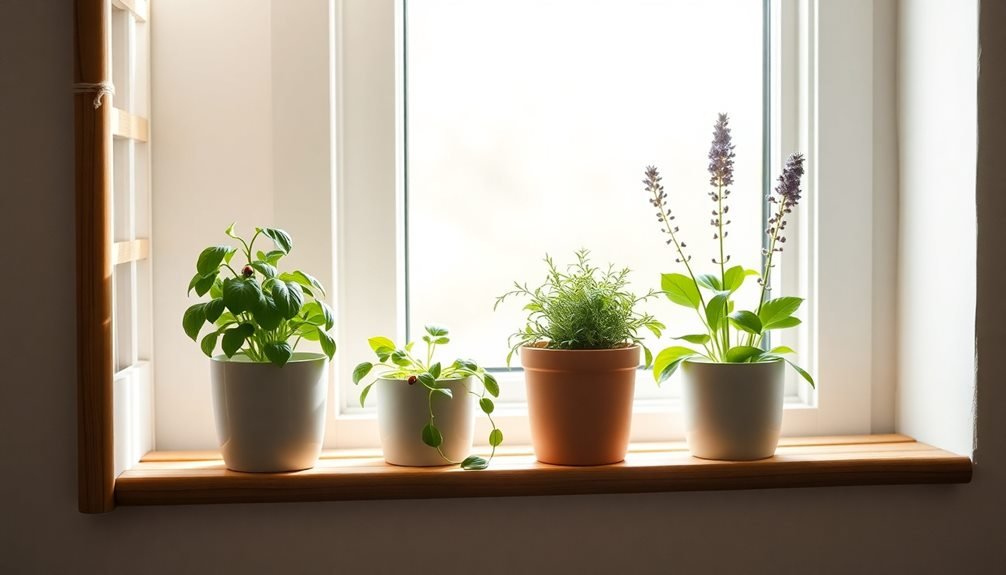
Protect your indoor herb garden naturally by combining strategic companion planting with eco-friendly pest control methods. You'll create a strong defense by pairing pest-repelling herbs like basil, rosemary, and lavender together, while attracting beneficial insects such as ladybugs and praying mantises. Make your own natural deterrent sprays using essential oils or herbal infusions, and maintain proper spacing between plants to prevent pest-friendly conditions. Regular monitoring and quick action against early signs of infestation will keep your garden healthy. Keep your herbs thriving with these time-tested Zen gardening principles that harness nature's own protective powers.
Common Indoor Herb Garden Pests
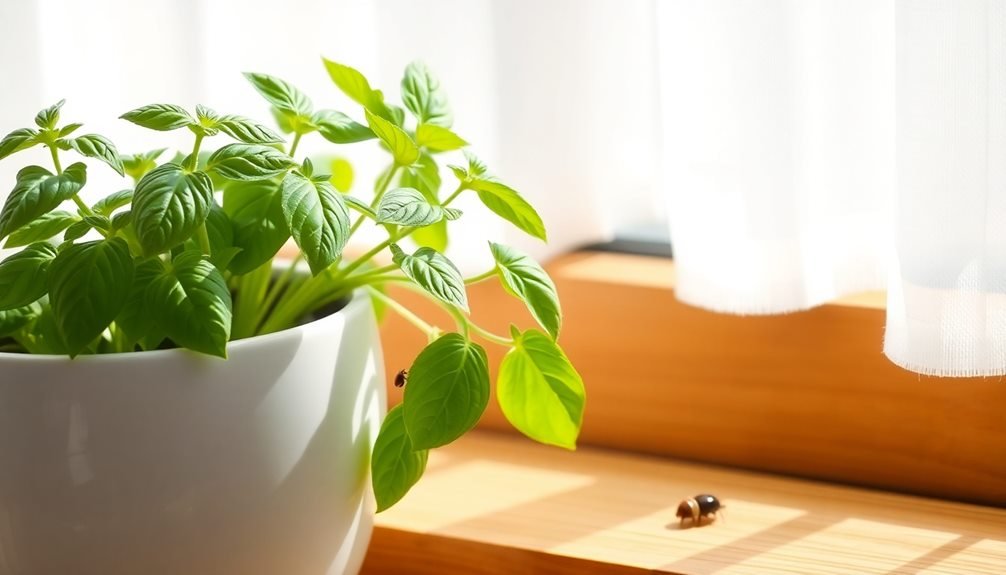
Frustration often stems from discovering unwanted visitors in your indoor herb garden. The most frequent pests you'll encounter are aphids, spider mites, whiteflies, and fungus gnats. Each poses unique threats to your herbs' health and well-being.
Aphids cluster on stems and leaves, sucking essential nutrients from your plants while leaving behind sticky residue. You'll spot these tiny, pear-shaped insects in groups, typically on new growth.
Spider mites, nearly invisible to the naked eye, create fine webbing between leaves and cause yellowing or stippling of foliage.
Whiteflies resemble tiny white moths and gather on leaf undersides, where they feed and lay eggs. When you brush against affected plants, they'll flutter up in small clouds.
Fungus gnats, while less harmful to mature plants, indicate overwatering and can damage seedlings. You'll notice these small black flies hovering around soil surfaces.
Other common pests include mealybugs, which appear as white, cottony clusters in leaf joints, and scale insects that form brownish bumps along stems.
Regular inspection of your herbs, especially under leaves and along stems, helps catch infestations early before significant damage occurs.
Companion Planting For Natural Defense
The strategic pairing of herbs through companion planting can create a natural defense system against common pests in your indoor garden.
You'll find that placing basil next to tomatoes or sage alongside rosemary not only maximizes your growing space but also strengthens each plant's natural pest-repelling abilities.
Beneficial Herb Pairings
Strategic herb placement throughout your garden creates natural defense zones against common pests while promoting beneficial insect activity.
By pairing specific herbs together, you'll maximize their protective qualities and create a more resilient growing environment.
Plant basil near tomatoes and peppers to repel flies and mosquitoes while improving their flavor.
Position rosemary adjacent to sage, as both herbs strengthen each other's aromatic oils that deter cabbage moths and carrot flies.
Place lavender near leafy greens to protect them from aphids and attract pollinators.
Mint's strong scent wards off ants and mice, but it's best grown in containers to prevent spreading.
Pair it with oregano to create a powerful pest-deterrent combination.
Plant thyme near cabbage and broccoli to keep away worms and beetles, while dill works well with cucumbers to repel spider mites.
Consider creating herb clusters with marigolds, as they're excellent companions that drive away nematodes and attract beneficial insects.
You'll find that careful herb pairing not only reduces pest problems but also enhances the overall health and productivity of your indoor garden.
Protective Planting Layouts
Planning your garden layout with defensive companion planting principles helps create multiple layers of natural pest protection. By strategically positioning your herbs, you'll establish a robust defense system that deters common pests while maximizing space efficiency.
Arrange tall, aromatic herbs like rosemary and lavender along the perimeter of your garden to create a protective barrier. Place basil plants between your tomatoes and peppers, as they'll repel flies and mosquitoes.
You'll want to position marigolds throughout your garden, especially near susceptible plants, since they deter nematodes and other soil-dwelling pests.
Create clusters of complementary herbs by planting sage near cabbage, oregano next to cucumbers, and thyme alongside eggplants. These groupings strengthen each plant's natural defenses.
Don't forget to include nasturtiums as trap crops – they'll attract aphids away from your valuable herbs.
For vertical gardens, position mint and catnip on upper levels, allowing their strong scents to cascade downward.
Keep dill and fennel separated from most herbs, as they can inhibit growth in nearby plants.
Remember to space your plants properly to guarantee adequate airflow, reducing the risk of fungal issues.
Strategic Space Planning
Successfully implementing companion planting requires careful attention to spacing and layout optimization. You'll need to position pest-repelling herbs strategically among your primary plants while guaranteeing each species has adequate room to thrive. Consider both vertical and horizontal spacing to maximize your garden's natural defense system.
| Herb | Spacing (inches) | Pest Protection |
|---|---|---|
| Basil | 12-18 | Flies, Mosquitoes |
| Lavender | 18-24 | Moths, Fleas |
| Rosemary | 24-36 | Spider Mites, Beetles |
| Mint | 12-18 | Ants, Aphids |
| Thyme | 6-12 | Cabbage Worms, Whiteflies |
Place taller herbs like rosemary and lavender toward the back or center of your garden, creating a protective barrier without overshadowing smaller plants. Keep mint in contained spaces, as it spreads aggressively and can overwhelm neighboring plants. You'll want to maintain at least 2-3 inches of space between different herb varieties to prevent root competition and guarantee proper air circulation, which reduces the risk of fungal diseases and pest infestations. Remember to adjust these spacing guidelines based on your containers' sizes and available light conditions.
Essential Oil Pest Sprays
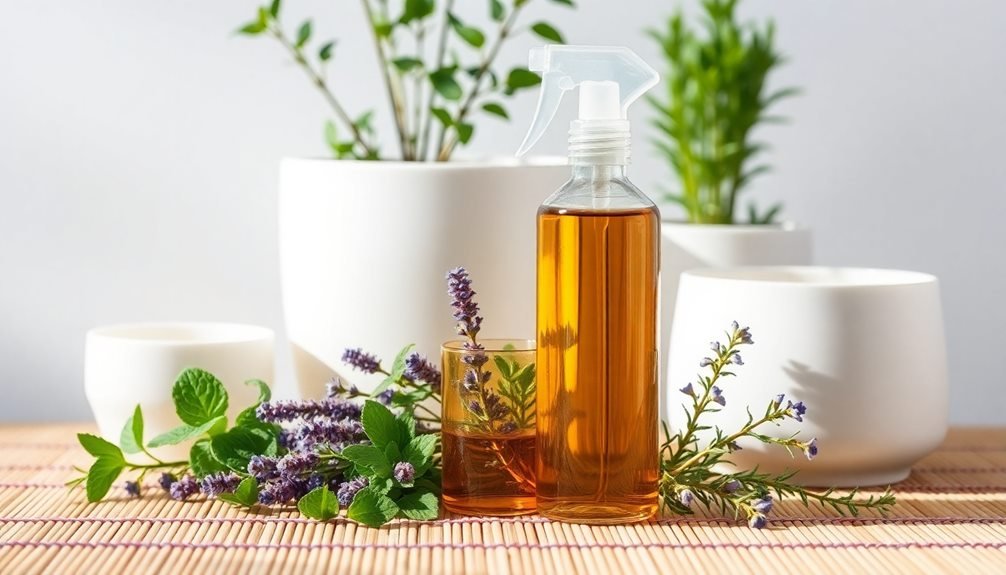
Essential oil pest sprays offer a chemical-free alternative to conventional pesticides, combining potent natural compounds that many insects find repulsive.
You'll need a small spray bottle, water, and a selection of pest-deterring essential oils like peppermint, lavender, citronella, or neem oil to create your own blend.
Mix 10-15 drops of essential oil per cup of water, adding a few drops of liquid soap to help the solution stick to plant leaves. For stronger protection against specific pests, you can combine multiple oils – try peppermint and citronella for aphids, or neem and lavender for spider mites.
Don't forget to shake the bottle well before each use, as oils naturally separate from water.
Test your spray on a single leaf first and wait 24 hours to verify it won't damage your herbs. When applying, spray both the top and bottom of leaves where pests often hide.
You'll need to reapply every few days or after watering, as the scent diminishes over time. For indoor herbs, focus on natural ventilation after spraying to prevent oil buildup on leaves.
Beneficial Insects For Your Garden
Your garden's natural pest control allies include ladybugs, which can devour up to 50 aphids per day and help protect your plants from these destructive pests.
Praying mantises serve as vigilant predators in your garden, consuming a variety of harmful insects like caterpillars, beetles, and flies.
You'll find these beneficial insects work tirelessly to maintain the ecological balance in your garden, reducing the need for chemical pesticides.
Ladybugs Control Aphid Populations
While many gardeners resort to chemical sprays, ladybugs offer a natural and effective solution for controlling aphid infestations in your garden.
These iconic red-and-black beetles can devour up to 50 aphids per day, making them one of nature's most efficient pest controllers. You'll find that both adult ladybugs and their larvae actively hunt aphids, mealybugs, and other soft-bodied insects that damage your herbs.
To attract and keep ladybugs in your indoor herb garden, you'll need to create an inviting environment. Plant shallow-necked flowers like dill, fennel, or yarrow nearby, as they provide essential nectar for ladybugs.
You can also purchase ladybugs from garden centers or online suppliers to jumpstart your natural pest control system.
When releasing ladybugs, do it in the evening and mist your plants with water first. This encourages them to stay and lay eggs.
If you're growing herbs indoors, place yellow sticky traps away from your plants to monitor aphid populations, but remove them once you've introduced ladybugs to prevent accidentally trapping these beneficial insects.
Remember to avoid using any chemical pesticides, as they'll harm your ladybug allies.
Praying Mantis Benefits Gardens
Like ladybugs, praying mantises serve as powerful allies in natural pest control, but these fascinating predators take on even larger garden pests.
These skilled hunters can tackle everything from moths and flies to caterpillars and beetles, making them excellent guardians for your indoor herb garden.
You'll find that praying mantises are particularly effective because they're patient ambush predators. They'll perch motionless on your herbs, waiting for the perfect moment to strike.
Unlike some beneficial insects, mantises don't discriminate between pest species, which means they'll help control a wider variety of unwanted visitors.
To attract and keep praying mantises in your garden:
- Place small twigs or thin bamboo stakes near your herbs to give mantises ideal perching spots
- Avoid using chemical pesticides, which can harm or kill these beneficial predators
- Leave mantis egg cases (ootheca) undisturbed if you find them – they'll hatch into dozens of helpful guardians
While mantises will occasionally eat beneficial insects too, their overall impact on pest control makes them valuable allies.
You can purchase mantis egg cases from garden suppliers to establish a population, but be patient as they take time to hatch and mature.
Herbal Deterrent Recipes
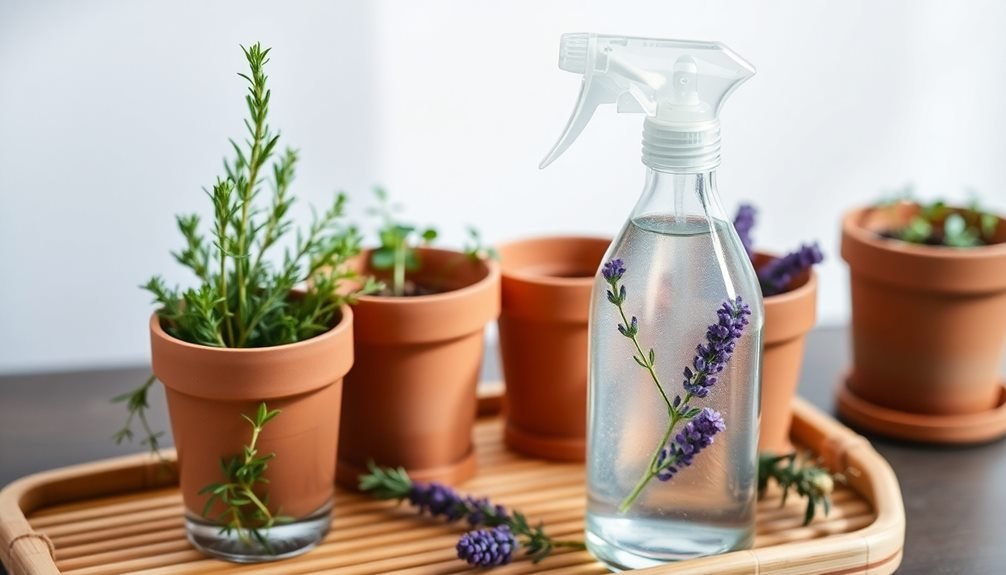
Several effective herbal deterrent recipes can keep pests away without harsh chemicals.
You'll need common herbs like rosemary, mint, lavender, and garlic to create potent natural sprays. Mix 2 cups of boiling water with 3-4 tablespoons of fresh herbs, let it steep for 30 minutes, then strain and add a drop of liquid soap to help it stick to plant surfaces.
For a stronger deterrent, you can combine multiple herbs in your recipe. Try mixing crushed garlic cloves with hot pepper and mint leaves, then add 2 cups of water and let it sit overnight. Strain the mixture and spray it directly on affected plants, reapplying after rain.
Don't forget to create dry herbal sachets by mixing dried lavender, rosemary, and citrus peels. Place these sachets around your indoor garden to repel moths and flies.
You can also make a neem oil solution by combining 2 teaspoons of neem oil with 1 teaspoon of liquid soap and 1 quart of water. This mixture works particularly well against aphids and spider mites.
Remember to test any spray on a small leaf area first to guarantee plant safety.
Preventive Care Methods
Taking preventive measures against pests starts with maintaining a healthy garden ecosystem. You'll find that well-maintained herbs are naturally more resistant to infestations and diseases. Regular monitoring of your plants allows you to spot potential issues before they become major problems.
Keep your indoor herb garden pest-resistant by implementing these essential practices:
- Monitor soil moisture carefully – overwatering creates an environment where fungus gnats and other pests thrive. Let the top inch of soil dry between waterings, and guarantee proper drainage in all containers.
- Clean your gardening tools regularly with a solution of one part vinegar to ten parts water. This prevents the spread of pests and diseases between plants when you're pruning or harvesting.
- Remove dead leaves, stems, and debris promptly. Decaying plant matter attracts pests and can harbor harmful organisms that might spread to healthy plants.
Don't forget to maintain proper air circulation around your herbs by spacing them appropriately and pruning when needed.
You should also quarantine new plants for at least a week before introducing them to your existing garden, checking thoroughly for any signs of pests or disease.
Frequently Asked Questions
How Long Should I Quarantine New Herb Plants Before Adding to Garden?
You'll want to quarantine new herb plants for at least 2-3 weeks, keeping them separate from your existing garden. This gives you time to spot and treat any pest issues or diseases.
Can Indoor Herb Gardens Attract Beneficial Insects Naturally Without Buying Them?
You can attract beneficial insects by growing companion flowers like marigolds, lavender, and chamomile near your herbs. Place pots by windows and balcony doors, where natural pollinators might visit your indoor garden.
Do Grow Lights Affect Pest Populations Differently Than Natural Sunlight?
Yes, you'll find grow lights can affect pests differently than sunlight. They'll attract fewer flying insects but may create warmer conditions that some pests love. You can adjust light schedules to discourage pest activity.
Which Herbs Are Most Resistant to Common Indoor Pests?
You'll find rosemary, sage, lavender, thyme, and mint naturally resist most indoor pests. These aromatic herbs contain strong essential oils that repel common bugs. Plant them as protective companions in your garden.
Should I Prune Infected Herbs or Remove Them Completely?
First try pruning infected areas and disposing them in sealed bags. If pests spread despite pruning, you'll need to remove the entire plant to protect your other herbs from infestation.
In Summary
You'll find that maintaining a pest-free indoor herb garden doesn't require harsh chemicals. By combining companion planting, essential oil sprays, beneficial insects, and herbal deterrents, you're creating a natural defense system that works in harmony with your zen space. Remember to stay proactive with preventive care methods – they're your best line of defense. With these natural solutions, you'll enjoy fresh, healthy herbs year-round.