
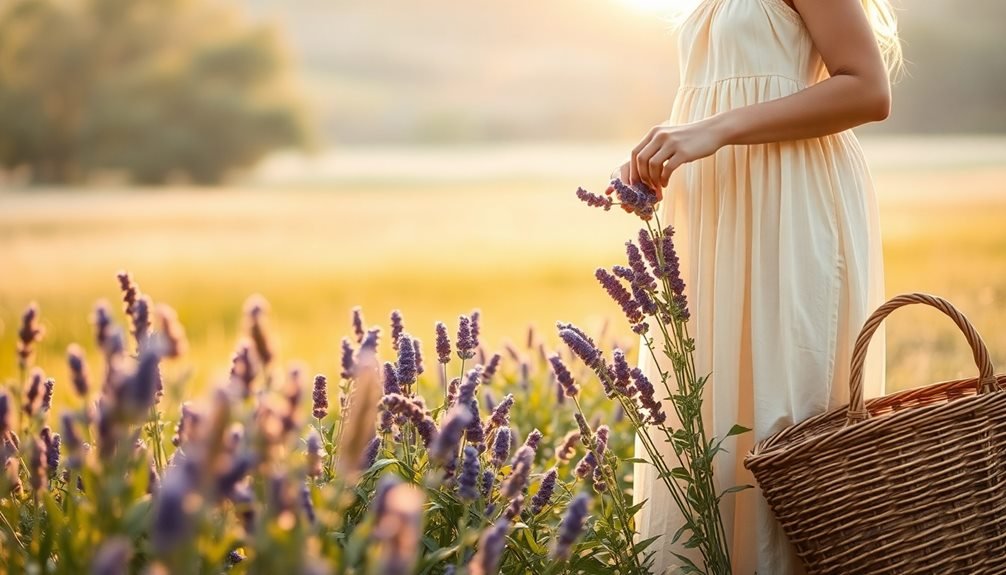
Seven soothing herb harvesting methods can transform your garden routine into a mindful practice for inner peace. Start with the morning dew gathering ritual at sunrise, when essential oils are most potent. Try moonlight harvest meditation during the full moon for enhanced aromatics. Use the sacred scissor method with precise 45-degree cuts while expressing gratitude. Practice mindful leaf selection by choosing the healthiest specimens. Incorporate gratitude while pruning to deepen your connection with nature. Explore silent garden walking to heighten awareness, and synchronize your breathing with each harvest movement. These ancient techniques hold secrets to both bountiful harvests and spiritual tranquility.
Morning Dew Gathering Ritual

As the sun peeks over the horizon, gathering herbs in the early morning dew provides the most potent medicinal properties.
You'll want to arrive at your garden between 5:00 and 6:00 AM, when the dew is fresh and herbs are naturally cleansed by nature's moisture.
Begin by examining each plant's leaves for droplets of dew. Using clean, sterilized scissors, snip the stems at a 45-degree angle, making sure you're leaving enough of the plant to regrow.
You'll notice the leaves are more fragrant and pliable during these early hours, making them ideal for harvesting.
Don't shake off the dew – instead, gently place the cut herbs in a natural fiber basket, keeping the stems aligned in the same direction.
The morning moisture helps preserve the herbs' essential oils and healing properties. If you're collecting different varieties, separate them with small cloth dividers to prevent mixing.
Once you've gathered your herbs, place them on drying screens within two hours of harvest.
The dew will naturally evaporate, leaving you with herbs that retain their maximum therapeutic benefits and energetic properties.
Moonlight Harvest Meditation
While morning harvests harness the sun's awakening energy, the moon offers a different kind of power for herb gathering. You'll find that moonlight harvesting creates a deeply meditative experience, especially during the full moon when plants reach their peak ethereal potency.
Begin your nighttime harvest by spending 5-10 minutes in silent meditation near your herb garden. Focus on your breath and set your intention for the herbs you'll collect. You'll want to bring a soft-bristled brush to gently clean the leaves, sharp scissors for clean cuts, and cloth bags for collection.
As you harvest, maintain mindful awareness of each plant you're working with. Touch the leaves gently, and you'll notice they feel different under moonlight – often more supple and cool. Cut only what you need, always leaving enough for the plant to thrive. Between each harvest, pause for three deep breaths.
For ideal results, harvest aromatic herbs like lavender, chamomile, and mint between 10 PM and midnight when their essential oils are most concentrated.
Don't forget to express gratitude to each plant before moving to the next – this practice enhances both the healing properties and your connection to the herbs.
Sacred Scissor Method
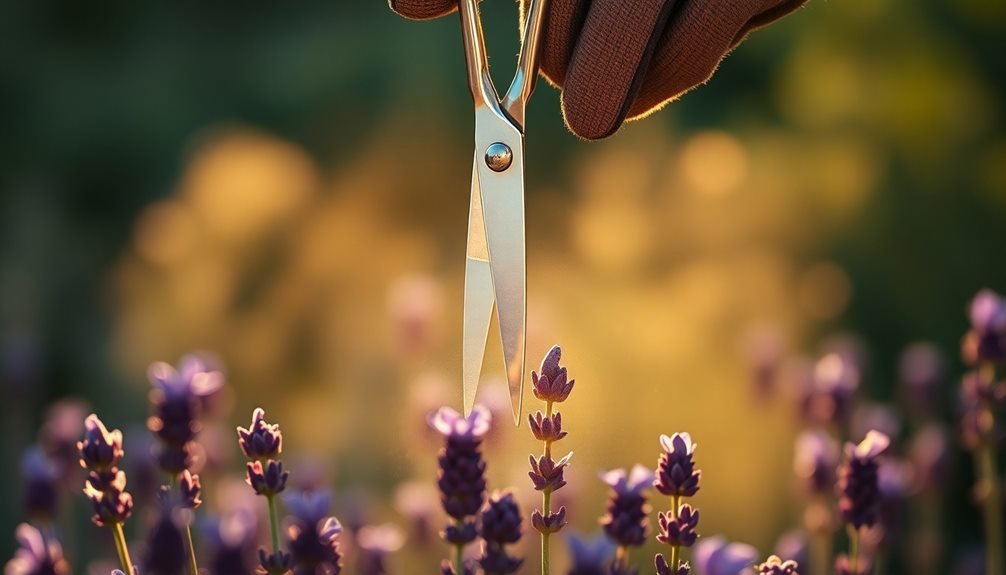
Building upon ancient traditions, the Sacred Scissor Method treats harvesting tools as extensions of your spiritual intent. Before cutting any herbs, you'll need to cleanse your scissors with purified water and dried sage, setting an intention for their use in your harvesting practice.
Hold your scissors in both hands, close your eyes, and take three deep breaths. As you exhale, visualize healing energy flowing from your hands into the blades. You'll want to cut your herbs at a 45-degree angle, making clean cuts without crushing the stems. This technique promotes healthy regrowth and honors the plant's vitality.
When you're harvesting, maintain mindful awareness of each cut. Don't rush – make deliberate snips while silently expressing gratitude to the plant.
The Sacred Scissor Method requires you to cut only what you need, never taking more than one-third of the plant at a time. Between different herb varieties, pause to wipe your scissors clean with a natural cloth, preventing cross-contamination and maintaining the purity of each harvest.
Store your sacred scissors wrapped in silk or natural fiber, keeping them separate from ordinary garden tools to preserve their spiritual connection.
Mindful Leaf Selection
Before you begin picking herbs, take time to carefully study each plant's appearance and growth patterns to understand its health and readiness.
You'll want to sync your harvesting with the plant's natural life cycle, ensuring you're not disrupting its growth or reproduction phases.
Select only mature, vibrant leaves that are free from damage or discoloration, as these will provide the most potent benefits for your herbal preparations.
Observe Before You Pick
Taking time to carefully observe herbs before harvesting them can mean the difference between collecting potent, healthy leaves and wasting your efforts on damaged or ineffective ones. Before you reach for those leaves, study the plant's overall appearance, noting its color, structure, and health.
You'll want to look for vibrant green leaves without spots, holes, or discoloration. Check the undersides of leaves for signs of pests or disease. If you notice yellowing, browning, or unusual patterns, move on to another plant.
Confirm the stems are firm and upright, not wilted or bent, as this indicates the plant's health status.
Don't forget to observe the plant's growing conditions. Is it in an area free from road pollution or pesticide drift? You'll need to verify that it's growing in clean soil and hasn't been exposed to contamination.
Notice whether the plant has enough space and isn't competing with weeds that might affect its medicinal properties. Timing matters too – observe whether the plant has reached its ideal harvesting stage, typically just before flowering when essential oils are most concentrated.
Honor Plant's Natural Cycle
In accordance with nature's rhythms, respecting a plant's growth cycle guarantees sustainable harvesting and peak medicinal potency. You'll need to understand when each herb reaches its ideal harvest time, as different plant parts store their healing properties at various stages of growth.
Root herbs like valerian and echinacea are best harvested in early spring or late fall when the plant's energy concentrates below ground. For leaves and stems, you'll want to pick them before the plant flowers, as that's when they contain the highest concentration of essential oils.
Flowers should be gathered just as they're opening, while seeds need to be collected once they're fully mature but before they naturally disperse.
- Harvest roots in early morning hours when the ground is still soft from dew
- Pick leaves on dry days after morning dew has evaporated but before the hot sun
- Collect flowers during mid-morning when they're fully open but not wilted
- Gather seeds on sunny afternoons when they're completely dry
- Time your harvests around the moon phases – decreasing moon for roots, increasing moon for above-ground parts
Choose Healthy Mature Leaves
Mindful leaf selection begins with identifying mature, vibrant leaves that show no signs of damage or disease. You'll want to look for leaves with rich, consistent coloring and avoid those with spots, holes, or discoloration. Mature leaves typically appear larger and more developed than young growth, offering the highest concentration of beneficial compounds.
When selecting leaves, gently touch them to assess their texture and resilience. Healthy leaves should feel firm and slightly thick, not brittle or limp. They shouldn't crumble in your hands or feel unusually soft.
You'll find the best specimens in the middle portion of the plant, where leaves are fully developed but not aged or weathered.
Don't harvest leaves that show signs of pest infestation, fungal growth, or environmental stress. Check both the upper and lower surfaces of each leaf, as problems often begin on the underside.
If you're unsure about a leaf's health, it's better to skip it and choose another. Remember that the quality of your harvest directly impacts the potency and effectiveness of your herbal preparations, so take time to select only the healthiest specimens.
Gratitude While Pruning
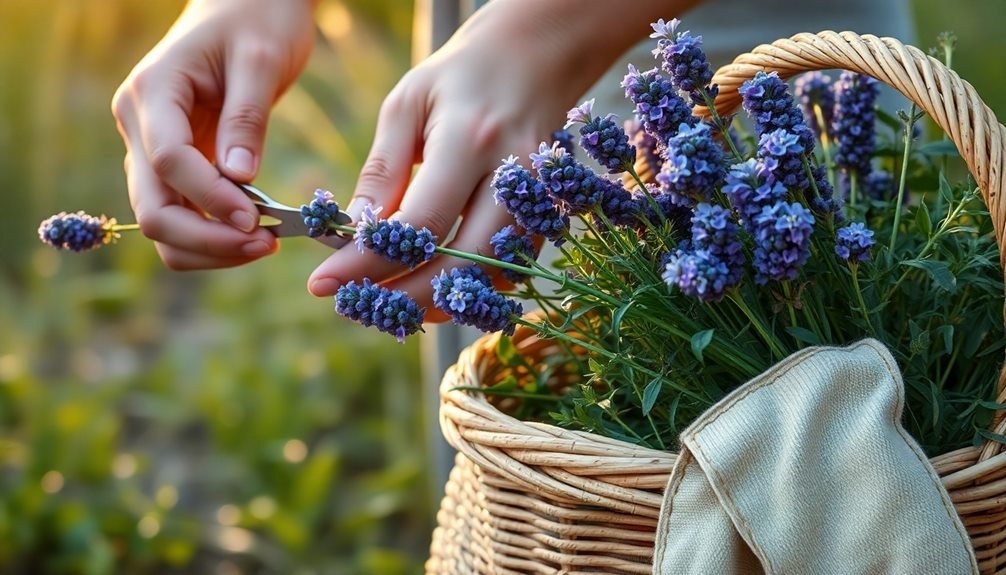
As you mindfully snip each herb stem, take a moment to appreciate nature's gift of healing plants in your garden.
You'll find that pruning with gratitude creates a deeper connection to the nurturing cycle of growth and harvest.
When you acknowledge these gentle rewards through careful and respectful cutting, you're participating in an ancient tradition of sustainable plant stewardship that enhances both your garden's liveliness and your own well-being.
Mindful Snipping Practices
Practicing gratitude while harvesting herbs transforms a simple garden task into a meaningful ritual. As you snip each stem, pause to notice the plant's unique characteristics, from its delicate leaves to its distinctive aroma. You'll find that mindful harvesting not only yields better quality herbs but also deepens your connection to nature's cycles.
When you're ready to harvest, choose sharp, clean pruning shears and approach each plant with intention. Listen to the gentle sound of stems separating, and observe how the plant responds to your touch. Remember that proper cutting techniques help promote healthy regrowth and guarantee your garden's vitality.
- Take three deep breaths before beginning to harvest, centering yourself in the present moment.
- Cut stems at a 45-degree angle to prevent water from pooling and causing rot.
- Express gratitude to each plant as you harvest, acknowledging its gifts.
- Focus on the sensation of the stems between your fingers and the tool in your hand.
- Harvest in the early morning when essential oils are most concentrated.
This mindful approach helps you develop a deeper appreciation for your garden while guaranteeing sustainable harvesting practices that benefit both you and your plants.
Nature's Gentle Rewards
The beauty of herb harvesting shines through when you tune into nature's quiet rewards. As you clip each stem, you'll discover small moments of gratitude that transform a simple gardening task into a mindful practice. Notice how the herbs release their aromatic oils, offering thanks for your gentle care and attention.
| Herb Type | Nature's Gift | Your Gratitude Practice |
|---|---|---|
| Lavender | Purple blooms sway | Thank the bees that pollinate |
| Mint | Spreads abundantly | Appreciate its generous growth |
| Sage | Soft, silvery leaves | Honor its healing wisdom |
| Rosemary | Strong, upright stems | Welcome its resilient spirit |
| Thyme | Tiny, delicate flowers | Respect its humble presence |
When you're harvesting, pause to observe the intricate patterns in each leaf and the way sunlight filters through the branches. You'll find that these moments of connection deepen your relationship with your garden. Let each snip become a small celebration of nature's cycle, remembering that your careful harvesting encourages healthy growth and guarantees future abundance. You're not just collecting herbs; you're participating in an ancient practice of giving and receiving.
Silent Garden Walking Practice
Silent walking through your herb garden is both a mindfulness practice and an important observation technique. As you move slowly between the rows of medicinal plants, you'll notice subtle changes in their growth patterns, leaf health, and readiness for harvest. This deliberate practice helps you develop a deeper connection with your garden while identifying potential issues before they become problems.
You'll want to practice silent walking early in the morning or at dusk when the garden's energy is most palpable. Remove your shoes if possible, and focus on each measured step as you move through your sacred space. Pay special attention to the soil's texture, moisture levels, and the overall liveliness of your plants.
- Keep your phone on silent and leave it outside the garden
- Take slow, deliberate breaths as you walk, matching your pace to your breathing
- Notice which herbs attract beneficial insects and which areas need attention
- Look for signs of readiness for harvest, such as flower formation or leaf maturity
- Document your observations mentally, saving note-taking for after your walk
Breath-Synchronized Picking
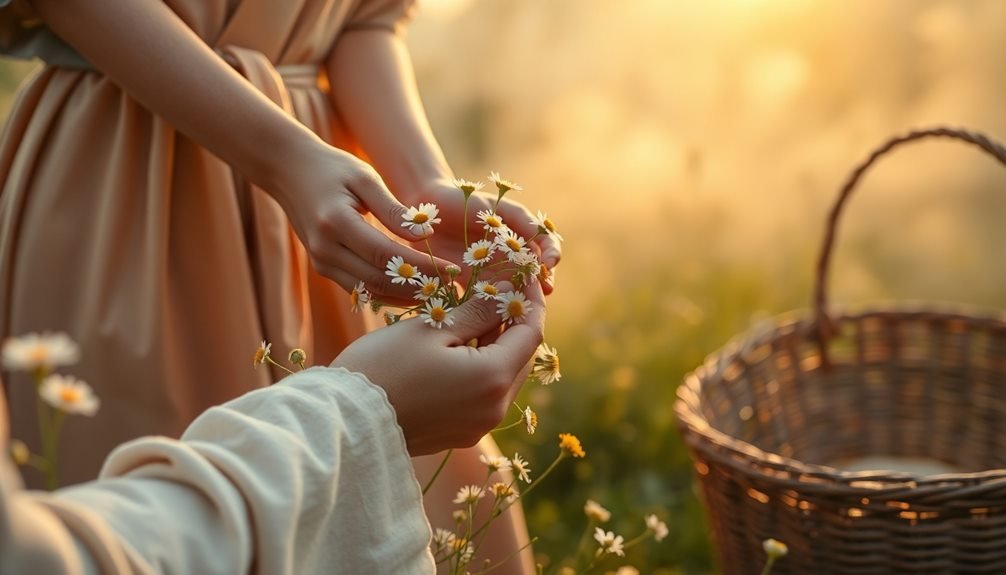
Once you've completed your silent garden walk, breath-synchronized picking offers a natural way to maintain your mindful state while harvesting herbs. You'll coordinate your breathing with each picking motion, creating a rhythmic pattern that keeps you centered and focused.
Start by selecting your harvest area and positioning yourself comfortably. As you inhale, gently grasp the herb stem, and as you exhale, make your picking motion. This synchronization helps prevent rushed or careless harvesting while maintaining the plant's integrity.
| Breath Phase | Action | Benefit |
|---|---|---|
| Inhale | Grasp stem | Builds focus |
| Hold | Assess cut point | Guarantees accuracy |
| Exhale | Make clean cut | Reduces plant stress |
You'll notice that this method naturally slows your picking pace, allowing you to be more selective and gentle with each plant. It's particularly effective when harvesting delicate herbs like chamomile, mint, and lavender. Remember to maintain a steady breathing pattern throughout your session, and don't rush to fill your basket. The quality of your harvest will improve as you become more attuned to this rhythmic practice.
Frequently Asked Questions
How Long Can Harvested Herbs Remain Fresh Before Drying?
You'll find most fresh-cut herbs stay viable for 5-7 days when stored properly in your fridge. For best results, wrap them in damp paper towels and place them in a plastic bag with small air holes.
Which Herbs Should Never Be Planted Together in a Sacred Garden?
You'll want to keep mint and fennel separate, as they'll aggressively compete. Don't plant dill near angelica or caraway. Also, keep rue away from basil, and avoid planting wormwood next to sage or thyme.
Can Healing Properties of Herbs Decrease if Harvested During Menstruation?
You won't find scientific evidence that menstruation affects herbs' healing properties. While some cultural traditions suggest waiting, your herbs' potency depends on proper harvesting techniques, storage, and timing of season instead.
What Blessing Rituals Protect Herb Gardens From Negative Energies?
You can protect your herb garden by burning sage, placing crystals, saying prayers, ringing bells, or creating intention circles. Remember to cleanse your tools and set positive energy before each ritual practice.
Should Specific Crystals Be Placed Near Herbs During the Growing Cycle?
You'll find clear quartz, amethyst, and moonstone work well near your herbs. Place them along garden borders or in pots – they can amplify growth energy while maintaining plant health during the growing season.
In Summary
You'll find these seven gentle harvesting methods transform a simple garden task into a mindful practice for cultivating inner peace. Whether you're collecting morning dew-kissed herbs or practicing the silent garden walk, each technique helps you connect more deeply with nature and yourself. By incorporating these mindful harvesting rituals into your routine, you're not just gathering herbs – you're nurturing your soul and creating moments of tranquility.