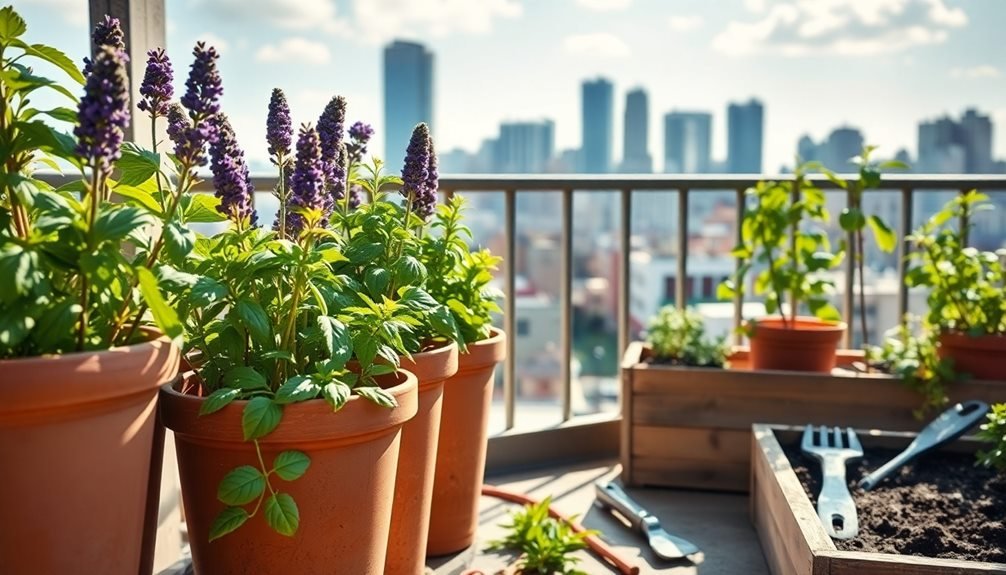
Creating a stress-relief herb garden in your urban space can transform daily life through natural anxiety management. You'll find peace with seven distinct container gardens: a lavender-chamomile blend for calming tea, a meditation-focused mint collection, a sacred basil (tulsi) trio featuring Krishna, Rama, and Vana varieties, a sleep-supporting mix of German chamomile and lemon balm, a sensory garden with aromatic herbs, an adaptogenic blend for stress resistance, and a mindful cooking collection. Each garden needs just 6 hours of sunlight and minimal space to thrive. These therapeutic combinations offer a gateway to discovering nature's most powerful stress-fighting tools.
Why Herbs Help Combat Stress
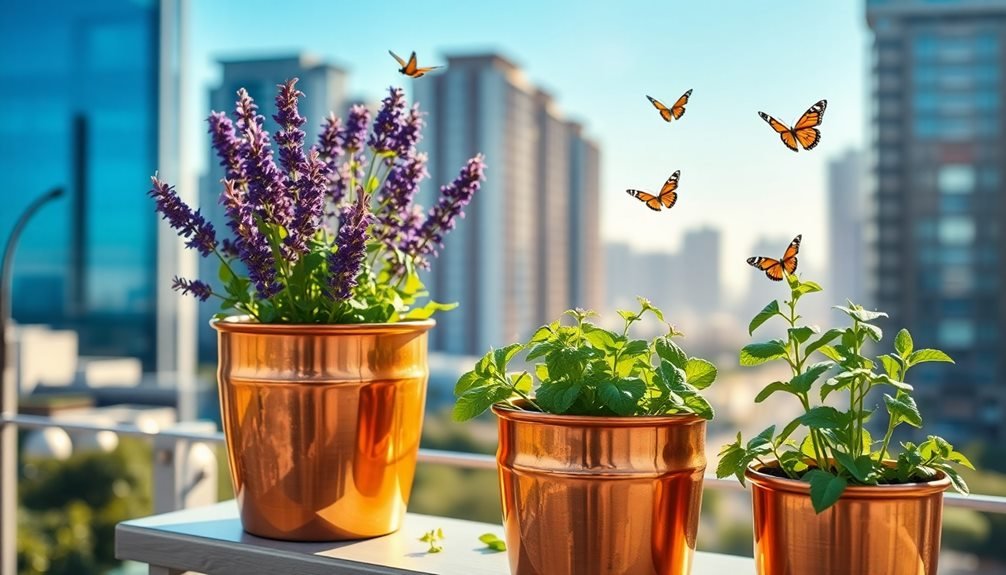
A well-tended herb garden offers more than just culinary benefits – it's a natural stress reducer for city dwellers. When you're feeling overwhelmed by urban life, caring for herbs can help regulate your cortisol levels and lower blood pressure through sensory engagement and mindful activity.
You'll find that herbs stimulate multiple senses simultaneously. The act of touching soft sage leaves, inhaling the sharp scent of rosemary, or watching basil seedlings emerge can trigger the release of mood-enhancing endorphins. Many herbs, like lavender and chamomile, contain natural compounds that promote relaxation when you breathe in their aromas.
The daily ritual of tending to herbs creates a meditative practice that breaks the cycle of city stress. You'll develop a nurturing routine: checking soil moisture, removing dead leaves, and harvesting fresh sprigs.
This connection to living plants fulfills your innate need for natural contact – what scientists call "biophilia." Even in a small apartment, your container herb garden becomes a micro-sanctuary where you can decompress and practice mindfulness.
The satisfaction of growing your own herbs also boosts self-esteem and provides a sense of accomplishment in your fast-paced urban environment.
Small-Space Anxiety-Relief Garden Setup
Creating a calming herb garden in limited urban spaces requires strategic planning and thoughtful plant selection. You'll want to focus on anxiety-reducing herbs like lavender, chamomile, and lemon balm, which can thrive in containers on balconies, windowsills, or small patios.
Start with 3-4 medium-sized containers (12-inch diameter minimum) with proper drainage holes. Place them where they'll receive at least 6 hours of sunlight daily. You'll need well-draining potting soil mixed with about 20% perlite to prevent root rot.
Space your herbs according to their mature size – lavender needs more room than compact herbs like thyme. Position taller plants like rosemary towards the back of your space, with shorter varieties in front for easy access. Install small trellises or stakes for climbing varieties like nasturtiums.
Consider using vertical gardening techniques, such as hanging baskets or wall-mounted planters, to maximize your growing area. Don't forget to include comfortable seating nearby – a small chair or cushion where you can sit and enjoy your garden's calming effects.
Water deeply but infrequently, and harvest regularly to encourage bushy growth.
Calming Lavender and Chamomile Garden
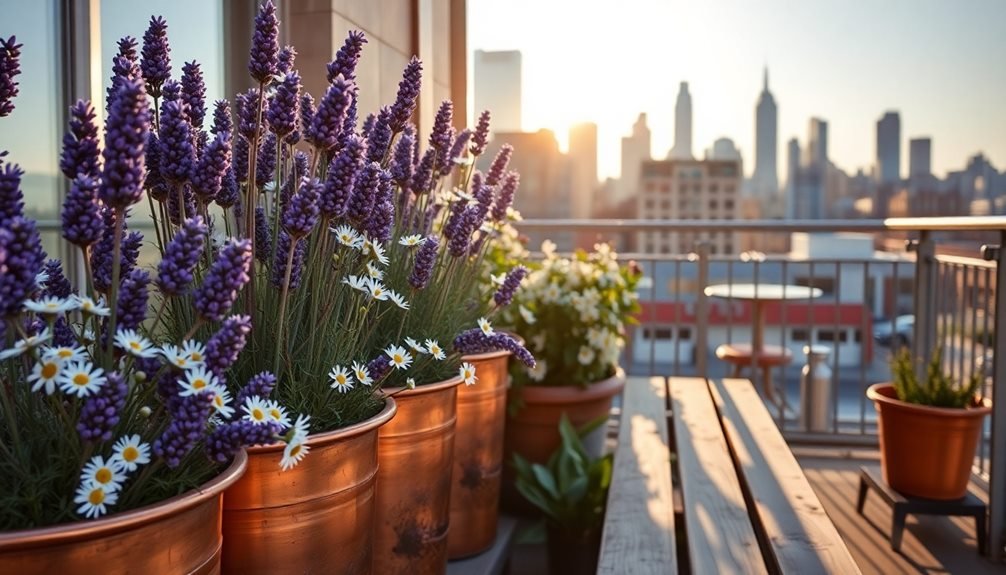
The perfect anxiety-reducing garden starts with lavender and chamomile, two powerhouse herbs known for their calming properties.
You'll need two 12-inch containers with drainage holes, quality potting soil, and healthy seedlings of English lavender and German chamomile.
Plant your lavender in the first container, positioning it in the center. This Mediterranean herb needs full sun and well-draining soil. Don't overwater; lavender prefers slightly dry conditions. You can harvest the purple blooms throughout summer to make calming teas or sachets.
Your chamomile container requires partial sun and consistently moist soil. Space three to four chamomile plants evenly in the pot, leaving room for growth. Unlike lavender, chamomile won't mind regular watering. The daisy-like flowers will bloom continuously if you harvest them regularly.
Place both containers near a sunny window or on your balcony.
To maintain your calming garden, prune lavender stems back by one-third after flowering, and pinch off spent chamomile blooms.
You'll enjoy fresh herbs for tea year-round, and the sweet, floral fragrance will transform your urban space into a peaceful retreat.
Meditation-Friendly Mint Container Garden
A mint container garden can transform your urban balcony or windowsill into a peaceful meditation spot, where you'll find natural aromatherapy at your fingertips.
You'll discover that crushing fresh mint leaves releases an invigorating scent that helps clear your mind during quick meditation breaks from city life.
Whether you're growing spearmint, peppermint, or chocolate mint, these hardy plants thrive in containers and provide year-round access to calming herbal benefits.
Growing Mint for Calm
Planting mint in your meditation space creates a natural environment for relaxation, as the herb's soothing aroma helps calm the mind during mindfulness practices.
You'll want to choose a container that's at least 12 inches deep with drainage holes, as mint's vigorous root system requires ample space. Place your container in a spot that receives partial shade, especially during hot afternoons.
Start with organic potting soil mixed with 30% compost, and plant your mint seedlings about 6 inches apart. You can grow different varieties like peppermint, spearmint, or chocolate mint to create varied sensory experiences.
Water your mint regularly, keeping the soil moist but not waterlogged. During meditation sessions, you'll benefit from mint's natural aromatherapy by gently brushing the leaves.
To maintain your mint's calming properties, harvest leaves regularly by pinching them off just above a leaf node. This encourages bushier growth and prevents the plant from becoming leggy.
Prune any flowers that appear to keep the leaves' aromatic oils concentrated. In winter, move your container to a protected area if temperatures drop below freezing to guarantee year-round access to this calming herb.
Aromatherapy During Urban Breaks
While maneuvering a hectic urban lifestyle, you'll find that creating an aromatic mint meditation corner offers a perfect escape during short breaks.
Position your mint container garden near a comfortable seating area, preferably by a window where natural light streams in and the herbs can thrive.
During your break, crush a few mint leaves between your fingers to release their essential oils. The invigorating scent helps clear your mind and reduces stress. You'll notice the mint's cooling aroma creating an instant shift in your mood and energy levels.
Take slow, deep breaths while focusing on the fresh, crisp fragrance.
Your mint meditation space doesn't need to be large. A small corner with a cushion, a compact container garden, and perhaps a small water feature can transform into your personal sanctuary.
Consider growing different mint varieties like peppermint, spearmint, and chocolate mint to create varying aromatherapy experiences. Each variety offers unique therapeutic properties – peppermint energizes, spearmint soothes, and chocolate mint uplifts.
Remember to trim your mint plants regularly to encourage bushier growth and maintain their compact shape, ensuring your aromatherapy corner stays vibrant and accessible whenever you need a moment of calm.
Sacred Basil Stress-Relief Collection
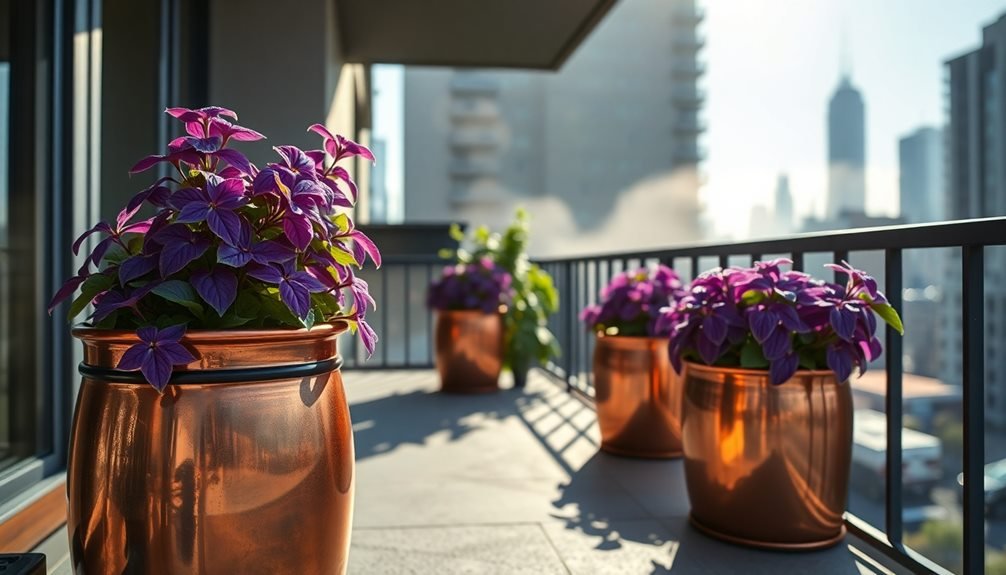
Through the ages, sacred basil (also known as holy basil or tulsi) has helped people manage stress and anxiety naturally. You'll find this adaptable herb particularly suited for container growing on your urban balcony or windowsill, where it can thrive with minimal care while providing fresh leaves for tea and aromatherapy.
| Variety | Growing Tips | Stress Benefits |
|---|---|---|
| Krishna Tulsi | Partial shade, rich soil | Highest adaptogenic properties |
| Rama Tulsi | Full sun, well-drained soil | Best for calming tea |
| Vana Tulsi | Indirect light, moist soil | Strongest aromatherapy effects |
To start your sacred basil collection, you'll need three 8-inch containers with drainage holes, organic potting mix, and quality seeds or seedlings. Plant them in spring when temperatures reach 70°F. You can harvest leaves once plants reach 6 inches tall, but don't take more than 1/3 of the plant at once. Make stress-relieving tea by steeping 2-3 fresh leaves in hot water for 5 minutes, or dry them for future use. Your sacred basil plants will continue producing for several months with regular pruning and proper watering.
Sleep-Supporting Herb Container Garden
Having trouble sleeping in your busy urban environment? Create a compact container garden filled with calming herbs that'll help you drift off naturally. Your windowsill or small balcony can become a source of sleep-supporting botanicals that you can harvest fresh before bedtime.
Choose a wide, shallow container at least 6 inches deep with good drainage. Fill it with organic potting soil and plant these proven sleep-supporting herbs:
- Lavender (Lavandula angustifolia) – Place this aromatic herb in the center of your container. Its purple blooms and soothing scent help reduce anxiety and promote deeper sleep.
- German Chamomile (Matricaria recutita) – Plant this daisy-like flower around the lavender. You'll love making fresh chamomile tea from its flowers, known to improve sleep quality.
- Lemon Balm (Melissa officinalis) – Position this fast-growing herb along the container's edge. Its citrusy leaves make a relaxing tea that eases insomnia and calms racing thoughts.
Water your sleep garden in the morning, and harvest herbs just before use.
Dry extra leaves and flowers on a screen, then store them in airtight containers for winter use.
Urban Herb Garden Care Tips
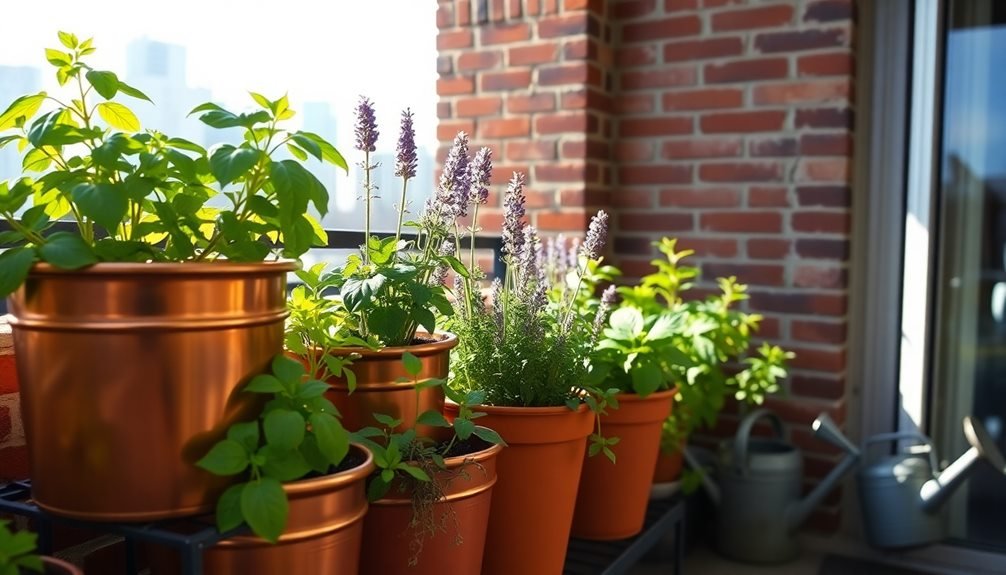
Proper care makes the difference between a thriving urban herb garden and a struggling one. You'll need to focus on four key aspects: lighting, watering, pruning, and fertilizing.
Most herbs require 6-8 hours of direct sunlight daily, so place your containers near a south-facing window or on a sunny balcony.
Water your herbs when the top inch of soil feels dry, but don't overwater – root rot is a common killer of container herbs. You'll want to guarantee your pots have drainage holes and use well-draining potting soil.
Trim your herbs regularly to promote bushier growth and prevent flowering, which can make the leaves bitter. Pinch off the top sets of leaves just above a leaf node.
Feed your herbs with a balanced, water-soluble fertilizer once every four to six weeks during the growing season, but don't overdo it – excess fertilizer can reduce the concentration of essential oils that give herbs their flavor.
Watch for signs of pest infestation, particularly if growing indoors. You can prevent most pest problems by guaranteeing good air circulation and avoiding overcrowding your containers.
Frequently Asked Questions
Can Herb Container Gardens Attract Unwanted Pests to My Apartment Balcony?
Your balcony herbs can attract some insects, but you'll rarely face serious pest problems. You can deter unwanted visitors by using natural repellents like neem oil or companion planting with pest-resistant herbs like rosemary.
Will Growing Multiple Herbs Together Affect Their Individual Medicinal Properties?
You won't lose medicinal properties when growing herbs together. Just guarantee they have similar water and light needs. Be careful with aggressive spreaders like mint, which can overtake others in shared containers.
How Do Indoor Herb Gardens Impact Apartment Humidity Levels?
You'll notice herbs slightly increase your apartment's humidity through transpiration. They'll add moisture, but not enough to solve dry air issues. Consider grouping multiple plants together for a more noticeable effect.
Are There Herbs That Should Not Be Planted Near Children or Pets?
You'll want to avoid toxic herbs like foxglove, wormwood, pennyroyal, and rue if you have kids or pets. Keep mint contained too – while safe, it's invasive and can overtake your garden space.
Can Stress-Relief Herbs Lose Their Calming Properties if Grown in Artificial Light?
You'll find that most stress-relief herbs maintain their beneficial properties under artificial light, though they might grow slower. For best results, you'd want to make certain your grow lights mimic natural sunlight's intensity and spectrum.
In Summary
You'll find that growing these seven herb container gardens brings both purpose and peace to your urban lifestyle. Whether you choose the soothing lavender collection or the meditation-friendly mint garden, you're creating a living sanctuary that fits your space. Start small, tend to your plants daily, and watch as your stress melts away with each leaf you nurture. Your windowsill oasis awaits.