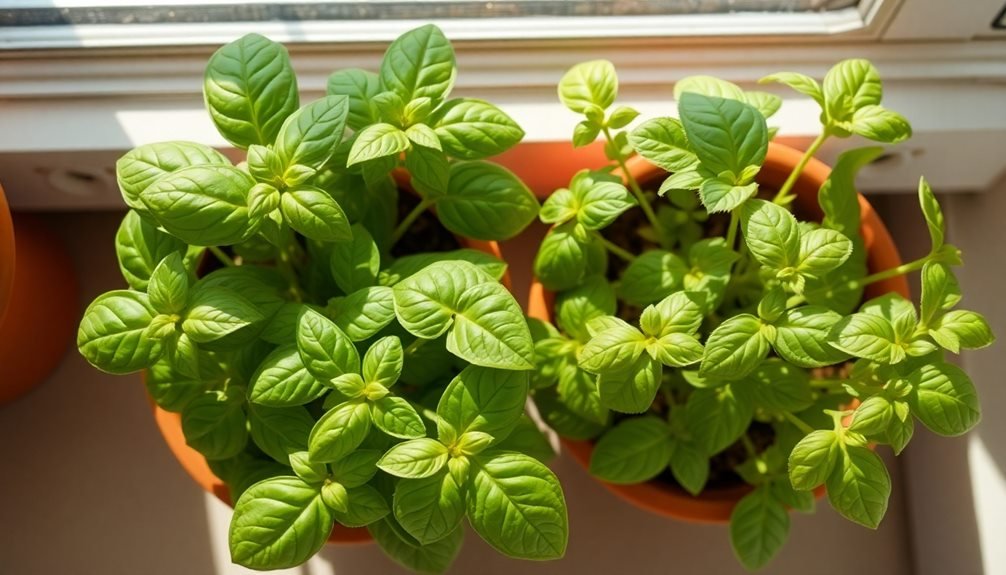
Consistent watering matters because it directly affects your herbs' health, flavor, and growth potential. When you maintain proper moisture levels, your plants develop strong root systems and produce aromatic leaves packed with essential oils. You'll avoid the damaging effects of water stress – like wilting, yellowing leaves, and root rot – that can quickly kill indoor herbs. Whether you're growing basil, mint, or thyme, each herb needs reliable hydration to thrive, but too much or too little water spells trouble. Understanding your herbs' specific water needs and warning signs will transform your indoor garden from surviving to flourishing.
Understanding Water Stress in Herbs
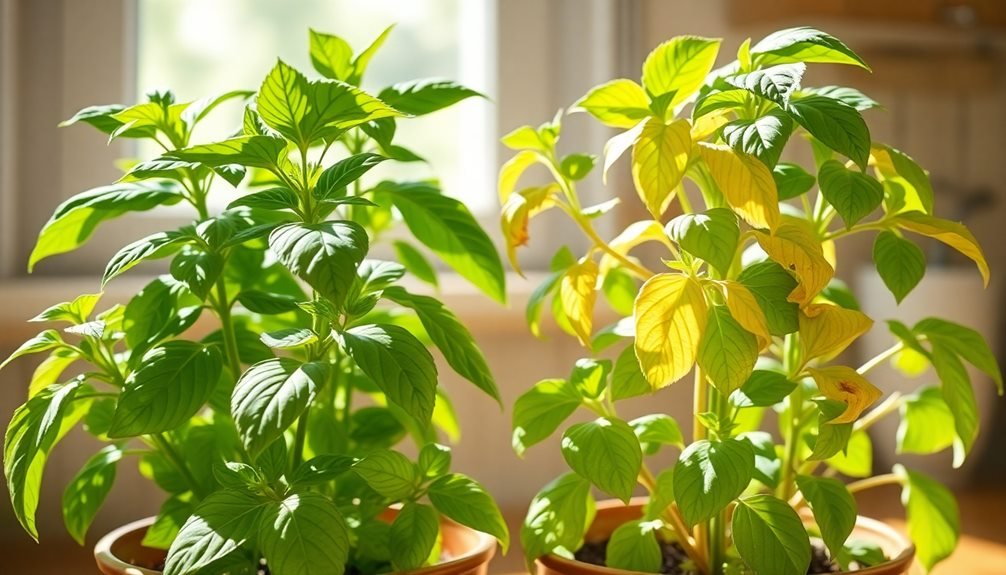
Two key signs help you identify water stress in herbs: underwatering and overwatering.
When you're underwatering your herbs, you'll notice wilting leaves, dry soil, and crispy leaf edges. The plants might also show stunted growth and develop a dull, lackluster appearance. Severe underwatering can lead to leaf drop and eventually plant death.
Overwatering presents different challenges. You'll spot yellowing leaves, soggy soil that doesn't dry out between waterings, and possibly a musty smell coming from the pot.
Root rot becomes a serious risk, and you might see mold growing on the soil surface. Your herbs' stems may become soft and mushy near the base, indicating that root damage has already occurred.
To prevent water stress, you'll need to find the right balance. Check your herbs' soil moisture by inserting your finger about an inch deep into the soil. If it's dry at that depth, it's time to water.
Different herbs have varying water needs – Mediterranean herbs like rosemary and thyme prefer drier conditions, while basil and parsley need more consistent moisture.
Signs of Overwatering
You'll spot overwatering in your indoor herbs when leaves turn yellow and droop, indicating the plant's distress from excess moisture.
Root rot can quickly take hold if you've left your herbs sitting in waterlogged soil, causing roots to become dark and mushy.
When your herb's soil stays consistently wet and doesn't dry between waterings, you're likely giving your plants more water than they need.
Yellowing Droopy Leaves
One clear indicator of overwatering your indoor herbs is yellowing, droopy leaves that feel soft and mushy to the touch. These symptoms occur because excess water prevents roots from accessing oxygen, leading to root rot and the plant's inability to absorb nutrients properly.
You'll notice the lower leaves typically show signs first, becoming pale yellow before progressing to a darker yellow. The stems may also appear swollen and waterlogged. If you gently press the leaves, they'll feel limp and spongy rather than firm and resilient. In severe cases, you might spot brown or black spots developing on the affected leaves.
When you identify these symptoms, it's essential to act quickly. First, stop watering immediately and check the soil moisture level by inserting your finger about an inch deep. If it's wet, allow the soil to dry until only slightly damp.
You should also inspect the drainage holes to verify they're not blocked and consider moving your herbs to a container with better drainage. Remove any yellowed leaves, as they won't recover, and trim any rotted roots to prevent the spread of decay.
Root Rot Development
Root rot frequently develops as the first serious complication of overwatering indoor herbs, often before visible symptoms appear above the soil. When you're consistently giving your herbs too much water, their roots sit in saturated soil, depriving them of oxygen and creating an ideal environment for fungal growth.
You'll notice root rot's early stages if you gently pull your herb from its pot. Healthy roots should appear firm and white, while rotting roots look brown or black, feel mushy, and may have a foul odor. If you spot these signs, you'll need to act quickly to save your plant.
The progression of root rot accelerates rapidly once it takes hold. Your herb's stems will start to darken near the soil line, and the entire plant will become unstable in its pot as the root system deteriorates.
You can prevent root rot by ensuring proper drainage through well-draining soil mixtures and pots with drainage holes. Only water when the top inch of soil feels dry, and never let your herbs sit in standing water.
If you catch root rot early, you can often save the plant by trimming affected roots and replanting in fresh, dry soil.
Soil Stays Too Wet
Several telltale signs indicate when your herb's soil stays too wet from overwatering.
You'll notice the soil surface remains consistently damp and dark-colored between waterings, and you might spot green algae growing on top. When you touch the soil, it feels cold and compacted, often with a musty or moldy smell emanating from the pot.
Your herbs will show distress signals when their soil can't dry out properly.
The lower leaves typically turn yellow first and may develop brown spots or feel soft and mushy. If you gently pull back the soil near the stem, you'll find the roots looking brown or black instead of healthy white. The plant's growth will slow considerably, and new leaves might appear stunted or pale.
You can confirm overly wet conditions by weighing your pot – if it feels unusually heavy days after watering, there's too much moisture retained.
Check the drainage holes; they shouldn't be blocked, and excess water should flow freely when you water. If you're using a decorative outer pot, never let water collect in the bottom, as this prevents proper soil aeration and drainage.
Common Underwatering Symptoms
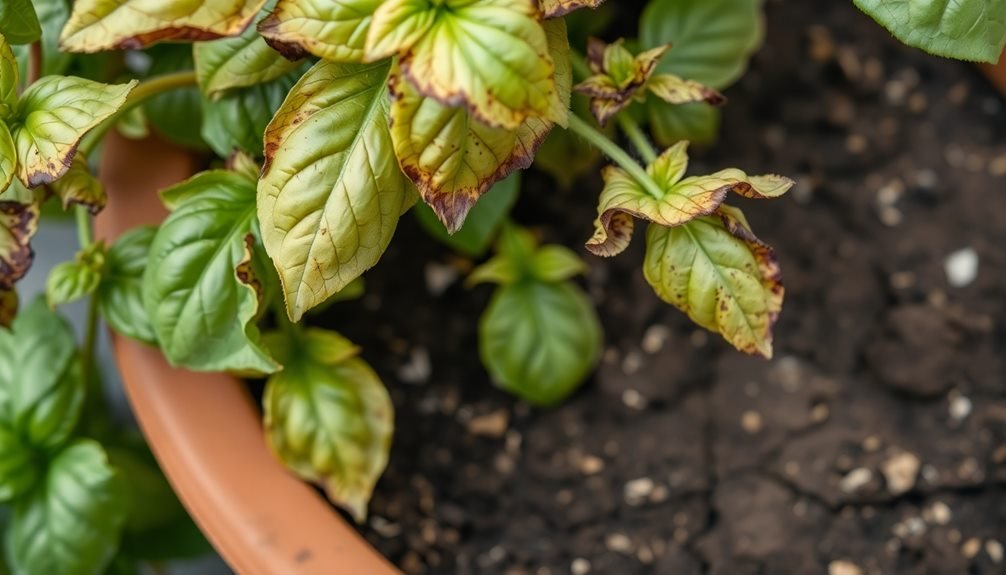
When your indoor herbs aren't getting enough water, you'll notice their leaves and stems beginning to droop or wilt.
Your plants will also exhibit considerably slower growth patterns than usual, making them appear stunted or weak.
The lack of proper hydration often leads to yellowing leaves, particularly around the edges and between the veins, signaling your herbs are desperate for a good drink.
Wilting Leaves and Stems
The most obvious signs of an underwatered herb garden typically appear in the leaves and stems. You'll notice your herbs becoming limp, droopy, and lacking their usual vibrant structure. The leaves might curl inward, feel crispy at the edges, or show yellowing patterns that start from the tips and move toward the center. These symptoms occur because your plants aren't getting enough water to maintain their cellular turgor pressure.
When your herbs don't receive adequate water, they'll display these specific wilting patterns:
- Lower leaves will droop first and may eventually fall off as the plant redirects water to newer growth.
- Stems become weak and bend easily, sometimes unable to support the weight of the leaves.
- New growth appears stunted, with smaller leaves and shortened stem segments.
You can test for wilting by gently touching the leaves – they'll feel papery and thin instead of firm and resilient. If you catch wilting early, most herbs will recover quickly after proper watering.
However, prolonged underwatering can lead to permanent damage, making it vital to establish a consistent watering schedule based on your herbs' specific needs.
Slow Growth and Yellowing
Beyond visible wilting, underwatered herbs demonstrate their distress through stunted development and discoloration.
You'll notice your herbs aren't growing at their usual pace, and new leaves appear smaller than normal. The plants redirect their limited resources to survival rather than producing new growth, resulting in a compact, stunted appearance.
When you don't provide enough water, your herbs can't properly absorb essential nutrients from the soil. This deficiency manifests as yellowing leaves, particularly on the lower portions of the plant.
You'll see the yellow start at the leaf edges and gradually spread inward. The yellowing often accompanies dry, crispy leaf margins that eventually turn brown.
If you're growing culinary herbs, insufficient water will affect their flavor and aromatic properties. The essential oils that give herbs their characteristic tastes become less concentrated, leaving you with bland-tasting leaves.
To prevent these issues, you'll need to establish a consistent watering schedule based on your herbs' specific needs and environmental conditions. Check the soil moisture regularly by inserting your finger about an inch deep – if it's dry at that depth, it's time to water.
Best Times to Water
Mastering the timing of watering your indoor herbs can greatly impact their growth and health. The best time to water your herbs is early morning, between 6 AM and 10 AM, when the plants are beginning their active growth period. This timing allows roots to absorb water efficiently before the day's peak temperatures arrive.
You'll want to check your herbs' moisture levels daily, but don't automatically water them. Instead, test the soil by inserting your finger about an inch deep – if it feels dry at that depth, it's time to water. Avoid watering in the evening or at night, as this can lead to fungal growth and root rot.
For ideal watering results, follow these key guidelines:
- Water thoroughly until you see drainage from the bottom holes, but never let plants sit in standing water.
- Maintain consistent watering schedules based on individual herb species' needs – basil requires more frequent watering than rosemary.
- Adjust watering frequency based on seasonal changes and indoor temperature fluctuations.
During winter months, you'll likely need to reduce watering frequency as most herbs enter a period of slower growth and require less moisture.
Moisture Meters and Testing Methods
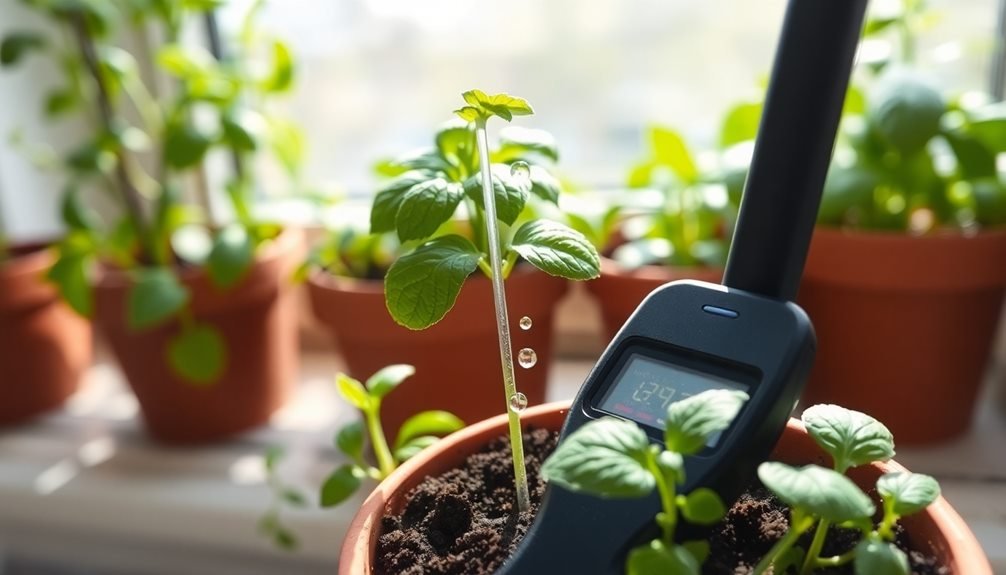
You'll find several reliable moisture meters at garden centers, ranging from basic analog models to digital versions with multiple features.
Testing soil moisture with your finger remains a practical method – simply insert your index finger about an inch deep into the soil to feel for dampness.
Whether you choose a meter or manual testing, you should check your herbs' moisture levels daily to maintain ideal growing conditions.
Choosing the Right Meter
Accurately measuring soil moisture is essential for maintaining healthy indoor herbs, and selecting the right moisture meter can make this task considerably easier.
When you're shopping for a moisture meter, you'll find both digital and analog options available. Digital meters often provide more precise readings and may include additional features like pH and light measurements, while analog meters are typically more affordable and don't require batteries.
Consider these key factors when choosing your moisture meter:
- Probe length – Verify it's long enough to reach the root zone of your herbs (usually 4-6 inches)
- Display readability – Look for clear measurements with an easy-to-interpret scale
- Durability – Select meters with sturdy construction and corrosion-resistant probes
You'll want to choose a meter that matches your gardening needs and budget. If you're growing multiple varieties of herbs with different moisture requirements, opt for a digital meter with memory functions to track readings over time.
For basic moisture monitoring, a simple analog meter will suffice. Remember to calibrate your meter regularly and clean the probe after each use to maintain accuracy.
Basic Finger Testing Tips
While moisture meters provide precise readings, the finger test remains one of the most reliable methods for checking your indoor herbs' soil moisture. To perform this test effectively, insert your index finger into the soil up to the second knuckle (about 2 inches deep). If soil clings to your finger and feels cool, your herbs don't need water yet. However, if the soil feels dry and doesn't stick, it's time to water.
You'll want to test at consistent depths because surface soil often dries faster than deeper layers. Make it a habit to check your herbs' moisture levels at the same time each day, ideally in the morning.
Don't rely on the soil's surface appearance, as it can be misleading. Some herbs, like basil and parsley, prefer consistently moist soil, while others, such as sage and thyme, tolerate drier conditions.
If you're unsure about moisture levels, gently lift your herb pots – dry soil makes them noticeably lighter.
You'll develop a better sense of your plants' watering needs over time as you become familiar with their weight differences between wet and dry states.
Daily Moisture Level Checks
Regular moisture level checks are fundamental to maintaining healthy indoor herbs. You'll want to establish a consistent monitoring routine to guarantee your plants receive the right amount of water. A moisture meter provides accurate readings of soil dampness at the root level, where it matters most.
When checking moisture levels, you should assess both the surface and deeper soil conditions. Insert your moisture meter about 2-3 inches into the soil, keeping it away from the pot's edges and the plant's stem. Different herbs have varying moisture needs, so it's crucial to know your specific plants' requirements.
Here are three reliable ways to check soil moisture without a meter:
- Weight test: Lift the pot to feel its weight – a light pot indicates dry soil.
- Wooden stick method: Insert an unpainted wooden stick into the soil; if it comes out clean, the soil is dry.
- Visual inspection: Look for soil pulling away from the pot's sides or surface cracks.
If you're using a moisture meter, maintain a schedule of checking at the same time each day, documenting readings to establish watering patterns for your specific herbs and growing conditions.
Container Drainage Requirements
Proper drainage is essential for any indoor herb container to prevent root rot and maintain healthy plants. You'll need containers with adequate drainage holes at the bottom – at least one large hole or multiple smaller ones. These holes should be approximately 1/4 to 1/2 inch in diameter to allow excess water to flow freely.
Place a layer of coarse material like gravel or broken pottery pieces at the bottom of your containers, creating about a 1-inch barrier between the soil and drainage holes. This prevents soil from clogging the holes while maintaining proper water flow.
Don't forget to use saucers or trays beneath your containers to catch excess water and protect your surfaces.
If you're using decorative pots without drainage holes, you'll need to double-pot your herbs. Place your herbs in plastic containers with drainage holes, then set these inside the decorative pots.
When watering, remove the inner container, water thoroughly, allow excess water to drain completely, then return it to the decorative pot. This method guarantees your herbs won't sit in standing water while maintaining an attractive appearance.
Seasonal Watering Changes
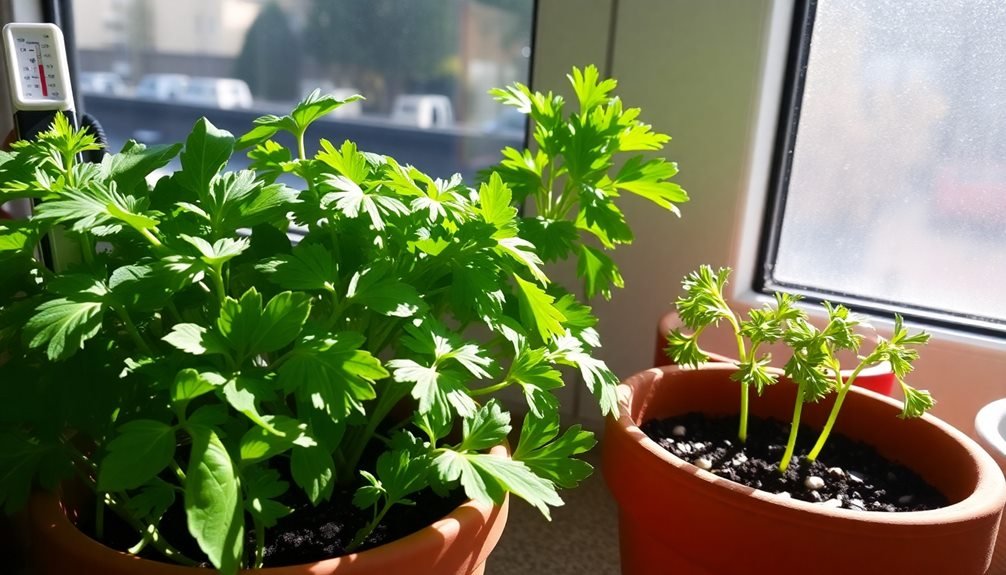
Adapting your watering routine throughout the year guarantees your indoor herbs thrive during seasonal changes.
You'll notice your herbs require different amounts of water as temperatures and humidity levels fluctuate with the seasons. During summer months, you'll need to water more frequently as higher temperatures increase evaporation and plant transpiration rates.
Winter presents unique challenges, as indoor heating systems can create artificial drought conditions. While your herbs might need less water overall, the dry air from heating systems can quickly dehydrate soil.
You'll want to monitor soil moisture more carefully and consider using a humidity tray during these months.
Here's how to adjust your watering schedule seasonally:
- Summer: Water every 1-2 days, checking soil moisture daily as temperatures rise
- Winter: Reduce watering to every 3-4 days, but monitor humidity levels closely
- Spring/Fall: Maintain a moderate schedule of every 2-3 days, adjusting based on growth patterns
Your herbs will signal their needs through leaf appearance and soil moisture levels.
Don't rely solely on a fixed schedule – instead, let your plants' condition guide your watering frequency through seasonal shifts.
Water Quality for Herbs
The quality of water you use can greatly impact your herbs' health and growth. Most tap water contains chlorine and other chemicals that can accumulate in soil over time, potentially harming your plants' root systems. If you're using tap water, let it sit out for 24 hours before watering to allow chlorine to dissipate.
While distilled water lacks beneficial minerals, filtered water offers an excellent balance for indoor herbs. You'll want to avoid softened water, as its high sodium content can damage your plants. If you're collecting rainwater, make certain it's from a clean source and properly stored to prevent bacterial growth.
Water temperature matters too – you'll want to use room temperature water, as cold water can shock the roots and slow growth. If your tap water is particularly hard, you might notice white mineral deposits on your soil's surface. In this case, you can flush the soil every few months with filtered water to prevent mineral buildup.
Additionally, check your water's pH level – most herbs prefer slightly acidic to neutral water, with a pH between 6.0 and 7.0.
Self-Watering System Options
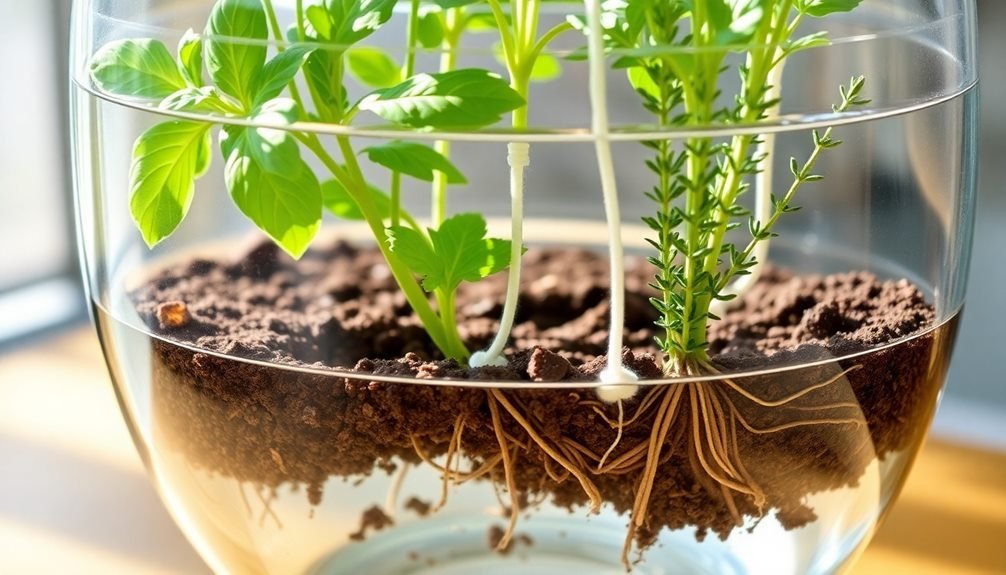
Self-watering systems provide a convenient solution for maintaining consistent moisture levels in your indoor herb garden. These systems use a reservoir of water beneath your plants, allowing them to draw moisture through capillary action when needed.
You'll find that self-watering planters greatly reduce the risk of both overwatering and underwatering, which are common challenges for indoor herb gardeners.
The most effective self-watering options for indoor herbs include:
- Wicking systems that use cotton ropes or fiber strips to draw water from a reservoir to your plants' roots
- Sub-irrigation planters with a false bottom that creates a water reservoir and allows roots to access moisture as needed
- Hydroponic systems that combine water circulation with nutrient delivery for ideal growth
You can choose between ready-made self-watering containers or create your own DIY system using simple materials.
When setting up your system, verify there's adequate drainage to prevent water stagnation, and monitor the reservoir levels weekly.
If you're growing multiple herbs together, group plants with similar water requirements in the same self-watering container to maintain proper moisture balance for all varieties.
Root Health and Hydration
Maintaining ideal root health requires careful attention to your herbs' hydration needs. When you water your indoor herbs properly, their roots develop strong systems that efficiently absorb nutrients and anchor the plants. You'll notice healthier growth and more flavorful harvests when you maintain proper moisture levels around the root zone.
| Root Condition | Watering Adjustment |
|---|---|
| Mushy brown roots | Reduce watering frequency |
| White firm roots | Maintain current schedule |
| Dry brittle roots | Increase water immediately |
| Root-bound pot | Repot and adjust watering |
Your herbs' roots will tell you exactly what they need if you know what to look for. Check the soil moisture by inserting your finger about an inch deep – if it's dry at that depth, it's time to water. Don't let your herbs sit in standing water, as this can lead to root rot. Instead, guarantee proper drainage and empty saucers after watering. When you notice yellowing leaves or stunted growth, it's often a sign that you're either overwatering or underwatering. By monitoring root health and adjusting your watering routine accordingly, you'll maintain vibrant, productive herbs year-round.
Humidity Versus Watering Needs
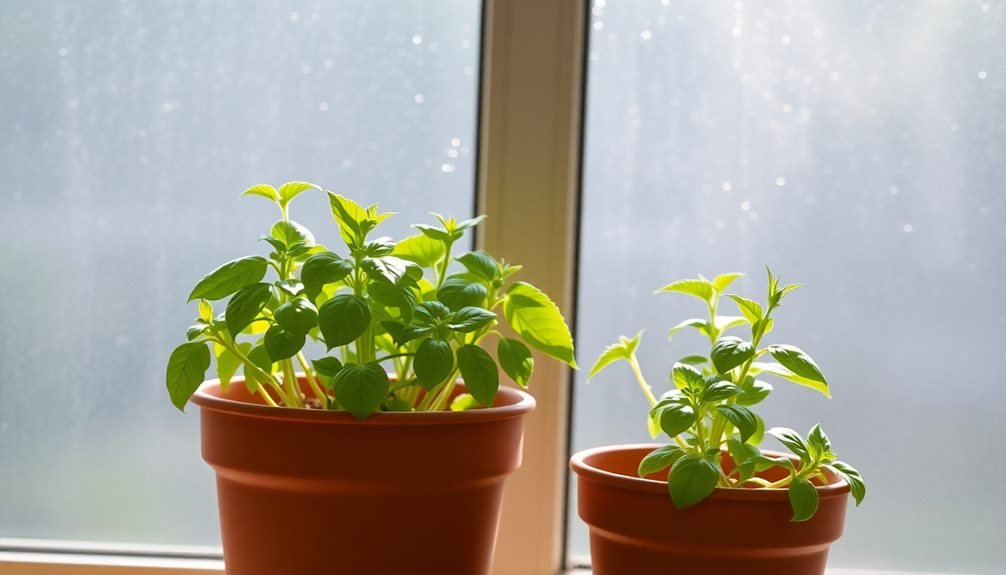
Beyond proper root care, understanding the difference between humidity and direct watering can greatly impact your herbs' health.
While humidity refers to moisture in the air surrounding your plants, watering addresses the soil's moisture content. You'll need to balance both for ideal growth, especially since indoor environments often lack natural humidity.
Your herbs may show different signs when they're lacking either humidity or water. Crispy leaf edges typically indicate low humidity, while wilting stems suggest insufficient watering. To maintain proper moisture levels, you'll need to take into account both factors independently.
Here's how to address both needs effectively:
- Test soil moisture by inserting your finger 1-inch deep – if it's dry, it's time to water, regardless of humidity levels.
- Use a humidity tray filled with pebbles and water to increase ambient moisture without overwatering.
- Monitor your home's relative humidity – most herbs thrive between 40-60%.
Don't assume high humidity means you can water less frequently. Each plant needs consistent soil moisture for nutrient uptake, while humidity mainly affects leaf health and transpiration rates.
You'll still need to maintain regular watering schedules even in humid conditions.
Creating Your Watering Schedule
Consistency forms the foundation of a successful indoor herb garden watering routine. To create an effective schedule, you'll need to check your herbs' moisture levels daily by pressing your finger about an inch into the soil. When it feels dry at this depth, it's time to water.
Start by watering your herbs at the same time each day, preferably in the morning. This allows excess moisture to evaporate before nightfall, reducing the risk of fungal growth. You'll quickly learn which herbs need daily watering (like basil and mint) and which can go longer between waterings (like rosemary and sage).
Track your watering patterns in a simple journal or smartphone app for the first few weeks. Note how each herb responds to different watering frequencies, and adjust accordingly.
Consider factors like seasonal changes, pot size, and indoor temperature when fine-tuning your schedule. If you're using different-sized containers, group herbs with similar water needs together to streamline your routine.
Don't forget to account for vacation days by setting up a self-watering system or arranging for someone to follow your established schedule while you're away.
Frequently Asked Questions
Can I Use Water From My Fish Tank to Water Indoor Herbs?
Yes, you can use fish tank water for your indoor herbs! It's rich in nutrients from fish waste and beneficial bacteria. Just make certain your tank is clean and you're not using saltwater, which could harm the plants.
Will Playing Music Near My Herb Garden Affect Its Water Absorption?
You don't need to play music for your herbs – there's no scientific evidence that sound waves affect water absorption in plants. Save your tunes for yourself and focus on maintaining proper watering schedules instead.
Does Watering Herbs With Carbonated Water Boost Their Growth?
You shouldn't water your herbs with carbonated water. The bubbles and added minerals can alter soil pH and potentially harm your plants. It's best to stick with plain, room-temperature water for healthy herb growth.
Can I Mix Vitamin Supplements Into Watering Can for Stronger Herbs?
Don't add vitamin supplements to your watering can – they're formulated for humans, not plants. If you want stronger herbs, use proper plant fertilizers designed specifically for edible herbs instead.
Why Do Some Herbs Wilt Immediately After Being Moved to Different Locations?
Your herbs wilt after moving because they're stressed from the environmental change. Different light levels, temperature, and humidity in the new spot shock their systems, causing temporary drooping while they adjust.
In Summary
You'll find that maintaining consistent watering habits makes all the difference in your indoor herb garden's success. By recognizing water stress signs, using the right tools, and establishing a reliable schedule, you're setting your herbs up to thrive. Whether you choose manual watering or self-watering systems, your attention to proper hydration will reward you with healthy, flavorful herbs year-round.