
Creating an indoor herb garden offers you a sustainable way to enjoy fresh, organic herbs while improving your mental well-being. You'll reduce food waste by harvesting only what you need, and you'll enhance your living space's air quality naturally. Start with beginner-friendly herbs like basil, mint, and chives near a south-facing window, ensuring they receive 4-6 hours of daily sunlight. Use organic potting soil and natural fertilizers to maintain a chemical-free environment. With mindful care practices like proper watering and pruning, you'll develop a thriving green sanctuary that nourishes both body and soul. The journey to sustainable home gardening begins with your first herb.
Benefits of Indoor Herb Gardens
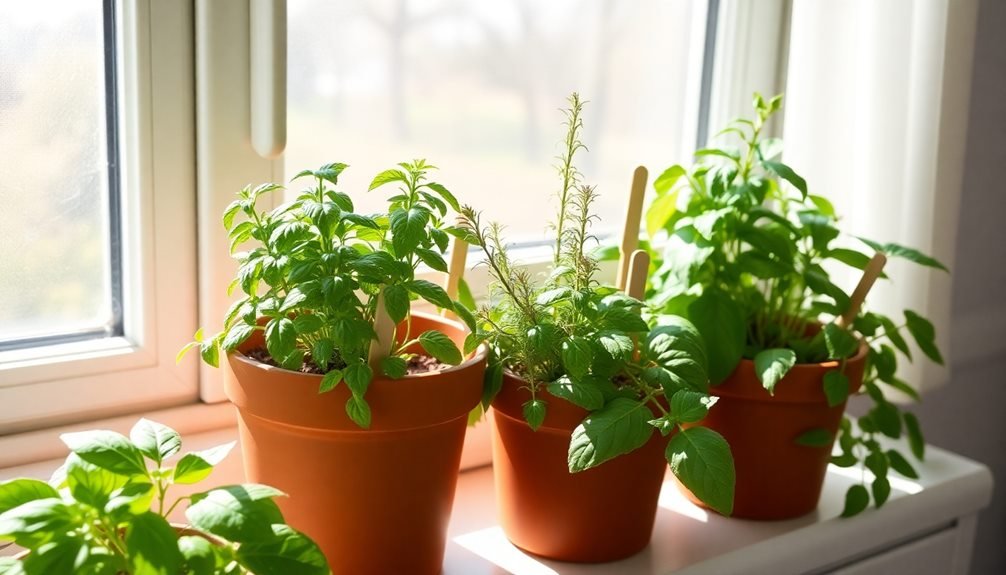
Growing herbs indoors consistently delivers multiple advantages for home gardeners and cooking enthusiasts. You'll have fresh, organic herbs at your fingertips year-round, saving money on store-bought alternatives while ensuring the highest quality ingredients for your cooking.
Indoor herbs also improve your home's air quality by naturally filtering toxins and releasing oxygen throughout the day. These living plants contribute to your mental well-being by creating a nurturing connection with nature, reducing stress levels, and providing a sense of accomplishment as you watch them grow.
You'll also cut down on food waste since you can harvest exactly what you need, leaving the rest of the plant to continue growing. Indoor herb gardens support sustainability by reducing packaging waste and transportation emissions associated with store-bought herbs.
Your indoor herb garden doubles as natural home decor, adding vibrant greenery and pleasant aromas to your living space. If you're teaching children about nature and responsibility, these gardens serve as excellent educational tools.
They demonstrate plant life cycles, basic botany, and the importance of daily care routines while developing a deeper appreciation for food sources.
Choosing Your Garden Space
When you're selecting space for your indoor herb garden, start by evaluating your home's natural light patterns and window orientations to match each herb's specific sunlight needs.
You'll want to take into account various layout configurations, from windowsill installations to vertical growing systems, based on your available square footage and the number of herbs you plan to grow.
Your chosen space should maintain consistent temperatures between 65-70°F (18-21°C), so keep herbs away from drafty windows and heating vents that could create unstable growing conditions.
Light and Window Positions
Most indoor herbs require at least 4-6 hours of direct sunlight daily, making window placement essential for your garden's success.
South-facing windows provide the strongest light intensity and longest duration of sunlight, making them ideal for sun-loving herbs like basil, sage, and rosemary.
If you don't have south-facing windows, east-facing windows offer good morning light suitable for mint, parsley, and chives.
West-facing windows can work but may get too hot in summer afternoons, so you'll need to monitor your plants for signs of leaf scorch.
North-facing windows typically don't provide enough direct sunlight for most herbs, but you can supplement with grow lights.
Position your herbs as close to the window as possible without touching the glass, as temperature fluctuations can damage the plants.
You'll know your herbs aren't getting enough light if they become leggy, with long stems and fewer leaves.
If this happens, either relocate them to a brighter spot or invest in LED grow lights.
During winter months, when daylight hours are shorter, you may need supplemental lighting even in south-facing windows to maintain healthy growth.
Space Layout Options
Successful indoor herb gardens can thrive in and around various spaces throughout your home, from compact windowsills to dedicated plant shelving units.
You'll find that vertical spaces offer excellent opportunities for maximizing your growing area, especially in apartments or smaller homes. Consider installing floating shelves near windows or mounting tiered hanging planters that make efficient use of vertical space.
If you're working with limited windowsill space, try using stackable containers or multi-level plant stands that let you grow herbs at different heights. Kitchen countertops can accommodate compact hydroponic systems, while unused corners can be transformed with corner shelf units designed specifically for plants.
You'll want to verify each herb has enough space for root growth – typically 4-6 inches of soil depth and similar width.
For larger spaces, rolling plant carts offer flexibility, allowing you to move your herbs to ideal positions as seasons change.
Don't overlook unconventional spaces like bathroom windows (for humidity-loving herbs) or empty wall space that can support living wall systems.
Just remember to maintain proper spacing between plants to prevent overcrowding and verify good air circulation.
Temperature Control Zones
Different herbs thrive in up to different temperature ranges, making it essential to map out your home's microclimates before choosing growing locations. You'll need to identify warm, moderate, and cool zones in your space to match each herb's temperature preferences. Windows facing south typically create warmer zones (65-80°F), while north-facing areas maintain cooler temperatures (55-65°F).
Use a thermometer to monitor different spots throughout the day, and you'll discover that even a single room can have multiple temperature zones. Keep track of daily fluctuations and seasonal changes to optimize your herbs' placement.
| Zone Type | Temperature Range | Best Herbs |
|---|---|---|
| Warm | 65-80°F | Basil, Oregano, Thyme |
| Moderate | 60-70°F | Mint, Parsley, Sage |
| Cool | 55-65°F | Chives, Cilantro, Dill |
| Flexible | 55-75°F | Rosemary, Lavender, Bay |
Remember to take into account heat sources like radiators and air vents when mapping your zones. You'll want to avoid placing herbs directly in front of AC units or heating vents, as sudden temperature changes can stress your plants.
Essential Herbs For Beginners
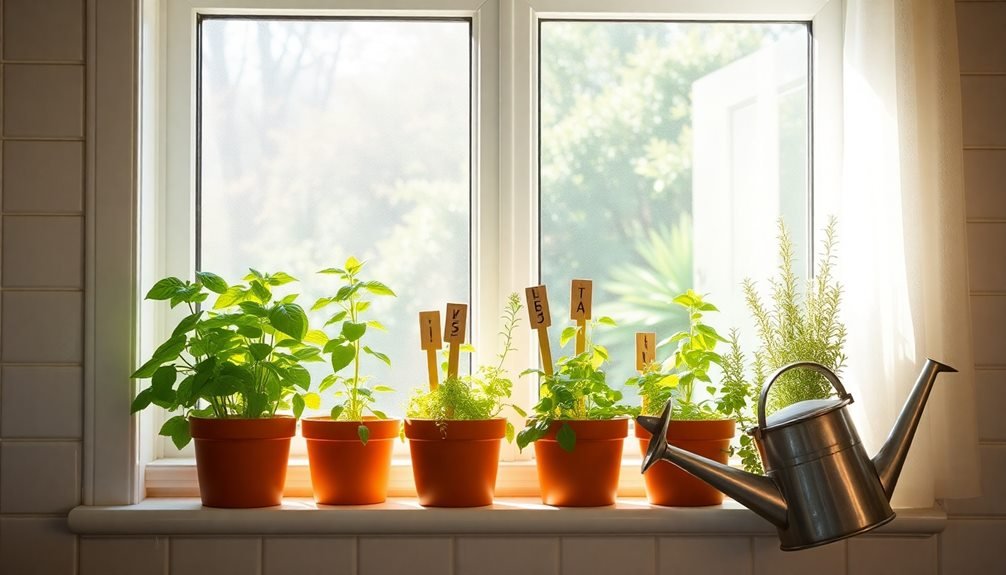
Starting your indoor herb garden with the right plants can make the difference between success and frustration. As a beginner, you'll want to focus on herbs that are forgiving and versatile in the kitchen.
Basil serves as an excellent starter herb, thriving in warm spots with bright, indirect sunlight. You'll find it grows quickly and produces abundantly with regular harvesting.
Mint's aggressive growth pattern makes it perfect for new gardeners, but keep it in its own container to prevent it from overwhelming other herbs.
Chives deserve a spot in your starter collection, as they're nearly impossible to kill and regrow quickly after cutting.
Parsley adapts well to indoor conditions and offers both flat-leaf and curly varieties for your culinary adventures.
For a low-maintenance option, try rosemary – it's drought-tolerant and provides year-round harvests.
Thyme rounds out the beginner's collection with its compact growth and minimal water needs. You'll appreciate its ability to thrive in less-than-perfect conditions.
These six herbs will give you a solid foundation in indoor gardening while providing fresh flavors for your cooking.
Natural Growing Methods
Natural growing methods form the backbone of a healthy indoor herb garden.
You'll want to start with organic potting soil that's rich in nutrients and provides good drainage. Mix in compost or worm castings to enhance soil fertility naturally, ensuring your herbs receive the nutrients they need without chemical fertilizers.
For pest control, you can use companion planting techniques – place basil near parsley or oregano next to sage to naturally deter unwanted insects. If you notice any pest problems, try neem oil or a simple solution of water and mild soap before reaching for chemical pesticides.
You'll also need to maintain proper air circulation to prevent mold and fungal growth.
When it comes to watering, collect rainwater or use filtered tap water that's sat out overnight to remove chlorine. Bottom watering helps prevent overwatering and encourages strong root growth.
For natural fertilizing, brew compost tea by steeping organic compost in water, or use diluted seaweed solution every few weeks during the growing season. You can also add crushed eggshells around your herbs to provide calcium and maintain soil pH levels.
Mindful Garden Care Practices
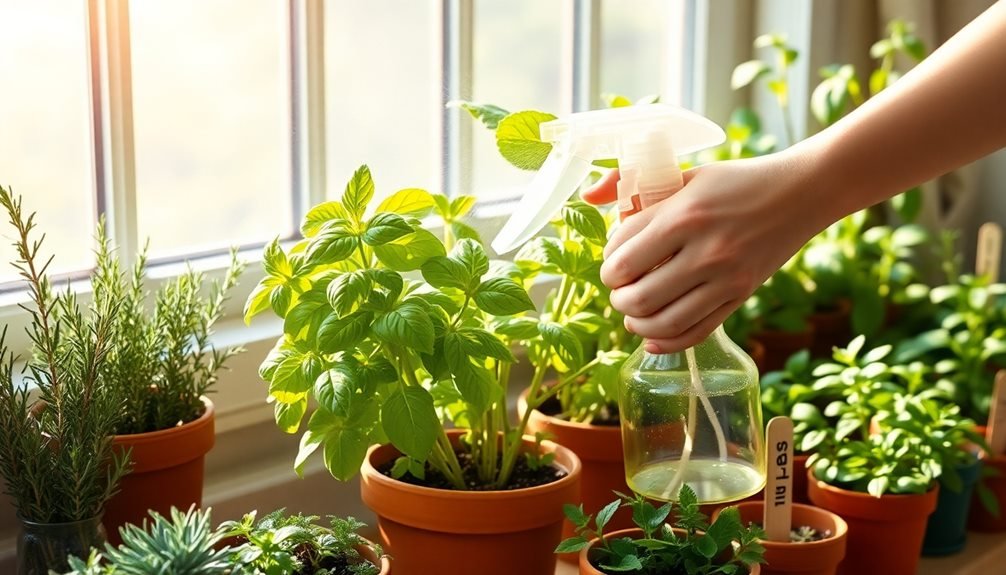
Mindful attention to your indoor herb garden transforms simple plant care into a rewarding daily ritual. By observing your plants' daily needs and responding thoughtfully, you'll develop a deeper connection with your garden while ensuring its health and liveliness.
Start each morning by checking your herbs' soil moisture with a gentle touch. Don't water automatically; instead, let your plants tell you when they're thirsty through subtle signs like slightly drooping leaves or dry topsoil.
When pruning, cut mindfully just above leaf nodes to encourage bushier growth, and take a moment to appreciate the herbs' aromatic qualities.
You'll want to rotate your containers weekly, ensuring each plant receives balanced light exposure. Pay attention to leaf color and growth patterns – they're valuable indicators of your herbs' well-being. If you notice yellowing leaves or leggy stems, adjust light conditions or feeding schedules accordingly.
Keep a small garden journal to track watering patterns, growth progress, and seasonal changes. This practice helps you understand your plants' cycles and respond to their needs more effectively, while creating a meaningful record of your garden's journey.
Harvesting With Purpose
The art of harvesting herbs requires both timing and intention to maintain plant health while maximizing yield.
You'll want to harvest your herbs in the morning after the dew has dried but before the day's heat sets in, as this is when their essential oils are most concentrated. Cut stems at a 45-degree angle about 2-3 inches above the soil, which encourages bushy growth and prevents woody stems.
Don't harvest more than one-third of the plant at once to guarantee it can recover and continue growing. For leafy herbs like basil and mint, pinch off the top leaves regularly to prevent flowering and promote fuller growth.
When harvesting woody herbs such as rosemary and thyme, you can cut whole stems but leave at least 3-4 inches of growth.
Store your freshly harvested herbs properly to maximize their usefulness. You can dry them by hanging bundles upside down in a well-ventilated area, freeze them in ice cube trays with water or oil, or keep them fresh in the refrigerator wrapped in damp paper towels.
Label everything with harvest dates to track freshness and rotation.
Frequently Asked Questions
Can Indoor Herb Gardens Attract Unwanted Insects or Pests Into My Home?
Yes, your indoor herbs can attract pests like aphids, fungus gnats, and spider mites. You'll need to monitor plants regularly, maintain proper watering, and use natural pest control methods to keep them away.
How Do Herb Gardens Affect Indoor Humidity Levels and Air Conditioning Costs?
Your herb garden slightly increases indoor humidity through plant transpiration. You'll notice minimal impact on air conditioning costs, and the added moisture can actually benefit your home in dry winter months.
Will Growing Herbs Indoors Affect Their Potency Compared to Outdoor Herbs?
You'll find indoor herbs can be just as potent as outdoor ones if you provide proper light, nutrients, and care. They may even be more concentrated since you're controlling their growing conditions year-round.
Can Indoor Herb Gardens Trigger Allergies or Respiratory Sensitivities?
Yes, you can experience allergic reactions to indoor herbs, especially if you're sensitive to pollen. Strong-scented herbs like basil and mint might trigger respiratory issues, so it's best to monitor your sensitivities carefully.
Do Different Herbs Compete for Nutrients When Planted Together Indoors?
Yes, you'll find that herbs can compete for nutrients when sharing soil. It's best to group plants with similar needs together and guarantee your containers provide enough space and nutrients for each herb's growth.
In Summary
You're now ready to commence your indoor herb gardening journey. Whether you're seeking fresh flavors, better mental health, or a sustainable hobby, your herb garden will provide daily rewards. Start small, stay consistent with your care routine, and watch your indoor oasis flourish. Remember, you're not just growing plants – you're cultivating a mindful practice that nourishes both body and soul.