
Three gentle pastel techniques can help you reduce stress while creating beautiful artwork. Start with soft layering, where you'll make sweeping strokes with light colors while holding the pastel at an angle for wider marks. Next, try breathing-synchronized blending, matching your circular motions to your inhales and exhales for a calming effect. Finally, practice mindful color shifts by selecting two complementary shades and observing how they interact as you layer them together. These soothing approaches transform your art practice into a meditative experience, and there's so much more to discover about each peaceful technique.
Soft Layering With Pastels
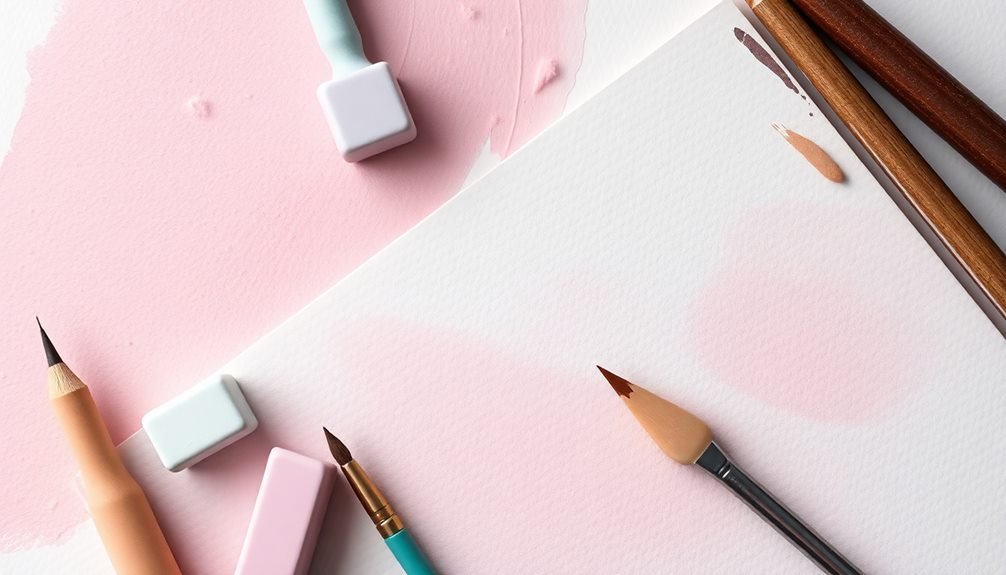
Through gentle strokes, soft layering with pastels creates a meditative drawing experience. As you hold your pastel stick, apply minimal pressure and let the pigment float onto the paper's surface. Start with lighter colors, gradually building up thin, transparent layers that blend naturally together.
You'll want to establish your base layer first, using broad, sweeping motions that follow the natural direction of your subject. Hold your pastel at a slight angle to utilize the stick's side, which creates wider, softer marks. Between layers, you can gently tap your paper to remove excess dust and prevent unwanted smudging.
For subsequent layers, switch to slightly darker or more vibrant hues. Keep your movements relaxed and rhythmic, allowing each new layer to partially reveal the colors beneath. If you're seeking ultra-smooth shifts, try using your fingertip or a paper stub to softly blend areas where colors meet.
Don't worry about achieving perfection – the beauty of soft layering lies in its subtle color variations and gentle gradients. When you feel satisfied with your color depth, you can add final highlights using your lightest pastels.
Gentle Blending Through Breathing
Connecting your breath with your blending motions creates a calming, mindful drawing experience. As you blend your pastels, synchronize your movements with your breathing pattern, inhaling as you lift your finger or blending tool, and exhaling as you sweep across the paper. This rhythmic coordination helps release tension and enhances your focus on the artistic process.
- Inhale deeply while selecting your colors, allowing yourself to fully absorb their gentle hues.
- Move your blending tool in circular motions as you exhale, creating soft shifts.
- Match longer breaths with broader strokes to achieve smoother gradients.
- Use quick, light breaths for detailed work in smaller areas.
- Practice "pause points" between strokes to reset your breathing and assess your progress.
You'll find that this breathing-focused approach transforms your pastel work into a meditative practice. Let your fingertips dance lightly across the surface, maintaining gentle pressure that mirrors your breath's natural flow.
When you feel tension building, pause to take a deep breath and reset your touch. This technique isn't just about achieving perfect blends—it's about finding harmony between your body's rhythm and your artistic expression.
Mindful Color Transitions
While creating smooth color shifts demands technical skill, approaching them mindfully transforms the process into a calming journey. You'll discover that shifting between pastel colors becomes more than just technique—it's a meditative practice that helps release tension and anxiety.
Start by selecting two complementary pastel shades you're drawn to. As you layer these colors, focus on your breathing and let each stroke flow naturally. You'll notice how the colors interact, creating subtle variations that mirror the ebb and flow of your thoughts.
| Shift Type | Emotional Effect |
|---|---|
| Soft Gradient | Promotes Peace |
| Feathered Blend | Reduces Anxiety |
| Dotted Fusion | Increases Focus |
Watch as the pigments merge, creating unexpected harmonies. Don't rush—let each layer settle before adding the next. When you feel stuck, step back and observe how the colors dance together. This mindful approach isn't just about achieving perfect blends; it's about embracing the process and allowing yourself to experiment without judgment. As you practice these shifts, you'll develop both artistic skill and emotional resilience.
Frequently Asked Questions
How Long Do Pastel Artworks Typically Last Before Requiring Fixative Spray?
Your pastel artwork can last 6-12 months without fixative, but you'll notice smudging and dust much sooner. It's best to spray fixative within a few weeks of completion for long-term preservation.
Can Anxiety Medication Affect My Ability to Focus on Pastel Techniques?
You'll want to discuss medication effects with your doctor. Some anxiety meds can impact focus, while others may help you concentrate better. Don't adjust your medication without professional medical guidance.
What Surfaces Work Best for Therapeutic Pastel Art Besides Paper?
You'll find pastel work calming on sanded boards, velour paper, canvas panels, or textured card stock. You can also try suede matboard or archival foam board for a soothing, controlled application experience.
Are Some Pastel Brands More Calming to Work With Than Others?
You'll find softer pastels like Rembrandt and Sennelier more soothing to blend and layer. They're smoother and require less pressure than harder brands, making your artistic experience more relaxing and meditative.
Should I Create Pastel Art During Panic Attacks or Wait Until After?
It's best to wait until your panic attack subsides. You won't have steady hands or clear focus during an attack. Instead, try deep breathing first, then use pastels when you're feeling more centered.
In Summary
You'll find these three pastel techniques become more natural with practice. Let your creative flow guide you while layering, breathing, and shifting between colors. Don't worry about perfection – these methods are meant to help you unwind and express yourself freely. When stress builds up, reach for your pastels and remember: there's no right or wrong way to create art that calms your mind.