
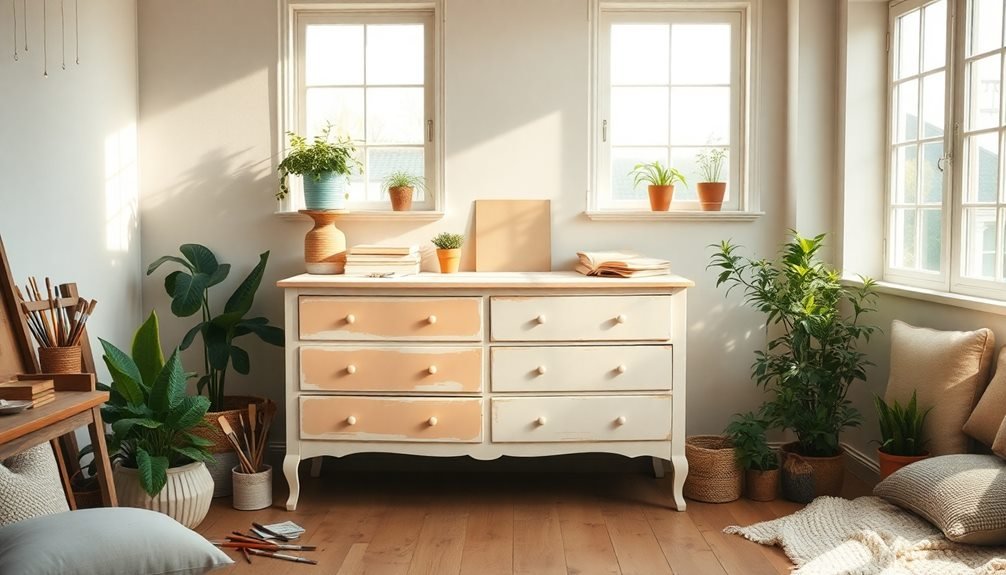
When you restore old furniture, you'll discover a therapeutic journey that combines mindfulness with hands-on creativity. The repetitive motions of sanding promote patience and concentration, while painting techniques create a meditative state that calms an overactive mind. You'll find satisfaction in saving discarded pieces, and each restoration builds confidence through small victories. Working with your hands improves coordination while developing problem-solving skills, and the sense of accomplishment grows with every completed project. From selecting calming colors to organizing your workspace, furniture upcycling offers countless ways to reduce stress and restore your inner peace.
Mindfulness Through Sanding
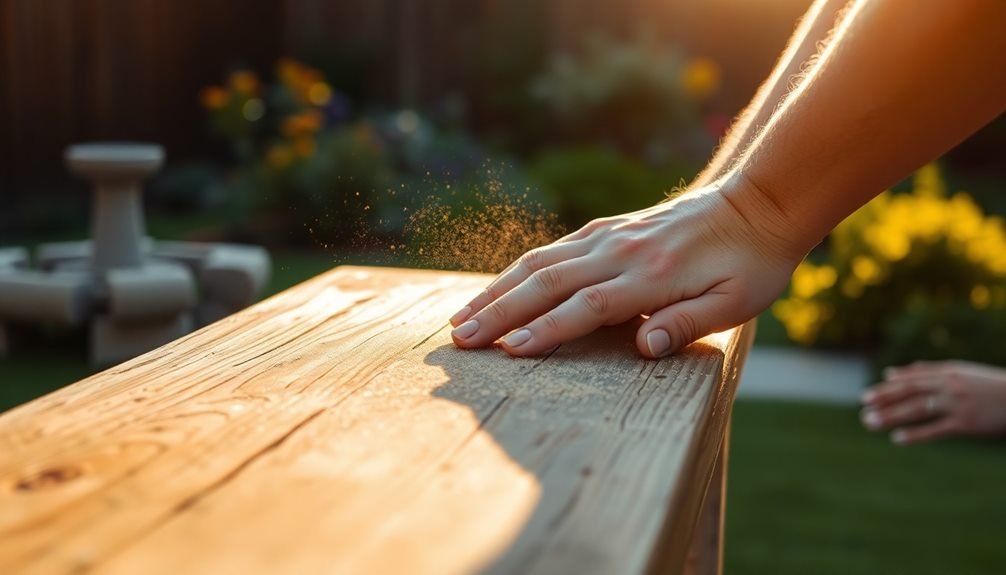
Patience emerges naturally when you focus on the repetitive motion of sanding wood. As you move your hand back and forth across the surface, you'll notice how each stroke gradually smooths rough patches and reveals the grain beneath. This methodical process forces you to slow down and concentrate on the present moment, much like meditation in motion.
You'll discover that different wood types require varying pressure and techniques. Pine needs a gentler touch, while oak demands more force. Learning to read the wood's texture with your fingertips develops sensory awareness and helps clear your mind of daily stresses. The gentle swooshing sound of sandpaper becomes a calming white noise that drowns out mental chatter.
Start with coarse-grit sandpaper to remove old finishes, then progress to finer grits for smoothing. You'll find satisfaction in feeling the surface become increasingly silky under your touch. This progressive refinement mirrors the calming of your thoughts as you work.
The physical evidence of your efforts – the pile of sawdust and the transformed surface – provides tangible proof of progress, both in your project and your state of mind.
Finding Treasures Worth Restoring
Your journey into furniture restoration begins with discovering the right pieces to transform. You'll find potential treasures in thrift stores, estate sales, flea markets, and even curbside discards.
Look for solid wood pieces with good bones – those items that show quality craftsmanship beneath years of wear and neglect. When examining a piece, check for structural integrity, focusing on joints, drawer slides, and overall stability.
The most rewarding restoration projects often come from pieces that others have overlooked. You'll develop an eye for spotting diamond-in-the-rough furniture that holds both creative potential and historical value.
Before committing to a piece, verify it's within your skill level and available workspace limitations.
- That forgotten dresser in your grandmother's attic that holds decades of family memories
- The mid-century modern chair that reminds you of your childhood home
- The weathered garden bench where countless love stories began
- The antique writing desk that whispers tales of letters written long ago
Remember to reflect on the piece's ultimate purpose in your space and whether its style aligns with your vision.
Don't let minor cosmetic damage deter you – those imperfections often become the most character-defining elements of your restored piece.
Calming Colors and Design Elements
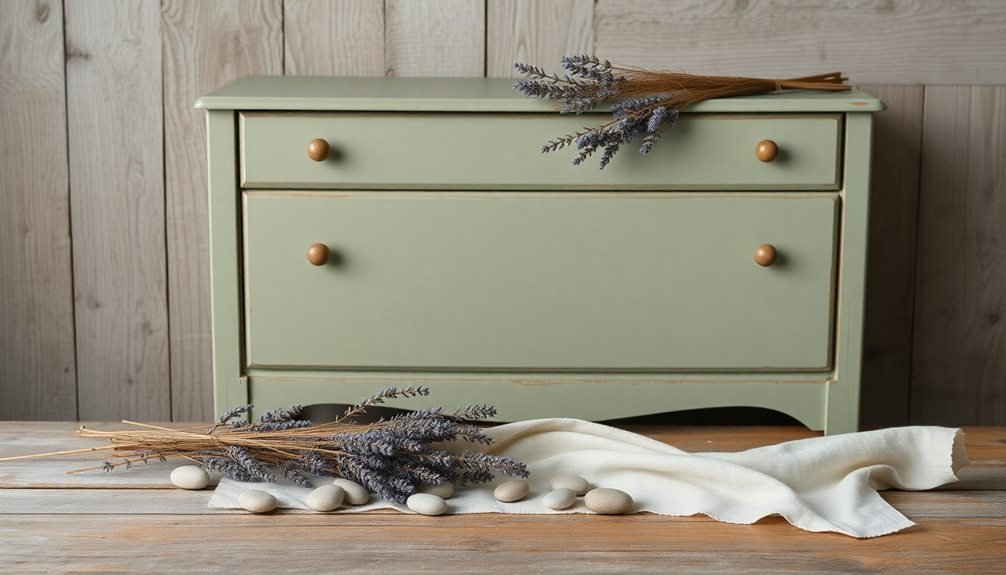
Paint swatches and color palettes become powerful tools for creating a soothing environment through furniture restoration. When you're selecting colors for your upcycling project, consider hues that naturally reduce anxiety and promote tranquility.
| Color Family | Psychological Effect | Best Used For |
|---|---|---|
| Blues | Promotes calmness | Bedroom pieces |
| Greens | Reduces stress | Living spaces |
| Soft Grays | Creates balance | Home office |
| Earth Tones | Grounds emotions | Any room |
Beyond color selection, you'll want to incorporate design elements that enhance your furniture's stress-reducing properties. Smooth, curved lines often feel more relaxing than sharp angles, while symmetrical patterns can bring order to chaos. You can achieve these effects through techniques like gentle distressing, rounded edges, or flowing decorative elements.
Don't forget texture's role in creating a calming piece. Consider using chalk paint for a velvety finish, or applying a light whitewash that lets the wood grain show through. These subtle touches can transform your restored piece into a focal point that soothes both your eyes and your mind, making your upcycling project doubly rewarding.
Hand Tools Vs Power Tools
You'll want to start with essential hand tools like a hammer, screwdriver set, and sandpaper before investing in power tools for your furniture upcycling projects.
Basic hand tools are perfect for small repairs, gentle sanding, and detail work where you need precise control.
While power tools can speed up larger projects, they're best introduced gradually as you build confidence and identify specific needs in your upcycling work.
Starting Small: Basic Tools
Diving into furniture upcycling doesn't require an overwhelming arsenal of tools right from the start.
You'll want to build your collection gradually, focusing first on versatile basics that'll serve multiple purposes. A good starter kit includes a hammer, screwdrivers (both Phillips and flathead), measuring tape, and a reliable pair of pliers.
When you're ready to expand your toolkit, consider these emotional benefits of working with basic hand tools:
- There's profound satisfaction in feeling the direct connection between your hands and the material, creating an intimate bond with your project.
- The rhythmic motion of sanding by hand can become a meditative practice, helping you process thoughts and emotions.
- Using simple tools allows you to work at your own pace, reducing anxiety and pressure to rush through the process.
- Manual work engages your whole body, releasing tension and promoting natural stress relief.
Remember to invest in quality basic tools rather than cheap alternatives – they'll last longer and provide better results.
Start with these fundamentals, and you'll develop an intuitive feel for when it's time to add more specialized tools to your collection.
When to Use Each
Balance plays an essential role when choosing between hand tools and power tools for furniture upcycling projects.
You'll want to reflect on your project's size, material, and the level of precision needed before selecting your tools. Hand tools offer better control for intricate details and delicate surfaces, while power tools excel at larger-scale transformations.
Opt for hand tools like sandpaper blocks and scrapers when working on small areas or antique pieces that require gentle handling.
They're perfect for spot-sanding, removing old finishes in tight spaces, or working with delicate veneers. You'll also find hand tools invaluable for detail work, such as carving or smoothing curved surfaces.
Power tools become your best allies when tackling bigger projects or working with stubborn materials.
Use an electric sander for large, flat surfaces that need significant refinishing. Choose power drills for hardware installation and making clean holes. Electric sanders work well for stripping paint quickly, while rotary tools help with detailed cutting or carving in hard-to-reach areas.
Remember to switch to hand tools whenever you need more precision or when working near edges to avoid accidental damage.
Create Your Restoration Space
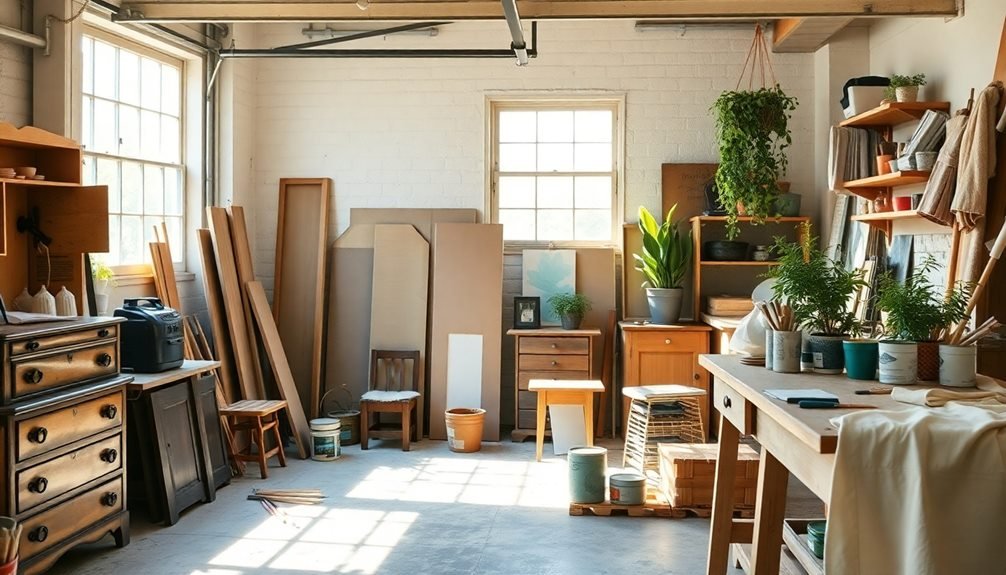
Setting up your restoration space starts with finding a dedicated work zone, whether it's a garage corner or spare room, where you won't need to pack up projects between sessions.
You'll want to position your workbench near a window, as natural light helps you spot imperfections and match colors accurately while reducing eye strain.
Keep your most-used tools organized on a pegboard or rolling cart within arm's reach to maintain workflow and minimize interruptions during your therapeutic upcycling sessions.
Designate Your Work Zone
A dedicated workspace provides the foundation for successful furniture restoration and contributes to a stress-free upcycling experience.
You'll need to choose a well-ventilated area that's spacious enough to move around your pieces comfortably. Whether it's a garage, basement, or outdoor workspace, guarantee you've got adequate lighting and easy access to power outlets for your tools.
Create distinct zones within your workspace: a cleaning station, a sanding area, a painting section, and a drying space.
Keep your tools organized and within arm's reach to maintain workflow efficiency. Consider installing pegboards or shelving units to maximize vertical storage and keep your surfaces clutter-free.
- Watch your stress melt away as you transform your garage into a personal restoration sanctuary
- Feel proud knowing you've created a space that's uniquely yours for creative expression
- Experience the satisfaction of having everything in its place, ready for your next project
- Embrace the peace of mind that comes with a well-organized, dedicated craft space
Remember to protect your work surface with drop cloths or old newspapers, and guarantee proper ventilation by opening windows or using fans when working with paints or stains.
Natural Light Matters Most
While organizing your dedicated workspace sets the stage for success, the quality of natural light will fundamentally shape your upcycling experience. Position your work area near windows or glass doors to maximize available daylight, which helps you accurately assess colors, textures, and surface imperfections on your furniture pieces.
Natural light doesn't just improve visibility—it boosts your mood and productivity while reducing eye strain during detailed work. If possible, set up your workspace facing north or south to avoid harsh direct sunlight that can cast misleading shadows or create glare on your surfaces. You'll want consistent, even lighting throughout the day to maintain a steady workflow.
When natural light isn't sufficient, supplement with daylight-balanced LED lights that mimic natural sunlight. Place these fixtures strategically to eliminate shadows in your work area, especially if you're painting or applying detailed finishes.
Consider installing adjustable blinds or sheer curtains to diffuse intense sunlight during peak hours while still maintaining adequate brightness. Remember that proper lighting isn't just about seeing your work—it's about creating an uplifting environment that supports your creative process and reduces stress while you transform old furniture into new treasures.
Tools Within Arm's Reach
Within your restoration workspace, organizing essential tools in easily accessible zones reduces frustration and maintains creative momentum.
Create designated spots for your most-used items, placing them within arm's reach of your primary work area. Store power tools on a pegboard directly behind your workbench, and keep hand tools in drawer organizers or desktop caddies where you'll naturally reach for them.
Set up your workspace with these emotion-calming zones:
- Comfort Corner – Position your essential tools, sandpaper, and brushes within a comfortable seated reach, allowing you to stay in your flow state without disruption.
- Power Zone – Arrange electric tools along your dominant side to reduce physical strain and mental stress when switching between tasks.
- Inspiration Station – Keep your project plans, color swatches, and reference materials at eye level to maintain focus and creative energy.
- Safety Hub – Place protective gear, first aid supplies, and cleaning materials where you can grab them instinctively, creating peace of mind while you work.
Consider using rolling carts or adjustable shelving to adapt your tool arrangement as projects evolve, maintaining an efficient and stress-free environment.
Daily Progress, Better Mental Health
Making daily progress on furniture upcycling projects can greatly boost your mental well-being. When you dedicate time each day to transform old furniture, you'll notice significant improvements in your mood and stress levels. The act of creating something beautiful from discarded pieces provides a sense of accomplishment and purpose.
| Mental Health Benefit | Project Impact |
|---|---|
| Stress Reduction | Sanding and painting create a meditative state |
| Self-confidence | Completing tasks builds belief in your abilities |
| Focus Enhancement | Detail work improves concentration skills |
| Emotional Release | Creative expression helps process feelings |
You'll find that setting small, achievable daily goals in your upcycling journey helps maintain motivation and prevents overwhelming feelings. Start with 30-minute sessions and gradually increase your time as you become more comfortable. Document your progress through photos, which will serve as visual reminders of your growth and accomplishments. When you're feeling anxious or stressed, return to your workspace and focus on simple tasks like cleaning hardware or organizing supplies. The tangible results of your efforts will reinforce positive emotions and create a satisfying sense of progress.
Furniture Stories and Emotional Connection
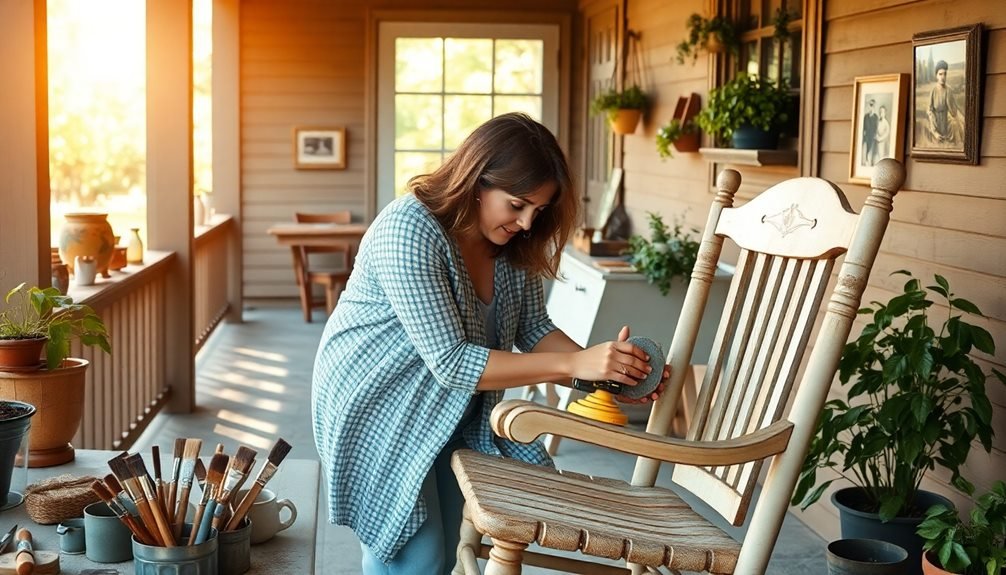
Each piece of furniture carries its own unique story, creating a deeply personal connection between the upcycler and their work. When you restore an old dresser or rejuvenate a vintage chair, you're not just transforming wood and fabric – you're becoming part of that item's ongoing narrative.
You'll find yourself wondering about the families who've treasured it before, the homes it's lived in, and the memories it's witnessed. This emotional investment transforms your upcycling project from a simple DIY task into a meaningful journey.
You're preserving history while adding your own chapter to the story. As you work, you'll develop an intimate understanding of every scratch, dent, and worn edge.
- Imagine the joy of knowing your grandmother's coffee table will continue bringing warmth to future generations.
- Feel the satisfaction of saving a discarded piece from the landfill, giving it new purpose.
- Experience the pride of telling guests, "I restored this myself," sharing its journey.
- Connect with the craftsmanship of past artisans as you honor their work through preservation.
Paint Strokes for Inner Peace
The rhythmic motion of a paintbrush against wood creates a meditative state that rivals traditional stress-relief practices. As you dip your brush into your chosen paint and make deliberate strokes across the furniture's surface, you'll notice your breathing naturally slowing and your shoulders relaxing. Each stroke becomes a mindful moment, helping you stay present and focused on the simple task at hand.
You'll find that different painting techniques offer varying levels of stress relief. Long, sweeping strokes with chalk paint can feel particularly soothing, while the detailed work of milk paint distressing requires careful attention that blocks out intrusive thoughts. The repetitive nature of applying multiple coats creates a predictable pattern that can calm an overactive mind.
Don't rush the process. Instead, focus on the sensory experience – the slight resistance as your brush moves across the surface, the transformation of color with each layer, and the satisfaction of watching your vision come to life.
When you're feeling overwhelmed, even fifteen minutes of mindful painting can reset your mental state and provide a creative outlet for stress.
Building Confidence Through Restoration
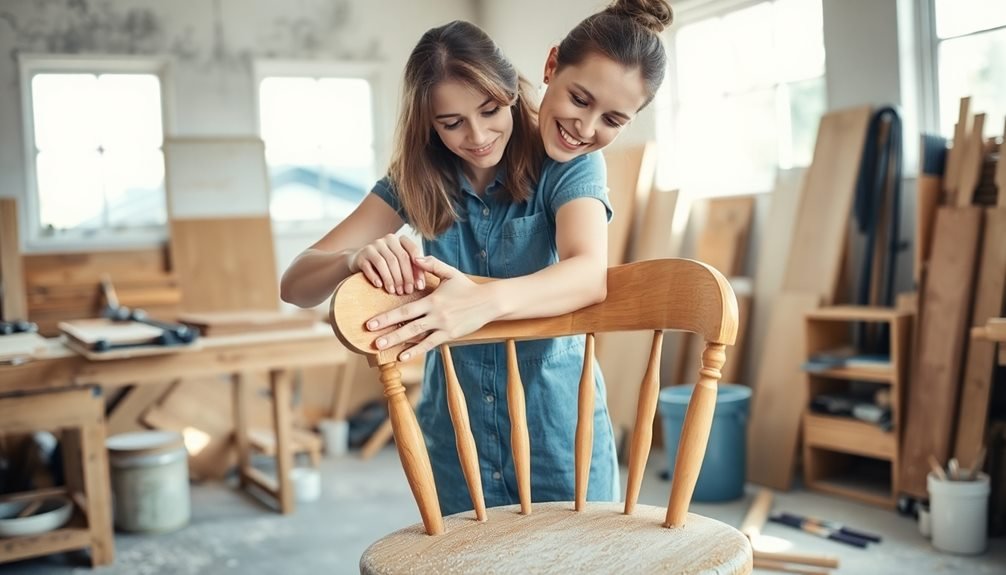
Successfully restoring old furniture builds your confidence with each small victory. When you transform a worn-out piece into something beautiful, you're proving to yourself that you can tackle challenging projects and achieve remarkable results.
Every repair you complete, every surface you refinish, and every problem you solve strengthens your belief in your abilities.
As you develop your restoration skills, you'll notice your confidence extending beyond your workshop. You'll start seeing possibilities where others see obstacles, and you'll approach new challenges with a problem-solver's mindset.
- The moment you fix a wobbly table leg that's stumped previous owners, you'll feel a surge of accomplishment that carries into your day.
- When you match a century-old wood stain perfectly, you'll realize you're more capable than you thought.
- As you transform a curbside castoff into a family heirloom, you'll discover your creative potential.
- While teaching others your restoration techniques, you'll recognize how far you've come.
Each piece you restore becomes a demonstration of your growing expertise, turning self-doubt into self-assurance through tangible, lasting results.
Frequently Asked Questions
How Much Should I Expect to Spend on Basic Furniture Restoration Tools?
You'll need around $100-200 for basic tools including sandpaper, paintbrushes, wood filler, scrapers, and essential hand tools. If you're adding power tools like sanders, expect to spend $300-400 more.
Can Pregnant Women Safely Participate in Furniture Restoration Activities?
You'll need to avoid certain restoration activities while pregnant. Don't sand lead paint, use chemical strippers, or spray finishes. Stick to safer tasks like cleaning, painting with low-VOC paints, and basic repairs.
Which Pieces of Furniture Are Typically Not Worth Restoring?
You'll want to avoid restoring particle board furniture, heavily water-damaged pieces, furniture with severe structural damage, or mass-produced items that'll cost more to fix than they're worth when finished.
How Long Does It Take to Develop Basic Furniture Restoration Skills?
You'll develop basic furniture restoration skills within 2-3 months of regular practice. Start with simple projects like sanding and painting, then gradually tackle more complex tasks as you're building confidence and expertise.
What Insurance Considerations Should I Have When Restoring Furniture at Home?
You'll need home insurance that covers DIY projects, liability protection for resale items, and workspace coverage. Check if you're protected against chemical accidents, fires, and damage from power tools.
In Summary
You'll find that furniture restoration offers more than just beautiful end results – it's a journey to inner calm and self-discovery. Whether you're sanding away stress, choosing peaceful colors, or breathing new life into forgotten pieces, each project builds your confidence and quiets your mind. Make time for this therapeutic craft, and you'll restore not just furniture, but your sense of peace and purpose.




Leave a Reply