

These seven eco-friendly upcycling projects can boost your mental wellness while reducing environmental waste. You'll find peace creating miniature gardens in mason jars, crafting meaningful memory quilts from old textiles, and designing wall art from scrap wood. Transform tin cans into zen planters, organize your space with painted paper roll holders, and build message boards from wine corks. For deeper meditation, construct a calming corner using wooden pallets, cushions, and LED candles. Each project combines mindful crafting with sustainable materials, offering therapeutic benefits as you turn everyday items into tools for tranquility and inner balance.
Mindful Mason Jar Gardens
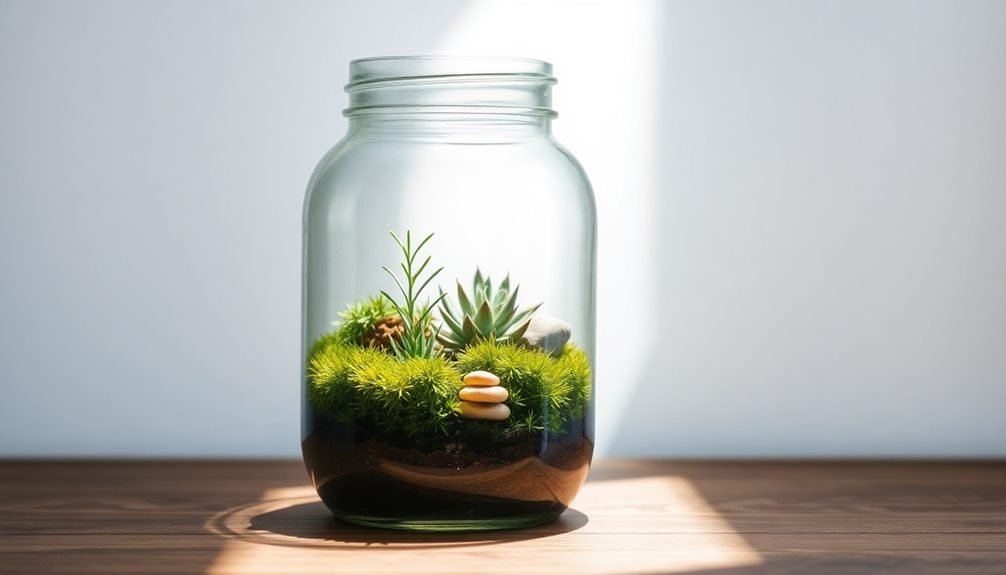
Through the simple act of creating mason jar gardens, you'll transform ordinary glass containers into miniature ecosystems while practicing mindfulness.
These compact gardens serve as meditative tools, combining the therapeutic benefits of gardening with sustainable upcycling practices. As you layer soil, pebbles, and carefully chosen plants, you'll engage in a focused, present-moment activity that calms racing thoughts.
Start by thoroughly cleaning used mason jars and adding a drainage layer of small stones. Next, mix activated charcoal with potting soil to create an environment that prevents mold growth.
Select small plants that thrive in humid conditions, such as ferns, moss, or air plants. As you position each element, concentrate on the varying textures and colors beneath your fingertips.
Your mason jar garden requires minimal maintenance, making it an ideal stress-relief tool. Place it near a window with indirect sunlight, and mist the plants weekly.
When you're feeling overwhelmed, spend a few minutes observing the tiny ecosystem you've created. Watch how water droplets collect on leaves and how new growth emerges, practicing mindful observation that grounds you in the present moment.
Tranquil Textile Memory Quilts
Creating a memory quilt from cherished textiles offers a meditative journey through personal history while giving new life to old fabrics. You'll need old clothing, bedding, or meaningful fabric scraps, basic sewing supplies, and backing material to begin this therapeutic crafting experience.
Start by selecting pieces that hold special memories – your child's first blanket, your grandmother's apron, or that concert t-shirt from college. Cut them into uniform squares or shapes that'll work together in your design. As you handle each piece, take time to reflect on its significance and the stories it carries.
Arrange your fabric pieces in a pattern that feels balanced and meaningful to you. You don't need to rush – the process of planning and piecing is just as important as the finished product.
Sew the pieces together row by row, adding batting and backing when your top design is complete.
Consider adding personal touches like embroidered dates, names, or small notes about the memories associated with specific fabrics. Your finished quilt won't just be a beautiful piece of functional art – it'll serve as a tangible reminder of life's precious moments while keeping textiles out of landfills.
Soothing Scrap Wood Art
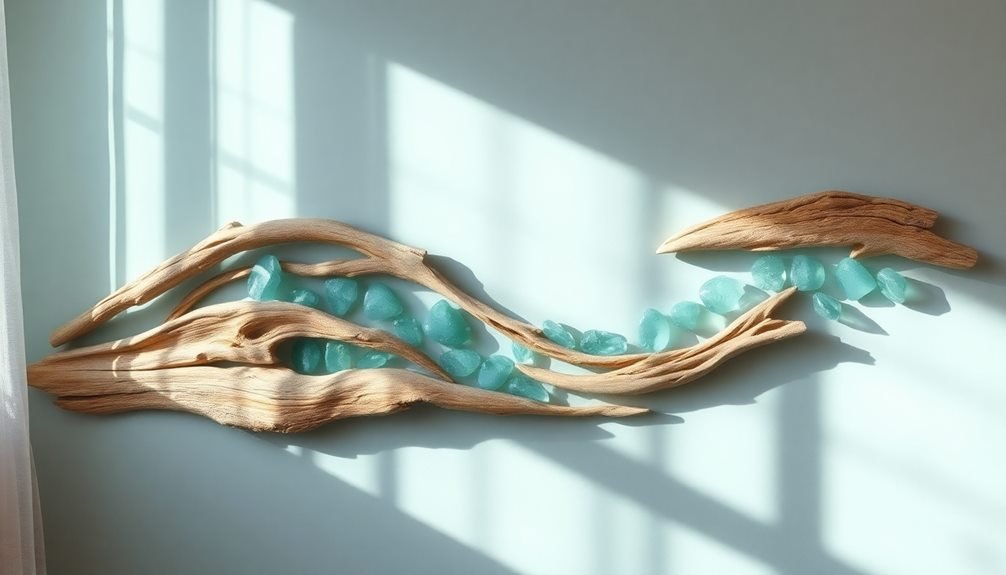
Discarded wood scraps can transform into stunning wall art while providing a grounding creative outlet. By collecting leftover pieces from construction sites, old furniture, or lumber yards, you'll reduce waste while creating a therapeutic workspace.
Sand each piece to reveal unique grain patterns and textures that'll serve as your artistic foundation. Start by arranging wood pieces in geometric patterns or natural flows, letting your intuition guide the design. You'll find that handling different wood textures and focusing on patterns helps quiet racing thoughts.
As you work, try mixing various wood tones or add subtle colors using eco-friendly stains and paints. Consider incorporating mindful mantras or inspiring words by wood burning or painting them onto selected pieces.
The repetitive actions of measuring, cutting, and assembling wooden pieces create a meditative rhythm that helps reduce anxiety. You'll need basic tools like a saw, sandpaper, and non-toxic wood glue.
Mount your finished piece on a recycled backing board, then hang it where you'll see it daily. Each time you glance at your creation, you'll remember the calm focus you experienced while making it, reinforcing your connection to mindful creativity.
Zen Tin Can Planters
Transform your empty tin cans into serene indoor planters by removing labels, sanding sharp edges, and mindfully choosing designs that reflect your personal aesthetic.
You'll create a sustainable growing environment by adding proper drainage holes, selecting drought-resistant plants, and using recycled potting mix to minimize waste.
Adding decorative elements like hemp twine wrapping, eco-friendly paint patterns, or pressed leaves can make your tin can planters both meaningful and visually appealing while keeping materials out of landfills.
Mindful Prep and Design
Before diving into your tin can planter project, mindfulness begins with thoughtful preparation and intentional design choices. Start by collecting clean, undamaged tin cans of various sizes, removing any sharp edges with sandpaper. While you're gathering materials, focus on the sensory experience – notice the cool metal texture and the rhythmic motion of sanding.
Select a peaceful workspace where you won't be disturbed, and lay out your supplies methodically: cans, drainage materials, soil, selected plants, and decorative elements. You'll need a hammer and nail for creating drainage holes, paint or decorative paper for the exterior, and waterproof sealant.
Take time to envision your design, considering how each planter will contribute to your space's harmony. As you plan the aesthetic elements, think about colors that calm you or patterns that bring joy. You might choose serene blues and greens or earthy neutrals for a grounding effect.
Consider incorporating meaningful symbols or mantras into your design. Remember to plan for proper drainage and plant compatibility – succulents need different conditions than herbs or small flowering plants, so match your design to your chosen plants' needs.
Sustainable Growing Techniques
Mindful gardening with tin can planters starts with establishing proper growing conditions for long-term plant health.
You'll need to drill 3-4 drainage holes in the bottom of each clean, label-free can to prevent root rot. Add a layer of gravel or broken pottery pieces for improved drainage before filling with organic potting soil.
Choose plants that match your tin can size and growing conditions. Herbs like basil, mint, and thyme thrive in smaller cans, while succulents and cacti adapt well to shallow containers.
For vertical gardens, mount your cans on a recycled wooden pallet using rust-resistant screws or strong wire, ensuring they're secure and level.
To maintain your plants sustainably, collect rainwater in larger upcycled containers for watering. Create natural fertilizer by composting kitchen scraps and adding them to your soil mix.
Position your tin can garden where it'll receive appropriate sunlight based on your chosen plants' needs. Most herbs need 6-8 hours of direct sunlight, while some indoor varieties can flourish in partial shade.
Monitor soil moisture by inserting your finger about an inch deep – if it's dry, it's time to water.
Decorative Recycling Tips
Creating a zen aesthetic for your tin can planters adds both visual appeal and therapeutic value to your growing space. Start by thoroughly cleaning used tin cans and removing any sharp edges with sandpaper.
You'll need outdoor-safe paint, natural twine, and decorative stones to transform these everyday items into mindful garden pieces.
Apply a base coat of white or neutral paint to your cans, then add simple Japanese-inspired designs using black or charcoal gray. You can create minimalist patterns like horizontal lines, circles, or gentle waves that promote calm and reflection.
Wrap natural twine around the middle section of some cans to add texture and organic elements.
Place small drainage holes in the bottom of each can using a hammer and nail. Fill the bottom inch with decorative stones or gravel before adding potting soil. These stones won't just help with drainage – they'll also contribute to the zen appearance.
Position your finished planters in groups of three at varying heights, following the Japanese principle of asymmetrical balance. You can enhance the peaceful atmosphere by selecting plants with soft, flowing forms like trailing succulents or ornamental grasses.
Calming Paper Roll Organizers
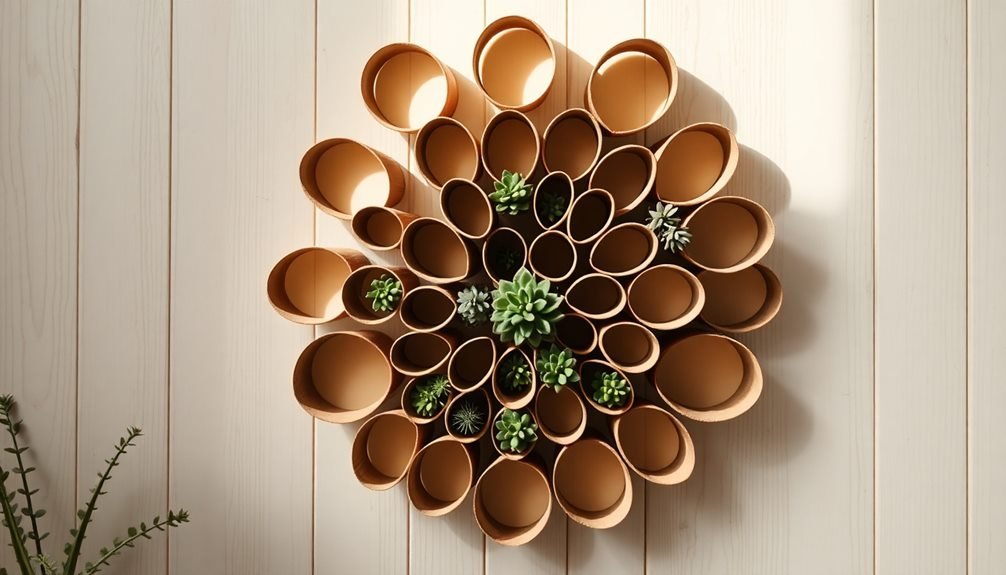
Through the simple transformation of empty paper rolls, you'll craft functional organizers that bring both order and tranquility to your space. Start by collecting toilet paper and paper towel rolls, then clean and sand them lightly to create a smooth surface.
Paint them in soothing colors like sage green, soft blue, or gentle lavender to enhance their calming effect. Stand the rolls vertically in a recycled box or tray, securing them with eco-friendly glue. You can arrange them in patterns that please your eye, creating a mindful moment as you organize.
Use these compartments to store pens, art supplies, makeup brushes, or small tools. For desk organization, label each tube with recycled paper tags to maintain clarity and reduce stress.
To strengthen the rolls, wrap them in remaining scraps of wallpaper or decorative paper you've saved. You'll find that the repetitive nature of creating these organizers can serve as a form of meditation.
The process of sorting items into their designated spaces helps declutter both your physical environment and mental space, promoting a sense of peace and accomplishment in your daily routine.
Therapeutic Wine Cork Boards
With your collection of wine corks, you can craft a beautiful message board that doubles as a mindfulness tool. The repetitive nature of sorting and arranging corks creates a meditative experience, helping you focus on the present moment while transforming waste into functional art.
Start by cleaning your corks and sorting them by size and color. You'll need a wooden frame or backing board, a hot glue gun, and approximately 50-80 corks depending on your board size.
As you arrange the corks in patterns, notice their unique textures and subtle variations – this mindful observation helps reduce anxiety and promotes relaxation.
Cut some corks in half lengthwise to fill gaps along the edges. While gluing each piece, practice deep breathing and appreciate how every cork contributes to the overall design.
You can add decorative elements like twine borders or paint certain corks to create visual interest.
The finished cork board serves as both a practical pin-up space and a reminder of your creative journey. Each time you use it, you'll connect with the calming energy you invested during its creation, making it a lasting tool for stress relief.
Peaceful Pallet Meditation Corners
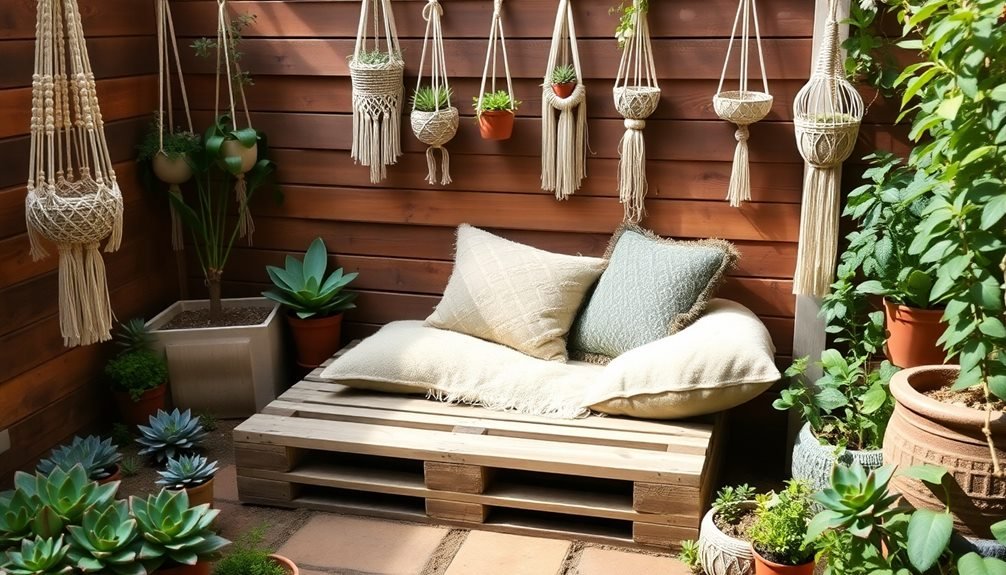
Transforming wooden pallets into a dedicated meditation space offers another meaningful way to blend sustainability with mental wellness. You'll need 4-6 wooden pallets, eco-friendly paint or natural wood stain, cushions made from recycled materials, and basic tools to create your serene corner.
Start by thoroughly cleaning and sanding the pallets to prevent splinters. Stack two pallets horizontally to form a stable base, then position two more vertically to create a protective wall. You can add another pallet on top as a roof-like structure for a more enclosed feeling. Secure all connections using recycled hardware or natural rope for added stability.
Paint or stain your structure using non-toxic finishes in calming colors like sage green or soft blue. Add recycled fabric cushions, LED candles, and potted plants to enhance the peaceful atmosphere.
Consider incorporating a small shelf made from pallet wood to hold meditation essentials like bells, incense, or inspiring books.
This upcycled meditation corner won't just reduce landfill waste – it'll provide you with a dedicated space for mindfulness practices, helping you maintain daily meditation habits while honoring your commitment to environmental stewardship.
Frequently Asked Questions
How Do Upcycling Projects Specifically Reduce Anxiety and Depression Symptoms?
You'll reduce anxiety and depression through upcycling's mindful focus, creative expression, and sense of accomplishment. It keeps your hands busy, your mind present, and gives you pride in transforming old items into something new.
What Safety Precautions Should Be Taken When Working With Recycled Materials?
You'll need to wear protective gear like gloves and masks when handling recycled items. Always clean materials thoroughly, check for sharp edges, and guarantee proper ventilation when using adhesives or paints.
Can Children Participate in These Eco-Friendly Wellness Projects?
You can definitely involve kids in eco-friendly projects with proper supervision. Keep projects age-appropriate, help with tools and sharp items, and guarantee they're using non-toxic materials. They'll learn sustainability while having fun!
How Long Does It Typically Take to See Mental Health Benefits?
You'll often notice initial mood improvements within 1-2 weeks of regular mindful activities. However, lasting mental health benefits typically develop after 4-6 weeks of consistent practice, though everyone's experience varies differently.
Are There Specific Upcycling Projects Recommended for Managing Particular Emotional Challenges?
You'll find memory boxes help with grief, mandala art from old CDs eases anxiety, and turning old clothes into weighted blankets reduces stress. Garden planters from recyclables can combat depression through nurturing activities.
In Summary
By starting these simple upcycling projects, you're not just helping the environment – you're creating mindful moments that boost your mental wellbeing. Whether you're tending to your mason jar garden or arranging memories in your textile quilt, each project offers a chance to slow down, breathe, and practice mindfulness. You'll find joy in giving new life to old items while nurturing your inner peace.



Leave a Reply