
To relieve stress through gentle yoga, try these five poses: Child's Pose, Cat-Cow Stretch, Seated Forward Bend, Legs-Up-the-Wall Pose, and Corpse Pose. Child's Pose calms your mind and body, while Cat-Cow Stretch warms up your spine and core. Seated Forward Bend gently stretches your back and hamstrings, and Legs-Up-the-Wall Pose promotes relaxation and improved circulation. Finally, Corpse Pose allows for complete relaxation and tension release. Each pose offers unique benefits for stress relief, from improving flexibility to calming your nervous system. By incorporating these gentle poses into your routine, you'll discover a powerful toolkit for managing stress and finding inner peace.
Key Takeaways
- Child's Pose calms the mind and body, focusing on deep breathing to release tension and stress.
- Cat-Cow Stretch improves spinal flexibility and relieves lower back pain through gentle, synchronized movements.
- Seated Forward Bend gently stretches the back body, relieving stress in the back, shoulders, and hamstrings.
- Legs-Up-the-Wall Pose reduces stress and improves circulation with minimal exertion, promoting overall relaxation.
- Corpse Pose promotes deep relaxation, reduces anxiety, and improves sleep quality through conscious tension release.
Child's Pose
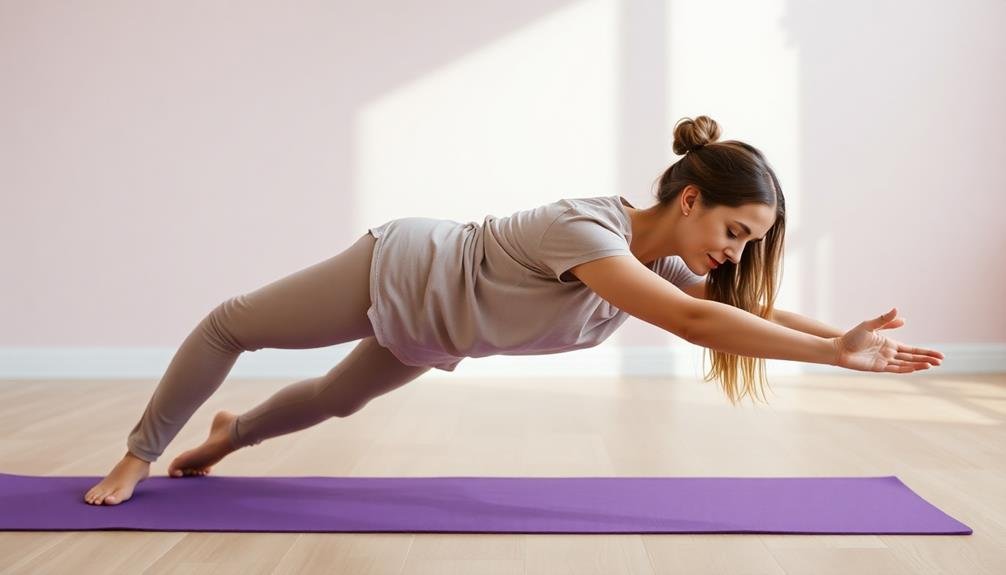
Sink into Child's Pose, a gentle and restorative position that's perfect for calming your mind and body.
Begin by kneeling on your mat with your big toes touching and knees hip-width apart. Exhale as you lower your torso between your thighs, extending your arms forward or resting them alongside your body.
As you settle into the pose, focus on your breath. Take slow, deep inhales and exhales, allowing tension to melt away with each breath. Feel the stretch along your spine, hips, and shoulders. If you're experiencing lower back discomfort, widen your knees for a gentler stretch.
You can modify Child's Pose to suit your needs. Place a folded blanket under your knees for added comfort, or rest your forehead on stacked fists if it doesn't reach the floor. For a deeper shoulder stretch, interlace your fingers behind your back and extend your arms overhead.
Hold this pose for 1-3 minutes, or longer if desired. Child's Pose is an excellent way to release stress, calm your nervous system, and connect with your breath.
It's also a great resting position between more challenging yoga poses.
Cat-Cow Stretch
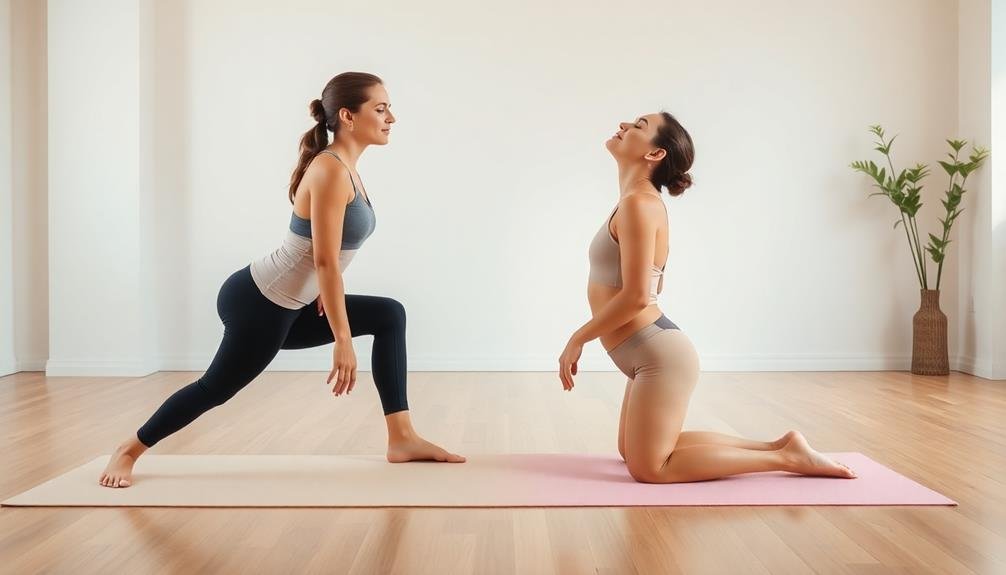
The Cat-Cow Stretch is a dynamic duo of poses that gently warms up your spine and core muscles. This flowing movement combines two positions: Cat Pose (Marjaryasana) and Cow Pose (Bitilasana).
You'll start on your hands and knees in a tabletop position, with your wrists aligned under your shoulders and knees under your hips.
For Cat Pose, exhale as you round your spine towards the ceiling, tucking your chin to your chest and pulling your navel in. As you inhale, shift into Cow Pose by arching your back, lifting your chest and tailbone, and gazing upward.
Continue alternating between these two poses, synchronizing your breath with each movement.
This stretch helps improve posture, balance, and spinal flexibility while massaging your internal organs. It's particularly beneficial for relieving lower back pain and neck tension.
As you flow through the poses, focus on your breath and let go of any stress or tension you're holding. Aim for 5-10 rounds of Cat-Cow, moving at a pace that feels comfortable for you.
Remember to listen to your body and modify if needed.
Seated Forward Bend
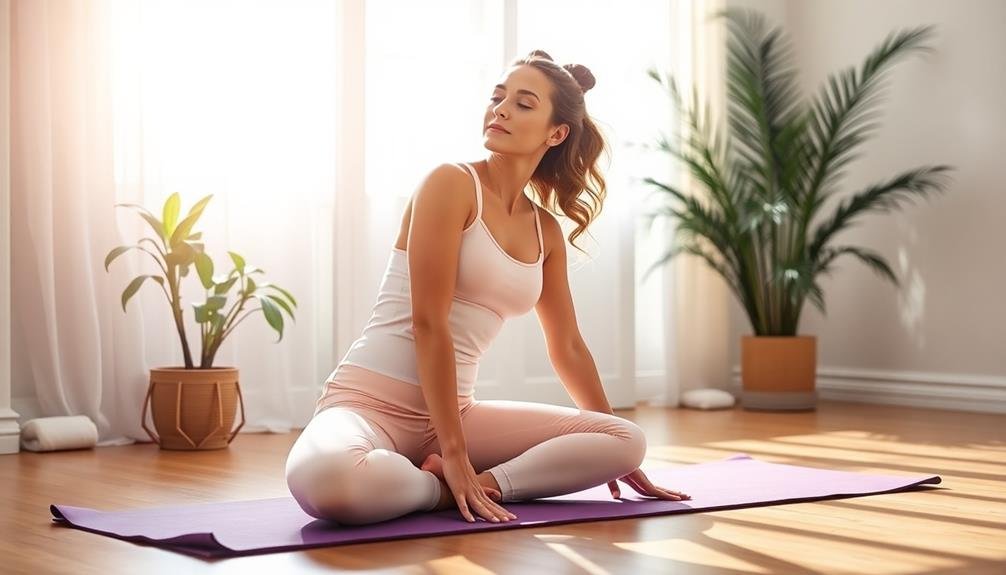
One of the most accessible and calming yoga poses, the Seated Forward Bend (Paschimottanasana) offers a gentle stretch for your entire back body.
It's an excellent pose for relieving stress and tension in your back, shoulders, and hamstrings.
To perform this pose, sit on the floor with your legs extended straight in front of you. Flex your feet, pointing your toes toward the ceiling.
Take a deep breath in, and as you exhale, hinge at your hips and slowly fold forward. Reach for your toes, ankles, or shins, depending on your flexibility.
Don't force the stretch; instead, focus on lengthening your spine and breathing deeply.
As you hold the pose, you'll feel a gentle stretch along your back and the backs of your legs. This stretch can help release built-up tension and promote relaxation.
If you're feeling particularly tight, you can bend your knees slightly to ease the stretch.
Remember to breathe slowly and deeply, allowing each exhale to help you sink a little deeper into the pose.
Hold for 30 seconds to 2 minutes, gradually increasing your hold time as you become more comfortable with the pose.
Legs-Up-the-Wall Pose
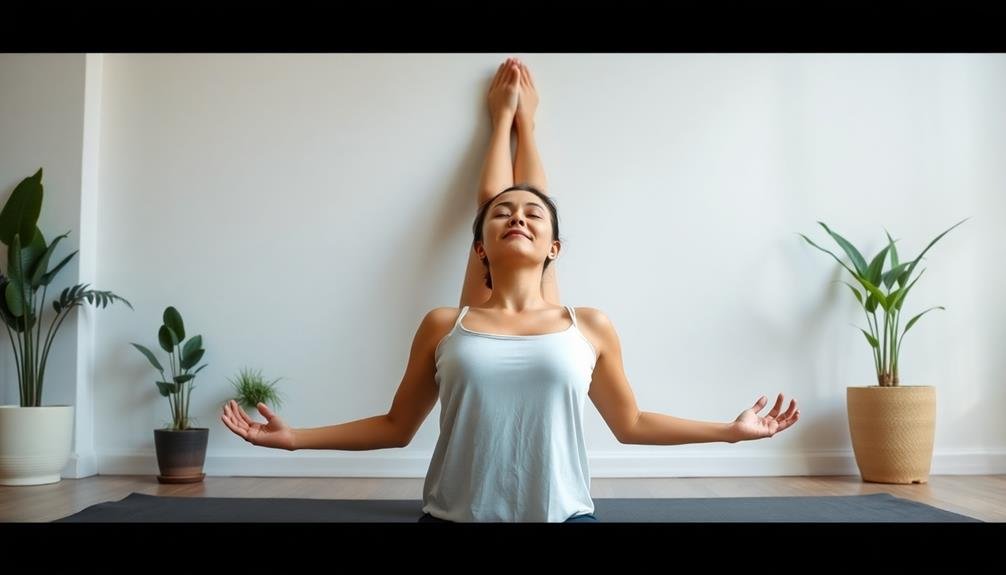
While many yoga poses require some effort, Legs-Up-the-Wall Pose (Viparita Karani) offers a deeply restorative experience with minimal exertion. This gentle inversion helps calm your nervous system, reduce stress, and alleviate tired legs and feet.
To practice this pose, find a clear wall space and lie on your back with your sit bones as close to the wall as comfortable. Extend your legs up the wall, forming an L-shape with your body. Rest your arms by your sides, palms facing up. Close your eyes and focus on your breath, allowing tension to melt away.
| Benefits | Precautions |
|---|---|
| Reduces stress | Avoid if you have glaucoma |
| Improves circulation | Not recommended during menstruation |
| Relieves lower back pain | Use caution with neck or back injuries |
You can enhance the pose by placing a folded blanket under your lower back for support. If you can't fully straighten your legs, bend your knees slightly or move your hips further from the wall. Stay in this pose for 5-15 minutes, gradually increasing the duration as you become more comfortable. To come out, slowly bend your knees and roll to your side before sitting up.
Corpse Pose
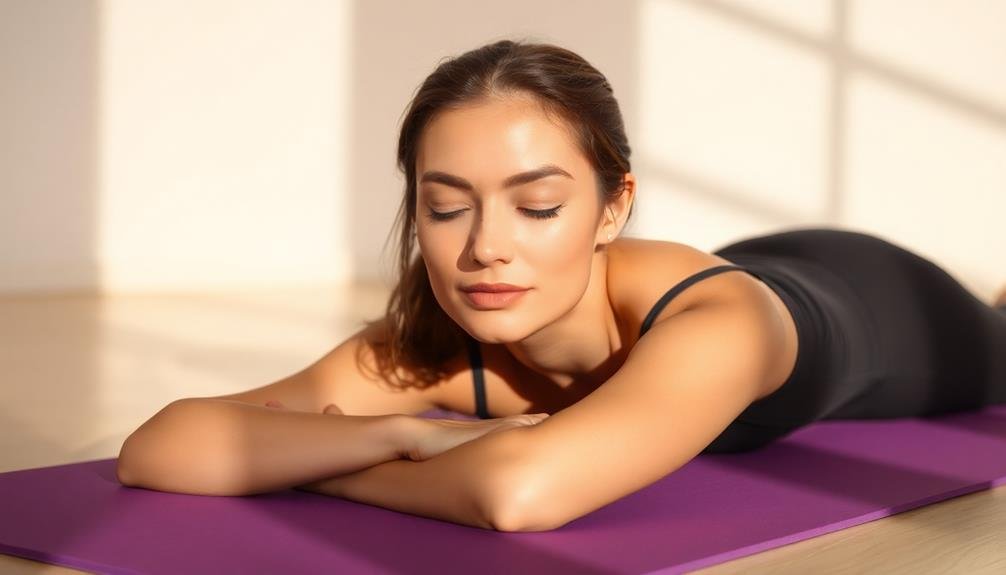
Moving from an inverted position to a completely flat one, Corpse Pose (Savasana) is often considered the most important pose in yoga practice. It's a deceptively simple posture that allows your body to fully relax and integrate the benefits of your yoga session.
To perform Corpse Pose, lie flat on your back with your arms at your sides, palms facing up. Close your eyes and focus on your breath, allowing tension to melt away from your muscles.
While in Corpse Pose, you'll experience several benefits:
- Deep relaxation of both body and mind
- Reduced stress and anxiety levels
- Improved sleep quality and overall well-being
As you lie in Savasana, scan your body from head to toe, consciously releasing any remaining tension. If your mind wanders, gently bring your attention back to your breath.
You'll find that this seemingly effortless pose can be challenging, as it requires you to be still and present. With practice, you'll become more comfortable in Corpse Pose, allowing yourself to fully surrender and reap its stress-relieving benefits.
Frequently Asked Questions
How Often Should I Practice Gentle Yoga for Stress Relief?
You should practice gentle yoga for stress relief at least 3-4 times a week. It's best to start with shorter sessions of 15-20 minutes and gradually increase to 30-60 minutes as you become more comfortable with the practice.
Can I Do Gentle Yoga if I Have Physical Limitations or Injuries?
Yes, you can do gentle yoga with physical limitations or injuries. It's adaptable to your needs. Always consult your doctor first, and inform your instructor about any issues. They'll help modify poses to guarantee you're safe and comfortable.
What's the Best Time of Day to Practice Stress-Relieving Yoga Poses?
You can practice stress-relieving yoga poses anytime, but many find early morning or evening most effective. Morning sessions energize you for the day, while evening practice helps you unwind. Choose a time that fits your schedule and feels right.
How Long Should I Hold Each Pose for Maximum Stress Relief Benefits?
You'll want to hold each pose for 30 seconds to 2 minutes. Listen to your body and breathe deeply. Don't push yourself too hard. Gradually increase your hold times as you become more comfortable with the poses.
Are There Any Breathing Techniques to Enhance the Stress-Relieving Effects of Yoga?
Yes, there are breathing techniques to enhance yoga's stress-relieving effects. You'll benefit from deep, slow breaths and techniques like ujjayi breathing. Focus on long exhales and try alternate nostril breathing to calm your mind and body.
In Summary
You've now learned five gentle yoga poses to help you unwind and de-stress. Remember, it's not about perfection but about listening to your body and finding what feels good. Don't push yourself too hard; instead, focus on your breath and the sensations in your body. With regular practice, you'll likely notice improvements in your stress levels and overall well-being. So why not give these poses a try? Your mind and body will thank you.



Leave a Reply