
To ease your anxious mind through reading, try various methods tailored to promote relaxation and mental escape. Engage in mindful reading by fully immersing yourself in the text, focusing on the present moment. Select escapist literature like fantasy or science fiction to transport yourself to different worlds. Explore calming poetry techniques, paying attention to rhythm and cadence to synchronize your breathing. Use guided imagery while reading to vividly imagine serene landscapes and settings. Consider bibliotherapy, which employs specific reading materials to help understand and manage anxiety. These approaches offer diverse ways to find solace and tranquility within the pages of a book. The journey to a calmer mind awaits as you explore these techniques further.
Mindful Reading Practices
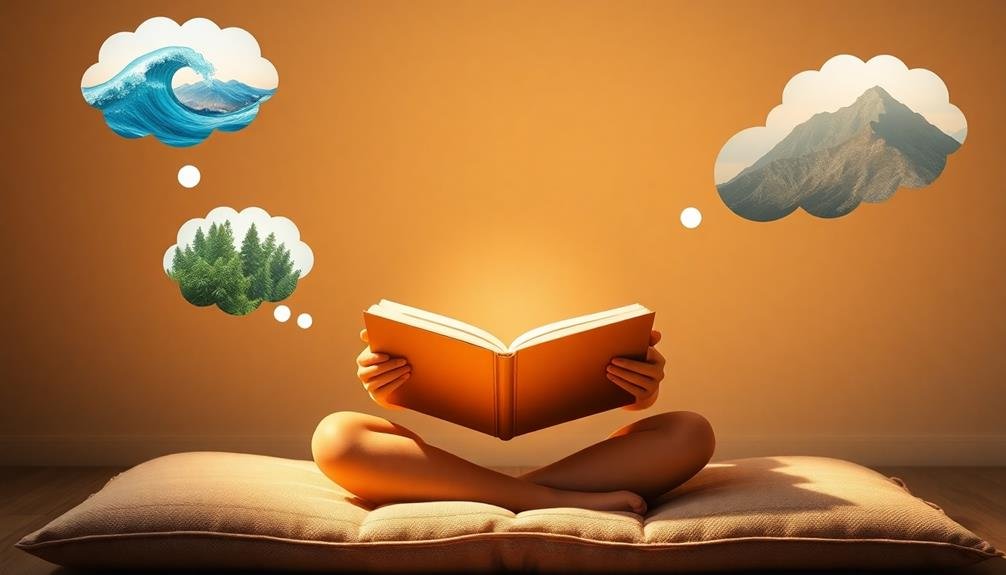
Through the practice of mindful reading, you can transform your relationship with books and reduce anxiety. Mindful reading involves fully immersing yourself in the text, focusing on the present moment, and letting go of distracting thoughts.
To begin, find a quiet, comfortable space where you won't be interrupted. Take a few deep breaths to center yourself before opening your book.
As you read, pay attention to the words on the page, noticing their shapes and sounds. Engage your senses by feeling the texture of the pages and inhaling the scent of the book. If your mind wanders, gently bring your focus back to the text without judgment.
Try reading aloud to enhance your concentration and connection with the material. Practice mindful reading for short periods, gradually increasing the duration as you become more comfortable.
You can also incorporate mindfulness techniques like body scans or breath awareness between reading sessions. By approaching reading with mindfulness, you'll not only reduce anxiety but also improve comprehension and retention.
This practice can help you develop a deeper appreciation for literature while cultivating a sense of calm and presence in your daily life.
Escapist Literature Selection
Selecting the right escapist literature can be a powerful tool for managing anxiety. When you're feeling overwhelmed, immersing yourself in a fictional world can provide much-needed relief. Choose genres that transport you to different realities, such as fantasy, science fiction, or historical fiction. These genres often offer complex worlds and characters that can fully engage your mind, distracting you from anxious thoughts.
Look for books with uplifting themes or satisfying resolutions. Avoid stories that might trigger your anxiety, such as those with intense violence or psychological horror. Instead, opt for narratives that inspire hope or offer a sense of adventure. Consider classics like "The Hobbit" or modern series like "Harry Potter" that provide rich, immersive experiences.
Don't overlook the power of humor in literature. Comic novels or witty memoirs can lift your spirits and provide a much-needed laugh.
Calming Poetry Techniques
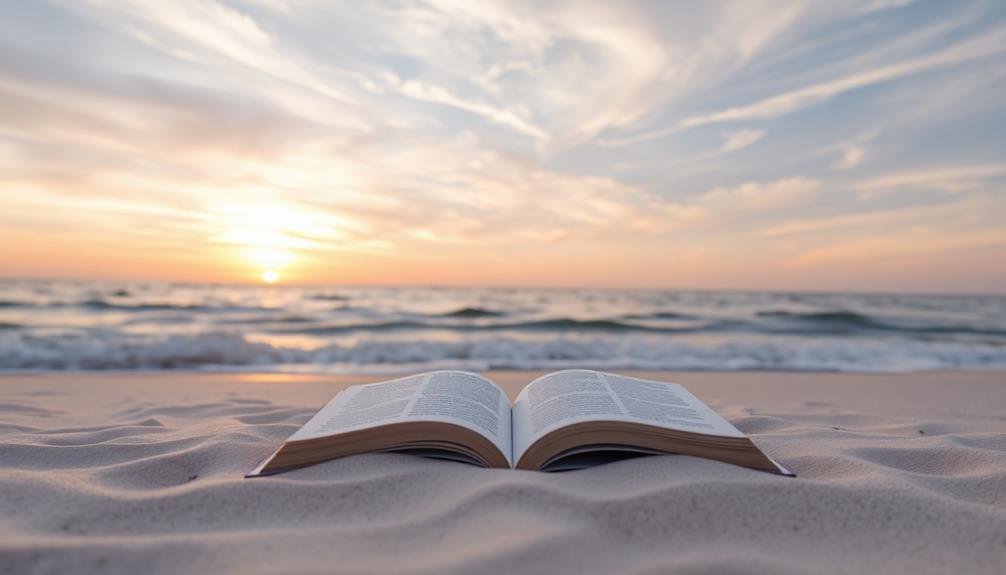
While escapist literature offers a complete departure from reality, poetry can provide a more focused and meditative approach to calming anxiety through reading. To harness the power of poetry for anxiety relief, start by selecting poems with soothing themes or rhythmic structures. Look for works that emphasize nature, tranquility, or mindfulness.
As you read, pay attention to the poem's cadence and meter. Allow the rhythmic flow of words to guide your breathing, naturally slowing your heart rate and relaxing your body. Try reading the poem aloud, savoring each word and letting the sounds resonate within you. This technique can help ground you in the present moment, reducing anxious thoughts about the future.
Consider memorizing short, calming poems to recite during moments of stress. This practice gives you a portable tool for anxiety management.
You can also try writing your own poetry as a form of self-expression and emotional release. Focus on crafting lines that evoke peaceful imagery or positive affirmations.
Guided Imagery Through Books
Guided imagery, a powerful technique for reducing anxiety, can be effectively harnessed through the pages of a book. As you read, you're transported to vivid landscapes and immersive scenes that engage your senses and distract your mind from anxious thoughts.
This mental escape allows you to relax and refocus, providing a much-needed respite from stress.
To maximize the benefits of guided imagery through books, try these techniques:
- Choose descriptive, sensory-rich novels or travel literature
- Read slowly, pausing to visualize each scene in detail
- Focus on engaging all five senses as you imagine the book's setting
- Practice deep breathing while reading to enhance relaxation
Bibliotherapy for Anxiety Management
Bibliotherapy offers a structured approach to using books for anxiety management. This therapeutic technique involves carefully selected reading materials to help you understand and cope with your anxiety. By engaging with stories, self-help books, or informative texts, you'll gain insights into your own experiences and learn new coping strategies.
When practicing bibliotherapy, you'll typically follow a process that includes:
- Identifying your specific anxiety concerns
- Selecting appropriate reading materials
- Reading and reflecting on the content
- Discussing your thoughts with a therapist or support group
- Applying the learned techniques to your daily life
Here's a quick guide to help you get started with bibliotherapy:
| Book Type | Benefits | Examples |
|---|---|---|
| Fiction | Provides relatable characters and situations | "The Anxiety and Phobia Workbook" |
| Self-help | Offers practical techniques and exercises | "Feeling Good: The New Mood Therapy" |
| Memoirs | Shares personal experiences and coping strategies | "My Age of Anxiety" |
Frequently Asked Questions
How Long Should I Read Daily to Reduce Anxiety Effectively?
You should aim to read for at least 15-30 minutes daily to effectively reduce anxiety. Consistency is key, so make it a habit. You'll notice benefits over time, but don't stress if you miss a day occasionally.
Can Audiobooks Provide the Same Anxiety-Relieving Benefits as Physical Books?
You'll find audiobooks can offer similar anxiety-relieving benefits as physical books. They're convenient and allow you to multitask. However, you might miss out on the tactile experience and screen-free relaxation that traditional reading provides. Choose what works best for you.
Are There Specific Genres to Avoid When Reading for Anxiety Relief?
You should avoid genres that trigger anxiety, such as horror or intense thrillers. Instead, opt for uplifting, calming genres like self-help, light fiction, or nature writing. Choose books that'll soothe your mind rather than agitate it.
How Can I Create a Calming Reading Environment at Home?
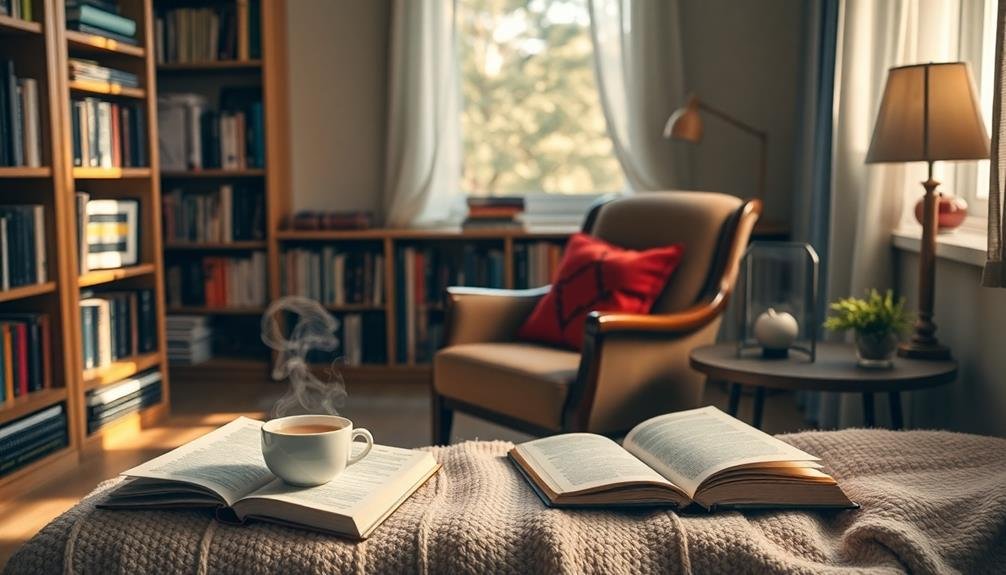
To create a calming reading environment, you'll want to choose a quiet spot. Dim the lights, light some candles, and use comfortable seating. Add soft blankets and pillows. Keep distractions minimal, and consider playing soft background music.
Can Reading-Related Activities Like Book Clubs Help With Social Anxiety?
Yes, book clubs can help with social anxiety. You'll interact with others in a structured setting, sharing thoughts on a common topic. It's a great way to practice social skills and build confidence in a supportive environment.
In Summary
You've now discovered various reading methods to soothe your anxious mind. Whether you're practicing mindful reading, losing yourself in escapist literature, finding solace in calming poetry, using guided imagery, or exploring bibliotherapy, books can be powerful tools for anxiety management. Don't hesitate to experiment with these techniques and find what works best for you. Remember, reading isn't just about gaining knowledge; it's also about finding peace and comfort in the written word. Embrace these methods and let literature become your ally in managing anxiety.

Leave a Reply