
Aquarium art therapy soothes anxious minds by immersing you in calming underwater-inspired techniques. You'll engage in activities like watercolor painting, seashell mosaics, and coral reef sculpting that promote mindfulness and relaxation. These artistic processes, including fish origami and aquatic mandalas, encourage focus and reduce stress through repetitive, meditative actions. The vibrant colors and fluid motions mimic the tranquil underwater world, helping to alleviate worry and promote emotional well-being. Unique methods like bubble wrap jellyfish printing and driftwood aquascapes offer tactile experiences that ground you in the present moment. Dive deeper to discover how these therapeutic techniques can transform your anxiety into creativity and calm.
Underwater Watercolor Techniques
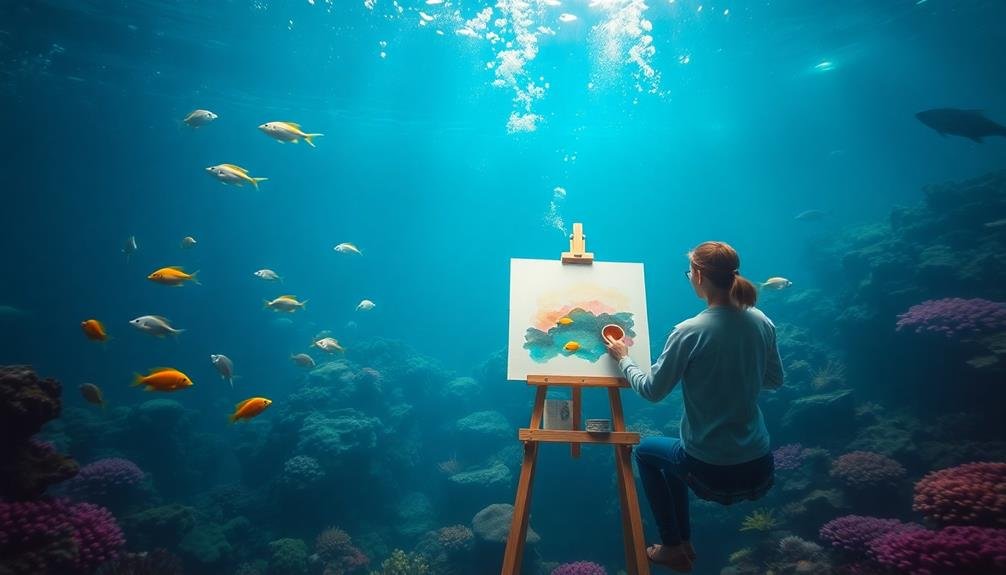
Three key techniques define underwater watercolor painting: wet-on-wet application, salt texturing, and bubble effects. When you're creating aquarium-inspired art, these methods will help you capture the fluid, ethereal nature of underwater scenes.
For wet-on-wet application, you'll need to work quickly. Start by wetting your paper, then apply diluted watercolors. The colors will blend and flow, mimicking the movement of water. This technique is perfect for creating soft, dreamy backgrounds that evoke the feeling of being submerged.
Salt texturing adds depth and texture to your underwater paintings. Sprinkle salt on wet paint to create unique patterns resembling coral or sea foam. As the paint dries, the salt absorbs moisture, leaving behind intricate textures that bring your aquatic scene to life.
To achieve bubble effects, you'll use masking fluid or wax resist. Apply small dots before painting, then remove them after the paint dries. This creates the illusion of air bubbles rising through water, adding a dynamic element to your artwork.
Seashell Mosaic Creation
Seashell mosaics offer a unique way to bring the ocean's beauty into your aquarium-inspired artwork. You'll find that creating these intricate designs can be both relaxing and rewarding.
To start, gather a variety of seashells in different sizes, shapes, and colors. Clean them thoroughly and sort them by type to make your design process easier.
Choose a base for your mosaic, such as a picture frame, wooden board, or even a small table top. Sketch your design lightly on the surface, incorporating aquatic themes like fish, waves, or coral reefs.
Apply a strong adhesive to the back of each shell and carefully place them on your base, following your sketch. As you work, you'll notice how the shells' natural textures and iridescent hues create an enchanting, three-dimensional effect.
Fill in gaps with smaller shells or pieces of broken shells to add depth and detail. Once you've completed your design, allow the adhesive to dry completely before applying a clear sealant to protect your artwork.
You'll discover that creating seashell mosaics not only enhances your artistic skills but also provides a meditative experience, helping to calm your mind and reduce anxiety.
Sculpting Coral Reef Landscapes

You'll immerse yourself in a vibrant underwater world as you sculpt coral reef landscapes, mixing and matching brilliant hues to recreate nature's aquatic palette.
By carefully crafting miniature ecosystems, you're bringing to life the intricate balance of coral formations, sea plants, and marine creatures.
The tactile experience of molding and shaping these underwater scenes can be both soothing and engaging, allowing you to connect with the ocean's beauty in a hands-on way.
Vibrant Underwater Color Palettes
Coral reefs burst with an incredible array of colors, offering a vibrant palette for underwater aquarium art. You'll find a mesmerizing spectrum ranging from soft pastels to electric neons, all of which can be incorporated into your aquarium art therapy designs.
These colors not only captivate the eye but also have a profound impact on your emotional state.
When creating your underwater scenes, consider using:
- Warm oranges and pinks to evoke a sense of energy and liveliness
- Cool blues and greens to promote calmness and tranquility
- Bright yellows and purples to inspire creativity and joy
You'll want to balance these hues carefully, mimicking the natural harmony found in coral reefs. Don't shy away from bold color combinations; they're essential in capturing the dynamic essence of underwater life.
Remember, the goal is to create a visually stimulating environment that engages your senses and soothes your mind.
As you work with these vibrant palettes, you'll find yourself immersed in a world of color therapy. The act of selecting and applying these hues can be meditative, allowing you to focus on the present moment and alleviate anxiety.
Miniature Ecosystem Creation
After exploring the vibrant color palettes, it's time to plunge into the intricate world of miniature ecosystem creation. You'll find that sculpting coral reef landscapes is a fascinating aspect of aquarium art therapy. By carefully arranging rocks, plants, and decorative elements, you're creating a thriving underwater world in miniature.
Start by selecting a variety of textures and shapes for your base. Use larger rocks to form the foundation, then add smaller pebbles and sand to create depth. As you build upwards, incorporate artificial corals in diverse forms – branching, plate-like, and boulder-shaped. These will provide the structural complexity that mimics a natural reef.
Now, introduce aquatic plants strategically. Choose species that complement your design and provide hiding spots for fish. Don't forget to leave open areas for water circulation and fish swimming paths. As you work, you're not just designing; you're engineering a balanced ecosystem.
This process of creation allows you to focus intently on the present moment, channeling your energy into something beautiful and alive. It's a meditative experience that can greatly reduce anxiety and stress, offering a sense of accomplishment and connection to nature.
Tactile Sensory Experience
The tactile experience of sculpting coral reef landscapes adds a powerful sensory dimension to aquarium art therapy. As you mold and shape the intricate details of a miniature reef, you're engaging multiple senses simultaneously. Your fingers glide over various textures, from smooth pebbles to rough coral structures, creating a grounding effect that anchors you in the present moment.
This hands-on approach allows you to physically manifest your creativity while providing a soothing, repetitive motion that can calm anxious thoughts. You'll find yourself absorbed in the process, focusing on the minute details of your underwater world. The act of sculpting coral formations engages your spatial awareness and fine motor skills, promoting a sense of accomplishment as you watch your creation take shape.
To fully immerse yourself in this tactile experience, try these techniques:
- Use a variety of materials like clay, sand, and small stones to create diverse textures.
- Experiment with different tools to carve intricate patterns into your coral structures.
- Incorporate found objects like shells or driftwood to add authenticity to your reef landscape.
This multisensory engagement helps redirect your focus from anxiety-inducing thoughts to the present moment, fostering a sense of calm and creative flow.
Fish-Inspired Origami Designs
As you explore fish-inspired origami designs, you'll discover simple folding techniques that are perfect for beginners.
You can start with popular patterns like the classic goldfish or koi, gradually advancing to more complex creations.
Engaging in this precise paper-folding art offers therapeutic benefits, helping you focus your mind and reduce stress while creating beautiful aquatic-themed pieces.
Folding Techniques for Beginners
Diving into the world of fish-inspired origami designs can be an exciting way to start your aquarium art therapy journey. As a beginner, you'll want to master a few basic folding techniques to create simple yet elegant fish shapes.
Start with the valley fold, where you crease the paper inward, and the mountain fold, which creates an outward ridge. These fundamental folds form the basis for more complex designs.
Next, practice the squash fold, a technique that combines valley and mountain folds to create three-dimensional forms. This fold is particularly useful for crafting fish bodies and fins.
As you progress, you'll learn to incorporate wet-folding, which involves slightly dampening the paper to achieve smoother curves and more realistic fish shapes.
To help you visualize the process, imagine:
- A sheet of vibrant blue paper transforming into a sleek, streamlined koi
- Delicate folds forming the intricate patterns of a tropical angelfish's fins
- A series of precise creases bringing a playful clownfish to life
Popular Fish Origami Patterns
Fish-inspired origami patterns offer a wide array of designs to explore, from simple to complex. You'll find that creating these aquatic-themed paper sculptures can be both relaxing and rewarding. Start with basic models like the traditional origami fish, which uses a few simple folds to create a recognizable shape. As you gain confidence, you can move on to more intricate designs such as koi, angelfish, or even sharks.
Here's a quick guide to some popular fish origami patterns:
| Fish Type | Difficulty | Fold Count |
|---|---|---|
| Goldfish | Easy | 10-15 |
| Koi | Medium | 20-30 |
| Angelfish | Medium | 25-35 |
| Shark | Hard | 40-50 |
| Stingray | Hard | 35-45 |
When selecting a pattern, consider your skill level and the time you're willing to invest. Remember, practice makes perfect. Don't be discouraged if your first attempts don't turn out exactly as planned. Each fold you make will improve your technique and bring you closer to creating stunning fish-inspired origami art. As you progress, you'll find that folding these intricate designs can be a meditative process, helping to calm your mind and reduce anxiety.
Therapeutic Benefits of Folding
The therapeutic benefits of folding fish-inspired origami designs extend far beyond the creation of beautiful paper sculptures. As you engage in this mindful practice, you'll find your stress melting away and your focus sharpening. The repetitive motions and concentration required to transform a flat sheet of paper into a three-dimensional fish can help calm your racing thoughts and promote a sense of inner peace.
Origami's therapeutic effects are rooted in its ability to:
- Engage your hands and mind simultaneously, drawing your attention away from worries.
- Provide a tangible sense of accomplishment as you complete each fold.
- Encourage patience and persistence, valuable skills for managing anxiety.
You'll also find that folding fish-inspired origami designs can boost your creativity and problem-solving skills. As you master different techniques and experiment with various patterns, you're exercising your brain in new ways.
This mental stimulation can help improve cognitive function and increase your overall sense of well-being. Furthermore, the act of creating something beautiful with your own hands can greatly boost your self-esteem and provide a sense of pride in your artistic abilities.
Aquatic-Themed Mandala Drawing
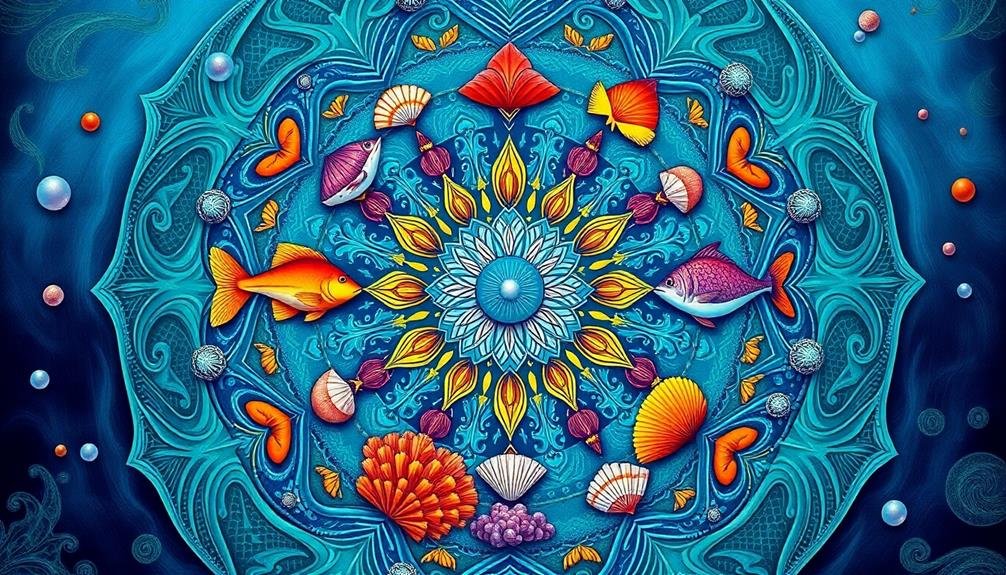
Aquatic-themed mandala drawing offers a serene and meditative approach to art therapy. As you create intricate patterns inspired by underwater life, you'll find yourself immersed in a calming, focused state. This practice combines the symmetry of traditional mandalas with the fluidity of marine elements, allowing you to express your creativity while reducing stress.
To begin, choose aquatic motifs like shells, fish, or coral. Start from the center and work outward, repeating patterns in a circular formation. You'll notice your anxiety melting away as you concentrate on the rhythmic process of drawing. The repetitive nature of mandala creation promotes mindfulness and helps quiet racing thoughts.
| Benefits | Techniques | Materials |
|---|---|---|
| Stress relief | Symmetry | Colored pencils |
| Improved focus | Repetition | Markers |
| Enhanced creativity | Layering | Watercolors |
| Emotional expression | Shading | Drawing paper |
| Mindfulness practice | Color blending | Compass or stencils |
As you progress, you'll develop a deeper appreciation for the intricacies of marine life. This art form not only soothes your mind but also fosters a connection with nature, promoting a sense of harmony and balance in your daily life.
Bubble Wrap Jellyfish Printing
Bubble wrap jellyfish printing offers a unique and tactile approach to aquarium-inspired art therapy. This technique combines the soothing properties of bubble wrap with the ethereal beauty of jellyfish, creating a calming and engaging art experience.
To begin, you'll need bubble wrap, paint, and paper. Cut the bubble wrap into jellyfish-shaped pieces, then apply paint to the bubbled side. Press the painted bubble wrap onto your paper, creating a textured print that resembles a jellyfish's delicate form. The repetitive action of pressing and lifting the bubble wrap can be incredibly relaxing, helping to alleviate anxiety and promote mindfulness.
As you create your jellyfish prints, imagine the following scene:
- Translucent jellyfish gracefully pulsing through calm, azure waters
- Gentle currents swirling around their tentacles, creating mesmerizing patterns
- Soft, bioluminescent glow emanating from their bell-shaped bodies
This visualization, combined with the tactile experience of bubble wrap printing, can transport you to a serene underwater world. The process allows you to focus on the present moment, letting worries fade away as you immerse yourself in the creative flow.
You'll find that this simple yet effective art therapy technique can considerably reduce stress and promote a sense of calm.
Driftwood Aquascape Arrangements
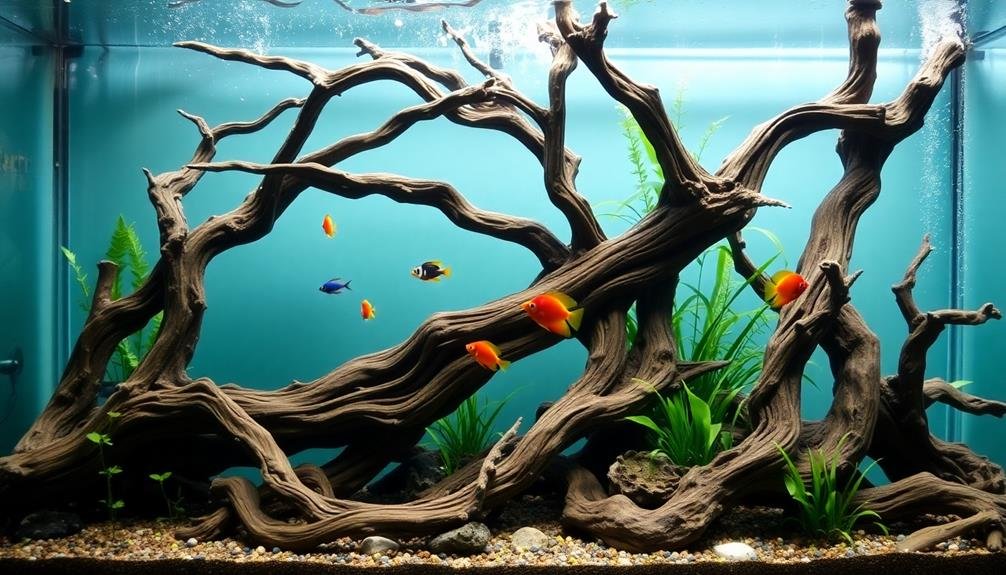
Inspired by the tranquil beauty of underwater landscapes, driftwood aquascape arrangements offer a unique and therapeutic approach to aquarium-themed art. You'll find that creating these miniature aquatic worlds can be both calming and rewarding. Start by selecting various pieces of driftwood, considering their shapes and textures. Arrange them to mimic natural formations, creating depth and interest within your aquarium or terrarium.
As you work, you're engaging in a mindful activity that encourages focus and creativity. The process of carefully positioning each piece of driftwood can be meditative, helping to reduce stress and anxiety. You'll notice how the arrangement takes shape, reflecting your artistic vision and connection to nature.
| Benefits | Materials | Techniques |
|---|---|---|
| Stress relief | Driftwood | Layering |
| Creativity boost | Aquarium/Terrarium | Balancing |
| Improved focus | Substrate | Focal points |
To enhance your aquascape, consider adding small plants, pebbles, or even miniature figurines. These elements can create a sense of scale and bring your underwater scene to life. As you refine your arrangement, you'll find that the act of creating and maintaining this living artwork becomes a soothing ritual, providing a peaceful retreat from daily stressors.
Frequently Asked Questions
How Does Aquarium Art Therapy Differ From Traditional Art Therapy?
You'll find aquarium art therapy involves creating art while observing aquatic life, unlike traditional art therapy. It combines visual stimulation from fish and water with creative expression, potentially offering a more calming and immersive experience for anxiety relief.
Are There Any Risks or Contraindications for Aquarium Art Therapy?
You should be aware of potential risks like water-related accidents or allergies to aquarium materials. If you're prone to obsessive behaviors, the repetitive nature of aquarium maintenance could be problematic. Always consult a healthcare professional before starting any therapy.
Can Aquarium Art Therapy Be Practiced at Home Without Professional Guidance?
You can practice aquarium art therapy at home without professional guidance. It's easy to set up a small aquarium and create art inspired by it. However, consulting a therapist can help you maximize its therapeutic benefits.
What Age Groups Benefit Most From Aquarium Art Therapy?
You'll find that aquarium art therapy benefits people of all ages. It's especially effective for children, teenagers, and older adults. You can see improvements in stress reduction and emotional well-being across these age groups with this calming practice.
How Long Does a Typical Aquarium Art Therapy Session Last?
You'll typically spend 30 to 60 minutes in an aquarium art therapy session. It's flexible, though, and can be adjusted based on your needs. Some therapists might offer longer sessions or multiple short sessions throughout the week.
In Summary
You've explored the calming world of aquarium art therapy, diving into techniques that soothe your anxious mind. By creating underwater watercolors, seashell mosaics, and coral reef sculptures, you've tapped into the tranquil essence of aquatic life. Your fish-inspired origami and aquatic mandalas have brought focus and peace. Through bubble wrap jellyfish prints and driftwood aquascapes, you've connected with nature's serene beauty. Embrace these artistic practices to find your inner calm and let creativity wash over you like gentle waves.

Leave a Reply