
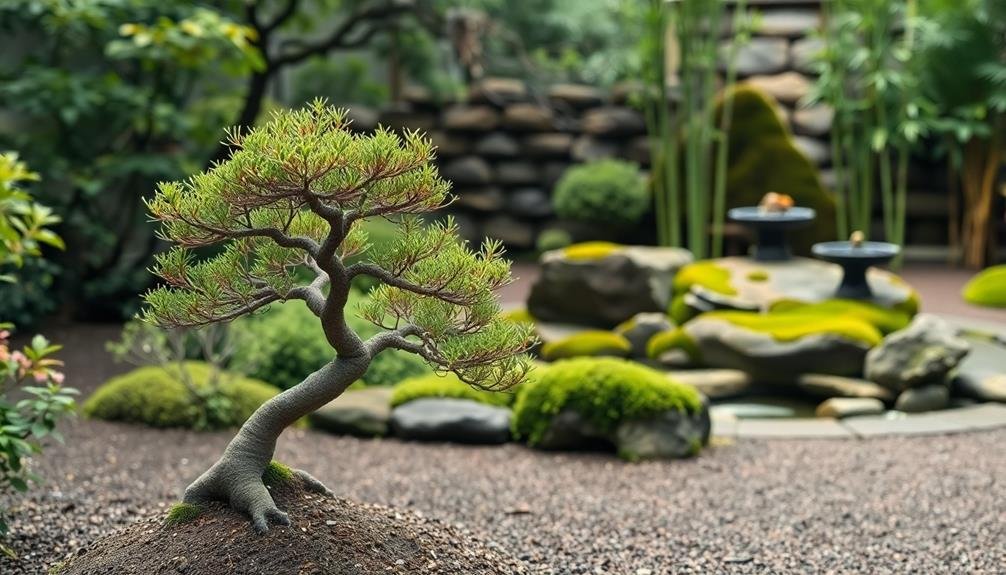
Bonsai, the ancient art of cultivating miniature trees, offers a path to mindfulness and inner peace. You'll discover a meditative practice that fosters a deep connection with nature as you shape and nurture your living sculpture. Through daily rituals of observation, pruning, and care, you'll develop a focused state of mind that extends beyond your bonsai garden. This art form can serve as a powerful tool for stress relief and anxiety management, promoting relaxation and self-confidence. Whether you're a beginner or experienced enthusiast, choosing the right bonsai companion and mastering essential techniques will enhance your journey. Explore the world of bonsai to reveal its transformative potential.
Key Takeaways
- Bonsai cultivation promotes mindfulness through focused, meditative practices like pruning and shaping miniature trees.
- Daily rituals of observing and caring for bonsai foster a deep connection with nature and enhance overall well-being.
- The patience and dedication required for bonsai nurture resilience and a relaxed approach to life's challenges.
- Engaging in bonsai care serves as an effective tool for stress relief and anxiety management.
- Choosing and maintaining a bonsai encourages continuous learning and personal growth through overcoming cultivation challenges.
The Art of Bonsai
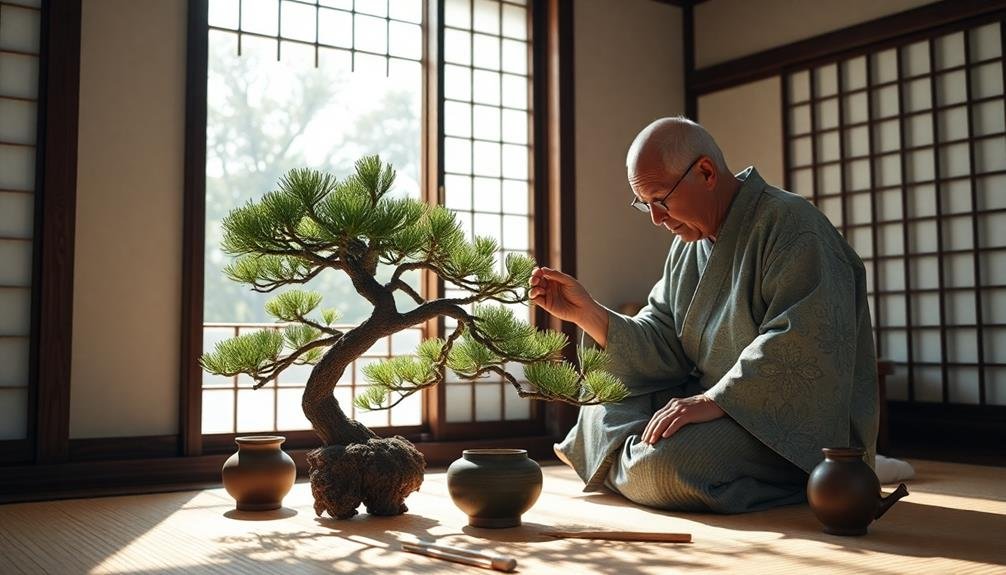
Cultivating a bonsai tree is an ancient art form that's both challenging and rewarding. You'll find that this practice requires patience, dedication, and a keen eye for detail. As you shape and prune your miniature tree, you're not just creating a living sculpture but also embracing a centuries-old tradition.
To start your bonsai journey, you'll need to choose the right tree species and understand its specific needs. You'll learn techniques like wiring, which allows you to guide the tree's growth, and pruning, which helps maintain its size and shape. The soil, pot, and watering routine are all essential elements you'll master over time.
As you work with your bonsai, you'll develop a deep connection with nature. You'll observe the subtle changes in your tree's growth and respond to its needs. This hands-on approach fosters a sense of responsibility and mindfulness.
You're not just tending to a plant; you're creating a balanced, harmonious representation of nature in miniature form. The art of bonsai teaches you to slow down, pay attention to details, and appreciate the beauty of imperfection.
Mindfulness Through Miniature Trees
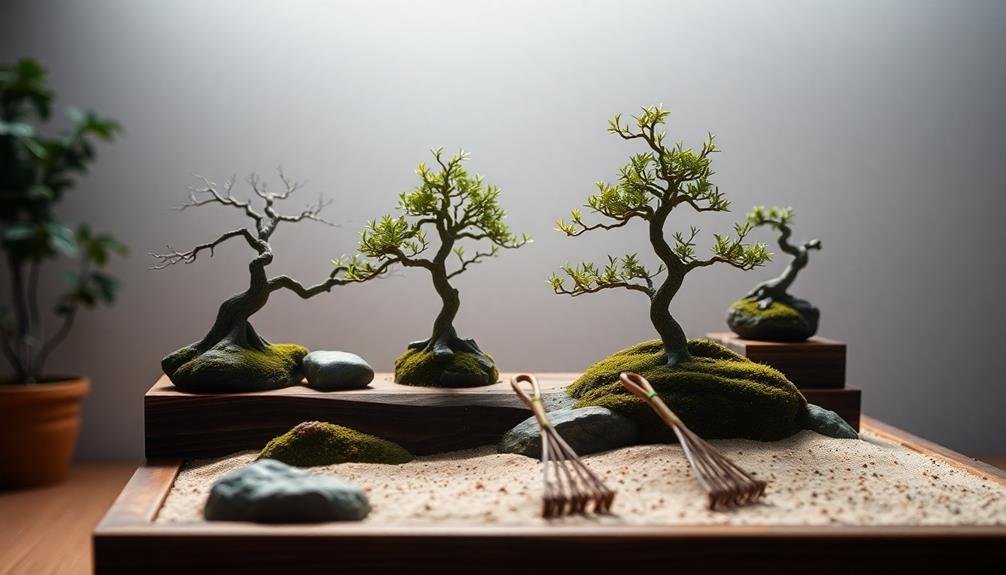
You'll find that pruning a bonsai tree can become a deeply meditative practice.
As you carefully shape each branch, you're cultivating a zen-like focus that extends beyond the tree itself.
This mindful approach to bonsai care can help you develop patience, attention to detail, and a heightened sense of presence in your daily life.
Meditative Pruning Practice
How can the simple act of pruning a bonsai tree become a gateway to mindfulness? As you carefully trim each tiny branch, you're not just shaping a tree; you're cultivating a focused state of mind. The precision required for this delicate task demands your full attention, pushing away distracting thoughts and anchoring you in the present moment.
Begin by observing your bonsai closely, noting its current shape and envisioning its potential. As you select your tools, feel their weight and texture, connecting with the process. With each snip, you're making deliberate choices, considering the tree's overall design and health. This thoughtful approach encourages patience and acceptance, as you can't rush the tree's growth or force its natural tendencies.
The repetitive motions of pruning can induce a meditative state, similar to practices like yoga or tai chi. You'll find your breathing naturally slows and deepens as you work.
This rhythmic pruning becomes a form of moving meditation, allowing you to enter a flow state where time seems to stand still. Through regular practice, you'll discover that the mindfulness cultivated during bonsai care extends into other areas of your life.
Zen-like Focus Cultivation
The art of bonsai offers a unique path to Zen-like focus. As you tend to your miniature tree, you'll find yourself entering a state of deep concentration. This practice helps you cultivate mindfulness, allowing you to be fully present in the moment.
When working with your bonsai, focus on each task deliberately. Observe the tree's structure, feel the texture of its leaves, and listen to the gentle rustle as you prune. This sensory engagement promotes a meditative state, quieting the mind's chatter.
| Benefits of Bonsai Focus | Techniques to Enhance Focus |
|---|---|
| Stress reduction | Breath awareness |
| Improved concentration | Mindful observation |
| Enhanced patience | Single-tasking |
| Increased self-awareness | Regular practice |
Over time, you'll notice this focused attention spilling into other areas of your life. You'll become more aware of your surroundings, more patient in your interactions, and better able to concentrate on tasks. The skills you develop through bonsai practice can help you navigate daily challenges with greater ease and clarity, fostering a sense of calm and balance in your life.
Choosing Your Bonsai Companion
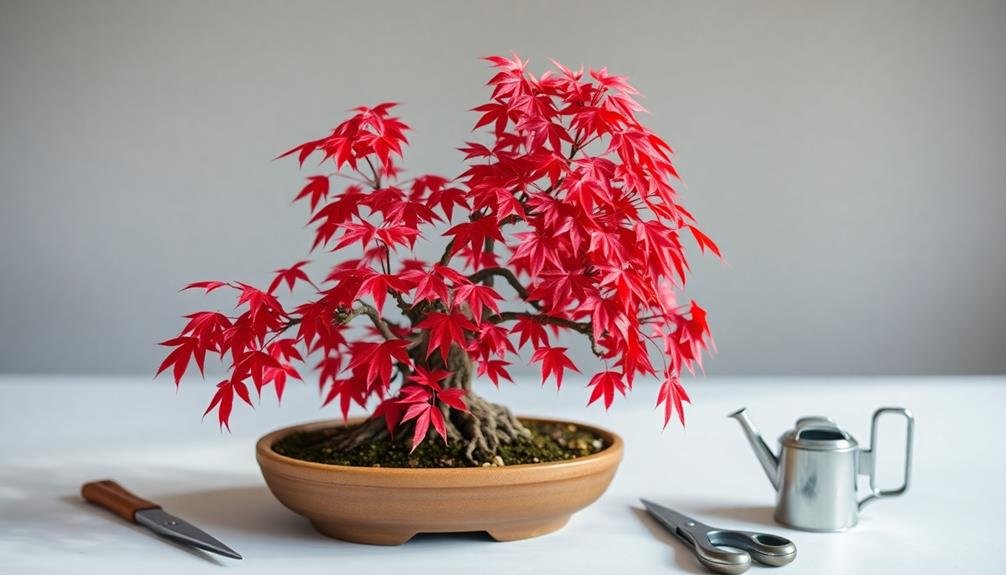
Selecting the right bonsai tree is an essential first step in your mindfulness journey. Consider your experience level, available time, and living space when choosing your bonsai companion.
Beginners should opt for hardy species like juniper, ficus, or jade, which are more forgiving of mistakes. If you're short on time, slow-growing trees like pines or maples require less frequent maintenance.
Assess your environment's light conditions and temperature fluctuations. Indoor bonsai thrive in bright, indirect light, while outdoor varieties need protection from extreme weather.
Choose a tree that matches your aesthetic preferences, as you'll be spending considerable time observing and caring for it.
Size matters too. Smaller bonsai are easier to move and require less space, but larger ones can make bolder statements. Consider the pot as well; it should complement the tree's style and your decor.
Don't rush your decision. Visit local nurseries or bonsai clubs to see various species in person.
Ask questions and handle the trees to get a feel for their textures and forms. Remember, your bonsai companion will be a long-term commitment, so choose one that resonates with you on a personal level.
Essential Tools and Techniques
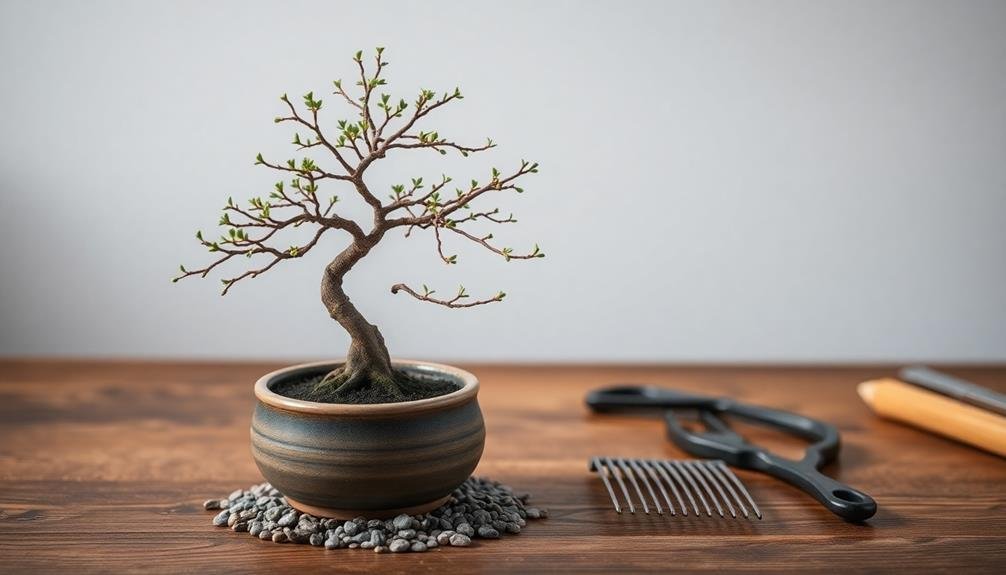
You'll need a few key tools to start your bonsai journey.
Pruning shears and wires are essential for shaping your tree, while the right soil mix and fertilizers guarantee its health.
Don't forget watering cans and proper drainage equipment to maintain ideal moisture levels for your bonsai.
Pruning Shears and Wires
As you explore deeper into the art of bonsai, pruning shears and wires become indispensable tools in your journey. Pruning shears are essential for shaping your tree and maintaining its miniature form. You'll use them to trim branches, leaves, and roots with precision. Choose a pair that fits comfortably in your hand and has sharp, clean blades for clean cuts that promote healing.
Wires are equally vital in bonsai cultivation. They allow you to guide the growth of branches and trunks, creating the desired shape and structure. You'll find two main types: aluminum and copper. Aluminum is more pliable and ideal for beginners, while copper offers more strength for thicker branches and advanced techniques.
When using wires, wrap them at a 45-degree angle around the branch, being careful not to damage the bark. Remember to check your wires regularly and remove them before they cut into the growing branch.
With practice, you'll develop a keen eye for when and where to prune and wire, allowing you to sculpt your bonsai into a living work of art that reflects your vision and patience.
Soil and Fertilizer Essentials
The right soil and fertilizer are essential components in bonsai cultivation. You'll need a well-draining soil mix specifically designed for bonsai to guarantee proper root health and prevent water logging. Typically, this mix consists of akadama, pumice, and lava rock in varying ratios, depending on your tree species and climate.
When it comes to fertilizer, you'll want to use a balanced, slow-release formula during the growing season. Look for products with equal parts nitrogen, phosphorus, and potassium (NPK). Apply fertilizer every two weeks during spring and summer, reducing frequency in fall and winter.
You'll also need to take into account your bonsai's specific nutritional needs. Some trees require more acidic soil, while others thrive in alkaline conditions. Adjust your soil pH accordingly using specialty products or natural amendments like sulfur or lime.
Remember to monitor your bonsai's response to soil and fertilizer. Yellowing leaves may indicate nutrient deficiencies, while burnt leaf tips could signal over-fertilization.
Watering and Drainage Tools
Proper watering and drainage are critical for bonsai health, and you'll need the right tools to manage them effectively. Start with a watering can that has a fine rose attachment, allowing for gentle watering that won't disturb the soil. A spray bottle is useful for misting leaves and increasing humidity. For larger bonsai, consider a hose with a adjustable nozzle for more precise control.
Drainage is equally important. Use a root hook to check soil moisture and aerate the root system. Mesh screens placed over drainage holes prevent soil loss while allowing excess water to escape. Humidity trays filled with pebbles and water can help maintain moisture levels around your bonsai.
Here's a table summarizing essential watering and drainage tools:
| Tool | Purpose | Frequency of Use |
|---|---|---|
| Watering can | Even water distribution | Daily to weekly |
| Spray bottle | Leaf misting | As needed |
| Root hook | Soil aeration | Monthly |
| Mesh screens | Prevent soil loss | During repotting |
Daily Rituals for Bonsai Care
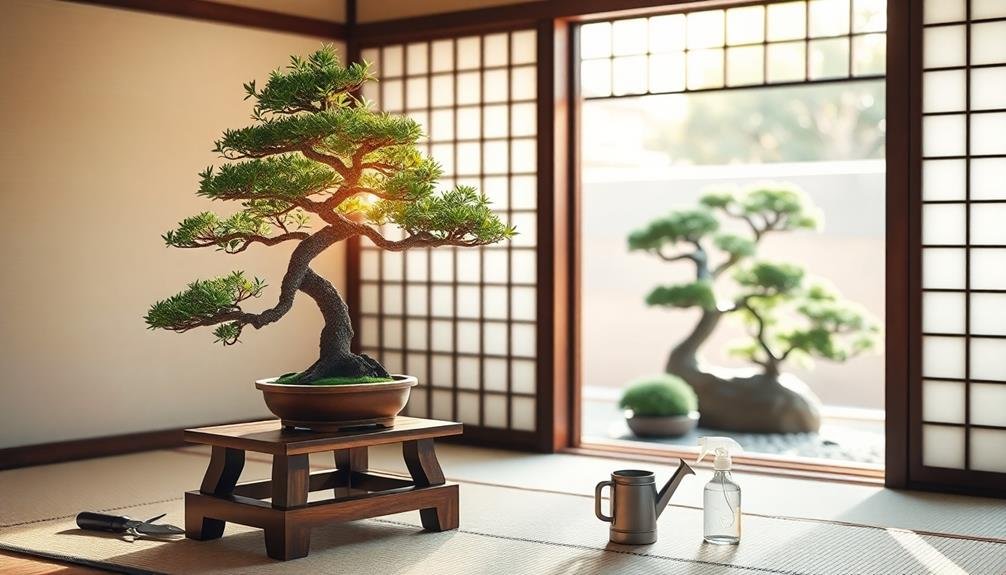
Cultivating bonsai trees requires daily attention and care, much like a meditation practice.
Begin your day by observing your bonsai, checking for any changes in leaf color, branch position, or overall health. This quiet moment of inspection allows you to connect with your tree and sets a mindful tone for the day.
Watering is a vital daily ritual. Check the soil's moisture level by gently pressing your finger into the top layer. If it's dry, water thoroughly until it drains from the bottom. In warmer months, you may need to water twice daily. Misting the leaves can also help maintain humidity.
Pruning is another essential task. Remove any dead or yellowing leaves, and trim new growth to maintain the tree's shape. This process requires focus and precision, encouraging a state of flow.
Rotate your bonsai regularly to guarantee even growth and sunlight exposure. As you turn the pot, take a moment to appreciate your tree from different angles.
End your day with another quiet observation, reflecting on any changes and planning for tomorrow's care.
These daily rituals foster a deep connection with your bonsai and promote mindfulness in your life.
Overcoming Challenges in Bonsai Cultivation
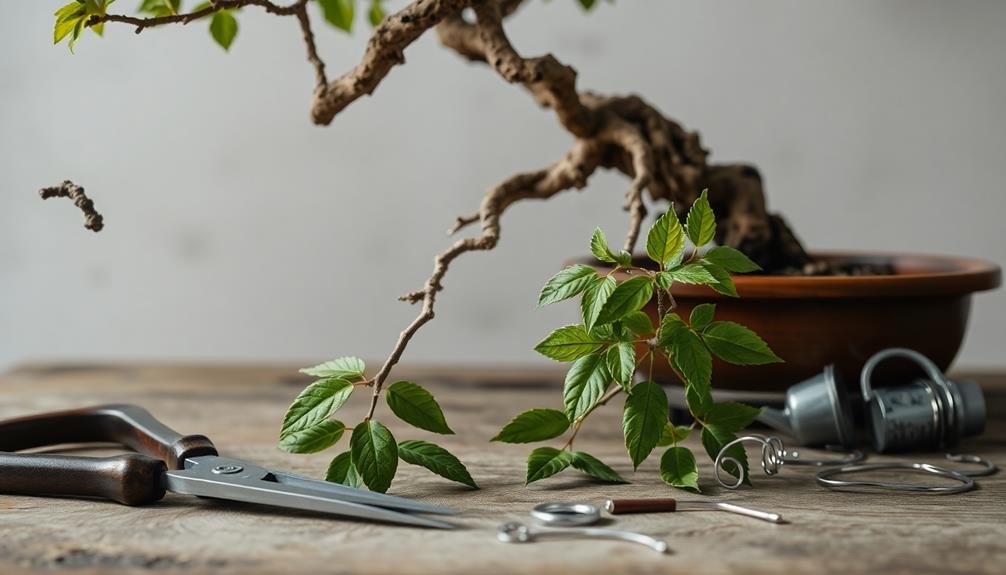
Beginners often face hurdles when starting their bonsai journey. You'll encounter challenges like over-watering, under-watering, and pest infestations. Don't be discouraged; these are common issues that even experienced enthusiasts face.
To overcome watering problems, observe your bonsai closely. Learn to recognize signs of thirst or saturation. Use a moisture meter if you're unsure.
For pest control, regularly inspect your tree's leaves and bark. Treat infestations promptly with appropriate organic or chemical solutions.
Another challenge is pruning anxiety. You might hesitate to cut, fearing you'll harm the tree. Start small, making conservative cuts to build confidence. Research proper pruning techniques for your specific species.
Selecting the right soil mix can be challenging. Experiment with different ratios of akadama, pumice, and lava rock to find what works best for your tree and climate.
Lastly, patience is essential. Bonsai is a slow art. You won't see dramatic changes overnight. Embrace the process, learn from setbacks, and celebrate small victories.
With persistence and practice, you'll develop the skills to nurture thriving bonsai trees.
Bonsai as Anxiety Management Tool
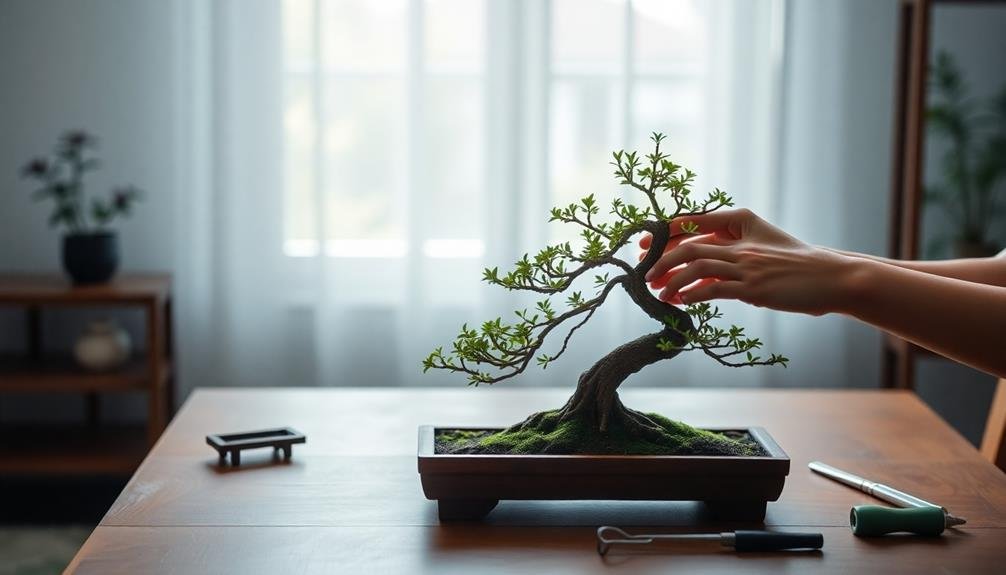
Anxiety, a common mental health concern, can find a soothing remedy in the art of bonsai. As you engage in this ancient practice, you'll discover a powerful tool for managing stress and calming your mind. The meticulous nature of bonsai cultivation demands your full attention, effectively redirecting your focus away from anxious thoughts.
When you're pruning, wiring, or repotting your miniature tree, you're fully immersed in the present moment. This mindfulness practice helps quiet the chatter of worry and allows you to experience a sense of peace. The slow, deliberate movements required in bonsai care can lower your heart rate and reduce physical symptoms of anxiety.
Moreover, nurturing a living organism gives you a sense of purpose and accomplishment. As you watch your bonsai thrive under your care, you'll build self-confidence and feel more in control of your environment.
The patience required in bonsai cultivation also translates to other areas of your life, helping you develop a more relaxed approach to challenges. By incorporating bonsai into your routine, you're not just creating art; you're cultivating inner tranquility and resilience against anxiety.
Frequently Asked Questions
Can Bonsai Trees Produce Fruit or Flowers?
Yes, your bonsai trees can produce fruit and flowers. You'll see miniature versions of blossoms and fruits on many varieties. With proper care and techniques, you can encourage flowering and fruiting in your tiny tree companions.
How Long Can a Well-Maintained Bonsai Tree Live?
You'll be amazed at how long bonsai trees can live! With proper care, they can thrive for centuries. Some well-maintained specimens have been known to live for over 1,000 years, outliving many generations of caretakers.
Are There Any Bonsai Species That Are Toxic to Pets?
You should be cautious with certain bonsai species around pets. Some toxic varieties include jade, ficus, azalea, and sago palm. It's best to research each species before bringing it home if you have furry friends.
Can You Create a Bonsai From a Cutting of a Regular Tree?
Yes, you can create a bonsai from a tree cutting. It's called propagation. You'll need to root the cutting first, then train it as it grows. It's a challenging but rewarding process for bonsai enthusiasts.
What's the Smallest Size a Healthy Bonsai Tree Can Be?
You'll find healthy bonsai trees as small as 3-4 inches tall. They're called mame or shohin bonsai. However, most enthusiasts prefer slightly larger sizes, around 6-8 inches, for easier care and more aesthetic appeal.
In Summary
You've commenced on a journey of patience and mindfulness with your bonsai. As you nurture your miniature tree, you're cultivating inner peace and a deeper connection to nature. Remember, it's not just about the end result; it's the daily rituals and challenges that shape both your bonsai and your mindset. Embrace the slow growth, learn from setbacks, and let your bonsai be a living reminder to stay present and find beauty in life's small moments.




Leave a Reply