

When anxiety strikes, these five brain games can provide a much-needed mental escape. Jigsaw puzzles offer a calming, methodical approach that promotes mindfulness. Sudoku challenges your focus with number patterns, giving you a sense of control. Crosswords engage your vocabulary and lateral thinking, boosting confidence as you complete them. Memory games redirect anxious thoughts while strengthening cognitive functions. Logic puzzles demand intense concentration, occupying your mind with analytical challenges. Each game offers a unique way to distract from anxiety, improve mental resilience, and create a soothing environment. Discover how these engaging activities can become powerful tools in your anxiety-management toolkit.
Jigsaw Puzzles for Mental Focus

Puzzle enthusiasts have long known the calming effects of jigsaw puzzles. When you're feeling anxious, these intricate games can provide a much-needed distraction and mental focus. As you sort through pieces and fit them together, your mind becomes absorbed in the task, leaving little room for worry.
Start by choosing a puzzle that suits your skill level and interests. Begin with the edge pieces to create a frame, then work your way inward. This methodical approach can help you feel more in control and organized. As you progress, you'll experience small victories with each piece you place correctly, boosting your confidence and sense of accomplishment.
Jigsaw puzzles also promote mindfulness, keeping you anchored in the present moment. You'll find yourself concentrating on colors, shapes, and patterns rather than dwelling on anxious thoughts. The repetitive nature of puzzling can induce a meditative state, lowering stress levels and promoting relaxation.
Consider setting up a dedicated puzzling area in your home. This creates a soothing environment you can retreat to when anxiety strikes.
Sudoku: Numbers vs. Anxious Thoughts
Logic triumphs over anxiety in the world of Sudoku. This number-placement puzzle challenges your mind to focus on patterns and sequences, effectively pushing anxious thoughts to the sidelines. As you fill in the 9×9 grid with digits from 1 to 9, you'll find your brain shifting gears from worry to problem-solving.
Sudoku's structure provides a sense of order and control, which can be comforting when anxiety makes you feel overwhelmed. You're presented with a clear goal and a set of rules, giving your mind a concrete task to tackle.
The puzzle's difficulty levels allow you to match the challenge to your current state of mind, ensuring you're always engaged but not overstressed.
As you progress, you'll notice your concentration improving and your anxiety receding. The act of completing each square gives you small victories, boosting your confidence and sense of accomplishment.
Sudoku's portability means you can carry this anxiety-busting tool with you anywhere, ready to redirect your thoughts whenever worry strikes. By regularly engaging with Sudoku, you're training your brain to focus on logical tasks, potentially making it easier to manage anxious thoughts in other aspects of your life.
Crosswords: Wordplay as Distraction
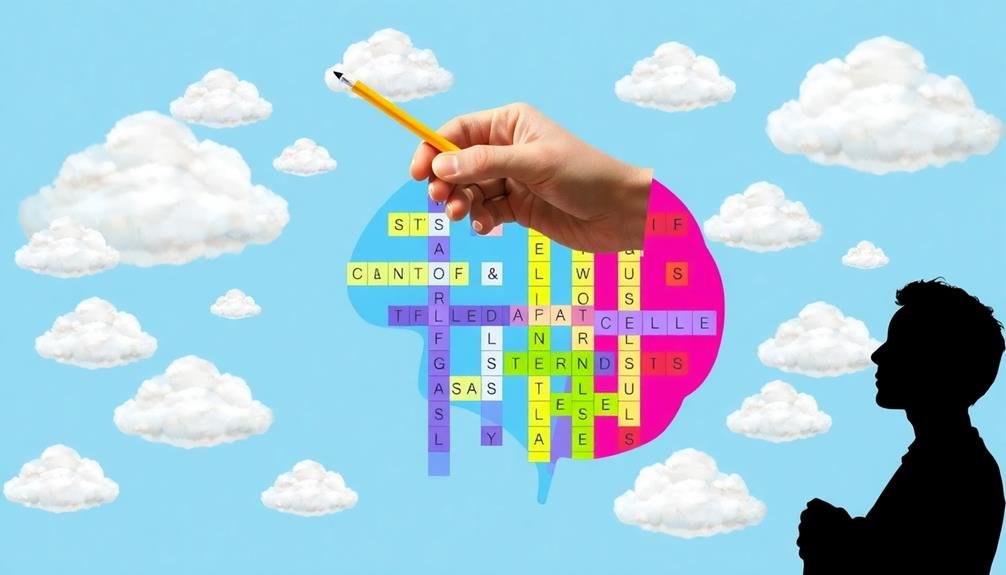
How can a simple grid of black and white squares become a powerful tool against anxiety? Crosswords offer a unique form of mental engagement that can effectively distract you from anxious thoughts. As you focus on deciphering clues and filling in words, your mind shifts away from worry and toward problem-solving.
Crosswords challenge your vocabulary, general knowledge, and lateral thinking skills. They require you to make connections between seemingly unrelated concepts, which can help break the cycle of repetitive anxious thoughts. The act of completing a crossword also provides a sense of accomplishment, boosting your confidence and mood.
You'll find that crosswords come in various difficulty levels, allowing you to choose one that matches your current mental state. Start with easier puzzles when you're feeling particularly anxious, and gradually work your way up to more challenging ones.
The repetitive nature of filling in squares can be soothing, while the mental stimulation keeps your mind occupied. Additionally, crosswords can be done alone or with others, making them a versatile tool for managing anxiety in different social situations.
Memory Games for Cognitive Engagement
Memory games offer a powerful way to redirect anxious thoughts while strengthening cognitive functions. These games challenge your brain to focus on recalling patterns, sequences, or information, effectively shifting attention away from anxiety triggers. By engaging in memory exercises, you're not only distracting yourself but also improving your cognitive abilities.
Try these popular memory games to combat anxiety:
| Game Type | Benefits | Difficulty Level |
|---|---|---|
| Concentration | Improves focus | Easy |
| Simon Says | Enhances sequencing | Medium |
| N-back | Boosts working memory | Hard |
| Picture Memory | Strengthens visual recall | Easy to Medium |
Start with simple games like Concentration, where you match pairs of cards. As you progress, challenge yourself with more complex options like the N-back task, which requires you to remember and manipulate information in your working memory. Digital versions of these games are readily available on smartphones and tablets, making them accessible anytime anxiety strikes. Regular practice can lead to improved memory function and increased mental resilience, potentially reducing the frequency and intensity of anxious episodes over time.
Logic Puzzles to Challenge Anxiety
While memory games offer cognitive engagement, another powerful tool in your anxiety-fighting arsenal is logic puzzles. These brain-teasers require intense focus and analytical thinking, effectively redirecting your mind from anxious thoughts.
Sudoku, for instance, demands concentration as you fill a 9×9 grid with numbers, following specific rules. This methodical process can be incredibly calming and rewarding.
Crossword puzzles present a different challenge, combining vocabulary skills with logical deduction. As you solve clues and fill in words, you're engaging multiple areas of your brain, leaving little room for worry.
For a more visual approach, try jigsaw puzzles. The act of piecing together an image can be meditative and satisfying.
Logic grid puzzles, where you use given clues to deduce relationships between items, offer a complex mental workout. These puzzles require systematic thinking and can be particularly effective at occupying an anxious mind.
Frequently Asked Questions
How Often Should I Play Brain Games to Reduce Anxiety?
You should play brain games regularly to help reduce anxiety. Aim for at least 15-20 minutes daily, but don't overdo it. Find a balance that works for you. Consistency is key, so try to make it a daily habit.
Can Brain Games Replace Professional Treatment for Anxiety Disorders?
Brain games can't replace professional treatment for anxiety disorders. While they may offer temporary distraction, you shouldn't rely on them as a sole solution. Seek help from a mental health professional for proper diagnosis and effective treatment options.
Are There Any Potential Negative Effects of Playing Too Many Brain Games?
You can experience negative effects from excessive brain games. They might cause eye strain, headaches, or sleep problems. You're also at risk of neglecting other important activities or becoming overly competitive. Moderation is key to avoid these issues.
Do Digital Versions of Brain Games Provide the Same Anxiety-Reducing Benefits?
You'll find digital brain games can offer similar anxiety-reducing benefits as traditional versions. They're often more accessible and convenient. However, you might miss out on tactile experiences and face-to-face interactions that physical games provide.
What Age Group Benefits Most From Using Brain Games for Anxiety Management?
You'll find that brain games for anxiety management can benefit all age groups. However, they're particularly effective for adults 25-55, as you're often dealing with work and life stressors. They'll help you refocus and calm your mind.
In Summary
You've now got a toolkit of engaging brain games to combat anxiety. Whether you're piecing together a jigsaw, crunching numbers in Sudoku, or unraveling crossword clues, you're actively redirecting your thoughts. Memory games and logic puzzles further challenge your mind, leaving little room for anxious rumination. Remember, these aren't just games; they're powerful tools for mental well-being. Next time anxiety creeps in, reach for one of these brain-boosters and give your mind a rewarding workout.

Leave a Reply