

You'll find that pairing herbs for indoor growing creates multiple benefits for your garden. When you combine compatible herbs, they can enhance each other's flavors, growth rates, and overall health. Smart pairings help repel harmful insects while attracting beneficial pollinators, and they create ideal microclimates for moisture and soil conditions. You can maximize your space by grouping herbs with similar sunlight, water, and root system needs – like basil with parsley or sage with rosemary. Tall herbs naturally shade sun-sensitive varieties, while pest-deterrent combinations protect your entire indoor garden. Discover the perfect herb partnerships to transform your windowsill into a thriving ecosystem.
Benefits of Herbal Companion Planting
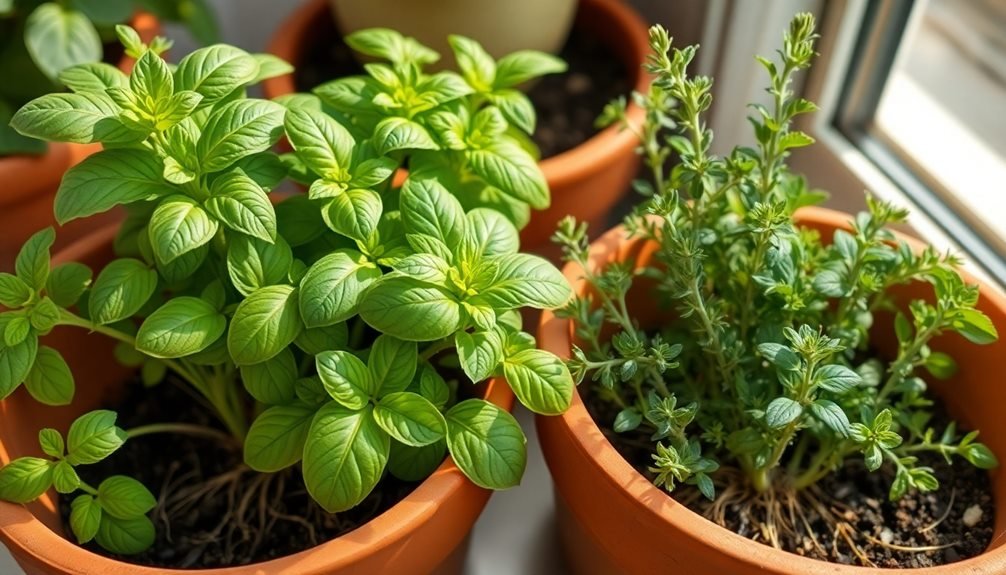
Building on centuries of traditional gardening wisdom, companion planting with herbs offers multiple advantages for your indoor garden. When you pair compatible herbs together, they'll create beneficial growing relationships that enhance flavor, improve growth rates, and maximize your limited indoor space.
You'll find that certain herb combinations naturally repel harmful insects while attracting beneficial pollinators when your plants flower. By strategically grouping your herbs, you're creating microclimates that help maintain ideal moisture levels and soil conditions.
Tall herbs can provide shade for sun-sensitive varieties, while shallow-rooted plants work harmoniously with deeper-rooted neighbors. You'll also benefit from improved space efficiency, as complementary herbs can share containers without competing for nutrients.
Some herbs release compounds that enhance the essential oil production of their companions, resulting in more fragrant and flavorful harvests. For example, basil grows exceptionally well with oregano, while sage enhances the growth of rosemary.
Through companion planting, you're not just growing herbs; you're creating a balanced, self-supporting ecosystem that maximizes your indoor growing success while minimizing the need for artificial interventions.
Basil and Parsley Growing Together
A perfect example of successful herb companionship comes from pairing basil and parsley together. These two herbs share similar growing requirements while offering complementary benefits to each other. You'll find that basil's strong aromatic properties help deter pests that might otherwise attack parsley, while parsley's dense foliage helps maintain soil moisture for both plants.
| Aspect | Basil | Parsley |
|---|---|---|
| Water Needs | Moderate | Moderate |
| Light Requirements | 6+ hours direct | 6+ hours direct |
| Soil pH | 6.0-7.0 | 6.0-7.0 |
When growing these herbs together indoors, you'll want to place them in a container that's at least 12 inches deep to accommodate parsley's longer roots. Keep the temperature between 65-70°F for ideal growth. You can harvest both herbs regularly, which encourages bushier growth and extends their productive life. Remember to plant basil slightly further apart than parsley, as it grows broader and taller. While parsley takes longer to germinate, it'll catch up to basil's growth rate within a few weeks.
Mint Family Combinations
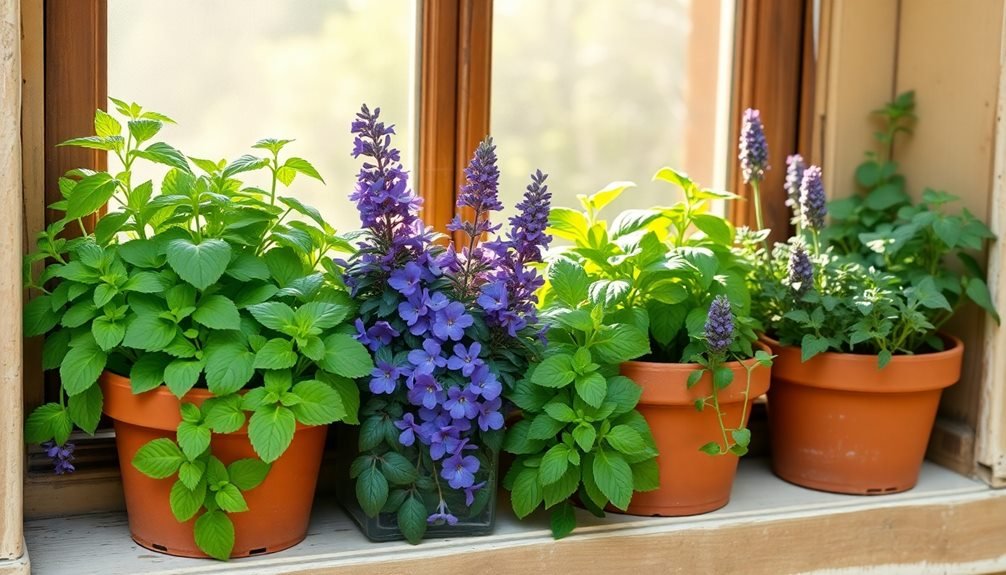
If you're ready to expand your indoor herb garden, consider pairing mint and oregano in a large container since both plants thrive in similar growing conditions.
You'll get the best results by planting lemon balm alongside peppermint, as these close relatives share comparable water and light requirements.
Just remember to give these vigorous growers plenty of space, as mint family herbs can quickly take over their growing area.
Mint and Oregano Pairing
Creating successful herb combinations starts with pairing mint and oregano, two robust members of the mint family that share similar growing needs.
These herbs thrive in well-draining soil, moderate temperatures between 65-70°F, and bright, indirect sunlight for 6-8 hours daily. You'll find they're both vigorous growers that adapt well to indoor containers.
When growing mint and oregano together, select a wide, shallow container at least 12 inches deep with adequate drainage holes. You'll want to position mint on one side and oregano on the other, leaving about 8 inches between them to prevent overcrowding.
Both herbs benefit from regular pruning, which encourages bushier growth and prevents them from becoming leggy.
While they're compatible companions, you'll need to monitor mint's spreading tendency, as it can overtake oregano if left unchecked. Consider planting mint in a separate plastic container within your main pot to contain its roots.
Water when the top inch of soil feels dry, and fertilize monthly with a balanced, water-soluble fertilizer. You'll enjoy fresh herbs year-round while maintaining a healthy balance between these two Mediterranean favorites.
Lemon Balm With Peppermint
Taking the mint family combinations a step further, lemon balm and peppermint create an aromatic indoor growing duo that'll enhance your herb garden. These complementary herbs share similar growing requirements, needing well-draining soil and moderate watering.
You'll find they thrive in partially shaded areas of your home, making them perfect windowsill companions.
When grown together, lemon balm and peppermint offer practical benefits beyond their aromatic qualities. Their strong scents naturally repel common indoor pests like spider mites and aphids, protecting both themselves and nearby plants.
You'll want to plant them in separate containers though, as both herbs can spread aggressively through underground runners.
The combination provides you with versatile culinary and medicinal options. You can harvest their leaves to create soothing teas, with peppermint offering digestive benefits while lemon balm provides calming properties.
During winter months, these herbs continue producing fresh leaves, ensuring you've got access to their flavors year-round.
Remember to trim them regularly to prevent flowering and maintain bushier growth, which'll result in more abundant leaf production for your indoor herb collection.
Sage and Rosemary Partnerships
You'll find that sage and rosemary make excellent growing partners since they both thrive in warm, sunny spots with well-draining soil.
To maximize your growing space, you can position rosemary's upright stems behind sage's lower-spreading growth pattern in a tiered arrangement.
You can water both herbs on the same schedule, as they prefer their soil to dry slightly between waterings.
Growing Conditions Match Well
Sage and rosemary's similar growing requirements make them perfect companions for indoor herb gardens. Both Mediterranean herbs thrive in well-draining soil with a pH between 6.0 and 7.0, and they'll do best when you plant them in containers with ample drainage holes.
You can use a mix of 70% potting soil and 30% perlite to create the ideal growing medium.
These herbs prefer temperatures between 65-70°F (18-21°C) and require at least six hours of direct sunlight daily. You'll find they're both drought-tolerant and won't need frequent watering – just verify the top inch of soil is dry before watering again.
They'll flourish in humidity levels around 40-50%, which is typical in most homes.
When it comes to fertilizing, both herbs have modest needs. You can feed them monthly during the growing season with a balanced, water-soluble fertilizer at half strength.
Their matching pruning schedules also make maintenance easier – trim them back regularly to encourage bushier growth and prevent them from becoming woody.
Because they're both upright growers, they won't compete for space when planted together.
Space-Efficient Vertical Arrangement
A vertical arrangement maximizes your indoor growing space while creating an attractive herb display. You'll find that sage and rosemary grow particularly well together in vertical setups, as both herbs have similar upright growth patterns and can be trained to grow vertically without compromising their health.
| Level | Plant Position | Light Exposure |
|---|---|---|
| Top | Rosemary | Direct sunlight |
| Upper-middle | Sage | Partial shade |
| Lower-middle | Rosemary | Filtered light |
| Bottom | Sage | Indirect light |
When you're arranging your herbs vertically, you'll want to position the rosemary plants where they'll receive the most sunlight, typically on the top tier. Place your sage plants slightly below, where they can benefit from partial shade created by the rosemary's foliage. This arrangement not only saves space but also creates a natural microclimate that benefits both herbs. You can use wall-mounted planters, tiered stands, or vertical garden systems to achieve this setup. Make sure each level has proper drainage and that water from upper plants won't oversaturate those below. The vertical structure also makes harvesting easier, as you can reach different parts of both plants without disturbing their root systems.
Similar Watering Requirements
Beyond their compatible vertical growth patterns, rosemary and sage share remarkably similar watering needs, making them ideal companions for indoor growing.
Both Mediterranean herbs thrive in well-draining soil and prefer to dry out between waterings. You'll find they're both drought-tolerant plants that would rather be underwatered than overwatered, which simplifies your care routine.
When you're growing these herbs together, you can maintain consistent watering practices that benefit both plants simultaneously. Their shared preferences include:
- A "soak and dry" approach, where you'll water thoroughly but allow the top 1-2 inches of soil to dry completely before the next watering
- Reduced watering frequency during winter months, when both herbs naturally enter a semi-dormant state
- Excellent drainage requirements, with both plants suffering quickly if their roots sit in waterlogged soil
You can monitor their moisture needs by simply pressing your finger into the soil – if it's dry at the first knuckle, it's time to water.
This matching water requirement means you won't have to remember different watering schedules for each herb, streamlining your indoor gardening routine.
Mediterranean Herb Pairings
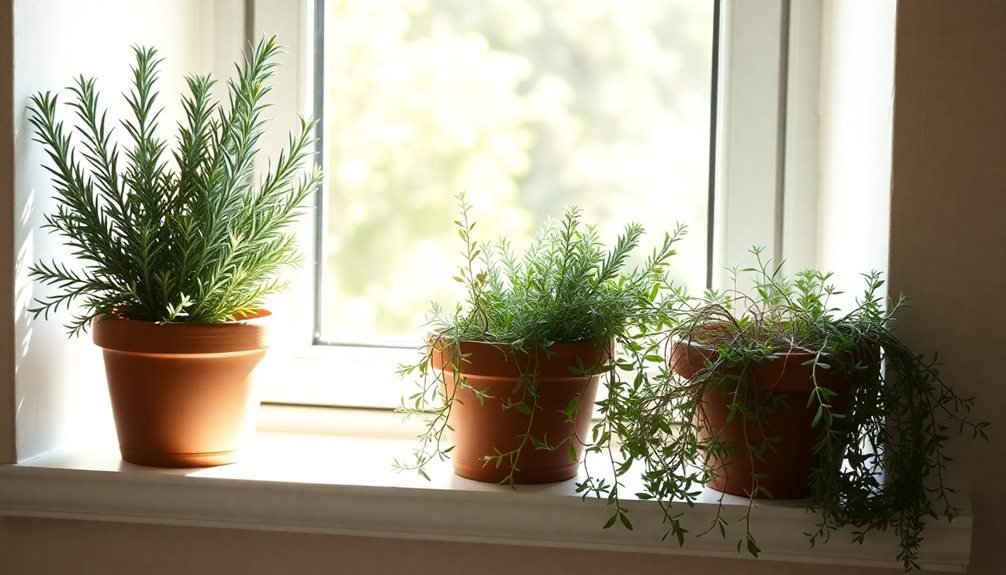
Through centuries of Mediterranean cooking, certain herb combinations have proven themselves indispensable.
You'll find that growing complementary Mediterranean herbs together not only maximizes your growing space but also guarantees you'll have the perfect flavor combinations for traditional dishes.
Pair rosemary with sage and thyme, as they share similar growing requirements and form the backbone of many Mediterranean meat dishes.
These three herbs thrive in well-draining soil and prefer full sun exposure.
You can also combine oregano with marjoram, as they're closely related and work wonderfully in tomato-based recipes and pizza toppings.
For a complete Mediterranean herb garden, add basil to your grouping.
While it's slightly more water-demanding than its Mediterranean companions, you can successfully grow it alongside other herbs if you monitor soil moisture carefully.
Plant basil near the container's edge where you can water it more frequently without affecting its neighbors.
Consider creating a dedicated container for these herbs, guaranteeing they're spaced properly: taller herbs like rosemary at the back, medium-height herbs like sage in the middle, and trailing varieties like thyme at the container's edge.
Supporting Herbs for Anxiety Relief
Pairing anxiety-relieving herbs in your indoor garden can create a powerful natural stress management system.
You'll find that lavender and holy basil work synergistically to promote calmness, while the combination of lemon balm and chamomile offers enhanced relaxation benefits.
Growing these complementary herbs together not only maximizes your limited indoor growing space but also provides you with readily available natural remedies for stress relief.
Lavender Plus Holy Basil
Combining lavender with holy basil creates a powerful duo for natural anxiety relief in your indoor herb garden. These complementary herbs not only share similar growing conditions but also work synergistically to promote relaxation and reduce stress.
You'll find that both plants thrive in well-draining soil and require moderate sunlight, making them perfect companions in your indoor growing space.
- Lavender's sweet, floral aroma helps calm your nervous system, while holy basil's adaptogenic properties help your body manage stress hormones naturally.
- Both herbs need about 6 hours of indirect sunlight daily and prefer temperatures between 65-70°F, making them ideal indoor companions year-round.
- You can harvest and blend these herbs to create calming teas, tinctures, or aromatherapy sachets for maximum anxiety-relieving benefits.
When growing these herbs together, guarantee proper air circulation and maintain consistent watering schedules.
Holy basil grows slightly taller than lavender, so position it behind your lavender plants to maximize light exposure for both.
You'll notice that these herbs' compatible growth patterns and shared maintenance requirements make them an efficient pairing for your indoor wellness garden.
Lemon Balm Meets Chamomile
Lemon balm and chamomile expand your indoor anxiety-relief garden with their gentle, soothing properties. Both herbs thrive in similar growing conditions, making them perfect companions for your indoor herb garden.
You'll find they prefer well-draining soil and moderate sunlight, typically requiring 4-6 hours of indirect light daily.
Plant your lemon balm in a deep container since its roots need space to spread. You can harvest its citrusy leaves throughout the growing season, which help reduce stress and promote better sleep.
Keep the soil consistently moist but not waterlogged, and trim regularly to encourage bushier growth.
Chamomile needs less space than lemon balm, so you can grow it in smaller pots nearby. The daisy-like flowers produce the most potent calming effects, and you'll want to harvest them when they're fully open.
You can expect blooms within 6-8 weeks after planting. Make certain of good air circulation between the plants to prevent fungal issues.
Together, these herbs create a powerful duo for natural anxiety relief. You can brew them separately or combine them in teas, with lemon balm's citrus notes complementing chamomile's apple-like flavor perfectly.
Space-Saving Herb Combinations
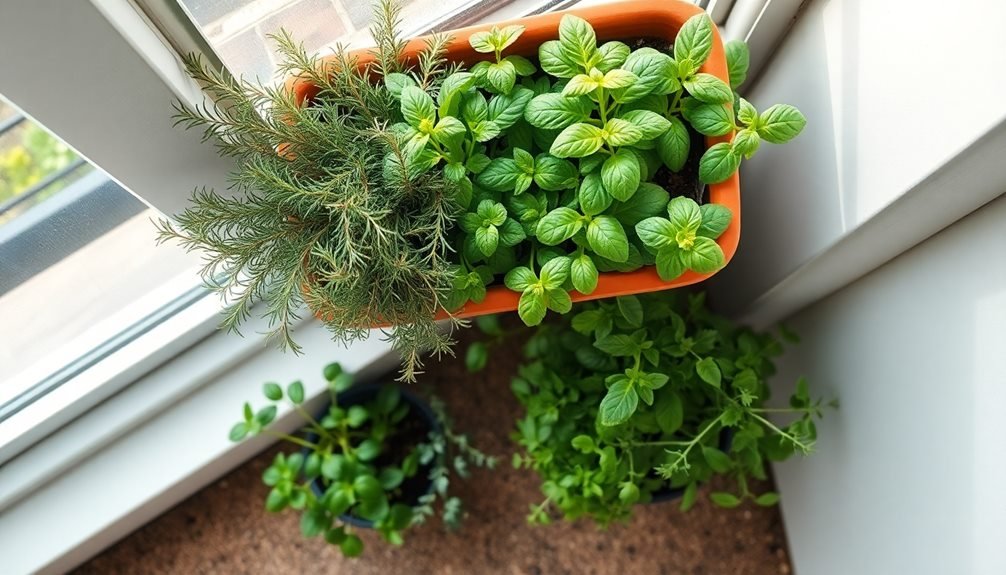
When you're working with limited indoor space, strategic herb groupings can maximize your growing area while creating beautiful combinations.
Consider pairing herbs with similar growing requirements but different heights and spreads to optimize your container space. Vertical groupings work particularly well, allowing tall herbs to provide shade for shorter, shade-tolerant varieties.
- Combine upright basil with trailing thyme and compact parsley in a single pot – the basil grows tall, while thyme cascades over the edges, and parsley fills the middle ground.
- Plant rosemary as a centerpiece surrounded by creeping oregano and compact sage – this creates a Mediterranean trio that shares similar watering and light needs.
- Group chives, mint, and cilantro together in a deep container – chives grow straight up, mint spreads horizontally, and cilantro fills any gaps.
These combinations don't just save space; they also create microclimates that can benefit all plants involved.
You'll want to monitor water needs carefully, as some herbs might require more frequent watering when grown in close proximity.
Trim your herbs regularly to maintain their designated spaces and prevent any single variety from dominating the container.
Moisture-Loving Herb Partners
Many moisture-loving herbs thrive together in containers, making them natural companions for your indoor garden. When you pair moisture-loving herbs, you'll create an efficient growing environment while maintaining similar watering schedules. Vietnamese coriander, watercress, and mint form an excellent grouping, as they all prefer consistently moist soil and higher humidity levels.
You can combine parsley with chervil and bee balm, as these herbs won't compete for resources while sharing their preference for damp conditions. Place these moisture-loving combinations near your kitchen sink or bathroom, where natural humidity levels are typically higher. For ideal growth, use well-draining potting soil and containers with drainage holes to prevent waterlogging.
To maximize success with these pairings, group basil with lemon balm and Vietnamese coriander, as they'll thrive in similar warm, humid conditions. Monitor soil moisture daily, and mist these herbs regularly to maintain humidity.
You'll find these combinations particularly successful when grown in self-watering containers or on humidity trays filled with pebbles and water. Remember to trim them regularly to encourage bushier growth and prevent one herb from overshadowing its companions.
Sunlight Requirements for Paired Herbs
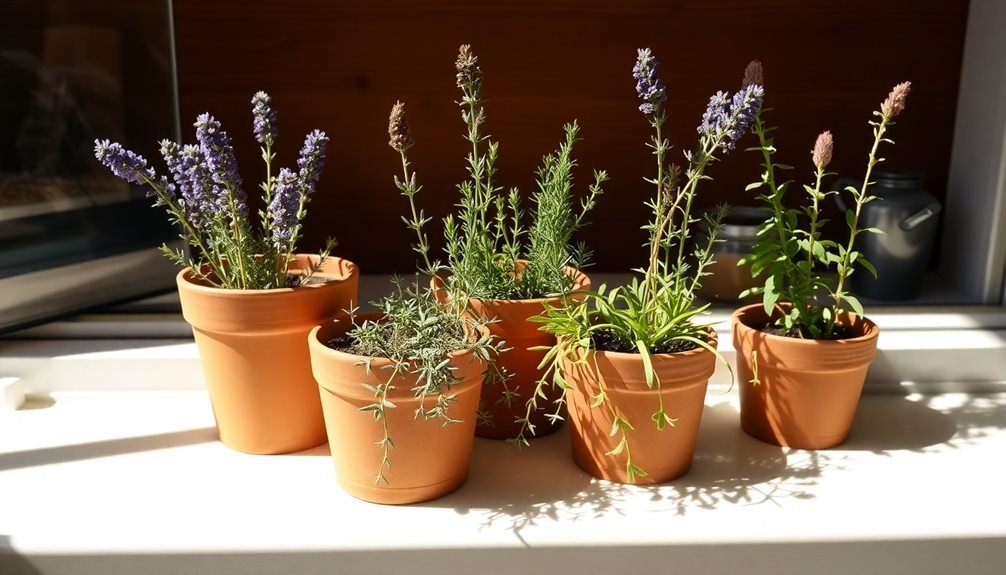
Successfully pairing herbs for indoor growing depends heavily on matching their sunlight requirements.
When you're grouping herbs together, you'll need to understand that different varieties thrive under specific light conditions. Most Mediterranean herbs like basil, sage, and rosemary require 6-8 hours of direct sunlight daily, while shade-tolerant herbs like mint and parsley can flourish with just 4-6 hours of indirect light.
To guarantee your herb combinations thrive, consider these light-based groupings:
- Full Sun Partners (6-8 hours direct light): Pair rosemary with sage, thyme with oregano, or basil with marjoram. Place these containers near south-facing windows for peak exposure.
- Partial Sun Partners (4-6 hours filtered light): Combine cilantro with parsley, chives with mint, or lemon balm with oregano. East or west-facing windows work well for these combinations.
- Low Light Partners (3-4 hours indirect light): Group mint varieties together, or combine parsley with chervil. North-facing windows can support these shade-tolerant herbs.
Remember to rotate your containers regularly to guarantee even light distribution and prevent leggy growth.
Root System Compatibility
Understanding root system compatibility is essential when growing multiple herbs in shared containers. You'll need to pair herbs with similar root depths and growth patterns to prevent competition for nutrients and space.
Some herbs, like basil and parsley, have shallow root systems that spread horizontally, while others, such as sage and oregano, develop deeper roots.
When you're planning your herb combinations, group shallow-rooted herbs together, such as thyme with chives or cilantro with dill. For medium-depth root systems, you can combine rosemary with sage or oregano with marjoram.
Avoid mixing shallow-rooted herbs with deep-rooted ones, as they'll compete for resources at different soil levels.
You'll also want to take into account root aggression. Mint, for example, has an invasive root system that can quickly overtake other herbs, so it's best grown alone.
Similarly, tarragon and horseradish have aggressive roots that require separate containers. For successful pairing, match herbs with similar root vigor – gentle spreaders like parsley work well with other mild-mannered herbs like basil or chervil.
Pest-Deterrent Herb Combinations
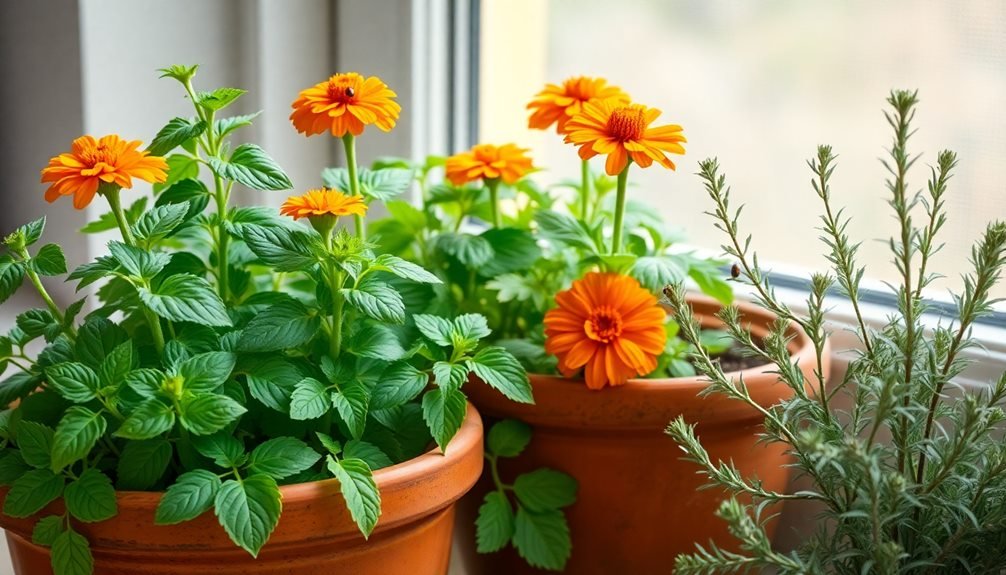
Strategic herb pairings can naturally protect your indoor garden from common pests while enhancing the overall health of your plants. By combining specific herbs with pest-repelling properties, you'll create a robust defense system against unwanted insects and maintain a thriving indoor herb garden.
You'll want to evaluate these proven pest-deterrent combinations for your indoor garden:
- Plant basil alongside parsley or cilantro to repel aphids and whiteflies. Basil's strong aromatic compounds create a natural barrier that these common pests actively avoid.
- Pair rosemary with sage to ward off spider mites and cabbage moths. These Mediterranean herbs share similar growing conditions and work together to create an environment hostile to these destructive insects.
- Grow lavender near mint to discourage ants and flies. The potent essential oils in both herbs confuse and repel these pests, while their complementary growing habits make them ideal companions.
Remember to position these herb pairs within 6-8 inches of each other to maximize their pest-deterrent benefits.
You'll also notice that these combinations often share similar watering needs, making maintenance more straightforward and efficient.
Seasonal Indoor Herb Matches
Nature's rhythms guide indoor herb selection, and pairing the right herbs for each season maximizes your growing success.
During winter months, pair rosemary with sage and thyme, as they share similar low-light and reduced-watering needs. These Mediterranean herbs thrive together in cooler indoor temperatures between 60-65°F.
For spring, combine basil with parsley and chives. They'll flourish with increasing light levels and respond well to consistent moisture levels. You'll find they grow vigorously as days lengthen, providing fresh herbs for your spring recipes.
Summer pairs call for heat-loving combinations like oregano with marjoram and summer savory. These herbs withstand warmer indoor temperatures and bright, indirect sunlight. Position them near east-facing windows for ideal growth.
In autumn, match cilantro with dill and fennel. They prefer the moderate temperatures and decreasing light conditions of fall. You'll need to maintain consistent soil moisture as indoor heating systems activate.
For year-round success, group mint varieties separately from other herbs, as they're aggressive growers in any season and can overwhelm companion plants.
Frequently Asked Questions
Can Indoor Herb Pairs Be Separated Later if They Outgrow Their Container?
You can separate paired herbs by carefully dividing their root systems when they outgrow their container. Just guarantee each plant has enough roots attached before replanting them into individual pots with fresh soil.
How Often Should Companion Herbs Be Pruned When Growing Together?
You'll need to prune companion herbs every 2-3 weeks during growing season. Don't remove more than 1/3 of each plant's growth. Regular trimming helps prevent overcrowding and encourages bushier, healthier growth.
Do Companion Herbs Affect the Flavor Intensity of Each Other?
Yes, companion herbs can affect each other's flavors. You'll notice some pairings enhance taste intensity while others may compete. It's best to group complementary herbs that won't overpower their neighbors' natural flavors.
Which Container Materials Work Best for Growing Paired Herbs Indoors?
You'll get the best results with unglazed clay or ceramic pots that allow proper drainage and airflow. Plastic containers work too, but they don't provide the same moisture control benefits for your herb pairs.
Should Fertilizer Amounts Be Adjusted When Growing Two Herbs Together?
You'll need to reduce fertilizer amounts per herb when growing pairs, since they share nutrients. Use about half the recommended dose for each plant to prevent nutrient competition and overfertilization issues.
In Summary
You'll find that thoughtfully pairing your indoor herbs creates a more successful growing environment. By considering factors like root systems, sunlight needs, and natural pest deterrence, you're setting yourself up for a thriving indoor garden. Whether you're combining Mediterranean herbs or mixing mint family varieties, these partnerships help maximize limited space while promoting better growth. Start experimenting with these proven combinations to enhance your indoor herb growing success.



Leave a Reply