

Transform your herb garden into a stress-relief sanctuary by keeping a dedicated journal. You'll find peace in tracking daily growth records, sketching herbs, and documenting care routines. Create mindful moments by pressing leaves into pages and recording sensory experiences like fragrances and textures. Maintain weekly sketches as a meditative practice, and document seasonal changes to deepen your connection with nature. Share your journey through photos and stories with gardening communities, building supportive relationships. Track weather patterns and their impact on plant health, and write reflective entries about your emotional growth. Let's explore how your garden journal can become your personal pathway to tranquility.
Choose Your Garden Journal Style
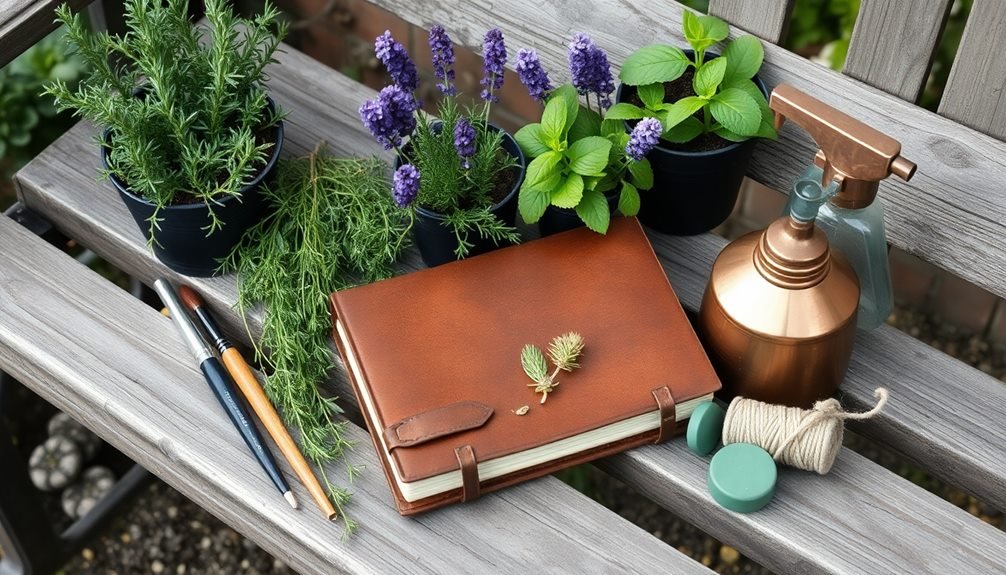
Beginners often feel overwhelmed when selecting a garden journal format, but you don't need anything fancy to get started. A simple notebook with blank pages gives you flexibility to record your herb garden experiences through writing, sketching, or both.
You'll want to choose a journal that's durable enough to withstand outdoor use and exposure to moisture.
Consider these practical journal styles: a traditional bound notebook, a three-ring binder with removable pages, or a digital journal on your tablet or smartphone. Each format offers unique advantages.
Bound notebooks are portable and classic, while binders let you add, remove, or reorganize pages as needed. Digital journals offer search capabilities and weather tracking integration, plus you can easily include photos of your herbs.
If you're artistic, select a journal with thick, unlined paper that can handle watercolors or colored pencils. For data-focused gardeners, gridded pages work well for plotting layouts and tracking growth measurements.
Whatever style you choose, make sure it's something you'll enjoy using regularly, as consistency is key to effective garden journaling.
Set Up Daily Growth Records
With your journal style selected, establishing a daily growth record system will help you track your herbs' progress and patterns.
Create dedicated pages for each herb variety, including sections for planting dates, germination times, and growth measurements. You'll want to record daily observations about leaf color, stem strength, and any signs of disease or pest issues.
Set up a simple rating system from 1-5 to evaluate your herbs' health, and note environmental factors like temperature, sunlight exposure, and watering frequency.
Don't forget to document your pruning dates and harvesting amounts – this data will guide your future growing decisions. Include a weather tracking section to correlate climate patterns with your plants' performance.
Consider adding a photography log where you can attach weekly photos of your herbs, making it easier to spot gradual changes.
Keep track of which companion plants work well together and maintain a fertilizing schedule with dates and types of nutrients used.
Remember to note any specialized care requirements you've discovered, such as specific soil preferences or ideal watering times that work best for each herb variety.
Sketch Your Herbs Weekly
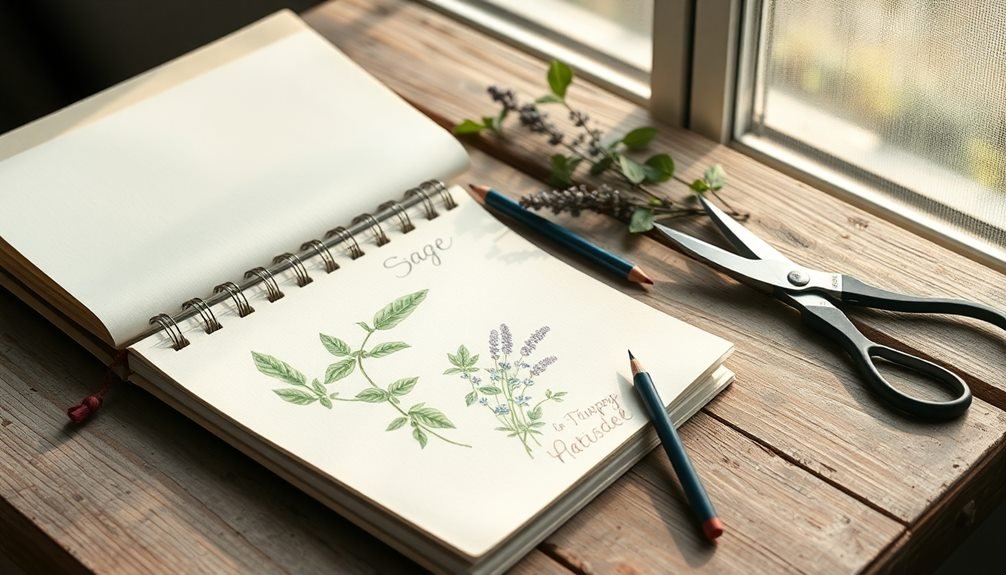
Drawing regular sketches of your herbs serves both as a meditative practice and a valuable growth record. You don't need to be an artist to benefit from this exercise – simple line drawings can effectively capture your plants' development. Set aside 15-20 minutes each week to observe and sketch your herbs, noting changes in leaf patterns, stem structure, and overall shape.
Keep your sketching supplies in your garden journal:
- A set of drawing pencils (2H, HB, and 2B for varying line weights)
- Fine-tip waterproof pens for adding detail and plant labels
- A small set of colored pencils to capture seasonal changes
Focus on one herb at a time, starting with basic shapes and gradually adding details like leaf veins and stem joints. Include notes about size measurements, unusual growth patterns, or pest damage directly on your sketches.
You'll find that drawing slows you down and helps you notice subtle changes you might otherwise miss. Over time, your collection of sketches will reveal patterns in your herbs' growth cycles and provide valuable reference material for future growing seasons.
Track Plant Care Routines
When you track your herb garden's daily activities, you're creating a valuable record that helps reduce stress through organization and mindfulness.
You'll want to jot down each plant's growth patterns and changes, including new leaf development, flowering phases, and any signs of distress.
Maintaining a clear schedule for watering and pruning guarantees you'll never forget essential care tasks while building a consistent, calming routine.
Record Daily Plant Activities
Recording daily plant activities in your herb garden journal creates an essential reference guide for monitoring growth patterns and care routines. You'll want to document specific actions and observations that affect your herbs' health and development. This detailed record-keeping helps you understand what works best for each plant and allows you to refine your gardening practices over time.
Make it a habit to note these key activities in your journal:
- Watering schedules and amounts, including any adjustments made for weather conditions or seasonal changes
- Pruning activities, such as removing dead leaves, harvesting herbs, or shaping plants for better growth
- Fertilizing dates and types of nutrients used, along with any visible plant responses
When recording daily activities, include timestamps and weather conditions to establish clear patterns. You'll find it helpful to use consistent terminology and measurements throughout your entries.
Don't forget to document any pest problems, diseases, or unusual growth patterns you notice. These observations will prove invaluable when troubleshooting issues or planning future herb gardens.
Consider taking photos to complement your written records, creating a more thorough growth timeline.
Document Growth and Changes
Tracking your herbs' growth and changes through consistent documentation helps create a clear picture of their development cycle. Use your journal to record specific measurements, like plant height, leaf count, and stem thickness. Note when new growth appears, including shoots, leaves, or flower buds, and document any changes in leaf color or texture.
Create detailed sketches or take photos to complement your written observations. Pay attention to seasonal variations and how your herbs respond to different weather conditions. Record when plants begin flowering, produce seeds, or show signs of dormancy.
Monitor for any signs of stress, such as wilting, yellowing, or pest damage, and document how the plants recover after implementing solutions. Keep track of pruning dates and observe how your herbs respond to harvesting. Note which branches grow back strongest and how quickly new growth emerges.
Document any transplanting activities and track root development when possible. By maintaining these detailed records, you'll better understand your herbs' growth patterns and be able to anticipate their needs throughout their life cycles. This knowledge will help you make informed decisions about future plant care and cultivation strategies.
Schedule Watering and Pruning
A consistent care routine forms the backbone of successful herb gardening. Your journal can become a powerful tool for tracking watering schedules and pruning activities, helping you maintain peak plant health while reducing your stress through organized planning.
Create dedicated pages in your journal to record your care routines, including specific watering needs for each herb and seasonal pruning requirements. You'll find it easier to stay on track when you've documented these essential tasks, and you won't have to worry about forgetting important maintenance dates.
- Note each plant's watering frequency, recording whether it needs daily moisture or can thrive with less frequent watering.
- Track pruning dates and methods, including which stems to cut and how much to remove for peak growth.
- Document seasonal maintenance tasks like deadheading spent flowers or cutting back woody growth.
Document Mindful Gardening Moments
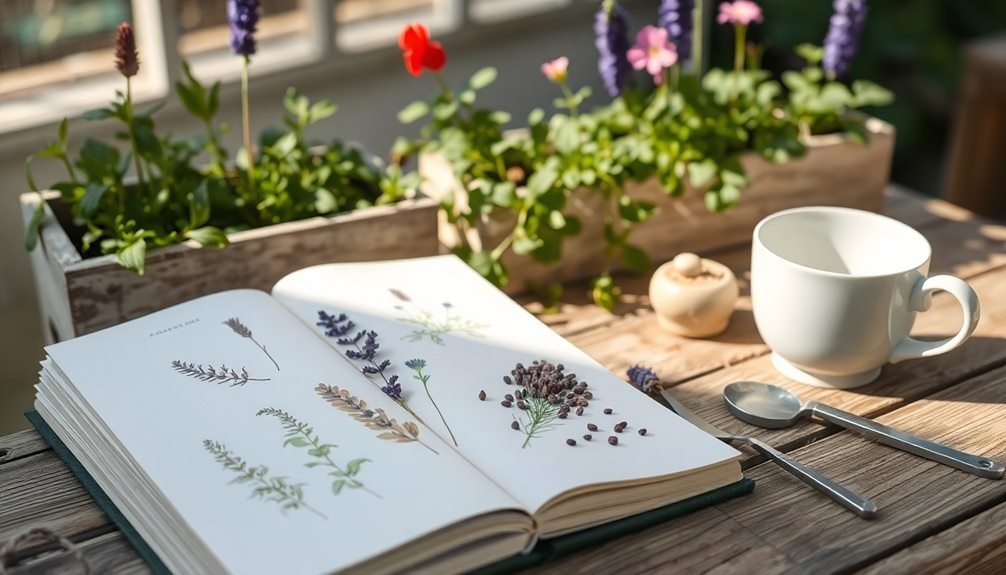
Your mindful garden sessions become more meaningful when you document the quiet moments spent tending to your herbs. Keep a small notebook nearby to capture fleeting observations, sensations, and thoughts that arise while you're working with your plants.
Note how the oregano's leaves feel between your fingers, the way basil releases its aroma when you brush past, or how the morning light catches dewdrops on the thyme.
Record the emotional benefits you experience during these moments – perhaps the calming effect of removing dried leaves from your mint plant or the satisfaction of harvesting fresh cilantro for dinner.
Don't forget to jot down any insights or solutions to problems that come to you while gardening, as these peaceful moments often spark clarity.
Include sketches of your herbs' growth patterns, pressing occasional leaves between pages, or adding photographs to track their progress.
Write about the seasonal changes you observe and how they affect your plants' behaviors.
These documented observations won't just create a valuable growing reference – they'll help you maintain mindfulness during future gardening sessions and provide a tangible record of your journey toward stress relief.
Create Herbal Tea Tasting Notes
Track your herbal tea's distinct characteristics by creating detailed flavor profiles that capture everything from the initial aroma to the lingering aftertaste.
You'll want to document specific steeping times, water temperatures, and leaf-to-water ratios to find your perfect brewing method.
Keep a running log of which combinations work best, noting how different preparation methods affect the tea's intensity, bitterness, and therapeutic benefits.
Document Flavor Profiles
Creating detailed flavor notes transforms your herbal tea tasting into a mindful sensory experience. As you sip each herbal blend, take time to identify and record the distinct taste elements that unfold on your palate. Start by noting the initial flavor that hits your tongue, then document how it evolves as you continue drinking.
When documenting flavor profiles, consider these key aspects:
- Primary flavors: Record dominant tastes like floral, earthy, sweet, bitter, or citrusy, and rate their intensity on a scale of 1-5
- Mouthfeel characteristics: Note whether the tea feels smooth, astringent, thick, or light on your tongue
- Aftertaste qualities: Describe any lingering flavors and how long they persist
Use descriptive language that helps you recall the experience later. Don't hesitate to compare flavors to familiar foods or experiences – perhaps your lemon balm tea reminds you of summer candies, or your sage blend carries notes of pine forest air.
Including these personal associations makes your flavor documentation more meaningful and helps you develop a more sophisticated palate over time. Remember to note steeping time and water temperature, as these factors greatly influence the final flavor profile.
Record Steeping Experiments
Steeping experiments reveal the full potential of your herbal tea collection and help you discover your ideal brewing preferences. In your journal, create dedicated pages for testing different steeping times, water temperatures, and herb combinations to find your perfect cup.
Start by recording the basics: herb type, amount used, water temperature, and steeping duration. Note whether you're using fresh or dried herbs, and document if you've crushed or bruised the leaves before steeping. Track multiple brewing attempts with the same herb, adjusting one variable at a time to understand its impact on flavor.
Create a rating system for strength, bitterness, and overall enjoyment. You'll want to note if longer steeping times enhance or diminish certain flavors, and whether combining herbs produces unexpected results. Document which temperatures work best – boiling water might release bitter compounds in delicate herbs, while cooler water mightn't extract enough flavor from hardier varieties.
Don't forget to record your mood and time of day, as these factors can influence your perception of taste. Include any additions like honey or lemon, and note how they affect the final flavor profile.
Press Leaves Into Pages
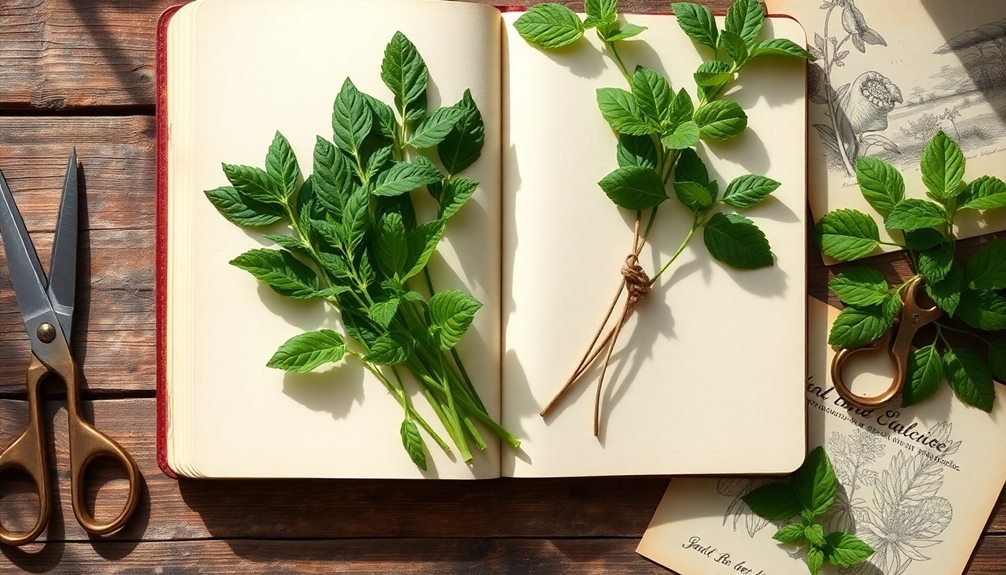
Along with recording your observations, pressing leaves between your journal pages adds a beautiful, tactile element to your herb garden documentation.
You'll need to select healthy, unblemished leaves that aren't too thick or moisture-laden. Position your chosen specimens between two sheets of wax paper before placing them in your journal to prevent any residual moisture from damaging the pages.
When pressing leaves, you'll want to follow these essential steps for the best results:
- Place the leaf and wax paper between two heavy books for initial flattening, then transfer them to your journal pages after 24 hours.
- Apply gentle, even pressure across the journal's surface by stacking additional books on top for 2-3 weeks.
- Check periodically to ascertain there's no mold development, and replace the wax paper if needed.
You can enhance your pressed leaf collection by labeling each specimen with its scientific name, date collected, and growing conditions.
Consider arranging multiple leaves in artistic patterns or creating seasonal collections that showcase your herb garden's evolution throughout the year. This practice helps you maintain a lasting record while developing a deeper connection to your plants.
Record Seasonal Growing Patterns
Keep track of your herbs' monthly growth changes by measuring their height and spread, noting when they flower or produce new leaves.
You'll gain valuable insights by recording how different weather conditions affect your plants, from their response to rainfall amounts to temperature fluctuations.
Creating these detailed records helps you understand your garden's natural rhythms and lets you anticipate future growing cycles.
Track Monthly Growth Changes
Recording your herbs' monthly growth patterns creates a valuable timeline of their seasonal changes and helps you anticipate future growth cycles. By documenting height, leaf production, and overall health each month, you'll better understand your plants' needs throughout their growing season.
This detailed tracking lets you identify potential issues early and adjust your care routine accordingly.
Create monthly entries in your journal that focus on specific growth indicators:
- Measure stem height and spread, noting how quickly each herb variety grows and when they reach their peak size.
- Document leaf color changes, flowering periods, and any signs of stress or disease that appear during different growth phases.
- Record your pruning and harvesting dates, including how the plants respond to these interventions.
You'll want to include monthly photographs alongside your written observations to visually track changes over time.
Make notes about which herbs thrive together and which need more space as they mature. This monthly documentation builds a thorough picture of your garden's development and helps you make informed decisions about future plantings and maintenance schedules.
Document Weather Impact Patterns
Weather patterns greatly influence your herb garden's performance throughout the year. By documenting weather impacts, you'll better understand how your herbs respond to different conditions and predict future growth cycles. Keep track of temperature fluctuations, rainfall amounts, and extreme weather events in your journal to build a thorough growing guide.
Record these weather observations alongside your herbs' reactions:
| Weather Condition | Impact on Herbs | Required Action |
|---|---|---|
| Heavy Rain | Soil oversaturation | Add drainage, move pots under cover |
| Heat Wave | Leaf wilting | Increase watering, add shade cloth |
| Early Frost | Leaf damage | Cover plants, move indoors |
| Strong Winds | Stem breakage | Install windbreaks, stake plants |
You'll notice patterns emerging as you document weather impacts over time. Some herbs might thrive in wet conditions while others prefer dry spells. Use this knowledge to adjust your care routine seasonally. When you spot weather-related stress signs early, you can take preventive measures to protect your plants and maintain a healthy herb garden year-round.
Write Healing Garden Reflections
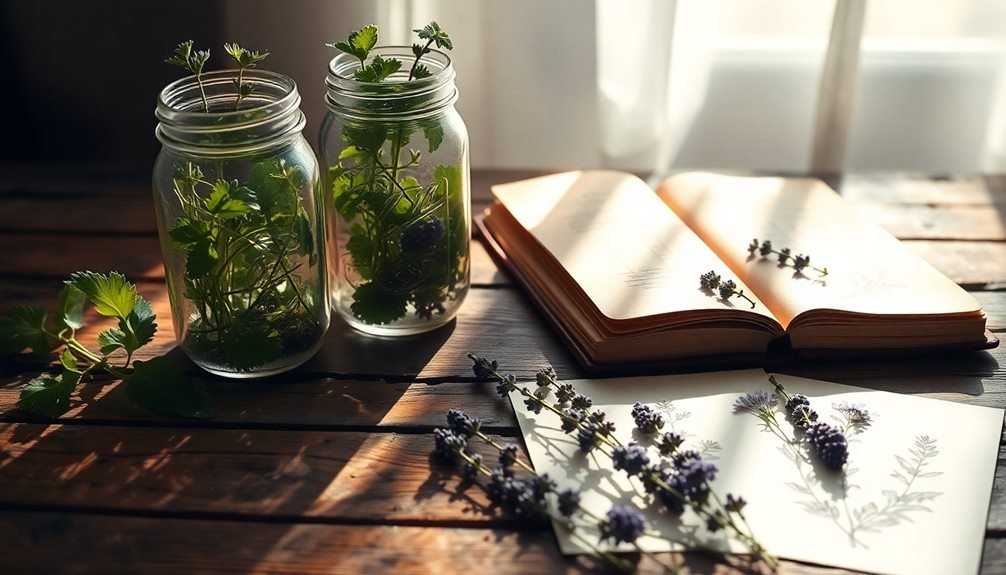
Jotting down your garden observations can open up a world of emotional release and mindfulness. Your herb garden journal isn't just about tracking plant growth – it's a therapeutic tool that helps you process emotions and find inner peace.
As you write about your garden experiences, you'll discover connections between nature's cycles and your own emotional journey.
When writing healing reflections, focus on how different herbs affect your mood and well-being. Notice how lavender's gentle sway calms your anxiety, or how mint's vibrant growth mirrors your own resilience. Don't censor your thoughts; let them flow naturally onto the page.
Include these elements in your healing garden reflections:
- Sensory experiences: Document the fragrances, textures, and colors that trigger emotional responses
- Personal growth parallels: Connect plant life cycles to your own personal development
- Mindful moments: Record instances of peace, clarity, or breakthrough thoughts while gardening
Your reflections will create a meaningful record of your healing journey, allowing you to track emotional patterns and growth over time.
Return to these entries when you need inspiration or want to reconnect with moments of garden-inspired tranquility.
Share Garden Progress Stories
Your personal herb garden story becomes even more meaningful when you share it with others. Consider joining online gardening communities or local herb enthusiasts' groups where you can exchange experiences, photos, and growth milestones. These connections often lead to valuable advice, seed exchanges, and lasting friendships built on shared passion.
Document your herb garden's journey through social media platforms like Instagram or dedicated gardening apps. You'll find that sharing weekly updates about your herbs' progress helps you stay accountable while inspiring others to start their own gardens.
| Platform | Best Content to Share | Engagement Tips |
|---|---|---|
| Before/After Photos | Use herb-specific hashtags | |
| Facebook Groups | Growing Tips | Respond to questions |
| Garden Forums | Problem-solving | Share detailed progress |
| Local Clubs | Seed Exchange Info | Organize meetups |
Keep track of which sharing methods work best for you. You might discover that in-person garden tours connect you more deeply with your community, while online platforms help you reach fellow herb enthusiasts worldwide. Don't forget to include both successes and challenges in your stories – they're equally valuable learning opportunities for everyone.
Frequently Asked Questions
How Long Should I Spend Journaling About My Herb Garden Each Day?
You don't need to spend more than 10-15 minutes daily journaling about your herb garden. Just write what matters most – growth patterns, harvests, or care routines. It's quality over quantity that counts.
Can I Use Digital Photos Instead of Sketches in My Garden Journal?
Yes, you can definitely use digital photos in your garden journal! They're great for tracking plant growth and capturing details. However, you might want to include some written notes alongside them for a complete record.
What Happens if I Miss Several Days of Garden Journal Entries?
Don't worry about missed entries! You can catch up by writing summary notes when you return. It's your journal, so there's no pressure to maintain perfect daily records. Just resume when you're ready.
Should I Write My Garden Journal Entries in the Morning or Evening?
You can write your journal entries whenever you feel most inspired. Morning entries let you plan your day's gardening tasks, while evening reflections help you document what you've accomplished and observe daily changes.
Can Multiple People Share and Write in the Same Herb Garden Journal?
You can definitely share your garden journal with others! Create sections for each person, use different colored pens, and add dates to entries. It's a wonderful way to collaborate and share gardening insights together.
In Summary
Start your herb garden journal today – you'll find it's a therapeutic escape from daily stress. By recording your plants' growth, sketching their progress, and documenting your gardening journey, you're creating more than just a log; you're building a personal sanctuary on paper. Let your journal become your mindful companion as you tend to both your herbs and your mental wellbeing through this rewarding practice.



Leave a Reply