
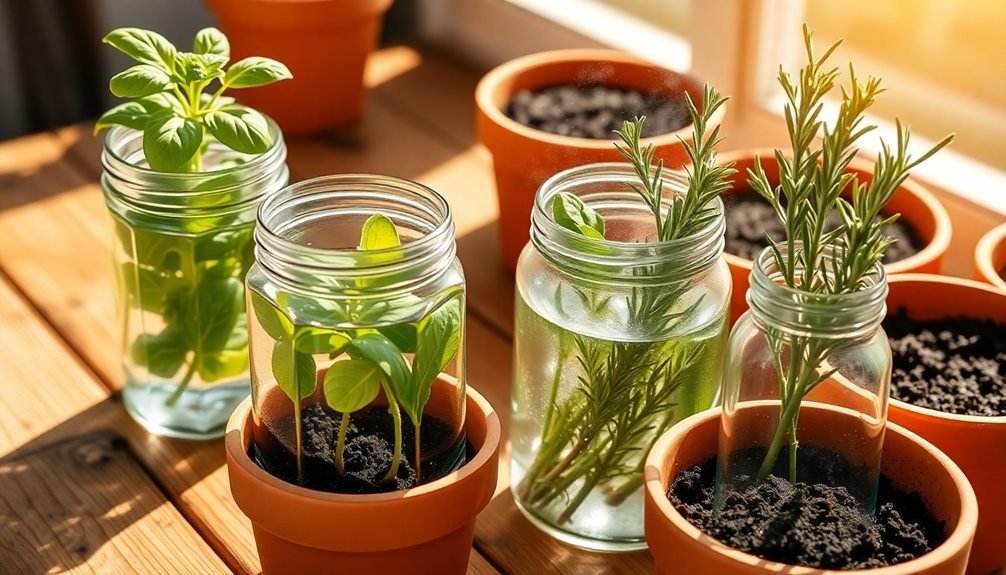
Growing herbs through mindful propagation nurtures both your garden and mental wellbeing. You'll find peace in water propagation as you watch roots develop in clear vessels, while cutting techniques encourage focus through precise, intentional movements. Root division connects you to nature's rhythms as you gently separate mature plants, and layering methods build patience as new growth emerges. Seeds offer concentrated healing power through their connection to ancient wellness traditions. When you combine these techniques with moon phase timing and sacred garden spaces, you'll discover a deeper relationship with your herb garden's therapeutic benefits.
The Healing Power of Seeds
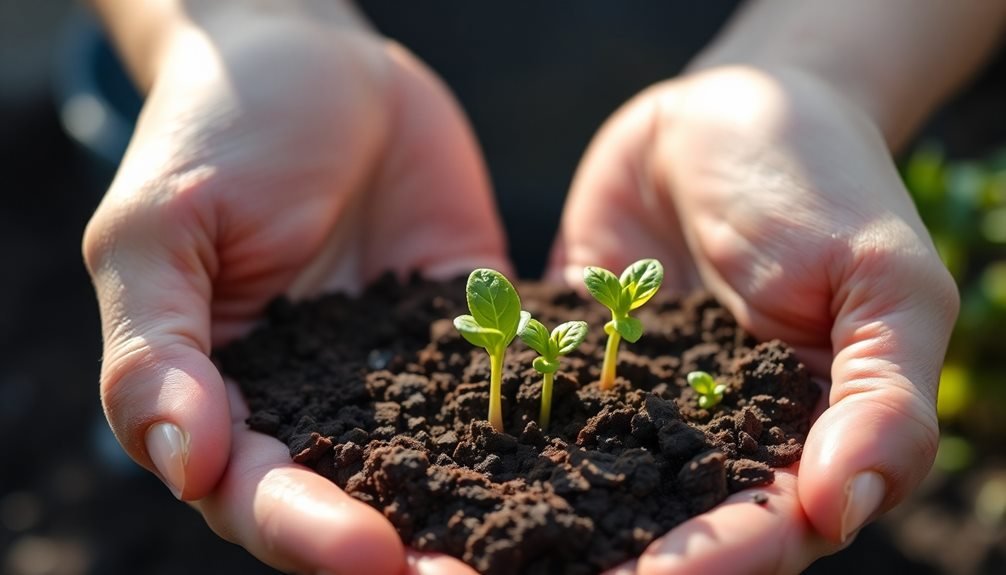
Seeds represent nature's most remarkable healing packages, containing concentrated nutrients and medicinal compounds that've supported human health for millennia.
When you grow herbs from seeds, you're tapping into an ancient wellness tradition that connects mind and garden. These tiny powerhouses contain essential fatty acids, proteins, vitamins, and minerals that can boost your immune system and enhance overall vigor.
You'll find that working with herb seeds offers both physical and mental healing benefits. The mindful process of planting seeds requires focus and patience, reducing stress and anxiety while promoting a sense of purpose.
Popular medicinal seeds like fennel, dill, and coriander don't just grow into useful herbs – you can use the seeds themselves in teas and remedies.
To harness their healing potential, you'll want to store your herb seeds properly in cool, dark places to preserve their therapeutic compounds.
Starting with high-quality, organic seeds guarantees you're getting the maximum medicinal benefit. When you plant these seeds, you're not just growing herbs; you're cultivating your own natural pharmacy while experiencing the therapeutic benefits of gardening itself.
Mindful Herb Cutting Techniques
Harvesting herbs mindfully requires a delicate balance of technique and timing to preserve their essence. When you're ready to take cuttings, choose stems that are healthy, vibrant, and free from disease.
Make your cuts at a 45-degree angle just below a leaf node using clean, sharp pruning shears or scissors to prevent crushing the stems. You'll want to remove leaves from the bottom third of each cutting, ensuring that at least two nodes remain exposed for root development.
As you work, stay focused on making precise cuts during the early morning hours when the herbs are most hydrated and their essential oils are concentrated. Keep your cuttings 4-6 inches long for best results.
To maintain the plant's health, never harvest more than one-third of the herb at once. After taking your cuttings, place them immediately in water or prepared growing medium. If you're propagating multiple varieties, label them clearly and record the date.
Remember to sanitize your tools between different plants to prevent cross-contamination. By following these mindful cutting practices, you'll create strong new plants while maintaining the health of your parent herbs.
Water Propagation for Inner Peace
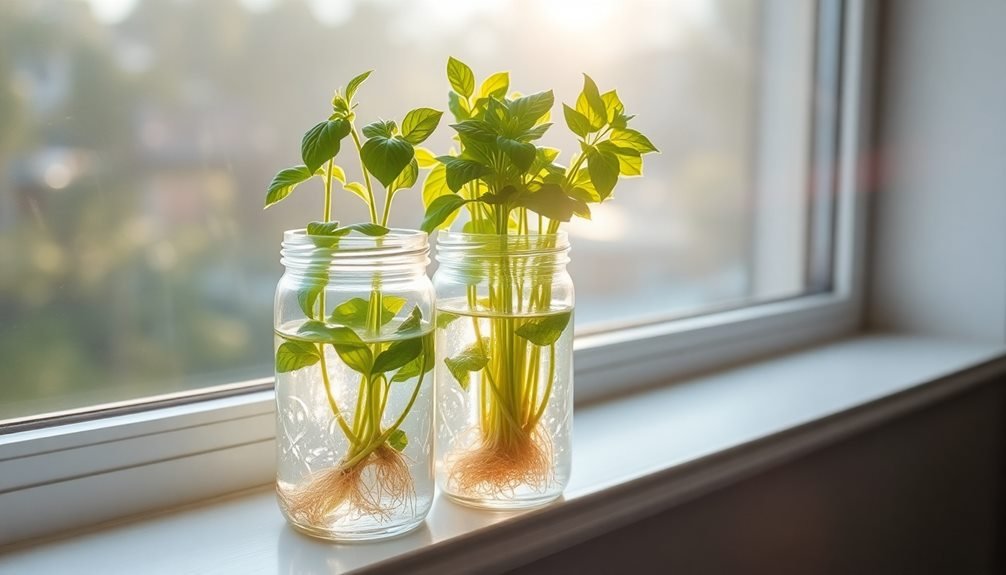
You'll discover a sense of tranquility by watching your herb cuttings develop roots in clear glass vessels, where each day brings subtle but noticeable growth.
Mindfully changing the water every few days helps you build a nurturing connection with your growing plants while ensuring ideal conditions for root development.
The transparency of glass containers allows you to witness the entire rooting process, creating moments of daily meditation as you observe your herbs' transformation from cutting to thriving plant.
Observing Daily Root Growth
While many gardeners focus solely on the end result, watching herbs develop roots in water offers a peaceful daily ritual and valuable insights into plant development. You'll witness nature's remarkable process as tiny white root primordia emerge and elongate into complex root systems.
Keep a daily growth journal to track your herbs' progress. Note the water temperature, sunlight exposure, and any changes in leaf color or stem strength. You'll start to recognize patterns in how different herbs respond to environmental conditions.
| Day | What to Watch For | Action Needed |
|---|---|---|
| 1-3 | Stem end swelling | Change water daily |
| 4-7 | White nubs appearing | Check water clarity |
| 8-14 | Root elongation | Monitor root color |
Position your propagation vessels near a window where you'll naturally pause during your daily routine. You'll find yourself taking micro-breaks to observe the subtle changes, which can become meditative moments in your day. Watch for roots branching out, secondary roots forming, and the gradual strengthening of the entire root system. These observations will help you determine the ideal time for transplanting your herbs to soil.
Mindful Water Changes
Fresh water changes present an opportunity to practice mindfulness during herb propagation. As you remove your cuttings from their containers, observe how the water's surface tension breaks and creates ripples. Notice the subtle differences in root development since your last inspection while holding each stem with gentle awareness.
Select fresh, room-temperature water and pour it mindfully into clean containers. Listen to the sound of water filling each vessel, and watch how light plays on its surface. This moment offers a chance to check for any cloudiness or debris in the old water that might indicate potential issues with your cuttings.
When you're changing the water, examine the cut ends of your stems for signs of rot or discoloration. Trim any affected areas with clean, sharp scissors while maintaining focused attention on each cut.
You'll want to guarantee the water level remains consistent – typically covering the nodes while leaving the leaves above the surface.
Establish a regular water-changing schedule, perhaps every 3-4 days, transforming this maintenance task into a meditative practice that connects you more deeply with your growing herbs.
Connecting Through Clear Vessels
Clear vessels serve as windows into your herbs' hidden growth journey, offering moments of contemplation and connection with the propagation process. You'll witness roots emerging from nodes, leaves unfurling, and the daily transformation of your plant cuttings. Glass jars, test tubes, and transparent vases let you monitor water levels and root development without disturbing the delicate growth.
| Vessel Type | Benefits | Best For |
|---|---|---|
| Mason Jars | Wide mouth, stable base | Woody herbs like rosemary |
| Test Tubes | Space-saving, aesthetic | Small cuttings, microgreens |
| Glass Vases | Multiple cuttings, depth | Tall herbs like basil |
Choose vessels that match your herbs' needs and your space. Position them where you'll see them daily – perhaps near a sink or sunny window. You're not just growing plants; you're creating living meditation points. Watch for the first white root nubs, track their expansion, and notice how different herbs develop unique root patterns. This visibility helps you learn ideal timing for soil transfer and lets you catch potential issues early, from water quality problems to stem rot.
Root Division as Meditation
Root division becomes a peaceful ritual when you slow down and tune into the process. As you gently lift mature herbs from the soil, you'll notice how the roots tell stories of growth and resilience. Each clump holds potential for new life, waiting to be awakened through your careful attention.
Begin by brushing away excess soil and observing where natural divisions occur. You'll find that some herbs, like oregano and mint, naturally separate into smaller plants. Hold each section with intention, feeling the weight and energy in your hands. Use clean, sharp tools to make precise cuts, ensuring each division has healthy roots and foliage.
As you work, let your breath sync with the methodical movements. Notice the earthy scent, the texture of soil between your fingers, and the subtle resistance as roots separate. This mindful approach transforms a simple gardening task into moving meditation.
You're not just multiplying plants; you're participating in a cycle of growth that connects you to the present moment.
Plant each division with purpose, knowing you've created new beginnings through this contemplative practice.
Layering: A Grounding Practice
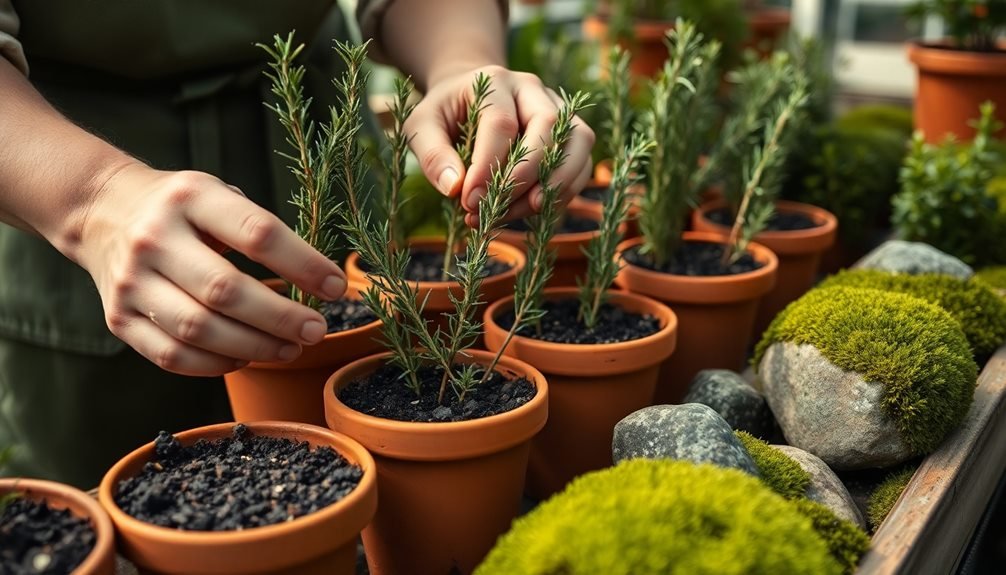
Simple yet profound, layering connects you directly to the earth's nurturing power. As you bend a flexible stem to meet the soil, you're participating in one of nature's most grounding propagation methods. The practice requires patience and mindful attention as you pin the stem, ensuring the leaf nodes make proper contact with the earth.
You'll discover three main layering approaches that align with different emotional states and gardening needs:
| Method | Emotional Connection |
|---|---|
| Simple Layering | Brings immediate peace through direct earth contact |
| Air Layering | Builds anticipation as roots form in suspended moss |
| Tip Layering | Creates joy through natural plant movement |
When you layer herbs like thyme, sage, or rosemary, you're not just multiplying plants – you're fostering a deeper connection with your garden. The process slows your thoughts as you carefully scrape the stem's bark, apply rooting hormone, and secure the branch. Watch for new growth emerging from the soil, signaling success. Each successful layer becomes a testimony to your patience and understanding of nature's rhythms, grounding you further in your gardening practice.
Therapeutic Benefits of Plant Care
Engaging in herb propagation reaches far beyond mere gardening – it offers profound therapeutic benefits for both mind and body. When you nurture herbs through various propagation methods, you're also cultivating mindfulness and reducing stress levels through focused, purposeful activity.
Working with herbs stimulates your senses – from the earthy scent of soil to the tactile experience of handling delicate cuttings. You'll find that the repetitive nature of plant care tasks, like pinching back stems or separating roots, can create a meditative state that lowers anxiety and blood pressure. The satisfaction of successfully propagating new plants releases dopamine, contributing to improved mood and self-esteem.
Herb propagation also strengthens your connection to natural cycles and seasonal rhythms. You'll develop patience and resilience as you observe your plants' growth journey. The process teaches valuable lessons about nurturing life and accepting both success and failure.
Whether you're propagating lavender for its calming properties or rosemary for mental clarity, you're engaging in a therapeutic practice that combines horticultural therapy with aromatherapy benefits.
Breathing With Growing Herbs
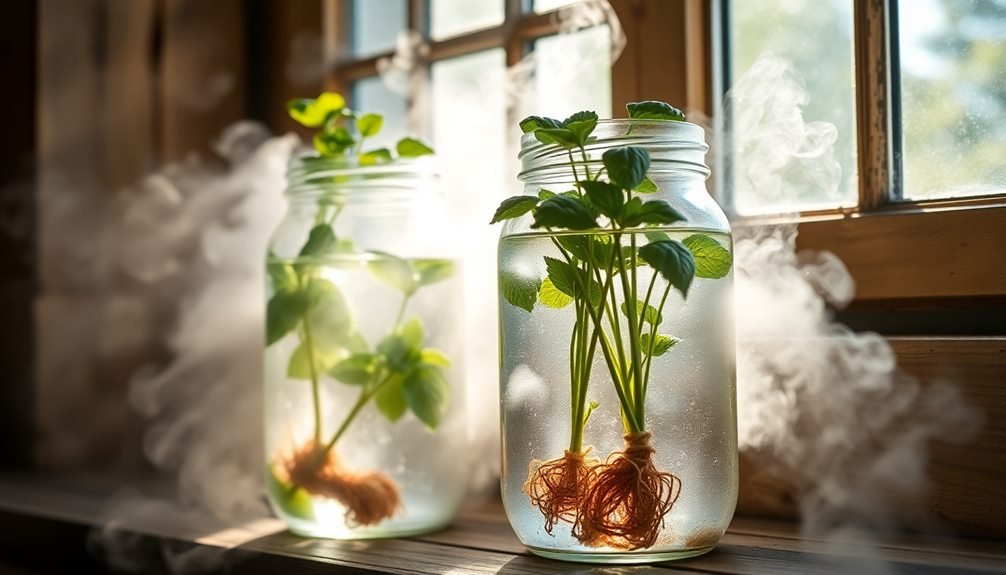
The air around growing herbs creates a unique microenvironment that enhances your breathing experience. When you work with herbs like lavender, rosemary, and mint, you'll notice their volatile oils release into the air, creating an aromatherapeutic effect. These natural compounds can help clear your airways and promote deeper, more mindful breathing.
You'll benefit most from this herbal air when you're actively working with your plants. As you prune, water, or harvest, you're disturbing the leaves and stems, which releases more essential oils.
Try taking slow, deliberate breaths while tending to your herbs, especially in enclosed spaces like greenhouses or indoor growing areas. The concentration of beneficial compounds is highest in these environments.
Different herbs offer varying respiratory benefits. Peppermint helps open nasal passages, while thyme's antimicrobial properties can support respiratory health. Oregano releases compounds that may help clear congestion, and sage's aromatic properties can promote easier breathing.
You can maximize these benefits by positioning your herb garden in areas where you spend time working or relaxing, allowing you to naturally incorporate therapeutic breathing into your daily routine.
Soil Mixing as Stress Relief
Getting your hands into well-balanced potting soil can serve as a natural stress reliever when preparing herb garden mixtures. As you blend your soil components, the repetitive motion of mixing and the earthy textures help release physical tension while focusing your mind on a productive task.
You'll find that creating custom soil blends becomes a meditative process. Mix two parts sterile potting soil with one part perlite or coarse sand, and one part aged compost. The methodical measuring and combining of ingredients requires concentration, pulling your attention away from daily worries.
As you work the materials between your fingers, you're connecting with an ancient gardening practice that grounds you in the present moment. The satisfaction of crafting the perfect growing medium extends beyond stress relief. You're developing an essential skill that directly impacts your herbs' health.
When you take time to thoughtfully prepare soil mixtures, you're not just nurturing your mental wellbeing – you're also creating an ideal foundation for your herbs to thrive. This dual benefit makes soil mixing a particularly rewarding aspect of herb propagation.
Herb Garden Design Psychology
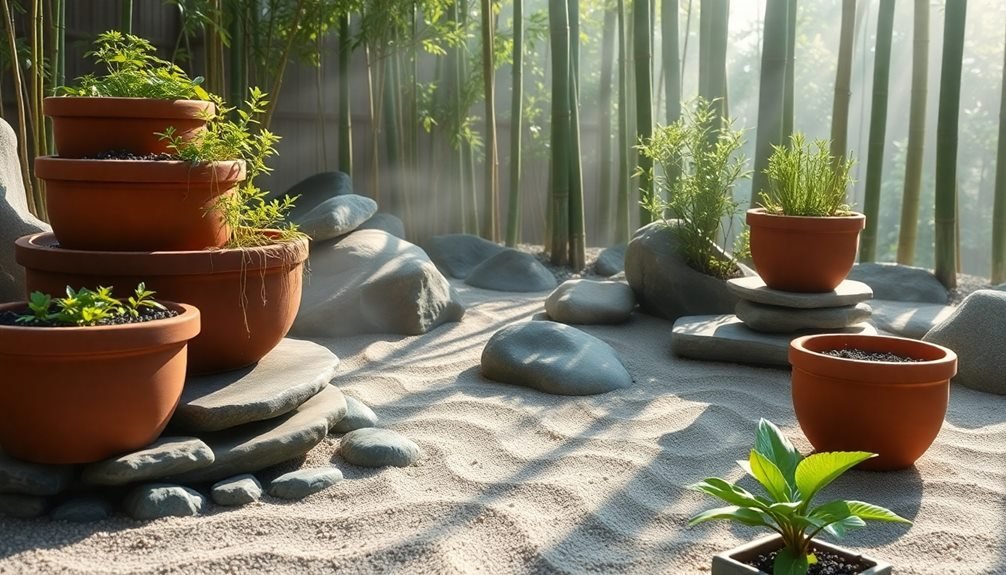
Beyond soil preparation, mindful garden design shapes both your herbs' growth and your emotional connection to the space. You'll find that strategic herb placement creates natural pathways that guide your movement and encourage moments of pause and reflection. Consider how different herbs affect your mood and arrange them accordingly.
| Herb Location | Psychological Impact | Design Purpose |
|---|---|---|
| Entry Path | Welcome & Comfort | Aromatic greeting |
| Central Area | Focus & Clarity | Daily interaction |
| Hidden Corners | Discovery & Joy | Surprise elements |
When you're designing your herb garden, work with circular or spiral patterns that mirror natural growth forms. You'll notice these organic shapes feel more soothing than rigid lines. Place fragrant herbs like lavender and rosemary where you'll brush against them during daily activities, triggering calming aromatherapy effects.
Create dedicated spaces for sitting and observing, allowing you to fully immerse yourself in the garden's therapeutic benefits. Position tall herbs like fennel and dill as natural screens, forming intimate garden rooms that provide a sense of sanctuary. Remember to include visual focal points that draw your eye and invite meditation.
Nature's Rhythm in Propagation
You'll find greater success propagating herbs when you align your planting schedule with natural seasonal patterns, particularly during spring's warming soil and autumn's cooler temperatures.
Your herb garden's growth potential increases when you time your propagation efforts with the moon's phases, as the gravitational pull affects soil moisture and seed germination rates.
If you're starting herbs from cuttings or seeds, consider that the waxing moon phase (from new moon to full moon) supports above-ground growth, while the waning phase benefits root development.
Seasonal Growth Patterns Essential
Understanding seasonal growth patterns is essential for successful herb propagation, as most herbs follow nature's predictable cycles of growth, dormancy, and reproduction. You'll find that timing your propagation efforts with these natural rhythms greatly improves your success rate and yields healthier plants.
| Season | Best Propagation Activities |
|---|---|
| Spring | Start seeds indoors, divide perennials, take softwood cuttings |
| Summer | Take semi-hardwood cuttings, harvest seeds, root basil cuttings |
| Fall | Plant garlic, collect seeds, divide established herbs |
| Winter | Start indoor windowsill herbs, plan next season, stratify seeds |
| Year-round | Root cuttings in water, maintain indoor herb gardens |
You'll want to observe your herbs' growth patterns throughout the year. In spring, most herbs enter active growth, making it ideal for division and softwood cuttings. Summer brings flowering and seed production, perfect for collecting seeds and taking semi-hardwood cuttings. Fall signals plants to redirect energy to their roots, making it best for division of established plants. Winter, while seemingly quiet, offers opportunities for indoor propagation and seed stratification. By aligning your propagation activities with these natural cycles, you'll work with nature rather than against it.
Moon Phase Planting Benefits
Traditional gardeners have long observed that moon phases influence plant growth, particularly during propagation. You'll find that timing your herb propagation with lunar cycles can enhance root development and germination rates.
During the waxing moon (from new moon to full), the moon's gravitational pull creates stronger upward sap flow, making it suitable for above-ground growth. You should propagate leafy herbs like basil, parsley, and mint during the waxing moon when moisture retention is highest.
Root crops and herbs valued for their roots, such as valerian and echinacea, benefit from planting during the waning moon (from full to new) when energy focuses downward. For best results, you'll want to take cuttings two to three days before the full moon.
You can maximize success by combining moon phase planting with other natural timing factors. Plan your propagation schedule around both the moon's quarters and your local frost dates.
The second quarter (waxing gibbous) proves especially favorable for transplanting rooted cuttings, while the third quarter (waning gibbous) works best for root division and direct seeding of perennial herbs.
Cultivating Patience Through Growth
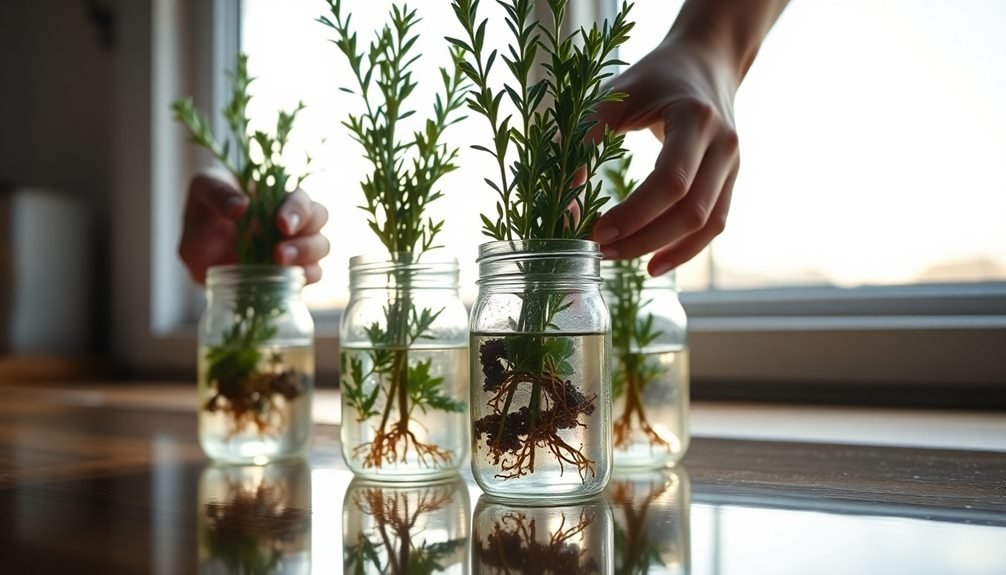
Growing herbs from propagation requires three essential qualities: patience, attention to detail, and persistence. As you nurture your herbs from cuttings or seeds, you'll discover that the slow process of growth mirrors personal development, teaching valuable life lessons along the way.
You'll learn to embrace the waiting period as seedlings emerge or roots develop. This process can't be rushed – watching for the first signs of growth might take days or weeks. During this time, you'll develop observation skills and learn to recognize subtle changes in your plants.
When you're propagating herbs, you'll face setbacks. Some cuttings won't root, and some seeds won't germinate. Each failure becomes a lesson in resilience, encouraging you to adjust your techniques and try again. You'll find that successful propagation often comes after multiple attempts.
The satisfaction of seeing your first successful propagation makes the wait worthwhile. As you witness new leaves unfurling or roots developing, you'll understand that nature operates on its own timeline. This understanding cultivates a deeper appreciation for the growth process, both in gardening and in life.
Creating Your Sacred Plant Space
Within your home or garden, a dedicated space for herb propagation serves as both a practical workspace and a peaceful sanctuary.
You'll want to choose a location that receives adequate natural light, maintains consistent temperature, and allows easy access to water. Consider setting up a small table or bench where you can focus on delicate tasks like taking cuttings or transplanting seedlings.
Your sacred plant space should include essential tools arranged within arm's reach: clean pruning shears, starter pots, rooting hormone, and quality potting soil.
Install shelving to maximize vertical space and accommodate grow lights if natural sunlight is limited. Don't forget to include a comfortable seat where you can observe your plants' progress and tend to their needs.
Keep your propagation area clean and organized by incorporating storage solutions for supplies and creating designated zones for different growth stages.
Add personal touches that enhance the space's tranquility – perhaps a small fountain for ambient sound or meaningful objects that inspire your gardening practice.
When you're working with your herbs, this carefully crafted environment will help you maintain focus and connection with your plants.
Frequently Asked Questions
Can Certain Herb Propagation Methods Trigger Allergies or Skin Sensitivities?
Yes, you'll need to be cautious when handling certain herbs, as they can trigger allergic reactions or skin rashes. Always wear gloves when propagating plants like mint, oregano, or rue to protect yourself.
What Time of Day Is Scientifically Best for Taking Herb Cuttings?
You'll get the best results taking cuttings in early morning when plants are fully hydrated. Make your cuts before the day's heat causes moisture loss and stress. Avoid midday sun exposure entirely.
How Do Different Moon Phases Affect Herb Propagation Success Rates?
You'll find greater success propagating herbs during the waxing moon when sap flow increases. Plant above-ground herbs in the first quarter and root crops during the waning moon for ideal growth rates.
Which Herbs Should Never Be Propagated Together in the Same Space?
You'll want to keep mint separate from other herbs, as it's highly invasive. Don't propagate fennel near dill or coriander, and keep sage away from rue, as they'll compete aggressively for nutrients and space.
Are There Specific Music Frequencies That Enhance Herb Propagation Growth?
You'll find that 432 Hz and classical music frequencies between 115-250 Hz can boost herb growth. Though research isn't conclusive, these sound waves may stimulate plant growth through gentle vibrations.
In Summary
You'll find that herb propagation becomes more than just gardening – it's a mindful journey that nourishes both plants and spirit. Whether you're starting seeds, taking cuttings, or dividing roots, each method offers unique opportunities for meditation and growth. Let nature's rhythms guide your practice as you create your sacred herb space. Remember, the patience you cultivate in propagation strengthens your connection to the natural world.



Leave a Reply