
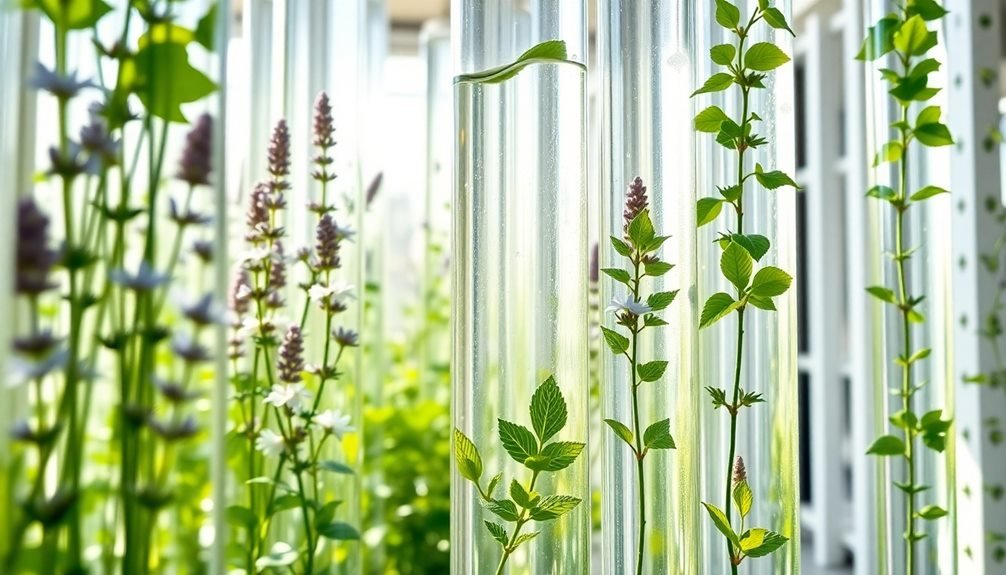
You can grow several stress-relieving herbs successfully in a hydroponic garden, giving you year-round access to natural anxiety remedies. The most effective options include lavender, with its calming essential oils; chamomile, known for its relaxing properties; lemon balm, which offers a soothing citrus scent; holy basil (tulsi), an adaptogenic stress-fighter; and peppermint, which helps ease tension headaches. These herbs thrive in controlled hydroponic environments with proper pH levels (5.5-6.5), temperature (65-75°F), and humidity (50-70%). Beyond providing therapeutic herbs, the act of tending to your hydroponic garden can become a mindful, stress-reducing practice that enhances your journey to wellness.
Understanding Hydroponic Stress Relief Gardens
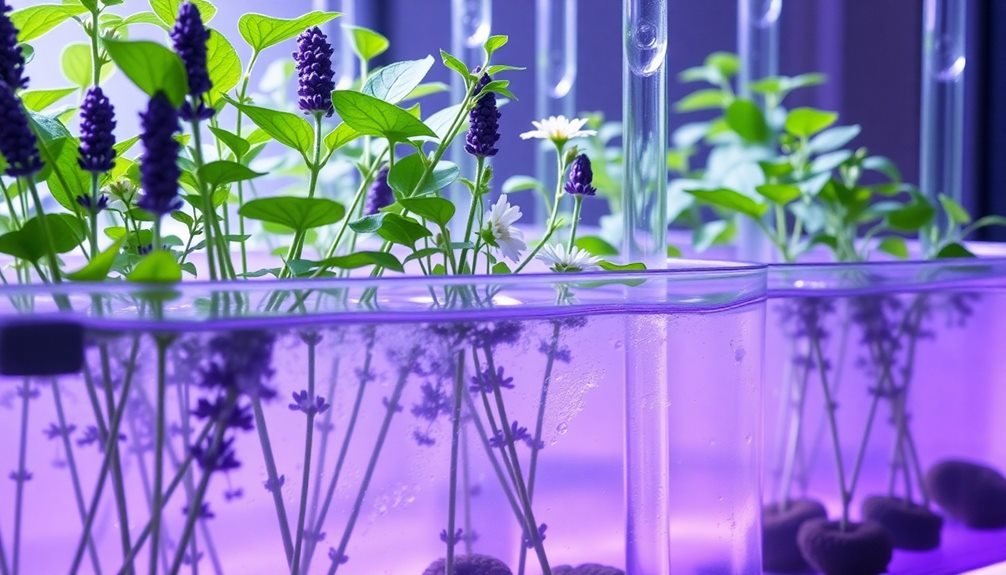
Stress-relief gardening takes on a modern twist when combined with hydroponic growing methods.
You'll find that creating an indoor hydroponic garden specifically for stress-relieving herbs offers a controlled environment where you can grow calming plants year-round, regardless of weather conditions or seasonal changes.
Your hydroponic stress relief garden works by suspending plants in nutrient-rich water instead of soil.
You'll need basic equipment including grow lights, water pumps, nutrient solutions, and growing containers.
The system's controlled nature lets you optimize conditions for each herb, resulting in faster growth and higher yields than traditional soil gardens.
When setting up your stress-relief hydroponic garden, you'll want to evaluate factors like temperature (65-75°F), humidity (50-70%), and pH levels (5.5-6.5).
These parameters create ideal growing conditions for most stress-relieving herbs.
You can choose between different hydroponic methods: deep water culture, nutrient film technique, or ebb and flow systems.
Each system offers unique benefits, but deep water culture often works best for beginners due to its simplicity and effectiveness with herbs.
Best Calming Herbs for Hydroponics
Several herbs known for their calming properties thrive especially well in hydroponic systems. You'll find that lavender, chamomile, and lemon balm adapt particularly well to water-based growing methods while offering significant stress-relief benefits. These plants don't just soothe your mind – they'll also add beautiful variety to your indoor garden.
Lavender produces calming essential oils and grows compactly in hydroponic setups, making it suitable for small spaces. You can harvest its purple blooms throughout the growing season for tea or aromatherapy.
Chamomile's delicate white flowers contain compounds that promote relaxation, and you'll find it grows quickly in nutrient film technique (NFT) systems. Lemon balm, with its citrusy scent and stress-reducing properties, thrives in deep water culture systems.
Other effective options include holy basil (tulsi), known for its adaptogenic properties that help manage stress, and peppermint, which can ease tension headaches.
You'll want to maintain water temperatures between 65-75°F (18-24°C) for ideal growth. Remember to prune these herbs regularly to encourage bushier growth and prevent them from becoming leggy in your hydroponic setup.
Setting Up Your Zen Garden
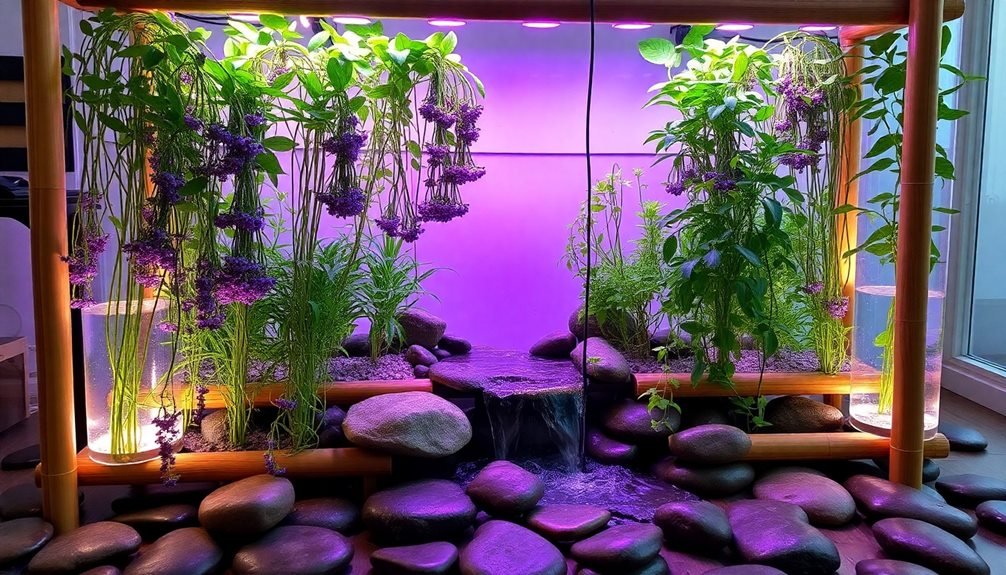
Your hydroponic zen garden needs a dedicated indoor space with at least 6 hours of direct sunlight or artificial grow lights positioned 6-12 inches above your plants.
You'll want to set aside a minimum of 4 square feet for a small setup, though larger spaces allow for more variety and fuller growth.
Essential equipment includes grow lights, a hydroponic system (either DWC or NFT), pH testing kit, nutrients, growing medium, and timers for automated light cycles.
Space and Light Requirements
A hydroponic zen garden's success relies heavily on proper space allocation and strategic lighting placement. You'll need to verify each stress-relieving herb has adequate room to grow while maximizing your available space. Most calming herbs thrive with 12-16 hours of daily light exposure.
| Herb Type | Space Needed | Light Requirements |
|---|---|---|
| Lavender | 12" apart | Full spectrum LED |
| Chamomile | 8" apart | Bright indirect |
| Holy Basil | 10" apart | Direct LED grow light |
| Lemon Balm | 12" apart | Moderate to bright |
| Mint | 6" apart | Partial to full |
Position your grow lights 6-12 inches above your plants, adjusting the height as they mature. You'll want to arrange taller herbs like lavender at the back of your setup, with shorter varieties like chamomile toward the front. This prevents shadowing and guarantees ideal light distribution.
For vertical systems, maintain at least 8 inches between growing levels. If you're using a shelf system, each tier should have its own dedicated grow light. Remember to rotate your plants weekly to promote even growth and prevent light-seeking behavior that can lead to leggy stems.
Essential Equipment Checklist
Setting up a stress-relieving hydroponic garden requires eight core pieces of equipment before you can begin growing your calming herbs.
You'll need a growing tray or container system with drainage holes, a reservoir to hold your nutrient solution, and an air pump with air stones to oxygenate the water. A reliable water pump will circulate nutrients throughout your system.
For monitoring and maintaining ideal conditions, you'll require a pH meter to check water acidity, an EC/TDS meter to measure nutrient concentrations, and a thermometer to track water temperature.
Don't forget to include growing media like clay pebbles, rockwool, or coco coir to support your herb roots.
Additional essential supplies include net pots to hold your plants, tubing for water circulation, and a timer for controlling your pump cycles.
You'll also want to invest in a quality hydroponic nutrient solution specifically formulated for herbs.
Consider adding a small fan for air circulation to prevent mold and strengthen stems.
While setting up might seem overwhelming, having these basic components ready will guarantee your stress-reducing herbs thrive in their new environment.
Daily Hydroponic Garden Care Routine
Start your morning by checking your hydroponic system's pH levels, water temperature, and pump functionality to guarantee your stress-reducing herbs are thriving.
You'll want to inspect the growing medium's moisture content and look for any signs of nutrient deficiency or pest issues during your afternoon routine.
Throughout the day, keep a watchful eye on your nutrient solution levels and top off as needed, adjusting the concentration based on your plants' growth stage.
Morning System Check Protocol
Your morning system check serves as the foundation for maintaining healthy stress-relieving herbs in your hydroponic garden.
Begin by checking your water levels and ensuring your pumps are functioning correctly. Test the pH and nutrient solution levels using calibrated meters, adjusting them to maintain ideal ranges between 5.5 and 6.5 for most stress-relieving herbs.
Inspect your herbs' roots through the growing chambers, looking for signs of discoloration or slime that might indicate root rot. Check that air stones are producing consistent bubbles and that all air pumps are operating efficiently.
Monitor water temperature, which should stay between 65-75°F (18-24°C) for optimal nutrient absorption.
Examine your plants' leaves for any signs of nutrient deficiencies, pest infestations, or disease. Look for yellowing, spots, or unusual growth patterns.
Verify that your grow lights are positioned at the correct height and functioning properly. During this check, prune any dead or yellowing leaves to maintain proper airflow and prevent disease spread.
Record all measurements and observations in your growing journal to track patterns and make informed adjustments to your system.
Afternoon Nutrient Monitoring Steps
The afternoon hours mark a crucial time for monitoring nutrient levels in your hydroponic herb garden. You'll need to check the EC (electrical conductivity) and pH levels between 2:00 and 4:00 PM when your stress-relieving herbs are actively photosynthesizing and consuming nutrients.
Start by testing the EC levels using your conductivity meter. For stress-soothing herbs like lavender, chamomile, and lemon balm, maintain EC readings between 1.2-1.8 mS/cm. Adjust your nutrient solution if readings fall outside this range.
Next, measure the pH levels, which should stay between 5.8-6.2 for ideal nutrient uptake. Add pH up or down solutions as needed.
Don't forget to inspect the nutrient solution's temperature, aiming for 65-75°F (18-24°C). If you're using a reservoir, check the water level and top it off with pH-balanced water if it's low.
Document your readings in your garden log, noting any adjustments you've made. Look for signs of nutrient deficiencies in your herbs, such as yellowing leaves or stunted growth, and address these issues promptly to maintain healthy, stress-relieving plants.
Harvesting and Using Medicinal Herbs
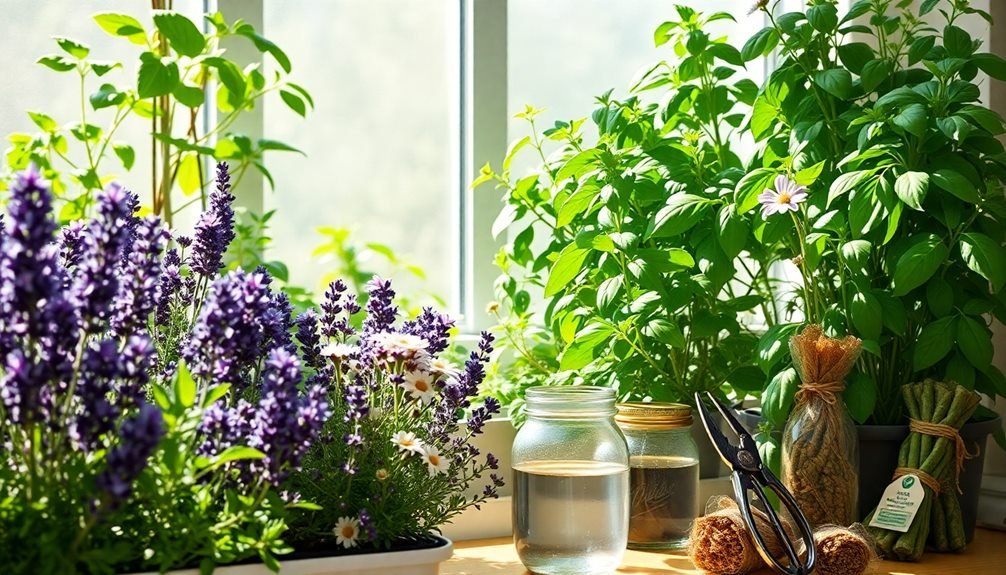
Most medicinal herbs reach their peak potency just before they flower, making this the ideal time to harvest them from your hydroponic garden.
Using sharp, clean scissors, cut the stems in the morning after the dew has dried but before the day's heat sets in. You'll want to harvest no more than one-third of the plant at a time to guarantee continued growth.
To preserve your herbs, you've got several options. You can hang bundles upside down in a dark, well-ventilated area for drying, which typically takes 1-2 weeks. If you're in a hurry, use a food dehydrator at its lowest setting. For immediate use, blend fresh herbs into teas, tinctures, or infusions.
When making calming teas, steep chamomile flowers for 5-10 minutes, lavender buds for 3-5 minutes, and lemon balm leaves for 5-7 minutes in water that's just below boiling.
You'll get the best results by using 1-2 teaspoons of dried herbs or 2-3 teaspoons of fresh herbs per cup of water.
Store dried herbs in airtight containers away from light and heat, where they'll maintain their potency for up to a year.
Common Hydroponic Growing Challenges
Growing medicinal herbs hydroponically can present several unique challenges that'll require quick attention.
You'll need to monitor pH levels closely, as stress-relieving herbs like lavender and chamomile prefer slightly alkaline conditions between 6.0-6.5. If your pH drifts outside this range, you'll notice yellowing leaves and stunted growth.
Nutrient deficiencies can quickly affect your herbs' medicinal properties. Watch for magnesium deficiency in basil and mint, which shows up as yellowing between leaf veins. Calcium deficiency often appears as brown spots on leaves, particularly in chamomile and lemon balm. You'll need to adjust your nutrient solution promptly when you spot these signs.
Root rot is another common issue you'll face, especially with humidity-sensitive herbs like sage and rosemary. Guarantee proper air circulation around the root zone and maintain water temperatures between 65-70°F. If you notice brown, mushy roots or a foul odor, you'll need to trim affected roots and increase oxygen levels in your system.
Light management can be tricky too. Most stress-relieving herbs need 14-16 hours of light daily. You'll see leggy, weak growth if your plants don't receive enough light intensity or duration.
Mental Health Benefits While Growing
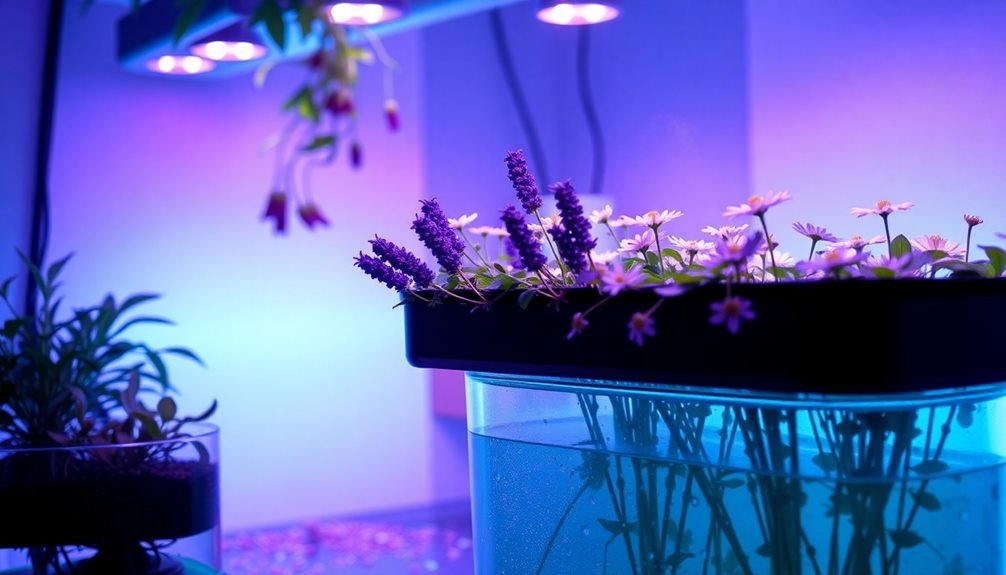
Tending to hydroponic herbs offers powerful mental health benefits beyond just their medicinal properties.
You'll experience reduced stress levels as you develop a nurturing routine, monitoring your plants' growth and maintaining their nutrient solutions. The systematic nature of hydroponic gardening can help ground you in the present moment, acting as a form of mindfulness meditation.
When you're feeling overwhelmed, the simple act of pruning your herbs or checking pH levels provides a calming escape from daily pressures.
You'll find that the organized structure of hydroponic systems appeals to your need for control, while the visible progress of your plants delivers regular doses of satisfaction and accomplishment. The clean, orderly nature of soil-free growing can also reduce anxiety compared to traditional gardening's messier aspects.
You'll benefit from the increased oxygen levels these indoor gardens produce, while the plants' natural aromas can trigger relaxation responses in your brain.
The satisfaction of harvesting your own stress-relieving herbs, knowing exactly how they were grown, creates a powerful sense of self-reliance and achievement that boosts your overall mental well-being.
Frequently Asked Questions
Can Stress-Relieving Herbs Lose Potency if Grown Hydroponically Versus Soil-Based Methods?
You won't lose potency with hydroponic herbs – they often contain similar or higher concentrations of active compounds compared to soil-grown plants when you maintain proper nutrients and growing conditions in your system.
Which Hydroponic Herbs Should Never Be Mixed in the Same Nutrient Solution?
You'll want to keep mint separate from other herbs since it's aggressive and can overtake nutrients. Don't mix oregano with basil or lavender with chamomile, as they've got different nutrient needs.
Do LED Grow Lights Affect the Medicinal Properties of Calming Herbs?
You'll find that LED grow lights don't diminish medicinal properties of calming herbs. In fact, they can enhance growth and potency when you use the right spectrum, especially blue and red wavelengths.
What Temperature Fluctuations Can Trigger Higher Production of Calming Compounds?
You'll boost calming compounds when you expose plants to cooler nights (60-65°F) and warmer days (70-75°F). These temperature swings can stimulate your herbs to produce more stress-relieving essential oils.
Are Hydroponic Stress-Relief Herbs Safe to Use During Pregnancy?
You'll want to consult your doctor before using any herbs during pregnancy. While some like chamomile or lemon balm are generally safe, others can affect hormones or cause complications. Don't self-prescribe herbs while pregnant.
In Summary
You've now got the knowledge to create your own hydroponic stress-relief garden. By growing calming herbs like lavender, chamomile, and lemon balm, you'll have a natural remedy right at your fingertips. Don't forget to maintain your system daily and harvest your herbs regularly. Your indoor garden won't just produce soothing botanicals – it'll become a therapeutic hobby that helps reduce your stress levels naturally.


Leave a Reply