
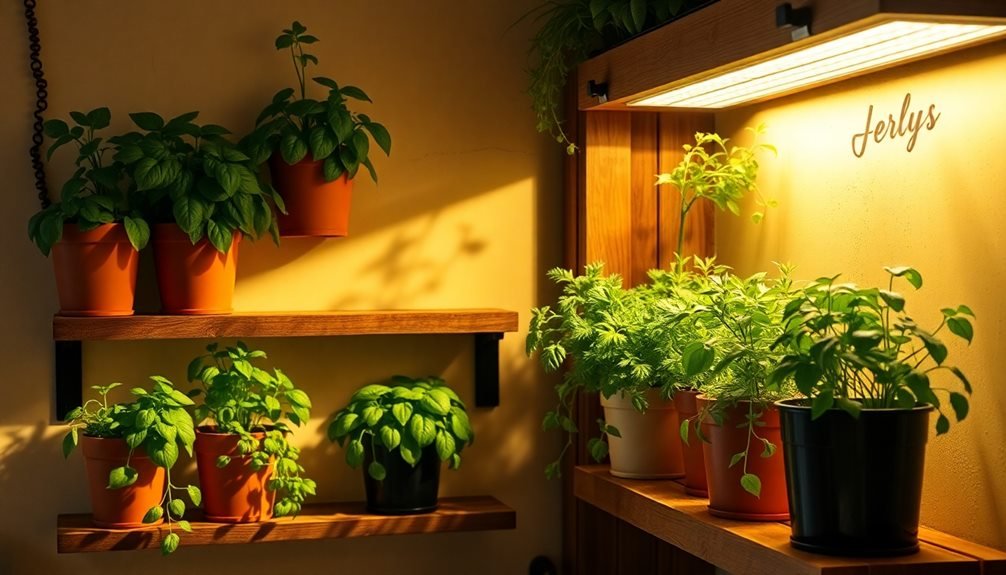
Creating your indoor herb oasis starts with choosing the perfect lighting solution. You'll find versatile options like LED strip grow lights that provide essential blue and red spectrums, or smart LED bulbs that offer customizable settings via your phone. Full-spectrum floor lamps and tabletop systems give you flexibility with adjustable heights, while pendant grow lights combine style with functionality. Consider space-saving choices like vertical garden panels, clip-on lights, or solar-powered options for eco-conscious growing. Don't overlook compact fluorescent systems for tight spaces or windowsill light bars for natural light enhancement. Let's explore how each option can transform your herb garden into a thriving paradise.
LED Strip Grow Lights
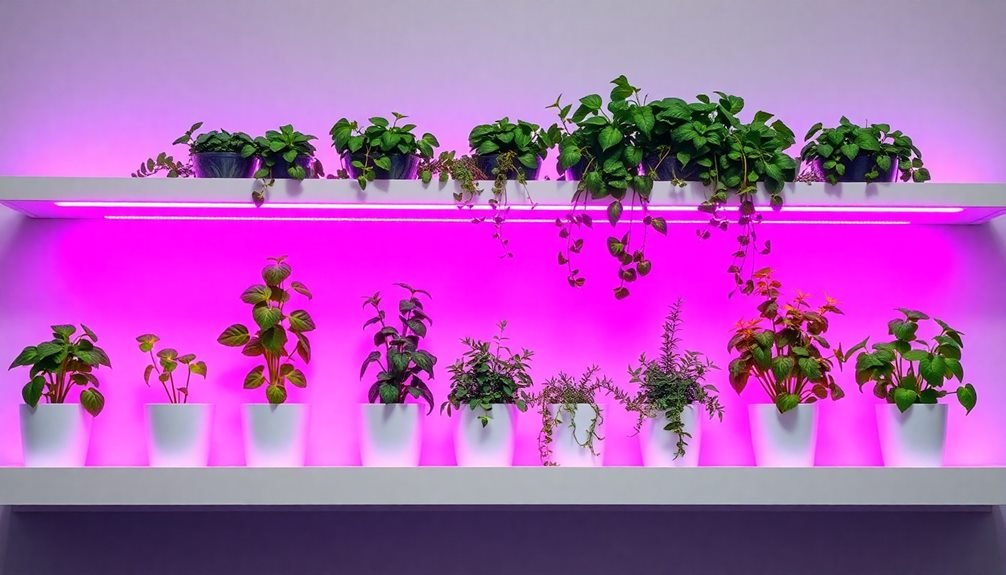
Growing herbs indoors becomes more accessible with LED strip grow lights, which provide an energy-efficient way to deliver essential light to your plants.
These flexible strips can be mounted under cabinets, along shelves, or directly above your herb garden, offering customizable coverage for spaces of any size. Most LED strips come with adhesive backing for easy installation and can be cut to precise lengths to fit your setup.
You'll find that LED strips consume considerably less electricity than traditional grow lights while producing minimal heat, making them safe to place close to your herbs.
Look for strips that emit both blue and red light spectrums – blue light promotes leaf growth, while red light encourages flowering and fruiting. Many models offer adjustable brightness levels and timer functions to simulate natural daylight cycles.
When installing LED strips, position them 6-12 inches above your herbs and guarantee even light distribution.
A quality strip should provide around 2000-3000 lumens per square foot of growing space. Consider strips with a color temperature between 4000K and 6500K for ideal vegetative growth.
You'll need to run them 12-16 hours daily to maintain healthy herb growth.
Full Spectrum Floor Lamps
While LED strips work well for compact spaces, full spectrum floor lamps offer a more versatile and mobile lighting solution for your indoor herb garden.
These standalone units combine adjustable height mechanisms with powerful, balanced lighting that mimics natural sunlight. You'll find most models feature flexible goosenecks or adjustable arms that let you direct light exactly where your herbs need it.
Full spectrum floor lamps typically include multiple light settings and timer functions, allowing you to customize the intensity and duration of exposure. The best models provide a complete light spectrum (400-700nm wavelength range) that supports all growth stages, from seedling to mature plant.
You'll want to position these lamps 12-24 inches above your herbs, adjusting the height as plants grow taller.
When selecting a floor lamp, look for units with at least 30-40 watts of power and built-in cooling systems to prevent overheating.
Many modern options come with smart features like smartphone controls and automated scheduling. While they're pricier than basic grow lights, their durability and versatility make them a worthwhile investment, especially if you're growing herbs year-round or in rooms with limited natural light.
Tabletop Grow Light Systems
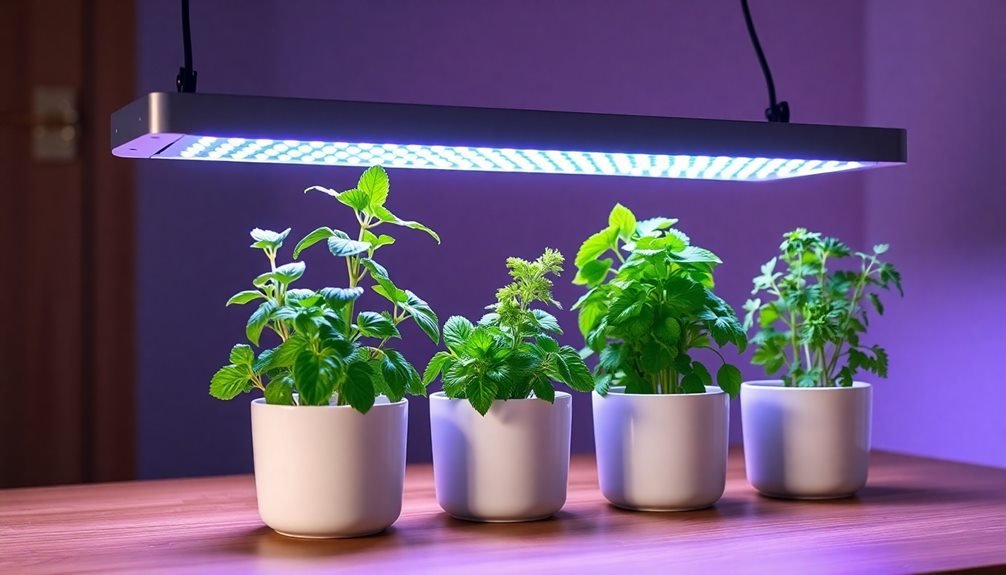
Tabletop grow light systems offer a perfect solution for gardeners with limited space or those who prefer a compact, all-in-one setup for their indoor herbs. These systems typically combine LED grow lights with adjustable stands and timers, allowing you to create the perfect environment for your plants right on your kitchen counter or desk.
Modern tabletop systems come equipped with features that'll help your herbs thrive. You'll find adjustable light heights to accommodate growing plants, built-in fans for proper air circulation, and easy-to-use control panels for light scheduling. The best part is that most units are plug-and-play, requiring minimal assembly and maintenance.
When selecting a tabletop grow light system, consider these vital features:
- Light intensity (measured in PPF or PPFD) – Look for systems providing at least 100 μmol/m²/s for herbs.
- Coverage area – Confirm the light footprint matches your growing space, typically 1-2 square feet for most tabletop units.
- Timer functionality – Choose systems with programmable timers to maintain consistent light cycles.
You'll find these systems particularly useful during winter months when natural light is scarce, guaranteeing year-round access to fresh herbs regardless of outdoor conditions.
Pendant Grow Lights
Pendant grow lights elegantly combine form and function, offering both aesthetic appeal and practical lighting for indoor herbs. These suspended fixtures hang from your ceiling, creating an unobstructed path of light while freeing up valuable counter space.
You'll find they're particularly effective for illuminating larger herb collections or multiple plants grouped together.
When selecting pendant grow lights, you'll want to take into account the adjustable height feature, which lets you modify the light intensity by raising or lowering the fixture. Most models come with full-spectrum LED bulbs that provide the perfect balance of blue and red light wavelengths your herbs need for photosynthesis.
You can choose between single-bulb pendants for smaller herb gardens or multi-bulb systems for broader coverage.
These fixtures typically include built-in timers and dimming capabilities, allowing you to customize your herbs' light exposure throughout the day. For ideal results, position your pendant lights 12-24 inches above your plants, adjusting the height as your herbs grow.
You'll also appreciate that many modern pendant grow lights feature sleek, minimalist designs that complement contemporary kitchen decor while serving their essential growing function.
Smart LED Grow Bulbs
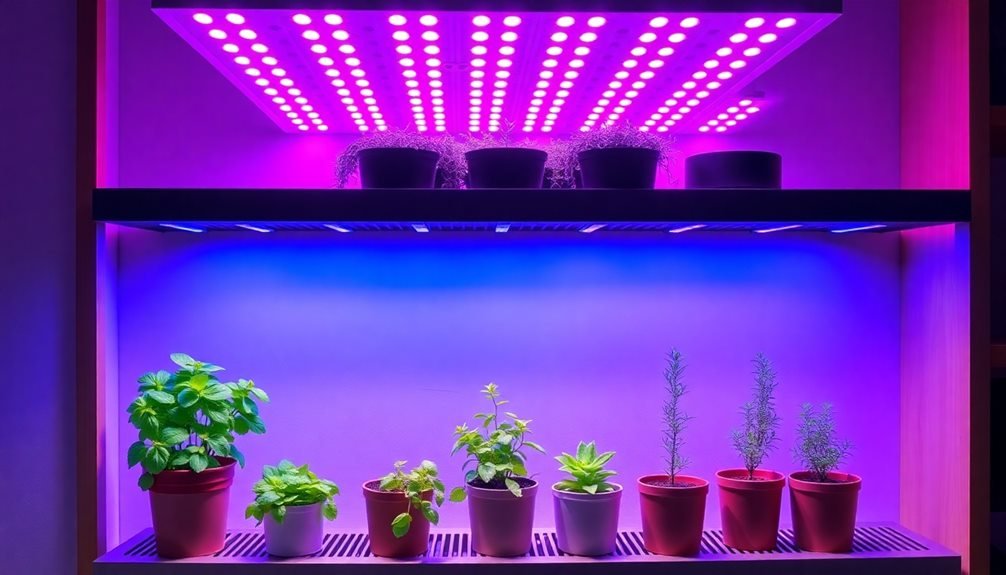
Smart LED grow bulbs represent the latest advancement in indoor herb lighting technology. These innovative bulbs combine energy efficiency with smart home connectivity, allowing you to control your herb garden's lighting from your smartphone.
You'll find most smart LED grow bulbs offer customizable spectrum settings that match your herbs' specific growth requirements.
The integration with smart home systems enables you to:
- Create automated schedules that mimic natural daylight cycles, ensuring your herbs receive consistent light exposure even when you're away.
- Monitor and adjust light intensity remotely, helping you maintain ideal growing conditions throughout different growth stages.
- Track energy usage and receive notifications about bulb performance, making it easier to manage operating costs.
These bulbs typically screw into standard light fixtures, eliminating the need for complex mounting systems.
You'll get the best results by positioning them 6-12 inches above your herbs, adjusting the height as plants grow.
While they're more expensive than traditional grow lights, smart LED bulbs often pay for themselves through reduced energy consumption and improved plant yields.
Their long lifespan, typically 25,000+ hours, makes them a practical long-term investment for your indoor herb garden.
Windowsill Light Extenders
You'll find several ways to maximize natural light for your indoor herbs without relying solely on grow lights.
Reflective mirrors strategically placed behind your plants can bounce additional sunlight onto the leaves, while clip-on LED light shelves offer targeted supplemental lighting for specific plants that need extra help.
Adjustable windowsill light bars provide a practical solution by extending across your entire herb collection, ensuring consistent light distribution throughout darker winter months.
Reflective Mirrors Boost Growth
Anyone looking to maximize natural light for indoor herbs can benefit from strategically placed mirrors. By positioning reflective surfaces near your herbs, you'll redirect sunlight to areas that typically receive less exposure. This simple yet effective technique can greatly boost your plants' growth potential without increasing your energy costs.
When using mirrors to enhance natural light for your herbs, follow these key guidelines:
- Place a medium-sized mirror at a 45-degree angle behind your herbs to catch and reflect incoming sunlight, creating a wider distribution of light across your plants' leaves.
- Mount small decorative mirrors on the wall opposite your herb-growing window to bounce light back onto the plants, effectively doubling the amount of natural light they receive.
- Use movable mirror tiles on nearby shelves, adjusting their positions throughout the day to track the sun's movement and maintain consistent light exposure.
Remember to clean your mirrors weekly, as dust can reduce their reflective properties.
You'll also want to observe your herbs carefully after installing mirrors, as some plants might need adjustment to prevent light burn from intensified exposure.
Clip-On LED Light Shelves
Modern clip-on LED light shelves step up the game for windowsill herb growing by combining natural sunlight with supplemental lighting.
These innovative fixtures attach directly to your windowsill, creating an extended growing space that maximizes both natural and artificial light sources. You'll find these units particularly useful during shorter winter days or in north-facing windows where direct sunlight is limited.
Most clip-on LED shelves feature adjustable arms that let you customize the height and angle of the lights, ensuring ideal coverage for herbs at different growth stages.
You'll want to position the LED panels 6-12 inches above your plants, adjusting as they grow taller. The best models include full-spectrum bulbs that mimic natural sunlight and consume minimal electricity.
When you're shopping for clip-on LED shelves, look for units with timer functions and adjustable intensity settings.
These features help you maintain consistent light cycles and adapt to seasonal changes. You'll also benefit from models with waterproof components, as they'll better withstand humidity from plant misting.
For maximum efficiency, choose shelves with reflective undercoatings that bounce light back toward your herbs, preventing light waste and promoting stronger growth.
Adjustable Windowsill Light Bars
Windowsill light bars offer a streamlined alternative to clip-on shelves, extending your growing space with a single continuous LED strip that spans the length of your windowsill.
These adjustable fixtures mount directly above your herbs, providing supplemental light during shorter winter days or in partially shaded windows. You'll find they're particularly effective for north-facing windows where natural light is limited.
Modern windowsill light bars come with features that maximize your herbs' growing potential:
- Full-spectrum LED arrays that mimic natural sunlight, promoting stronger stem growth and more vibrant foliage
- Timer functions that automatically adjust to seasonal light changes, ensuring your herbs receive consistent daily exposure
- Height-adjustable arms that let you raise or lower the light source as your plants grow taller
When installing your light bar, position it 6-12 inches above your herbs for ideal coverage.
The fixture's slim profile won't obstruct your view through the window, and many models include dimming capabilities to fine-tune light intensity.
You'll want to look for bars with waterproof ratings since they'll be exposed to moisture during plant watering.
Vertical Garden Light Panels
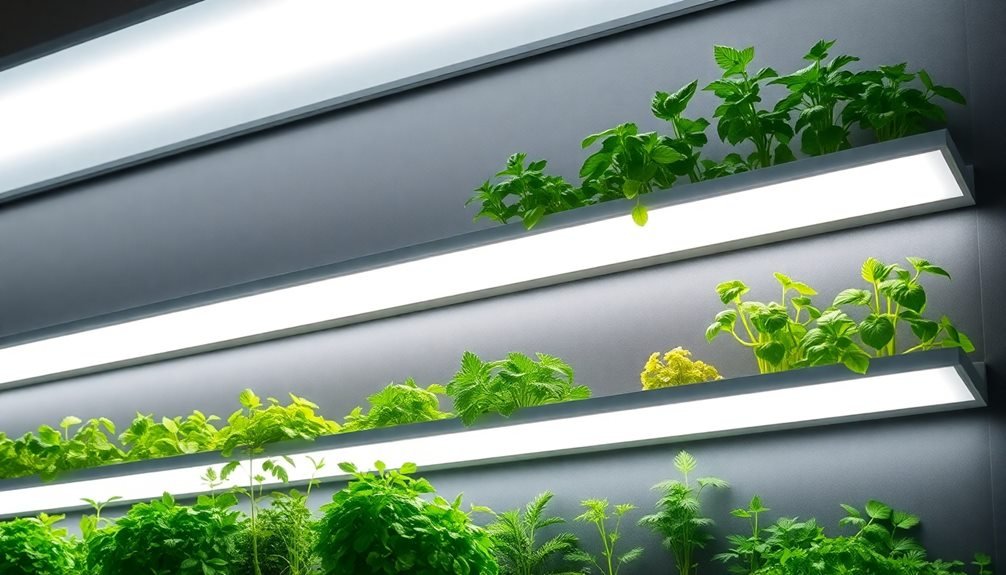
LED light panels specifically designed for vertical gardens deliver ideal illumination across multiple growing tiers.
These slim-profile panels mount directly to your vertical garden structure, providing consistent light coverage for each level of herbs. You'll find that most vertical garden panels use full-spectrum LED technology, which mimics natural sunlight and promotes healthy growth at every stage.
When selecting vertical garden panels, you'll want to evaluate the coverage area per panel and your system's dimensions. Most panels cover 2-3 square feet effectively, and you can connect multiple units to expand your growing space.
The best panels offer adjustable height settings, allowing you to maintain optimal distance between the lights and your herbs as they grow.
Look for panels with built-in timers and intensity controls, as these features help you create custom lighting schedules for different herbs. Mediterranean herbs like basil and oregano thrive under higher intensity settings, while shade-tolerant herbs like mint prefer lower light levels.
Many modern panels also include cooling systems to prevent heat build-up, ensuring your herbs don't get stressed from excessive warmth.
Clip-On Plant Lights
For smaller herb gardens or individual plants, clip-on grow lights offer a practical and flexible lighting solution. These versatile fixtures can be attached directly to shelves, pots, or nearby furniture, providing targeted illumination exactly where you need it.
You'll find that most clip-on grow lights feature adjustable goosenecks, allowing you to position the light at ideal distances and angles for your herbs.
When selecting a clip-on grow light for your herbs, consider these essential features:
- Light intensity – Look for models offering at least 1000-1500 lumens per square foot, which provides adequate brightness for most culinary herbs.
- Color spectrum – Choose lights with both blue (400-500nm) and red (600-700nm) wavelengths to support proper growth and leaf development.
- Timer function – Select models with built-in timers to maintain consistent light schedules without manual intervention.
You'll want to position your clip-on light 6-12 inches above your herbs, adjusting the height based on the light's intensity and your plants' specific needs.
Most clip-on units use energy-efficient LED technology, which runs cool and won't burn delicate herb leaves even at close range.
Solar-Powered Indoor Lights
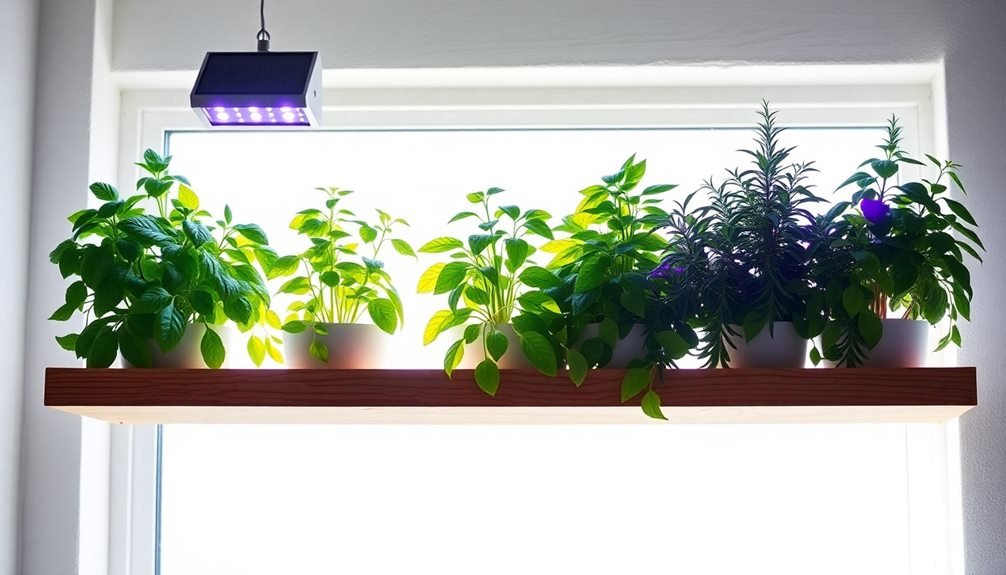
While clip-on lights offer direct electrical power, solar-powered indoor grow lights present an eco-friendly alternative that harnesses natural energy. These innovative lighting solutions collect sunlight through external solar panels, which you'll need to position near a window or mount outside. The stored energy powers LED grow lights for your herbs during darker hours, helping you reduce your carbon footprint and electricity bills.
Modern solar-powered grow lights come with various features you'll find useful. Many models include adjustable light intensities, timers, and backup battery systems for cloudy days. You'll want to look for units with efficient photovoltaic cells that can store enough power to provide 6-8 hours of continuous lighting for your herbs.
However, you should consider some limitations before investing in solar lighting. Your geographic location and available sunlight will impact the system's effectiveness. If you live in an area with limited sun exposure or frequent overcast conditions, you might need supplementary traditional lighting.
Additionally, initial costs are typically higher than conventional options, though you'll recover this investment through reduced energy consumption over time.
Compact Fluorescent Growing Systems
Compact fluorescent systems give you excellent herb growing flexibility with their unique spiral bulb designs that fit neatly into tight spaces.
You'll appreciate how these systems use 75% less energy than traditional growing lights while delivering comparable light output for your indoor herbs.
The multi-tier configuration options let you stack growing trays vertically, making it possible to cultivate different herb varieties simultaneously in a single compact setup.
Space-Saving Bulb Designs
Modern growers who need space-efficient lighting solutions will find compact fluorescent systems ideal for indoor herb gardens. These specialized bulbs are designed to fit into tight spaces while delivering excellent light spectrum for herb growth.
You'll appreciate their slim profiles and flexible mounting options, making them perfect for small windowsills, cabinet spaces, or countertop gardens.
Today's space-saving CFL grow lights come with innovative features that maximize growing potential in minimal space. You can choose from various configurations that include:
- Clip-on adjustable arms that attach directly to shelving units, allowing you to position lights exactly where needed without permanent installation.
- Vertical stacking systems with multiple bulb positions that let you grow herbs at different heights while maintaining a small footprint.
- Multi-directional reflector hoods that concentrate light downward, eliminating wasted illumination and reducing the number of bulbs needed.
When selecting space-saving bulbs, focus on those rated between 2700K and 6500K for complete coverage of both vegetative and flowering stages.
You'll want to position these bulbs 4-6 inches from your herbs, adjusting height as plants grow to maintain ideal light intensity.
Energy Usage Breakdown
Most indoor gardeners can expect reasonable electricity costs when using compact fluorescent grow lights for herbs, with typical systems consuming between 15-30 watts per bulb. Running a two-bulb setup for 14 hours daily will use approximately 0.8 kWh per day, costing you around $3-4 monthly on your electricity bill.
You'll find that compact fluorescent systems offer significant energy savings compared to traditional grow lights. They convert about 80% of their energy into usable light rather than heat, making them highly efficient for indoor herb cultivation.
While these bulbs cost more upfront than standard fluorescents, you'll recover the difference through lower energy consumption within 6-8 months of regular use.
To maximize your energy efficiency, you can install a timer to automate your lighting schedule. Most herbs need 12-16 hours of light daily, so you won't waste electricity during off-hours.
If you're growing light-loving herbs like basil or oregano, you might need to run your lights longer, which could increase your monthly costs by $1-2. Consider clustering your herbs beneath fewer bulbs to reduce overall energy consumption while maintaining healthy growth.
Multi-Tier Growing Capabilities
Resourceful gardeners can maximize their growing space by taking advantage of compact fluorescent systems' versatile multi-tier capabilities. These setups allow you to stack multiple growing levels vertically, effectively multiplying your available growing area without expanding your footprint.
You'll find that compact fluorescent lights are ideal for multi-tier systems because they run cool and don't require significant spacing between the light source and plants.
When designing your multi-tier growing system, consider these key factors:
- Distance between tiers – Allow 12-18 inches between each level to accommodate plant growth and guarantee proper light distribution.
- Light fixture mounting – Install adjustable hanging mechanisms for each tier so you can modify heights as your herbs grow.
- Air circulation – Position small fans strategically between levels to prevent heat buildup and promote strong stem development.
You can easily customize your multi-tier setup based on your space and needs. A typical three-tier system using compact fluorescents can support up to 36 medium-sized herb plants in just four square feet of floor space.
This efficiency makes it possible to maintain a productive indoor herb garden even in small apartments or limited spaces.
Frequently Asked Questions
How Often Should I Replace Indoor Grow Lights to Maintain Optimal Performance?
You'll need to replace LED grow lights every 50,000 hours (about 5-7 years), while fluorescent bulbs should be swapped every 10,000-20,000 hours. Don't wait until they burn out for best plant growth.
Can Mixing Different Types of Grow Lights Damage My Indoor Herbs?
You won't damage your herbs by mixing grow light types. It's actually beneficial to combine different lights, like LED and fluorescent, since they provide varied light spectrums that can enhance your plants' overall growth.
What Color Temperature Is Best for Promoting Herb Flowering Versus Leafy Growth?
You'll want cool blue light (5000-6500K) for leafy growth and warm red light (2700-3000K) for flowering. Switch between these temperatures or use full-spectrum lights to support both growth phases effectively.
Do Grow Lights Significantly Impact Monthly Electricity Bills for Small Herb Gardens?
You won't see a huge impact on your electricity bill with small herb gardens. A typical LED grow light uses about 20-40 watts and might add just $1-3 monthly when running 12-16 hours daily.
Should Grow Lights Be Adjusted Seasonally When Natural Daylight Hours Change?
Yes, you'll want to adjust your grow lights seasonally. When days get shorter, increase artificial lighting time to maintain 12-16 daily hours of light. When days lengthen, you can reduce supplemental lighting proportionally.
In Summary
You'll find the perfect lighting solution for your indoor herb garden among these versatile options. Whether you're working with limited space or want a full-scale growing system, there's a lighting choice to match your needs. Don't let lack of natural light stop you from cultivating fresh herbs – these modern lighting solutions make year-round indoor growing easier and more efficient than ever before.

Leave a Reply