
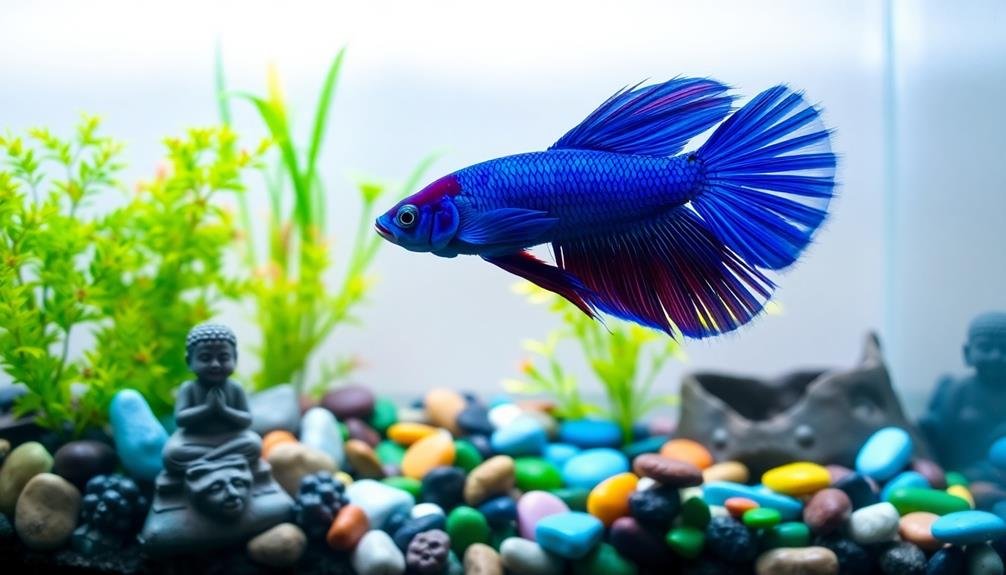
Caring for your betta fish can be a meditative experience with these five mindful techniques. Start with a weekly tank cleaning routine, focusing on gentle maintenance and water quality. Practice observing your betta's behavior as a form of meditation, noting its movements and interactions. Slow down feeding time to enhance awareness of your fish's habits and needs. Use aquascaping as a stress-relieving creative outlet, designing a peaceful underwater landscape. Finally, turn water quality checks into mindfulness exercises, engaging all your senses. These practices not only benefit your betta but can also improve your own mental well-being. Discover how these techniques can transform your fish care into a calming ritual.
Mindful Tank Cleaning Routine
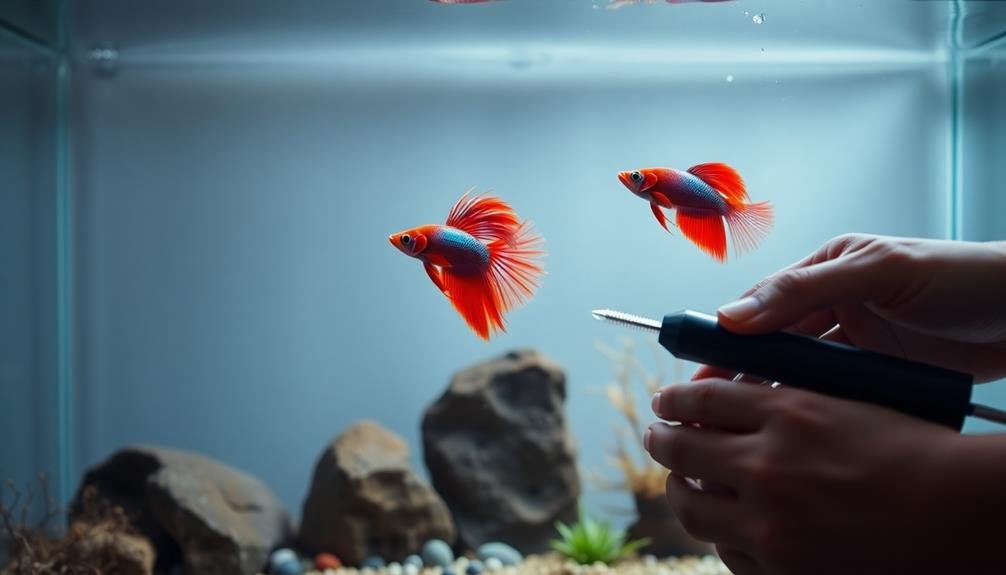
How often do you clean your betta fish tank? A mindful approach to tank maintenance involves regular, gentle cleaning to preserve your betta's health and habitat. Aim for weekly partial water changes of 10-25%, depending on your tank size. Use a siphon or gravel vacuum to remove debris from the substrate while simultaneously extracting water.
When cleaning, be present and observant. Notice any changes in your betta's behavior or appearance. Check the water parameters using a test kit, confirming ammonia and nitrite levels remain at zero, and nitrates stay below 20 ppm. Adjust your cleaning frequency if needed based on these results.
Gently wipe algae from tank walls and decorations using a soft sponge or cloth. Avoid harsh chemicals or soap; instead, use only water from the tank. Rinse filter media in old tank water to preserve beneficial bacteria.
When refilling the tank, verify the new water's temperature matches the existing water.
Throughout the process, move slowly and deliberately. Your betta may become stressed if you rush or make sudden movements. By maintaining a calm, mindful presence, you'll create a more positive experience for both you and your fish.
Observing Betta Behavior Meditation
Regular tank maintenance offers an excellent opportunity to practice mindfulness with your betta fish.
After cleaning, take a few moments to observe your betta's behavior through a meditative practice. Find a comfortable position near the tank and focus on your breathing. As you relax, shift your attention to your betta.
Watch how your fish moves through the water, noting its graceful fins and vibrant colors. Observe its interactions with its environment, such as exploring plants or investigating decorations. Pay attention to its breathing patterns, visible through the gentle movement of its gills. Notice how it responds to your presence or changes in lighting.
As you observe, remain non-judgmental and present in the moment. If your mind wanders, gently bring your focus back to your betta.
This practice not only helps you become more attuned to your fish's needs and behaviors but also promotes relaxation and stress reduction for you. Regular observation can help you quickly identify any changes in your betta's behavior that might indicate health issues, allowing for prompt care when needed.
Slow Feeding Awareness Practice
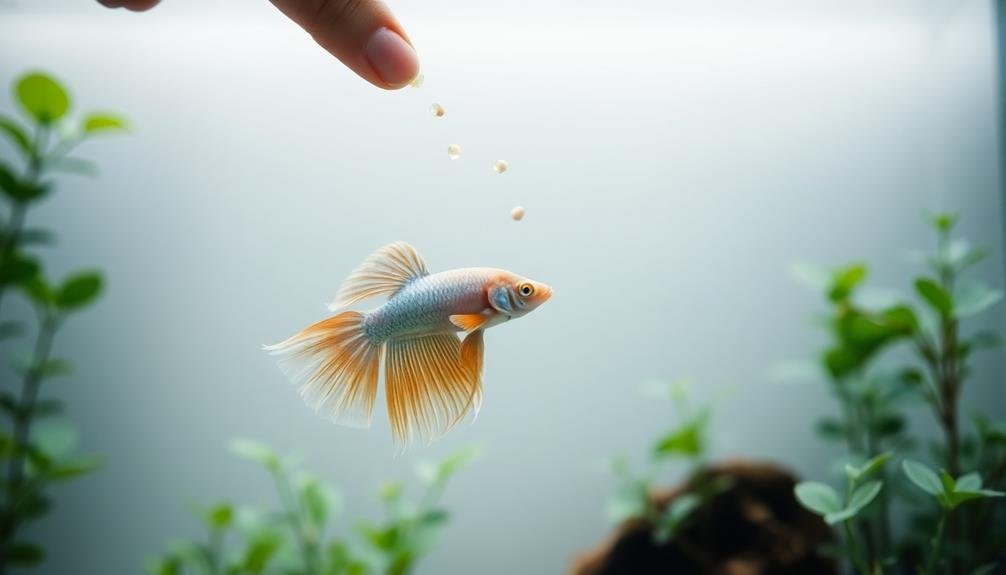
A pinch of food can transform into a mindful moment with your betta fish. As you approach the tank, take a deep breath and center yourself. Observe your betta's reaction to your presence. Are they enthusiastic, swimming to the surface in anticipation?
Now, focus on the feeding process. Instead of quickly sprinkling food, drop each pellet or flake individually. Watch as your betta notices, tracks, and consumes each morsel. This slow feeding practice heightens your awareness of your fish's behavior and eating habits.
| Mindful Feeding Benefits | Betta Behavior to Observe |
|---|---|
| Reduces overfeeding | Eagerness to eat |
| Improves digestion | Pellet tracking ability |
| Strengthens bond | Food recognition speed |
| Enhances observation | Post-feeding contentment |
As you engage in this practice, you'll become more attuned to your betta's needs. You'll notice if they're eating less than usual or if they're particularly hungry. This awareness can help you adjust their diet and catch potential health issues early. Remember, mindful feeding isn't just about nourishment; it's about connection and understanding your aquatic companion better.
Aquascaping as Stress Relief
Creativity flows as you design and maintain your betta's underwater landscape. Aquascaping isn't just about aesthetics; it's a mindful practice that can reduce your stress while enhancing your betta's environment.
As you carefully select and arrange plants, rocks, and driftwood, you're creating a miniature ecosystem that reflects your artistic vision and provides stimulation for your fish.
Focus on the textures, colors, and shapes of the elements you're working with. Notice how they interact and complement each other. This process of thoughtful creation can be meditative, allowing you to forget daily worries and immerse yourself in the present moment.
Regular maintenance of your aquascape offers ongoing opportunities for mindfulness. As you trim plants, rearrange decorations, or clean the substrate, you're not just caring for your betta; you're engaging in a calming ritual that can center your thoughts and emotions.
Consider these deeper aspects of aquascaping as stress relief:
- Connects you with nature, even in urban environments
- Encourages patience and long-term thinking
- Provides a sense of accomplishment and pride
- Offers a creative outlet for self-expression
Water Quality Mindfulness Exercises

How can maintaining water quality become a mindfulness practice? Start by setting aside specific times for water testing and changes. As you perform these tasks, focus your attention fully on the present moment. Observe the water's clarity, temperature, and your betta's behavior. Use all your senses: feel the water's temperature, smell its freshness, and listen to the gentle sounds of your aquarium.
When testing water parameters, approach it as a meditative exercise. Breathe deeply and calmly as you collect water samples. Pay close attention to each step of the testing process, noting the changing colors of test strips or liquids. As you record the results, reflect on how these numbers relate to your betta's well-being.
During water changes, practice gratitude for the clean water you're providing. Move slowly and deliberately as you siphon out old water and add fresh. Watch how your betta responds to the improved environment.
Frequently Asked Questions
How Do I Introduce New Tank Mates to My Betta Fish?
You'll need to introduce new tank mates slowly. First, quarantine them for a week. Then, add them to your betta's tank in a separate container. Gradually acclimate them before releasing. Monitor closely for any aggression.
What's the Ideal Water Temperature for a Betta Fish Tank?
You'll want to maintain your betta's tank between 76-82°F (24.5-28°C). This range mimics their natural tropical habitat. Use a reliable aquarium heater and thermometer to keep the temperature stable. Don't let it fluctuate too much.
How Can I Tell if My Betta Fish Is Sick?
You can spot a sick betta by observing changes in behavior, appearance, or appetite. Watch for lethargy, loss of color, clamped fins, bloating, or refusal to eat. Also, check for visible signs like white spots or fuzzy growths.
How Often Should I Change the Water in My Betta Tank?
You should change your betta's water weekly, replacing 10-25% of the tank volume. If it's a smaller tank (less than 5 gallons), you'll need more frequent changes. Always use a water conditioner to remove harmful chemicals.
Can Betta Fish Recognize Their Owners?
Yes, betta fish can recognize their owners. You'll notice they may swim to the front of the tank when you approach, react to your voice, or even follow your finger. They're intelligent fish that can form bonds with their caretakers.
In Summary
You've now learned five mindful techniques to enhance your betta fish care routine. By incorporating these practices, you'll deepen your connection with your aquatic friend and create a more serene environment for both of you. Remember, mindfulness isn't just about relaxation; it's about being present and attentive. As you continue to care for your betta, you'll find these techniques become second nature, enriching your experience as a fish keeper and improving your pet's quality of life.




Leave a Reply