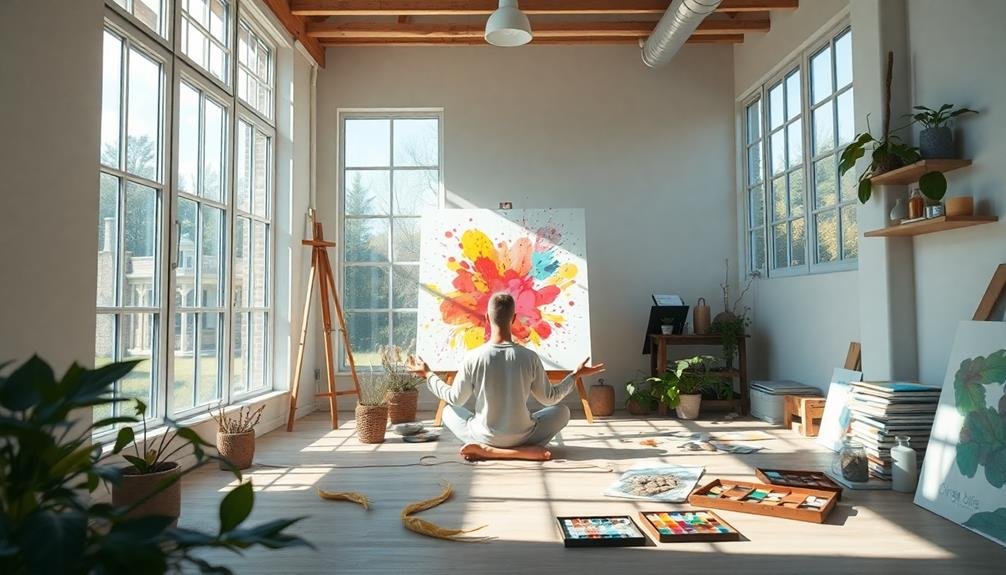
Mindful art is a fantastic way to cultivate inner peace and emotional clarity. By engaging in creative exercises like guided coloring or art journaling, you can express your feelings while enhancing focus and relaxation. Using the right supplies, such as quality pencils and thick paper, can greatly impact your experience. Techniques like mindful breathing help ground you in the moment, making your creative time even more rewarding. Plus, sharing your artwork can foster connections with others, enriching your journey. If you explore further, you'll discover even more ways to deepen your practice and embrace the tranquility it brings.
Benefits of Mindful Art

Mindful art offers several key benefits that can enhance your overall well-being. Engaging in creative activities helps you focus on the present moment, allowing your mind to break free from stressors and distractions. As you immerse yourself in the colors and shapes, you'll find a sense of calm washing over you. This focused attention can promote relaxation, reducing anxiety and improving your mood.
Additionally, mindful art encourages self-expression. Whether you're painting, drawing, or coloring, you're channeling your feelings and thoughts into your work. This process not only fosters creativity but also helps you process emotions, leading to greater self-awareness. You'll discover insights about yourself that you mightn't have realized otherwise.
Moreover, practicing mindful art can improve your fine motor skills and hand-eye coordination. As you manipulate different tools and materials, you develop a deeper connection with your body and its movements. This physical engagement can boost your overall sense of accomplishment and well-being.
Ultimately, incorporating mindful art into your routine can serve as a powerful tool for personal growth, emotional healing, and enhanced mental clarity. So grab your supplies and start exploring the benefits for yourself!
Essential Supplies for Coloring
When you start coloring, having the right supplies makes all the difference.
You'll want to explore various coloring tools, choose the best paper for your project, and select a color palette that sparks your creativity.
Let's look at what you need to get started on your mindful coloring journey.
Coloring Tools Overview
Have you ever wondered what supplies can enhance your coloring experience? The right tools can make a significant difference in how you express your creativity and find inner peace.
Start with coloring pencils, which offer versatility and control. They come in various hardness levels, allowing you to create everything from soft shades to bold lines.
Next, consider markers. They're vibrant and can cover large areas quickly, but be mindful of their bleeding potential on certain papers.
Gel pens are another excellent option, adding a unique shine and texture to your artwork. They're perfect for finer details and intricate designs.
Don't forget about crayons! They can evoke nostalgia and are perfect for blending techniques.
For those who prefer a softer touch, watercolor pencils are fantastic. They allow you to draw and then blend with a wet brush for a dreamy effect.
Lastly, an eraser isn't just for mistakes; it can help you lighten areas or create highlights.
With these tools in hand, you're ready to immerse yourself in the mindful world of coloring, releasing your creativity while nurturing your inner calm.
Choosing the Right Paper
Picking the right paper can make all the difference in your coloring journey. It's vital to choose a paper that complements your coloring tools and style. If you're using markers, opt for a thicker paper that can handle the ink without bleeding through. Look for paper specifically labeled as marker or mixed media paper; this will guarantee your colors stay vibrant and your artwork remains neat.
For colored pencils, a smooth, heavier paper can enhance blending and shading. You might want to try watercolor paper if you enjoy using water-based mediums. This type of paper can absorb moisture well and prevent warping, allowing for beautiful washes and gradients.
Consider texture, too. A textured paper can add depth to your designs, while a smooth surface may be better for intricate details. Experiment with different types to see what feels best for you.
Lastly, don't forget to check the size of the paper. Larger sheets give you more space to express your creativity, while smaller ones are great for quick exercises.
Ultimately, the right paper will enhance your experience and help you create beautiful, mindful art.
Color Palette Selection
Choosing the right paper sets the stage for your coloring experience, but selecting a color palette is just as important. A well-chosen palette can elevate your art and create a sense of harmony.
Here's how to choose the perfect colors for your project:
- Consider Your Mood: Think about the emotions you want to convey. Warm colors like reds and oranges evoke energy, while cool colors such as blues and greens promote calmness.
- Stick to a Theme: If you're working on a particular subject, choose colors that enhance that theme. For nature scenes, earthy tones work well, while vibrant colors might suit abstract art.
- Test Combinations: Before committing to a palette, try out different color combinations. Create small swatches to see how the colors interact. This can help you avoid clashing hues.
Techniques for Effective Coloring

When it comes to effective coloring, choosing the right tools can make all the difference in your experience.
You'll also want to think about your color selection strategies to create the mood you desire.
Choosing the Right Tools
Finding the right tools can make all the difference in your coloring experience, enhancing both your creativity and mindfulness. Choosing the right supplies not only impacts the outcome of your artwork but also affects how you feel during the process.
Here are three essential tools you should consider:
- Quality Coloring Pencils: Invest in a set of colored pencils that glide smoothly across the paper. Look for brands known for vibrant pigments and easy blending, allowing you to express your artistic vision fully.
- Paper Type: Select the right paper for your medium. A thicker, textured paper can handle various coloring tools without bleeding, creating a more enjoyable experience. Experiment with different types to find what resonates with you.
- Erasers and Blending Tools: Don't underestimate the power of a good eraser and blending tools. These can help you refine your work, allowing for corrections and better shading, which can enhance the meditative aspect of your coloring.
With the right tools in hand, you'll find that your coloring sessions become more fulfilling and therapeutic, fostering a deeper connection to your creative self.
Color Selection Strategies
With the right tools in hand, it's time to focus on how you select your colors. Start by considering your mood and the emotions you want to evoke. Colors can greatly impact your feelings, so think about vibrant hues for energy or softer shades for calmness.
Next, experiment with color palettes. You can choose a monochromatic scheme, which uses variations of a single color, or a complementary palette that pairs colors opposite each other on the color wheel. This adds depth and interest to your work.
Don't forget about the importance of balance. Too many contrasting colors can create chaos, while a limited palette can bring harmony.
Try picking three to five colors that resonate with you and build your artwork around them.
Mindful Breathing Techniques
Engaging in mindful breathing techniques can markedly enhance your coloring experience by grounding you in the present moment. When you focus on your breath, you create a calm space that allows your creativity to flow freely.
Here are three simple techniques to integrate mindful breathing into your coloring routine:
- Deep Breathing: Before you start coloring, take a moment to inhale deeply through your nose, allowing your abdomen to rise. Hold your breath for a count of four, then exhale slowly through your mouth. Repeat this a few times to center yourself.
- Color Pause Breaths: As you color, pause every few minutes to take a breath. Inhale deeply while visualizing the colors you're using, and exhale any tension you might feel in your body. This keeps you relaxed and focused.
- Counting Breaths: Count your breaths while you color. Inhale for a count of four, hold for four, and exhale for four. This rhythmic breathing not only calms your mind but also enhances your concentration.
Guided Coloring Exercises
Guided coloring exercises offer a unique way to immerse yourself in creativity while promoting mindfulness. These exercises help you focus on the present moment, allowing your mind to relax and your creativity to flow. As you color, you'll engage with colors, patterns, and shapes, which can be therapeutic and grounding.
Here's a simple table to help you choose your coloring approach:
| Coloring Style | Benefits | Tips |
|---|---|---|
| Mandalas | Enhances focus and calm | Start from the center outwards |
| Nature Scenes | Connects you with nature | Use earthy tones for grounding |
| Abstract Patterns | Sparks creativity | Experiment with color choices |
| Inspirational Quotes | Boosts positivity | Choose colors that resonate with you |
| Geometric Shapes | Improves concentration | Focus on symmetry and balance |
As you engage in guided coloring, remember that there's no right or wrong way to express yourself. Let go of perfection and embrace the joy of creating. This practice not only cultivates mindfulness but also brings a sense of accomplishment and inner peace. So grab your coloring tools and plunge into this enriching experience!
Integrating Mindfulness Practices

Coloring exercises can serve as a perfect springboard into broader mindfulness practices. Once you've engaged in the calming act of coloring, consider how to weave that mindfulness into other areas of your life.
Here are three ways to integrate mindfulness practices seamlessly:
- Breath Awareness: After coloring, take a moment to close your eyes and focus on your breath. Feel the air moving in and out of your body. This simple practice can ground you in the present moment and enhance your overall sense of well-being.
- Mindful Observation: As you move on from coloring, apply the same attentive focus to your surroundings. Notice the colors, shapes, and textures in your environment. This helps you cultivate a deeper appreciation for your daily life.
- Intentional Movement: Incorporate mindful walking or stretching into your routine. As you walk, pay attention to how your feet touch the ground or how your body feels while stretching. This helps you remain connected to your body and breath.
Art Journaling for Reflection
Art journaling can be a powerful tool for self-reflection and personal growth. When you set aside time to express your thoughts and feelings on paper, you create a safe space for exploration.
Grab a journal, some colored pens, and let your creativity lead the way. You don't need to be an artist; it's about the process, not the product.
Start by writing down your thoughts or feelings. What's on your mind? What emotions are you experiencing? You might find that doodling or sketching helps to reveal deeper insights.
Use colors that resonate with your mood, and don't hesitate to mix different media—collage, painting, or even photography.
As you journal, pay attention to recurring themes or symbols. These can reveal important aspects of your inner world.
Reflect on what you've created. Ask yourself how these reflections relate to your life, and consider setting intentions for personal growth based on your discoveries.
Ultimately, art journaling invites you to connect with your true self, fostering clarity and understanding.
Embrace this practice regularly, and you'll likely find it enhances your journey towards inner peace.
Sharing Your Mindful Creations

Sharing your mindful creations can deepen your connection with others and foster a sense of community. When you open up about your art, you invite others to experience your journey, which can be incredibly healing for both you and them.
Here are three ways to share your mindful creations effectively:
- Host a Gathering: Organize a small event where friends and family can come together to explore your artwork. Create a relaxed atmosphere where everyone feels comfortable sharing their thoughts.
- Social Media Platforms: Use platforms like Instagram or Pinterest to showcase your pieces. Share the stories behind them, and encourage others to engage. This can spark conversations and connect you with like-minded individuals.
- Create a Collaborative Project: Invite others to contribute to a collective art piece. This not only brings diverse perspectives but also builds a strong sense of community as everyone works toward a common goal.
Frequently Asked Questions
Can Mindful Art Be Practiced by Beginners?
Absolutely, you can practice mindful art as a beginner! It's all about expressing yourself freely without judgment. Just grab some supplies, let your creativity flow, and enjoy the calming process of making art.
How Often Should I Engage in Mindful Art?
You should engage in mindful art as often as you can—ideally, a few times a week. Consistency helps deepen your experience, but even occasional practice can bring you peace and clarity in your life.
Are There Specific Themes for Mindful Art Exercises?
Yes, there are specific themes for mindful art exercises. You can explore serenity, nature, emotions, or gratitude. Each theme invites creativity, helping you express feelings and cultivate inner peace through artistic exploration.
Can I Use Digital Tools for Mindful Art?
Absolutely, you can use digital tools for mindful art! Whether it's drawing apps, digital painting software, or photo editing, these tools let you express creativity and find peace while engaging in a calming, enjoyable process.
What if I Don't Consider Myself an Artistic Person?
You don't have to be an artistic person to express yourself creatively. Embrace your unique perspective, let go of perfection, and explore different mediums. It's about enjoying the process, not the outcome.
In Summary
Incorporating mindful art into your routine can transform your perspective and enhance your inner peace. By exploring creative exercises, you not only express yourself but also cultivate mindfulness in your daily life. Whether you're coloring, journaling, or sharing your creations, each step brings you closer to a calmer state of being. Embrace the journey and let your art lead you to a more tranquil mind. Remember, it's about the process, not just the finished piece.


Leave a Reply