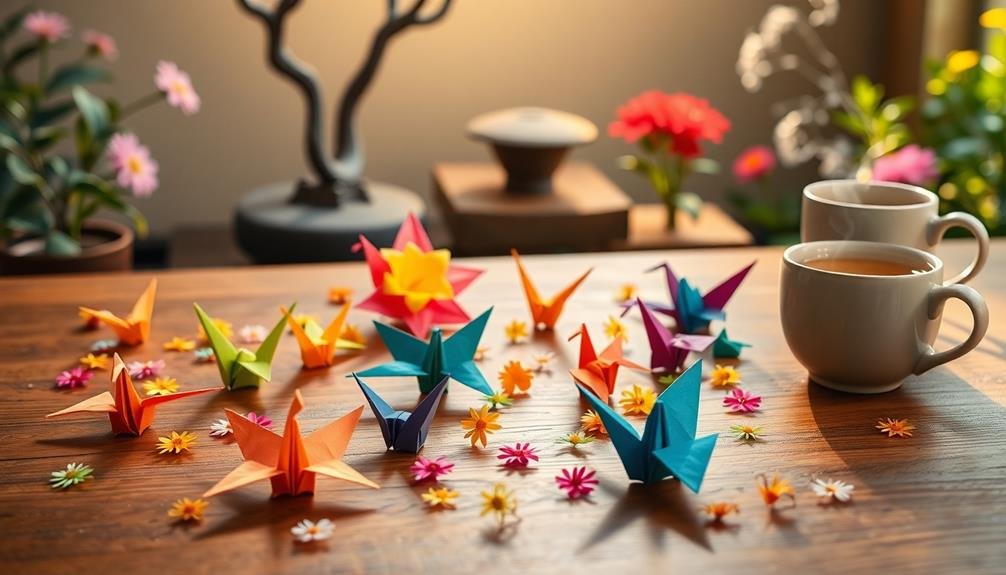
Origami, the Japanese art of paper folding, can be a powerful tool for anxiety relief. As you focus on creating precise folds and intricate designs, you'll enter a state of mindfulness that quiets racing thoughts. The repetitive motions and tactile sensations of folding paper can induce a meditative state, releasing endorphins and promoting relaxation. Start with simple projects like boats or hearts, using calming colors and textures that soothe your senses. Set aside daily folding time in a peaceful environment to make origami a regular part of your stress management routine. By exploring this ancient art, you'll discover a hands-on approach to folding away your worries.
Understanding Origami's Calming Effects
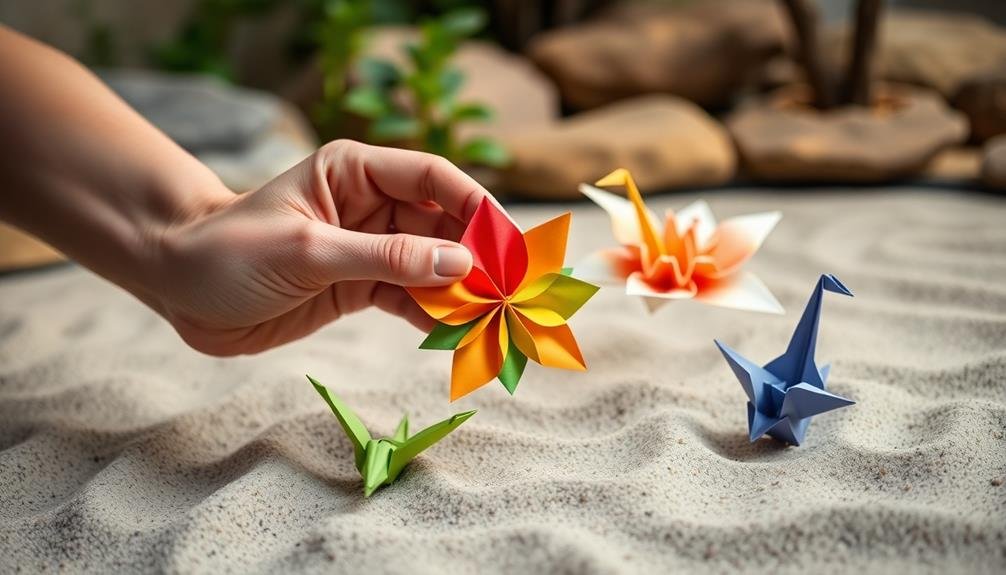
Three key factors contribute to origami's calming effects: mindfulness, repetition, and tangible results. When you engage in origami, you're forced to focus on the present moment, directing your attention to the paper and the folding process. This mindfulness practice helps quiet racing thoughts and reduce anxiety by grounding you in the here and now.
The repetitive nature of origami movements creates a soothing rhythm, similar to meditation. As you fold and unfold, crease and smooth, your mind enters a state of flow, allowing worries to fade into the background.
This repetition also triggers the release of endorphins, your body's natural stress-relievers.
Choosing Paper for Anxiety Relief
When choosing paper for anxiety-relieving origami, you'll want to contemplate several key factors.
The type, color, pattern, texture, and thickness of your paper can all influence your folding experience and its calming effects.
Let's explore how these elements impact your origami practice and help you select the best paper for stress reduction.
Suitable Paper Types
Choosing the right paper for your anxiety-relieving origami practice can considerably enhance your experience. Traditional origami paper, known as kami, is an excellent option. It's thin, crisp, and comes in various colors and patterns. This paper folds easily and holds creases well, making it ideal for beginners and experienced folders alike.
If you're looking for a more tactile experience, try washi paper. This handmade Japanese paper has a unique texture and is slightly thicker than kami. It's perfect for creating sturdy models and can add an extra sensory element to your folding practice.
For a budget-friendly option, consider using regular printer paper. While it's not as thin as specialized origami paper, it's readily available and works well for practicing new folds. You can also experiment with recycled paper or old magazines to add an eco-friendly dimension to your hobby.
When you're ready to tackle more complex projects, tissue foil or duo paper (colored on one side, white on the other) can provide additional challenge and visual interest.
Color and Pattern Impact
Colors and patterns in origami paper often play a crucial role in anxiety relief. When choosing paper for your origami practice, consider how different hues and designs might affect your mood and stress levels. Calming colors like soft blues, greens, and lavenders can help soothe your mind, while vibrant colors might energize you. Patterns can also impact your experience; simple, repetitive designs may promote focus, while intricate patterns could provide a welcome distraction from anxious thoughts.
Consider these color and pattern combinations for different effects:
| Color | Pattern | Effect |
|---|---|---|
| Pale Blue | Solid | Calming |
| Soft Green | Floral | Nature-inspired |
| Lavender | Geometric | Meditative |
| Yellow | Polka Dots | Cheerful |
| Gray | Abstract | Neutral focus |
You'll find that experimenting with various colors and patterns can enhance your origami experience. Pay attention to how different combinations make you feel, and adjust your choices accordingly. Remember, there's no right or wrong selection – it's all about what works best for you in managing anxiety through origami.
Texture and Thickness Considerations
The texture and thickness of origami paper can greatly impact your anxiety-relief experience. When selecting paper, consider how it feels against your fingertips and how easily it folds. Smoother papers can create a soothing sensation, while textured papers might provide a more tactile, grounding experience.
The thickness of the paper also plays an essential role in your folding process. Thinner papers are more pliable and easier to crease, which can be helpful if you're looking for a quick, effortless folding session. On the other hand, thicker papers offer more resistance, requiring more focus and potentially providing a deeper sense of accomplishment.
For ideal anxiety relief, experiment with different paper types:
- Traditional washi paper for a delicate, authentic feel
- Handmade paper with natural fibers for a unique texture
- Recycled paper for an eco-friendly, varied texture experience
As you explore various textures and thicknesses, you'll discover which papers work best for your anxiety relief needs. Some days, you might prefer the challenge of a thicker, more resistant paper, while on others, a thin, smooth sheet might be more comforting.
Don't hesitate to mix and match papers within a single project to create a multi-sensory experience that caters to your current emotional state.
Simple Origami Projects for Beginners
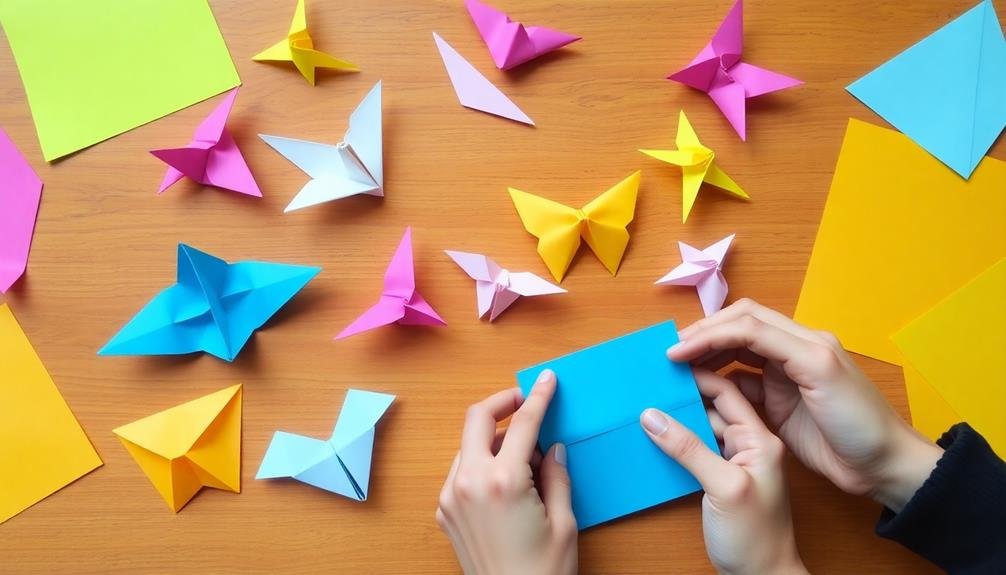
For those just starting out with origami, simple projects offer an ideal entry point. You'll want to begin with designs that require few folds and use basic techniques. The classic paper crane is a popular choice, but it might be too complex for absolute beginners. Instead, try creating a simple boat or a paper cup. These projects typically involve just a handful of straightforward folds and can be completed in minutes.
Another excellent option for novices is the origami heart. It's a bit more challenging than a boat but still manageable for beginners. As you gain confidence, you can move on to animals like the easy dog face or a simple butterfly. These projects introduce slightly more intricate folds while remaining achievable.
Don't forget about modular origami, where you create multiple identical units and combine them. The kusudama flower is a great starting point in this category.
Mindfulness Through Folding Techniques
How can the simple act of folding paper become a mindfulness practice? As you engage in origami, you'll find that it naturally draws your attention to the present moment. The repetitive motions and precise folds require focus, pulling your mind away from anxious thoughts and into the task at hand.
To cultivate mindfulness through origami, try these techniques:
- Focus on your breath as you fold, syncing each inhale and exhale with your movements.
- Pay close attention to the texture and feel of the paper between your fingers.
- Observe the transformation of the flat sheet into a three-dimensional form without judgment.
As you practice mindful folding, you'll notice a shift in your mental state. The concentration required to create clean creases and precise angles helps quiet the mind's chatter.
You'll become more aware of your body's movements and the sensations in your hands. This heightened awareness can extend beyond your origami session, helping you approach other daily tasks with greater mindfulness and reduced anxiety.
Creating a Relaxing Origami Environment
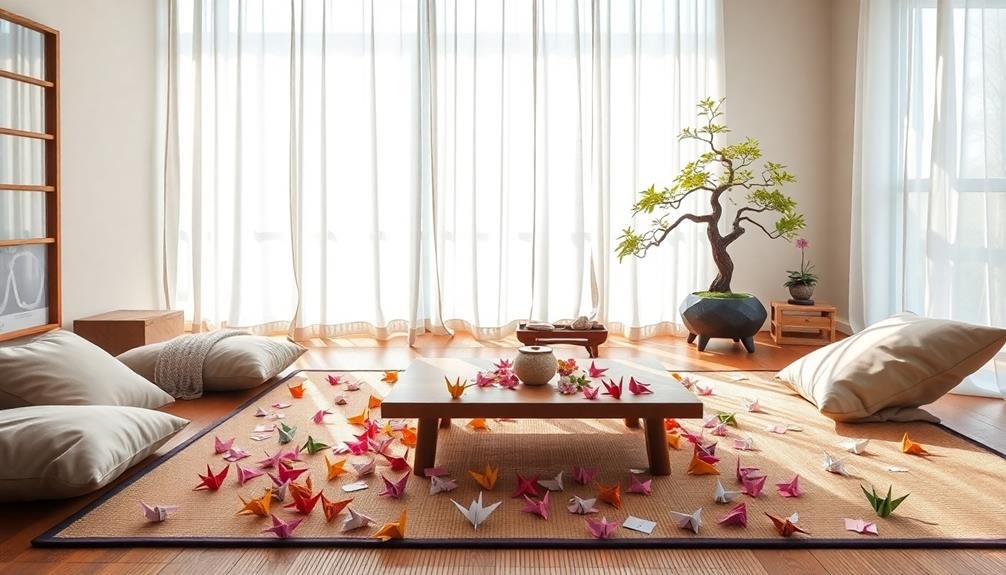
While mindful folding techniques can greatly reduce anxiety, your surroundings play a key role in maximizing the calming effects of origami. To create an ideal environment, start by choosing a quiet, clutter-free space where you won't be disturbed.
Make sure you have a comfortable chair and a flat, stable surface to work on.
Lighting is vital; opt for soft, natural light or warm artificial lighting to reduce eye strain and create a soothing atmosphere. Consider using a desk lamp with adjustable brightness for precision folding.
Background noise can be distracting, so either embrace silence or play gentle, instrumental music to enhance focus and relaxation.
Keep your origami supplies organized and easily accessible. Use a dedicated storage system for papers, tools, and completed models. This organization will minimize frustration and maintain a sense of calm.
Adding plants or nature-inspired decor can further promote tranquility in your origami space.
Temperature and air quality also impact your comfort. Make sure proper ventilation and maintain a comfortable room temperature.
Origami as a Daily Anxiety Routine
Incorporating origami into your daily routine can create a powerful anxiety-management tool. By setting aside just 15-20 minutes each day for folding, you'll establish a consistent practice that can help calm your mind and reduce stress levels. Choose a specific time that works best for you, whether it's first thing in the morning, during your lunch break, or before bed.
Start with simple designs and gradually increase complexity as your skills improve. This progression will provide a sense of accomplishment and boost your confidence. Remember, the goal isn't perfection but rather the process of focusing on the present moment and letting go of worries.
To maximize the anxiety-reducing benefits of your origami routine:
- Keep a dedicated origami kit with paper and instructions readily accessible
- Experiment with different paper types and colors to stimulate your senses
- Share your creations with others or join online origami communities for support
As you make origami a daily habit, you'll likely notice improvements in your overall mood and ability to manage stress. The meditative aspects of folding, combined with the satisfaction of creating something tangible, can provide a much-needed respite from anxiety-inducing thoughts and situations.
Advanced Projects for Stress Management
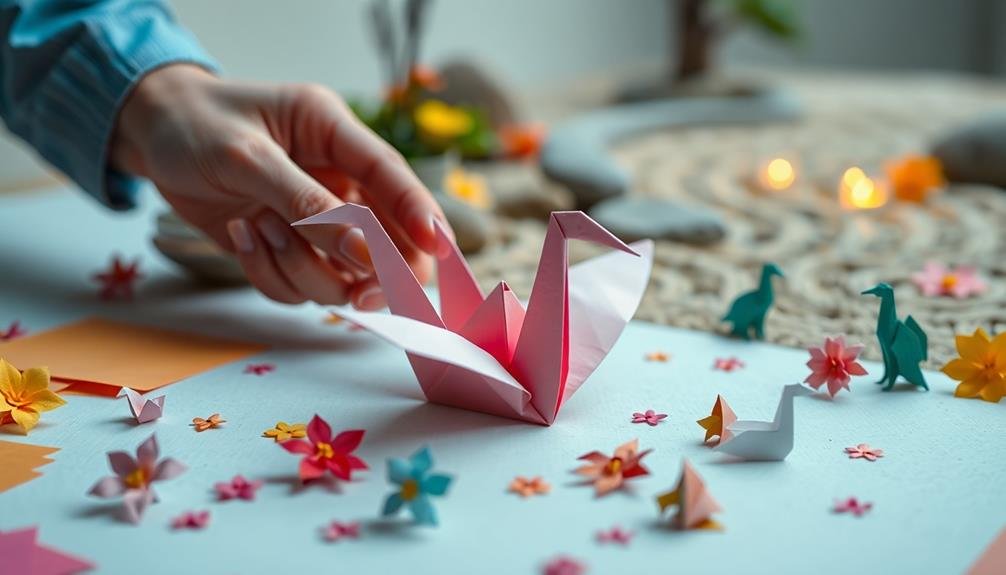
For those who've mastered the basics of origami, delving into advanced projects can provide an even greater sense of accomplishment and stress relief. As you tackle more complex designs, you'll find your focus sharpening and your worries fading into the background. Advanced origami projects often require patience and precision, which can be meditative in nature.
Consider trying these advanced origami models to manage stress:
| Model | Difficulty | Time Required |
|---|---|---|
| Origami Crane | Moderate | 30-45 minutes |
| Dragon | Hard | 1-2 hours |
| Kusudama Ball | Expert | 2-3 hours |
As you work on these intricate designs, you'll notice your mind clearing and your anxiety lessening. The concentration required for complex folds leaves little room for anxious thoughts. You'll also experience a sense of pride and achievement upon completing a challenging project, boosting your mood and self-esteem. Remember to take breaks if you feel frustrated, and don't hesitate to return to simpler models if needed. The goal is to enjoy the process and reap the stress-relieving benefits of this ancient art form.
Incorporating Origami Into Therapy Sessions
Therapists are increasingly recognizing the potential of origami as a therapeutic tool. If you're a mental health professional, you might consider incorporating origami into your sessions to help clients manage anxiety and stress.
It's a versatile technique that can be adapted to various therapeutic approaches and client needs. When introducing origami in therapy, start with simple models to build confidence and reduce frustration.
As your clients progress, you can use more complex designs to challenge their problem-solving skills and enhance focus. The act of folding paper can serve as a mindfulness exercise, helping clients stay present and redirect their thoughts away from anxious ruminations.
Here are some ways to integrate origami into therapy sessions:
- Use it as an icebreaker or conversation starter
- Assign origami projects as homework for stress relief
- Incorporate metaphors related to the folding process in discussions
Building an Origami Support Community

Beyond individual practice, building an origami support community can greatly enhance the anxiety-relieving benefits of this art form.
You'll find that connecting with others who share your passion for paper folding creates a supportive environment where you can learn, grow, and destress together.
Start by seeking out local origami clubs or workshops in your area. If none exist, consider starting your own group.
You can host regular meetups at libraries, community centers, or even coffee shops. Social media platforms and online forums are excellent tools for finding like-minded individuals and organizing events.
In your origami community, encourage members to share techniques, swap paper, and collaborate on projects.
You might organize themed folding sessions, challenges, or exhibitions to keep things exciting.
Don't forget to create a welcoming atmosphere for beginners, as teaching others can be just as rewarding as mastering new folds yourself.
Frequently Asked Questions
Can Origami Help With Specific Types of Anxiety Disorders?
Yes, origami can help with various anxiety disorders. You'll find it beneficial for generalized anxiety, social anxiety, and panic disorders. It's a mindful activity that can calm your thoughts, improve focus, and provide a sense of accomplishment.
Are There Any Potential Negative Effects of Practicing Origami for Anxiety Relief?
While origami can be beneficial, you should be aware of potential drawbacks. You might experience frustration if you're too perfectionist, paper cuts can be annoying, and it's possible to become overly focused, neglecting other coping strategies.
How Long Does It Typically Take to See Benefits From Origami Practice?
You'll likely notice some immediate stress relief when practicing origami. However, it typically takes a few weeks of regular practice to see significant benefits. You're developing a skill, so patience and consistency are key to experiencing long-term effects.
Can Children Use Origami as an Anxiety Management Tool?
Yes, children can use origami as an anxiety management tool. You'll find it's an effective way to help kids focus, relax, and boost their confidence. It's also a fun, hands-on activity that can distract them from anxious thoughts.
Are There Cultural Considerations When Using Origami for Anxiety Relief?
You'll find cultural considerations in origami for anxiety relief. Be mindful of paper colors and designs in different cultures. Respect traditional forms and meanings. Don't appropriate sacred symbols. Learn about the art's Japanese origins and cultural significance.
In Summary
You've discovered a powerful tool for managing anxiety through the art of origami. By embracing this ancient practice, you're not just creating beautiful paper objects; you're folding away stress with each crease. Remember, it's about the journey, not perfection. Whether you're a beginner or an expert, origami can be your daily ritual for calm. So pick up that paper, let your fingers guide you, and watch your worries unfold into serenity.




Leave a Reply