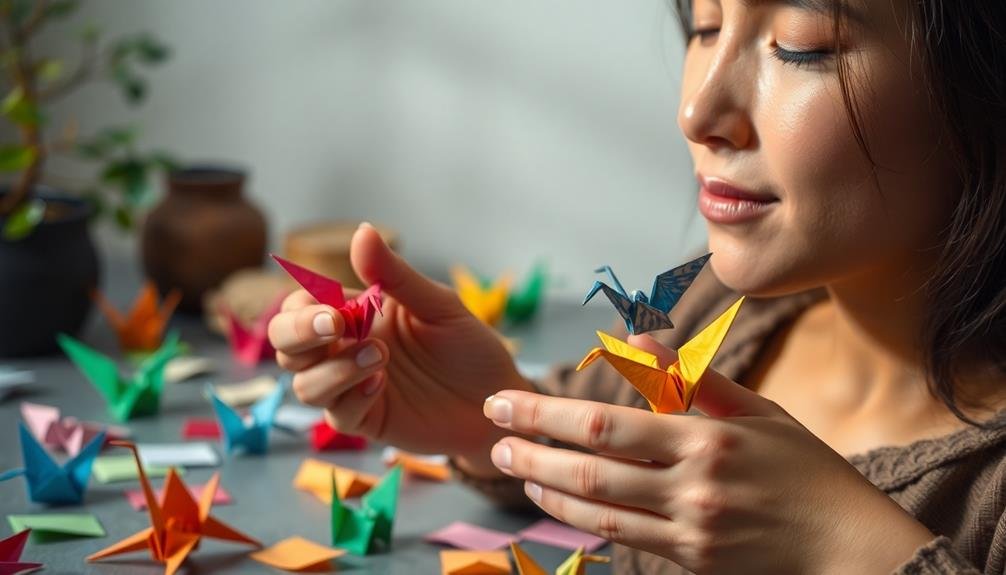
Paper folding offers a unique blend of mental focus and creative expression that can greatly improve your emotional balance. As you engage in the repetitive, mindful movements of origami, you'll activate multiple brain areas, enhancing cognitive flexibility and emotional regulation. The process induces a meditative state, lowering stress hormones while boosting feel-good neurotransmitters. You'll find yourself absorbed in the present moment, distracting from daily worries and providing a sense of accomplishment. This portable anxiety management tool not only cultivates patience and perseverance but also serves as a creative outlet for emotional expression. Discover how this ancient art form can transform your mental landscape.
The Science Behind Paper Folding
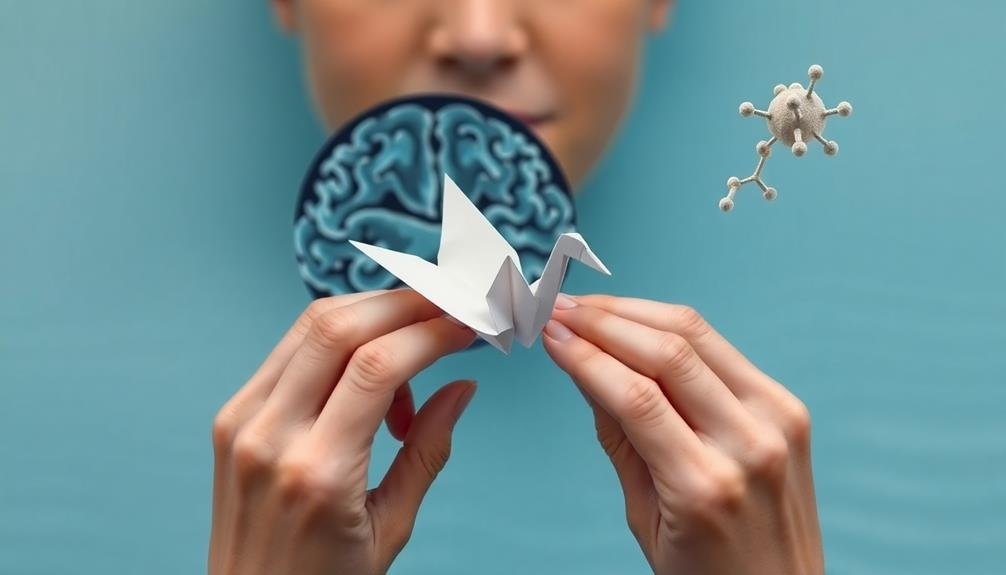
In recent years, researchers have uncovered surprising links between paper folding and emotional well-being. Studies show that the act of folding paper engages multiple areas of your brain, promoting cognitive flexibility and reducing stress. When you focus on creating precise folds, you're activating the prefrontal cortex, which is responsible for executive functions like decision-making and emotional regulation.
The repetitive nature of paper folding induces a meditative state, similar to mindfulness practices. This state lowers cortisol levels, your body's primary stress hormone, while increasing the production of serotonin and dopamine, neurotransmitters associated with happiness and relaxation.
As you manipulate the paper, you're also enhancing your fine motor skills and hand-eye coordination, which can improve overall brain function.
Moreover, the tangible results of your folding efforts provide a sense of accomplishment and control. This can be particularly beneficial if you're feeling overwhelmed or anxious.
The process of transforming a flat sheet into a three-dimensional object mirrors the concept of psychological transformation, reinforcing your ability to create positive change in your life through small, deliberate actions.
Mindfulness Through Repetitive Movements
Through the rhythmic motions of folding paper, you can cultivate a deep sense of mindfulness. As you focus on each crease and fold, your mind becomes absorbed in the present moment, letting go of worries and distractions. This repetitive action serves as a form of moving meditation, allowing you to enter a state of flow where time seems to slow down.
The act of paper folding engages both your hands and mind, creating a powerful connection between your thoughts and physical movements. As you repeat these motions, you'll notice your breathing becomes more regulated, and your body relaxes. This practice can help reduce stress, anxiety, and even improve your overall emotional well-being.
To fully embrace mindfulness through paper folding:
- Set an intention before you begin, focusing on what you hope to achieve emotionally.
- Pay close attention to the texture of the paper and the sound of each fold.
- Observe your thoughts without judgment, gently returning your focus to the folding process.
Stress Reduction and Origami
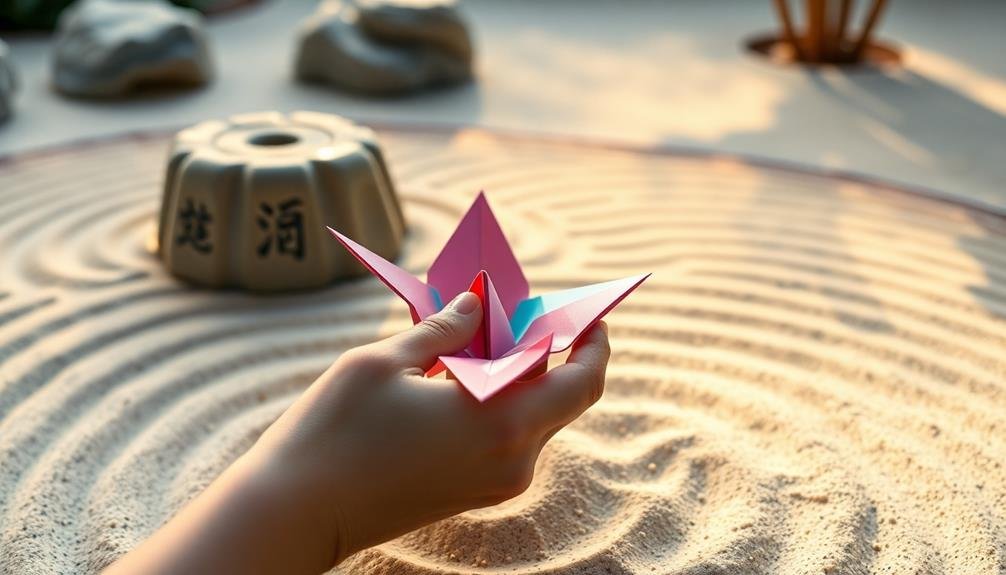
You'll find that origami offers a unique path to stress reduction through its focus on creation.
As you fold paper into intricate shapes, you're engaging in a mindful activity that can calm your thoughts and emotions.
This practice of paper folding allows you to center your attention on the present moment, providing a respite from daily worries and promoting emotional balance.
Calming Through Focused Creation
Diving into the world of origami can offer a powerful antidote to stress and anxiety. As you immerse yourself in the art of paper folding, you'll find that your mind becomes focused on the task at hand, allowing worries and distractions to fade away.
This concentrated attention on creating something beautiful and intricate can be incredibly calming, promoting a sense of mindfulness and presence. The process of folding paper demands your full attention, encouraging you to be fully present in the moment.
As you follow the steps and watch your creation take shape, you'll experience a sense of accomplishment and pride. This focused creation can lead to a state of flow, where time seems to stand still, and you become completely absorbed in the activity.
Here are three ways origami promotes emotional balance through focused creation:
- Enhances concentration and mindfulness
- Provides a sense of control and accomplishment
- Encourages patience and perseverance
Mindfulness in Paper Folding
Origami offers a unique gateway to mindfulness, inviting you to focus intently on each fold and crease. As you engage in this ancient art form, you'll find yourself naturally entering a state of present-moment awareness. The repetitive motions and careful attention required for each step help quiet your mind, pushing aside worries and distractions.
When you're folding paper, you're compelled to concentrate on the task at hand. This singular focus acts as a form of moving meditation, allowing you to let go of stress and anxiety. You'll notice your breathing slowing down and your muscles relaxing as you immerse yourself in the process.
The tactile nature of origami also enhances mindfulness. Feeling the paper between your fingers, observing its texture, and hearing the soft sound of each fold all contribute to a multi-sensory experience that anchors you in the present.
This heightened awareness can extend beyond your origami session, helping you become more attuned to your surroundings and emotions throughout the day.
Boosting Focus and Concentration
You'll find that origami's repetitive folding actions can cultivate mindfulness, helping you stay present in the moment.
As you concentrate on creating intricate paper designs, you're naturally distracted from negative thoughts and worries.
This focused practice also enhances your hand-eye coordination, sharpening your overall attentiveness and ability to concentrate on tasks.
Mindfulness Through Repetitive Actions
Engaging in repetitive actions like paper folding can be a gateway to mindfulness, boosting your focus and concentration. As you fold paper, you're naturally drawn into the present moment, focusing on each crease and fold.
This repetitive process helps quiet your mind, allowing you to let go of distracting thoughts and worries. The rhythmic nature of paper folding encourages a state of flow, where you're fully immersed in the task at hand.
You'll find your breathing becomes more regular and your body relaxes as you settle into the meditative practice. This mindful state can have lasting effects, improving your ability to concentrate on other tasks throughout the day.
Here are three ways paper folding promotes mindfulness:
- Anchors your attention to the present moment
- Creates a sense of flow and timelessness
- Encourages a mind-body connection through tactile engagement
Distracting From Negative Thoughts
Beyond its mindfulness benefits, paper folding serves as a powerful tool for distracting from negative thoughts. When you're caught in a spiral of worry or self-doubt, engaging in origami can redirect your focus to the present moment. As you concentrate on intricate folds and precise creases, your mind shifts away from troubling thoughts, providing a temporary respite from anxiety.
This distraction technique isn't just a Band-Aid solution; it's a way to interrupt negative thought patterns and give your mind a chance to reset. You'll find that as you immerse yourself in the folding process, your brain becomes occupied with problem-solving and spatial reasoning, leaving less room for rumination.
Moreover, paper folding can boost your focus and concentration skills. The act of following step-by-step instructions and paying attention to detail strengthens your ability to concentrate on a single task.
This improved focus can carry over into other areas of your life, helping you stay present and engaged in daily activities. By regularly practicing origami, you're not only creating beautiful art but also training your mind to better manage distractions and maintain emotional balance.
Improving Hand-Eye Coordination
Paper folding's intricate nature demands precise movements, making it an excellent exercise for improving hand-eye coordination. As you fold paper, you're training your brain to synchronize visual input with physical actions, enhancing your overall dexterity. This skill translates into everyday tasks, from typing on a keyboard to playing musical instruments.
When you engage in paper folding, you're not just creating art; you're also strengthening neural pathways that connect your eyes, hands, and brain. The more you practice, the more efficient these connections become, leading to improved coordination in various aspects of your life.
Here's how paper folding can boost your hand-eye coordination:
- Develops fine motor skills through precise creasing and folding
- Enhances spatial awareness by manipulating 2D objects into 3D forms
- Improves bilateral coordination by using both hands simultaneously
Creativity as Emotional Outlet
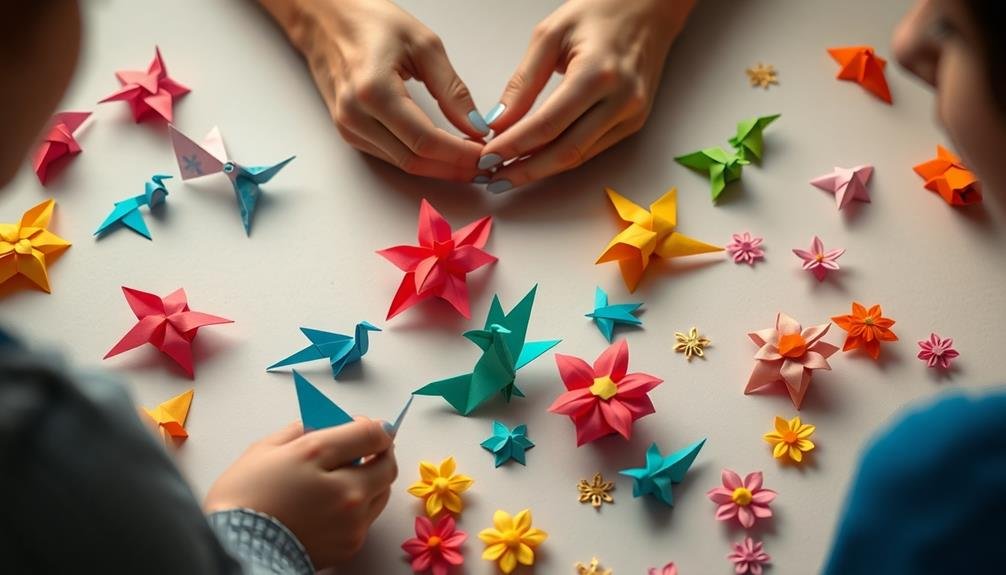
For many people, artistic expression serves as a powerful emotional outlet. When you fold paper, you're engaging in a creative process that can help you channel your emotions constructively. As you transform a flat sheet into a three-dimensional object, you're also giving shape to your feelings, making them tangible and easier to process.
Origami and paper folding allow you to express yourself without the pressure of producing a masterpiece. There's no need for expensive materials or advanced artistic skills. You can experiment freely, letting your emotions guide your hands as you create. This process can be particularly beneficial when you're dealing with stress, anxiety, or other challenging emotions.
As you focus on the folds and creases, you'll find your mind clearing, giving you space to reflect on your feelings. The repetitive nature of folding can induce a meditative state, helping you achieve emotional balance.
Additionally, the sense of accomplishment you feel upon completing a paper creation can boost your mood and self-esteem, providing a positive outlet for negative emotions.
Tangible Results and Self-Esteem
After completing a paper folding project, you're left with a tangible result of your efforts. This physical representation of your creativity and skill can greatly boost your self-esteem.
Unlike many digital or ephemeral activities, paper folding provides a lasting object you can hold, display, or gift to others. This concrete outcome serves as a reminder of your capabilities and progress.
As you develop your paper folding skills, you'll notice improvements in your creations over time. This visible growth can enhance your confidence and motivate you to tackle more challenging projects.
The sense of accomplishment you feel when mastering a difficult fold or completing a complex model can have a positive ripple effect on other areas of your life.
Paper folding's impact on self-esteem extends beyond the finished product:
- It cultivates patience and perseverance
- It encourages problem-solving and spatial reasoning
- It fosters a growth mindset by emphasizing practice and improvement
Social Connections in Paper Folding
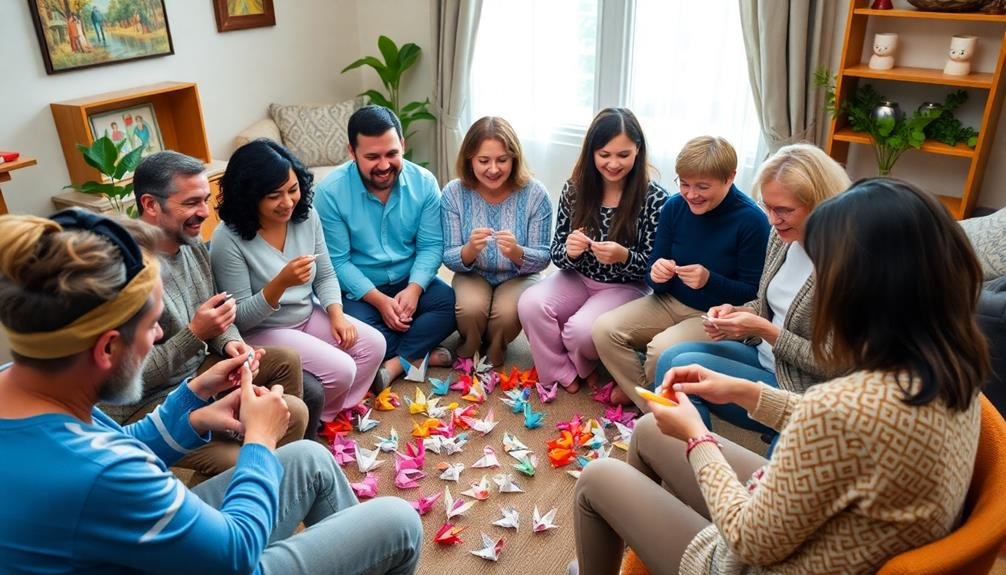
Paper folding can be a social activity that strengthens connections with others.
You'll find opportunities to engage in group folding activities, where you can learn new techniques and share experiences with fellow enthusiasts.
Group Folding Activities
While folding paper can be a solitary pursuit, engaging in group folding activities can amplify its emotional benefits. You'll find that sharing this creative process with others fosters a sense of community and belonging.
Whether you're participating in a local origami club or joining an online folding workshop, you'll connect with like-minded individuals who share your passion.
Group folding sessions offer unique opportunities for social interaction and emotional growth. You'll learn new techniques from others, exchange ideas, and collaborate on larger projects.
These shared experiences can boost your confidence and self-esteem as you receive encouragement and recognition from your peers.
To maximize the emotional benefits of group folding activities:
- Embrace vulnerability by sharing your creations and asking for feedback
- Practice active listening and offer constructive suggestions to others
- Celebrate collective achievements and support each other's progress
Sharing Origami Creations
Sharing your origami creations can be a powerful way to forge social connections and deepen your emotional engagement with the craft. When you display your finished pieces, you're inviting others into your world of creativity and skill. This act of sharing can boost your confidence and self-esteem, especially when you receive positive feedback.
Consider joining online origami communities or local clubs where you can showcase your work and learn from others. These platforms provide opportunities to exchange ideas, techniques, and inspiration. You'll find that the origami community is often supportive and encouraging, which can enhance your emotional well-being.
Don't hesitate to gift your origami creations to friends and family. This gesture can strengthen relationships and bring joy to both the giver and receiver.
You might even consider teaching others how to fold simple models, fostering a sense of connection through shared learning experiences.
Portable Anxiety Management Tool
When anxiety strikes, having a portable tool at your disposal can make all the difference. Origami serves as an excellent portable anxiety management tool, easily accessible whenever you need it. You can carry a small pack of origami paper in your bag or pocket, ready to fold at a moment's notice. The act of folding paper requires focus and concentration, effectively redirecting your mind from anxious thoughts to the task at hand.
As you engage in origami during stressful moments, you'll find that it offers several benefits:
- Mindfulness: The repetitive motions of folding paper anchor you to the present moment, reducing worry about the future or rumination about the past.
- Tactile stimulation: The physical sensation of paper between your fingers can be grounding, helping to calm your nervous system.
- Sense of accomplishment: Completing an origami figure, no matter how simple, provides a tangible result and boosts your confidence.
Incorporating Colors for Mood

The colors you choose for your origami creations can significantly impact your mood and emotional state. When selecting paper for your folding projects, consider the psychological effects of different hues.
Warm colors like red, orange, and yellow tend to evoke feelings of energy, enthusiasm, and warmth. They're ideal for boosting your mood when you're feeling low or need motivation.
Cool colors such as blue, green, and purple often promote calmness, relaxation, and tranquility. You might opt for these shades when you're feeling stressed or overwhelmed.
Pastel tones can create a sense of softness and comfort, while bright, vibrant colors can stimulate creativity and excitement.
Try experimenting with color combinations to achieve specific emotional effects. For instance, pair a calming blue with an energizing yellow to balance relaxation and positivity.
You can also use color gradients or patterned paper to add visual interest and complexity to your origami, which may help distract your mind from negative thoughts.
As you fold, focus on the colors and how they make you feel. This mindful approach can enhance the therapeutic benefits of origami and help you better manage your emotions.
From Simple to Complex Folds
Origami's beauty lies in its progression from simple to complex folds. As you begin your journey, you'll start with basic folds like the valley and mountain folds. These fundamental techniques are the building blocks of more intricate designs.
As you practice, you'll find yourself naturally advancing to intermediate folds like the squash fold and inside reverse fold.
Don't rush the process; each fold teaches you valuable lessons about patience and precision. As your skills improve, you'll tackle more complex models that require multiple steps and advanced techniques. This progression mirrors personal growth and emotional development.
The journey from simple to complex folds offers deeper insights:
- Patience: Complex folds require time and focus, teaching you to slow down and be present.
- Problem-solving: As models become more intricate, you'll develop creative solutions to challenges.
- Self-confidence: Mastering difficult folds boosts your self-esteem and encourages you to tackle other life obstacles.
Frequently Asked Questions
Can Paper Folding Help With Specific Mental Health Conditions Like Depression or ADHD?
Paper folding can potentially help with depression and ADHD. It's a mindful activity that encourages focus and relaxation. You'll find it can reduce stress, improve concentration, and boost your mood. Try incorporating origami into your daily routine.
Are There Age Restrictions for Using Origami as an Emotional Balance Technique?
You'll find origami suitable for all ages. It's not restricted to any specific group. Whether you're a child or senior, you can enjoy its emotional benefits. Start with simpler designs if you're new, progressing as you gain confidence.
How Long Should One Practice Paper Folding Daily for Optimal Emotional Benefits?
You'll benefit most from 15-30 minutes of daily paper folding. Start with shorter sessions and gradually increase. Listen to your body and mind; if you're feeling calmer and more focused, you've found your ideal practice time.
Can Digital Origami or Virtual Paper Folding Provide Similar Emotional Balance Benefits?
You'll find digital origami can offer some emotional benefits, but it's not as effective as physical paper folding. You're missing out on tactile sensations and real-world engagement that contribute considerably to the calming effects of traditional origami.
Are There Any Potential Negative Effects of Excessive Paper Folding on Emotions?
While paper folding can be calming, overdoing it might lead to frustration or obsession. You'll risk neglecting other activities, potentially isolating yourself. It's important to maintain balance and not rely solely on origami for emotional regulation.
In Summary
You've discovered a powerful yet simple tool for emotional balance in paper folding. It's not just a craft; it's a mindfulness practice that can reduce stress, boost focus, and release creativity. Whether you're making simple shapes or complex designs, you're engaging your mind and hands in a calming, portable activity. Don't underestimate the power of this ancient art form. Embrace paper folding as your go-to method for finding peace and balance in your daily life.



Leave a Reply