
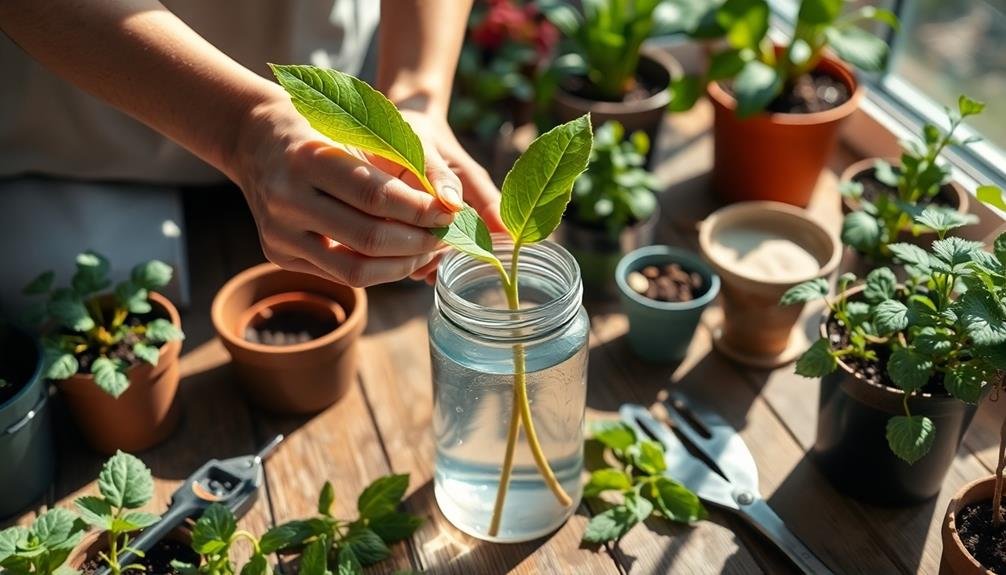
Looking to ease anxiety through plant propagation? Try these three techniques: water propagation, leaf cutting, and air layering. Water propagation is perfect for beginners, simply place stem cuttings in water and watch roots grow. Leaf cutting works well for succulents, allowing you to grow new plants from a single leaf. For woody plants, air layering is an advanced method that encourages roots to form on stems while still attached to the parent plant. Each technique offers a unique, hands-on approach to nurturing new life, providing a calming and rewarding experience. Discover which method suits your green thumb and start your journey to a more relaxed, plant-filled life.
Key Takeaways
- Water propagation offers a simple, low-stress method for beginners to multiply plants and reduce anxiety.
- Leaf cutting propagation provides a hands-on, meditative activity that can calm nerves and promote mindfulness.
- Air layering, while advanced, can be a rewarding long-term project to focus on during anxious periods.
- Regular plant care routines associated with propagation techniques can create a sense of stability and purpose.
- Watching new roots and plants grow from propagation efforts can boost mood and instill a sense of accomplishment.
Water Propagation
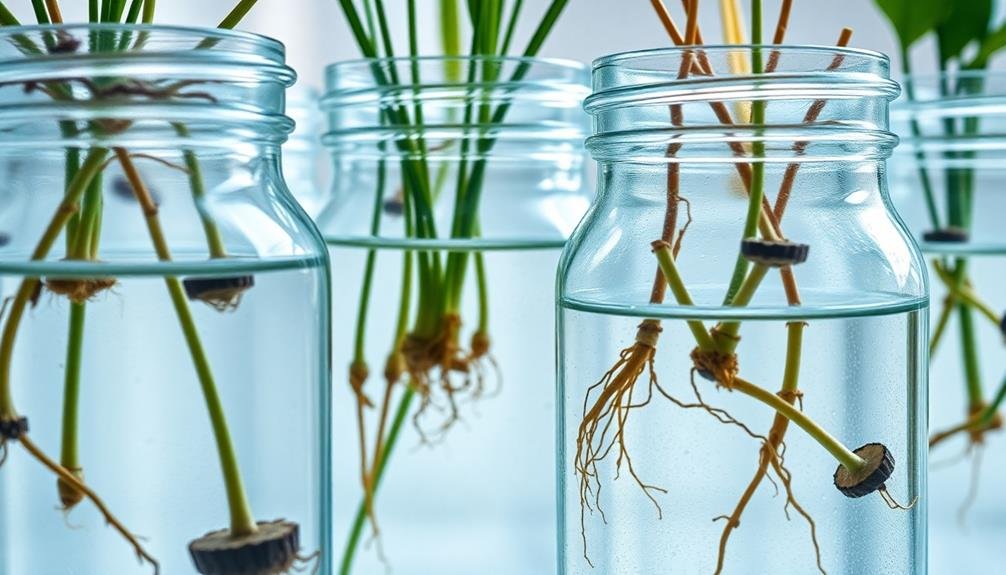
Water propagation is often the easiest method for beginners to start multiplying their plants. This technique involves placing stem cuttings in water to encourage root growth before transplanting them into soil. You'll need a clean container, fresh water, and a healthy cutting from your desired plant.
To begin, select a stem with at least two leaf nodes and cut it just below a node using sterilized scissors. Remove the lower leaves, leaving only the top ones intact. Place the cutting in a container filled with room temperature water, ensuring the nodes are submerged but the remaining leaves stay above water.
Position your container in a bright, indirect light location and change the water every few days to prevent bacterial growth. Within a few weeks, you'll notice roots developing from the submerged nodes. Once the roots reach about an inch long, it's time to transplant your cutting into soil.
Water propagation can be a calming and rewarding process, allowing you to watch your plants grow new roots with minimal effort. It's an excellent way to expand your plant collection while reducing stress and anxiety through nurturing new life.
Leaf Cutting Method
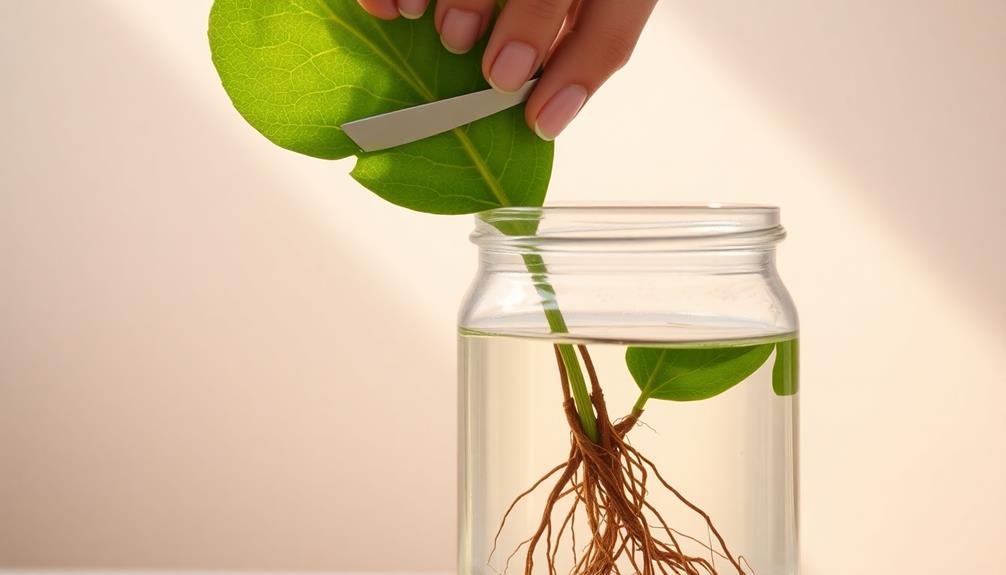
Occasionally, the leaf cutting method proves to be an effective way to propagate certain plant species, particularly succulents and some houseplants. This technique involves removing a healthy leaf from the parent plant and encouraging it to develop roots and grow into a new plant.
To start, select a mature, undamaged leaf and gently twist or cut it off at the base. Allow the cut end to callus over for a day or two, which helps prevent rot.
Next, prepare a well-draining potting mix and lightly moisten it. Place the leaf, cut-side down, on the surface of the soil. You can also insert the cut end slightly into the soil for better stability.
Keep the soil slightly moist but not waterlogged, as excessive moisture can cause the leaf to rot. Place the container in a warm, bright location with indirect sunlight.
Within a few weeks, you'll notice tiny roots and new plantlets forming at the base of the leaf. Once the new plants are large enough, carefully separate them from the original leaf and transplant them into individual pots.
Air Layering Technique
While leaf cutting works well for some plants, air layering is a more advanced propagation method suitable for woody shrubs and trees.
You'll find this technique particularly useful for plants that are difficult to root through other methods.
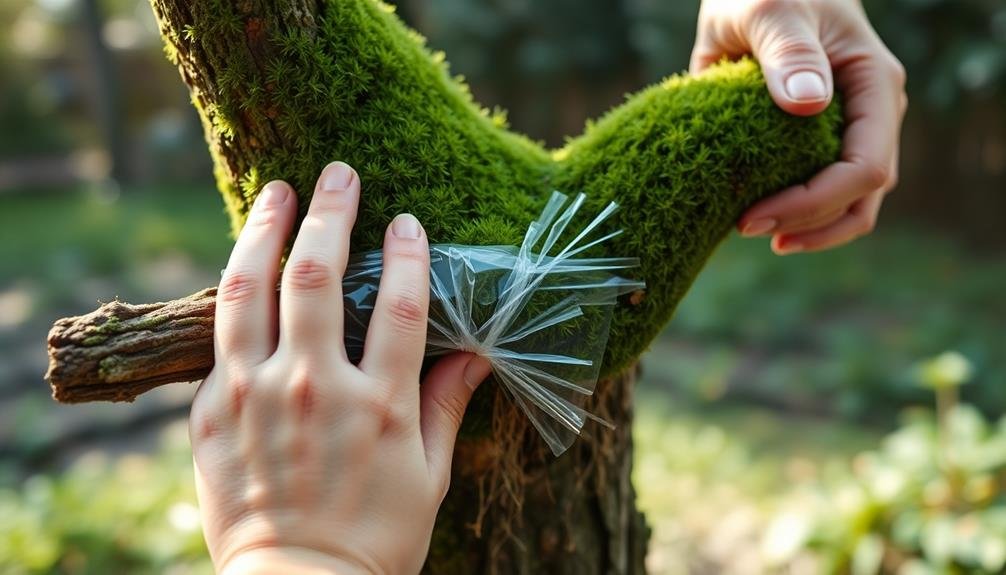
To begin air layering, choose a healthy stem and remove a ring of bark about an inch wide.
Wrap the exposed area with damp sphagnum moss, then cover it with plastic wrap to retain moisture.
Secure both ends with twist ties or tape.
Over time, roots will form in the moss-covered area.
Once roots are visible through the plastic, cut the stem below the new root ball and pot your new plant.
This process can take several weeks to months, depending on the species.
It's an excellent way to propagate large plants without the space constraints of other methods.
Air layering works well for plants like rubber trees, fiddle leaf figs, and magnolias.
It's a low-stress technique that allows the new plant to receive nutrients from the parent while developing its own root system.
You'll enjoy watching the progress and anticipating your new plant's growth.
Frequently Asked Questions
How Does Plant Propagation Specifically Help Reduce Anxiety?
Plant propagation can reduce your anxiety by providing a calming, focused activity. You'll feel a sense of accomplishment as you nurture new life. It's a mindful process that helps you stay present and distracted from worries.
Can Propagation Be Done With Any Type of Plant?
You can propagate many plants, but not all. Some are easier than others. Try herbs, succulents, or houseplants for best results. Research your specific plant's needs, as methods vary. Don't be discouraged if it doesn't work every time.
What Are the Best Plants for Beginners to Start Propagating?
You'll find success with easy-to-propagate plants like pothos, spider plants, and succulents. They're forgiving and root quickly in water or soil. Start with these, and you'll gain confidence before trying more challenging varieties.
How Long Does It Typically Take to See Results From Propagation?
You'll see results from propagation in varying timeframes. Some plants root in days, while others take weeks or months. It depends on the plant species, propagation method, and growing conditions. Be patient and consistent for success.
Are There Any Risks or Potential Drawbacks to Plant Propagation?
You might face risks like disease spread, pest infestations, or genetic weakening. Overcrowding can stunt growth, and some methods may fail. You'll need patience and space. Propagation can also be time-consuming and potentially frustrating for beginners.
In Summary
You've now learned three powerful plant propagation techniques to help ease your anxiety. Whether you're drawn to the soothing water method, the satisfying leaf cutting approach, or the fascinating air layering process, you'll find a new sense of calm as you nurture new life. Don't hesitate to try these methods and watch your plant collection grow. Remember, propagation isn't just about multiplying plants; it's about cultivating peace of mind and connecting with nature.




Leave a Reply