

Playdough isn't just for kids—it's a powerful tool for managing adult anxiety. Start by gathering high-quality, non-toxic playdough and simple tools like rolling pins and cookie cutters. Engage in calming kneading techniques, such as palm kneading and finger pressing, to release tension and focus your mind. Try anxiety-busting sculpting exercises like creating a worry jar or strength totem to symbolically manage your concerns. Don't forget mindful color mixing, which combines breathing exercises with tactile sensations for enhanced relaxation. These techniques offer a hands-on approach to reducing stress and promoting mindfulness. Discover how this simple, malleable medium can transform your anxiety management routine.
Understanding Playdough's Anxiety-Reducing Properties
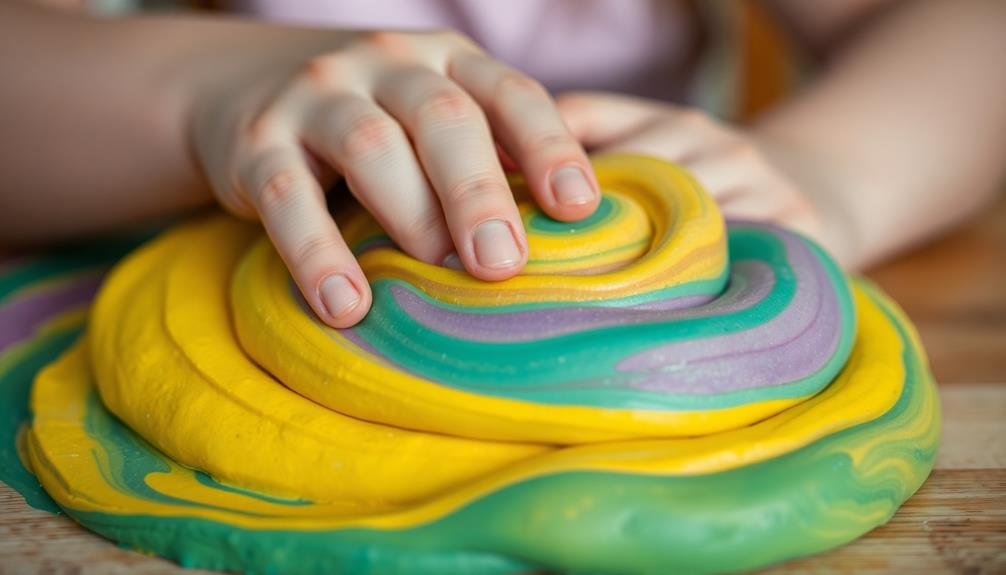
Kneading, squeezing, and molding playdough can greatly reduce anxiety levels. This tactile activity engages your senses and redirects your focus from anxious thoughts to the present moment. As you manipulate the pliable material, you're employing a form of mindfulness that grounds you in the here and now.
Playdough's effectiveness stems from its ability to stimulate your body's relaxation response. The repetitive motions involved in working with playdough can lower your heart rate and blood pressure, promoting a sense of calm. Additionally, the act of creating shapes or figures provides a constructive outlet for nervous energy, helping to dissipate tension.
The malleability of playdough also offers a sense of control, which is often lacking when you're feeling anxious. You have the power to shape, change, and recreate at will, fostering a feeling of mastery over your environment.
The vibrant colors of playdough can also positively impact your mood, as color therapy has been shown to influence emotional states.
Moreover, playdough's non-toxic, safe nature makes it an accessible tool for anxiety relief that you can use virtually anywhere, anytime.
Essential Supplies for Playdough Therapy
Preparedness is key when starting on playdough therapy for anxiety relief. You'll need to gather a few essential supplies to make the most of your experience. First and foremost, invest in high-quality playdough. Look for non-toxic, soft, and pliable options that won't dry out quickly. You can opt for store-bought varieties or make your own using simple ingredients like flour, salt, and water.
Next, consider adding tools to enhance your playdough therapy sessions. A rolling pin, plastic knife, and cookie cutters can help you create various shapes and textures. Don't forget about texture mats or small objects like beads or buttons to press into the dough for added sensory stimulation.
To keep your workspace clean and organized, grab a plastic mat or tray to contain the playdough. This will also make cleanup a breeze.
If you're planning to use playdough therapy on the go, invest in small, airtight containers to keep your dough fresh and portable.
Lastly, consider incorporating essential oils into your playdough for aromatherapy benefits. Lavender, chamomile, or bergamot can enhance relaxation during your anxiety-busting sessions.
Calming Kneading and Rolling Techniques
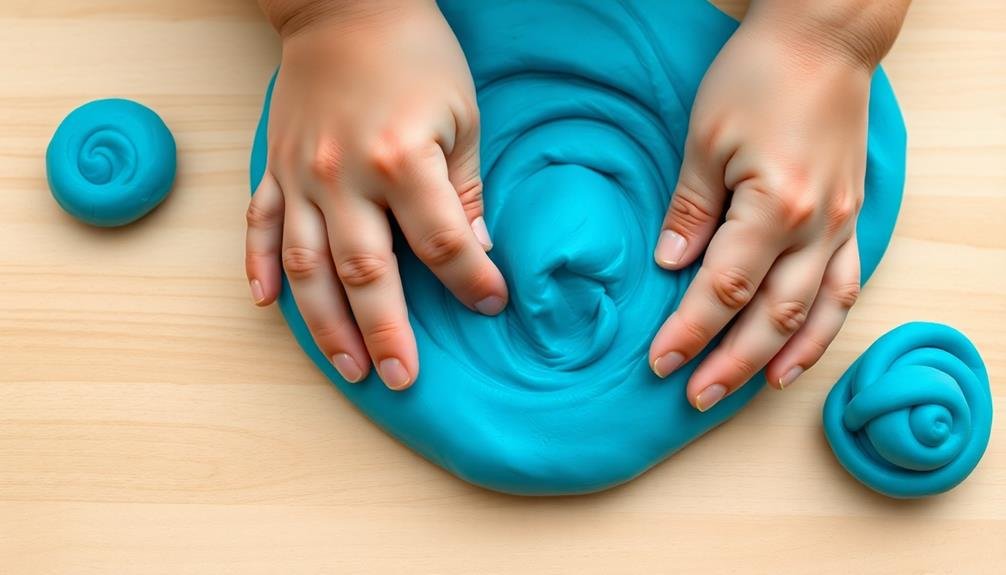
Now that you've gathered your supplies, it's time to explore the soothing world of playdough manipulation. Begin with gentle kneading, using your palms to press and fold the dough repeatedly. This rhythmic motion helps release tension and focuses your mind on the present moment.
Next, try rolling techniques to further calm your nerves. Use a rolling pin or your hands to flatten the dough into various shapes. The smooth, repetitive motion can be incredibly relaxing.
Here's a table of calming techniques and their benefits:
| Technique | Benefit |
|---|---|
| Palm kneading | Releases tension |
| Finger pressing | Improves focus |
| Rolling pin flattening | Promotes relaxation |
| Hand rolling | Enhances mindfulness |
| Coil making | Boosts creativity |
As you practice these techniques, pay attention to the texture and temperature of the playdough. Notice how it changes as you work with it, becoming warmer and more pliable. This sensory experience can help ground you in the present, reducing anxiety and promoting a sense of calm.
Remember to breathe deeply and slowly as you manipulate the dough, syncing your movements with your breath for maximum relaxation.
Anxiety-Busting Sculpting Exercises
Sculpting's therapeutic power extends beyond simple kneading and rolling. When you're feeling anxious, try these sculpting exercises to channel your energy and calm your mind.
Start by creating a small ball of playdough and gradually shape it into a form that represents your current emotional state. As you mold the dough, focus on transferring your anxious feelings into the sculpture, allowing yourself to physically manifest and then release your worries.
For a more structured approach, try these anxiety-busting sculpting exercises:
- Worry Jar: Sculpt a jar and fill it with tiny playdough "worries." As you create each worry, acknowledge it, then place it in the jar, symbolically containing your anxieties.
- Calming Landscape: Create a serene scene using playdough, incorporating elements like trees, water, or mountains that you find soothing.
- Strength Totem: Craft a small figurine or symbol that represents your inner strength and resilience. Keep it nearby as a tactile reminder of your ability to overcome challenges.
These exercises encourage mindfulness and provide a tangible outlet for your emotions, helping to alleviate anxiety through creative expression and focused attention.
Mindful Playdough Color Mixing
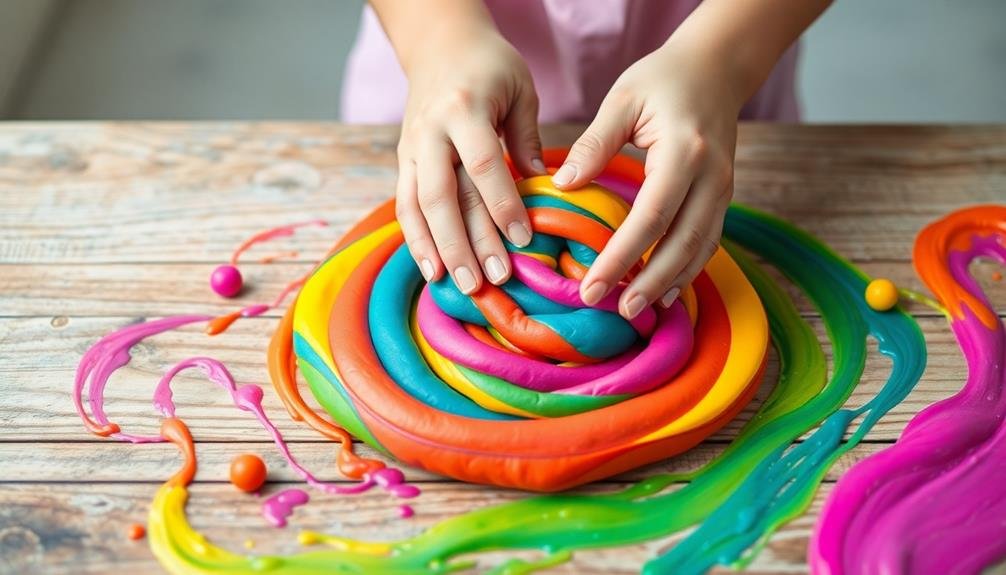
As you explore deeper into playdough techniques, color mixing emerges as a powerful tool for mindfulness and anxiety relief. This process engages your senses and focuses your attention on the present moment, effectively distracting you from anxious thoughts.
Start with three primary colors: red, blue, and yellow. Take small amounts of each and begin mixing them slowly, observing how they blend and create new hues. Pay close attention to the gradual color changes as you knead the playdough. Notice the smoothness of the dough and the resistance it offers as you work it with your hands.
Try creating secondary colors by mixing equal parts of two primaries. Watch as purple, green, and orange emerge from your efforts. Challenge yourself to create specific shades by adjusting the ratios of colors you're mixing. This requires concentration and experimentation, further anchoring you in the present.
As you mix, focus on your breathing. Inhale deeply as you separate colors, and exhale slowly as you combine them. This rhythmic breathing, coupled with the tactile sensation of the playdough, can greatly reduce anxiety and promote a sense of calm.
Frequently Asked Questions
Can Playdough Therapy Be Effective for Children With Autism Spectrum Disorders?
Yes, playdough therapy can be effective for children with autism spectrum disorders. You'll find it helps improve sensory processing, fine motor skills, and social interaction. It's a versatile tool that can be tailored to each child's specific needs.
Are There Any Potential Allergic Reactions to Consider When Using Playdough?
You should be aware of potential allergies when using playdough. Watch for reactions to wheat, fragrances, or dyes. If you're concerned, opt for hypoallergenic or homemade versions. Always supervise children and stop use if any symptoms occur.
How Long Should a Typical Playdough Therapy Session Last?
You'll typically want to keep your playdough therapy session between 15 to 30 minutes. However, it's flexible; you can extend or shorten it based on your needs and comfort level. Listen to your body and mind's signals.
Can Playdough Therapy Be Combined With Other Anxiety Management Techniques?
Yes, you can combine playdough therapy with other anxiety management techniques. You'll find it works well with deep breathing, mindfulness, or visualization exercises. Don't hesitate to mix and match methods to create a personalized anxiety-busting routine that suits you best.
Is It Possible to Make Anxiety-Reducing Playdough at Home?
Yes, you can easily make anxiety-reducing playdough at home. You'll need flour, salt, water, and essential oils. Mix the ingredients, knead the dough, and add calming scents like lavender or chamomile for extra stress relief.
In Summary
You've now got a toolkit of playdough techniques to combat anxiety. Remember, it's not just child's play – it's a powerful stress-relief method. Whether you're kneading, sculpting, or mixing colors, you're engaging your senses and calming your mind. Don't hesitate to incorporate these exercises into your daily routine. With practice, you'll find yourself reaching for the playdough instead of reaching for worry. Keep exploring and stay calm!



Leave a Reply