

Transform your workshop into a peaceful sanctuary where you'll repurpose discarded materials into beautiful, functional pieces. Start by setting up a well-lit, organized space with essential tools and clear storage solutions. You'll need safety equipment, basic tools like drills and sanders, and a sturdy workbench for your projects. Create distinct zones for different activities, from planning to assembly, and incorporate calming elements like plants and natural light. Connect with fellow crafters through local groups and online communities to share ideas and materials. The journey from trash to treasure offers both creative fulfillment and inner peace – there's so much more to explore in this mindful craft.
The Power of Creative Repurposing

While many view discarded items as waste, creative repurposing transforms trash into meaningful works of art and functional objects. You'll discover that everyday items like glass bottles, wooden pallets, and metal scraps hold unlimited potential for reimagining and reconstruction.
By applying your creative vision, you can turn these overlooked materials into stunning home décor, practical furniture, or innovative garden features.
When you embrace creative repurposing, you'll develop a keen eye for seeing beauty in the broken and possibility in the discarded. You're not just creating something new; you're participating in a sustainable practice that reduces landfill waste and conserves resources.
Whether you're turning old windows into picture frames or transforming tin cans into luminaries, each project helps build a more sustainable future.
The process strengthens your problem-solving skills as you figure out how to adapt and combine different materials. You'll learn to work with various tools, experiment with different techniques, and develop your unique style.
Through repurposing, you're not only crafting objects but also fostering a mindset of resourcefulness and environmental responsibility.
Finding Items Worth Transforming
Successful creative repurposing starts with knowing where to look for the right materials. You'll find valuable items in thrift stores, garage sales, flea markets, and even your own storage spaces.
Look for pieces with solid construction, unique character, or interesting patterns that could enhance your repurposed creation.
When searching, focus on durable materials like hardwood furniture, metal fixtures, glass containers, and quality fabrics. You'll want to avoid items with severe structural damage, extensive rust, or toxic materials like lead paint.
Check local curb alerts and online marketplaces, where people often give away items that could become perfect transformation candidates.
Keep an eye out for these high-potential items: wooden pallets, vintage suitcases, old doors, window frames, mason jars, wine bottles, bicycle parts, and outdated light fixtures.
You'll also find treasure in unexpected places like demolition sites (with permission), restaurant supply stores, and architectural salvage yards.
Consider joining local upcycling groups where members share resources and swap materials.
Remember to inspect each item carefully for stability, cleanability, and transformation potential before bringing it to your workshop.
Setting Up Your Peaceful Workshop
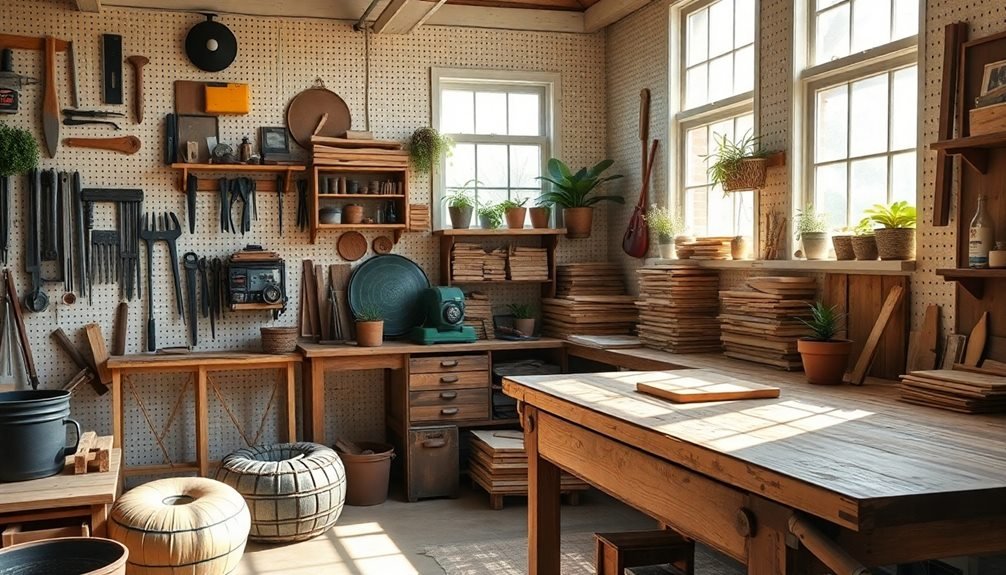
Creating a dedicated workspace sets the foundation for your repurposing journey. You'll need a well-lit area with proper ventilation, especially when working with paints, adhesives, or wood.
Select a space that allows you to leave projects undisturbed while they're in progress, whether it's a garage corner, spare room, or covered patio.
Organize your basic tools on a pegboard or in clear containers: hammers, screwdrivers, pliers, measuring tape, and safety equipment like goggles and gloves.
Set up distinct zones for different activities – cutting, painting, assembly, and storage. You'll want a sturdy workbench that's the right height for comfortable standing or sitting while you work.
Consider storage solutions that keep materials visible yet protected. Install shelving units for larger items and use mason jars or clear bins for smaller components like screws, buttons, or fabric scraps.
Don't forget to create a cleaning station with rags, eco-friendly cleaners, and a small vacuum. Keep your first aid kit accessible and maintain good lighting with both overhead and task lamps to reduce eye strain during detailed work.
Essential Tools and Materials
You'll need proper safety equipment like goggles, gloves, and a dust mask before starting any repurposing project in your workshop.
Your material storage should include clearly labeled bins made from recycled containers, keeping supplies organized and accessible while maintaining the spirit of sustainability.
Essential repurposing tools include a versatile multi-tool, various clamps, and a quality cordless drill to help you transform old items into new treasures.
Basic Workshop Safety Equipment
Before starting on any repurposing project, having the right safety equipment is essential for protecting yourself from potential workshop hazards.
You'll need safety glasses that meet ANSI Z87.1 standards to shield your eyes from flying debris, dust, and chemical splashes. Don't forget to wear a properly fitted dust mask or respirator rated for the materials you're working with, especially when sanding, cutting, or handling chemicals.
Protect your hands with cut-resistant work gloves when handling sharp materials or power tools. For noise protection, keep a pair of earmuffs or earplugs rated at least 25 NRR (Noise Reduction Rating) within reach.
You'll also want steel-toed boots to guard against falling objects and punctures.
Keep a first-aid kit stocked with bandages, antiseptic wipes, and burn treatment supplies in an easily accessible location. Install a fire extinguisher rated for multiple types of fires (Class A, B, and C) near your workspace.
Consider adding an emergency eyewash station if you're working with chemicals. Finally, make certain your workshop has adequate ventilation and lighting to maintain a safe working environment.
Sustainable Material Storage Solutions
Three fundamental storage solutions form the backbone of any sustainable repurposing workshop: modular shelving units, stackable bins, and pegboard systems.
You'll want to invest in adjustable metal shelving units that can handle heavy loads and adapt to your changing needs. These units should feature removable shelves and multiple height options to accommodate materials of various sizes.
For smaller items, opt for clear, stackable storage bins made from recycled materials. Label each bin clearly and organize them by material type, size, or project stage. You'll save countless hours when you can quickly locate items like hardware, fabric scraps, or electrical components.
Your pegboard system serves as both storage and visual inspiration. Install it on available wall space and use hooks, holders, and custom brackets to display frequently used tools and materials.
You can also incorporate upcycled containers – like repurposed mason jars or tin cans – as removable storage solutions that attach to your pegboard.
Don't forget to implement a rotation system: place newer materials at the back and older ones at the front to guarantee you're using resources efficiently and preventing waste through spoilage or forgetting.
Repurposing-Specific Tools Guide
A well-equipped repurposing workshop relies on both standard workshop tools and specialized equipment designed for material transformation.
You'll need essential hand tools including various screwdrivers, pliers, wire cutters, hammers, and wrenches to disassemble and modify items. A quality drill with multiple bits and attachments serves as your primary power tool for creating new connections and mounting points.
For material manipulation, you'll require metal snips, a utility knife, measuring tools, and sandpaper in various grits. A heat gun helps remove adhesives and bend plastics, while wood rasps and files shape both wooden and metal surfaces.
Don't forget safety equipment: protective eyewear, work gloves, and a dust mask are non-negotiable.
Specialized tools for specific materials include glass cutters for repurposing windows, a soldering iron for electronic components, and leather working tools for fabric projects.
You'll also want clamps in various sizes to hold pieces while working, plus a reliable workbench with a sturdy vise. Keep adhesives handy: wood glue, epoxy, and construction adhesive will help join different materials effectively.
Mindful Project Planning
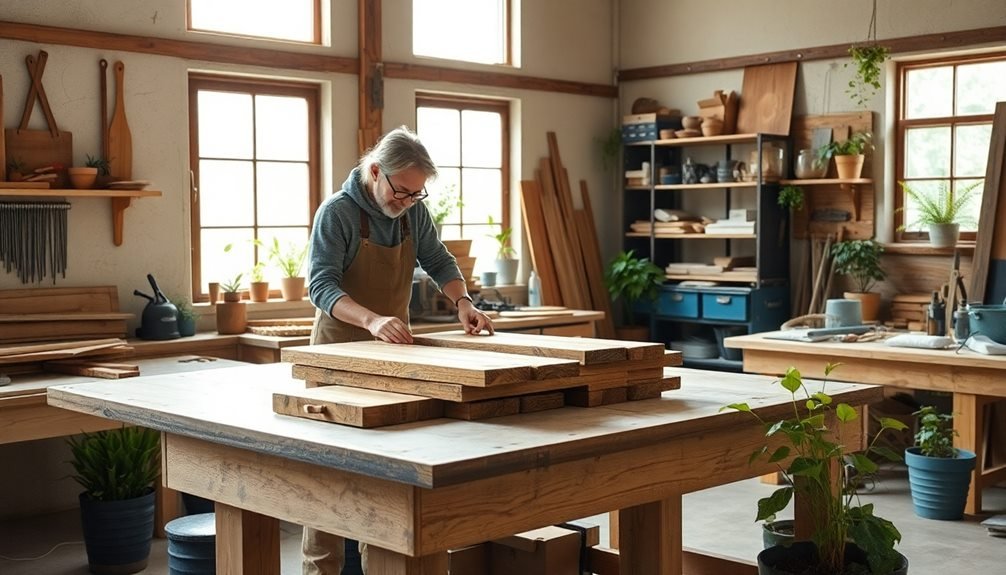
Begin your repurposing journey by establishing clear, achievable project goals that align with your desire to create something meaningful from discarded materials.
You'll find greater success when you map out your projects on paper first, considering both the materials needed and the steps required to transform them.
Creating a dedicated, clutter-free workspace helps maintain the peaceful mindset essential for repurposing projects, allowing you to focus fully on the creative process.
Set Clear Project Goals
Setting clear project goals forms the foundation of any successful repurposing endeavor. When you're transforming discarded items into peaceful art pieces, you'll need specific, measurable objectives to guide your creative process.
Start by defining what you want to achieve with your repurposed creation, whether it's making a meditation bench from reclaimed wood or crafting a peace garden from recycled materials.
Break down your project into smaller, manageable targets that you can track and accomplish. You'll want to establish timelines, identify required materials, and determine the specific skills you'll need to develop.
Consider factors like the item's intended use, durability requirements, and aesthetic elements that will contribute to its peaceful purpose.
Document your goals using the SMART method: Specific, Measurable, Achievable, Relevant, and Time-bound. For instance, rather than saying "I'll make something peaceful," specify "I'll create a meditation corner using repurposed pallets within three weeks."
This approach helps you stay focused, track your progress, and adjust your strategies when needed. Remember to align your goals with your overall vision of promoting peace through sustainable creativity.
Create Peaceful Workspaces
Once you've established your project goals, your workspace environment plays a key role in bringing your peaceful creations to life. Transform your crafting area into a calming sanctuary by decluttering surfaces and organizing tools in easily accessible storage solutions.
Natural lighting can greatly impact your mood, so position your workbench near windows whenever possible.
Consider incorporating elements that engage your senses positively. Add plants to purify the air and create a connection with nature, or play soft instrumental music to maintain focus while working. Choose wall colors that promote tranquility, such as soft blues or gentle greens.
You'll want to guarantee proper ventilation, especially when working with paints, stains, or adhesives.
Create designated zones for different activities: one area for planning and sketching, another for actual construction, and a clean space for finishing touches. Keep your most-used tools within arm's reach to maintain workflow efficiency.
Don't forget to include a comfortable chair or stool that supports proper posture during long crafting sessions. Remember to schedule regular cleaning sessions to maintain this peaceful atmosphere – a tidy workspace helps foster a clear, creative mind.
Therapeutic Upcycling Techniques
Taking everyday discarded items and transforming them into something new can be a powerful form of therapy. You'll find that upcycling helps reduce stress, boosts creativity, and provides a sense of accomplishment.
When you're working with your hands to repurpose materials, your mind focuses on the present moment, creating a natural meditative state that calms anxiety and negative thoughts.
- Start with simple projects: Transform glass jars into candle holders, old magazines into paper beads, or wooden pallets into garden planters. These beginner-friendly projects build confidence.
- Practice mindful material selection: Choose items that spark joy or hold meaningful memories. The emotional connection to your materials enhances the therapeutic benefits of upcycling.
- Create a ritual: Set aside dedicated time for your upcycling projects, play calming music, and arrange your materials thoughtfully. This structured approach maximizes the stress-reducing benefits.
As you develop your upcycling skills, you'll notice improvements in problem-solving abilities and emotional regulation.
The process of transforming discarded items mirrors personal growth, helping you see potential in what others might overlook.
Connecting With Fellow Crafters

Through local craft groups and online communities, you'll discover kindred spirits who share your passion for upcycling and sustainable crafting. These connections offer invaluable opportunities to exchange ideas, learn new techniques, and find inspiration for your repurposing projects.
Join local workshops, craft fairs, and community centers where you can meet fellow crafters face-to-face and participate in collaborative projects.
Social media platforms like Instagram and Pinterest serve as virtual galleries where you can showcase your work and connect with global upcycling enthusiasts. Facebook groups dedicated to specific crafting niches provide spaces for troubleshooting challenges and sharing resource-saving tips.
Don't overlook craft-specific platforms like Ravelry or Etsy, where you'll find specialized communities focused on sustainable making.
Consider starting a monthly crafting circle in your neighborhood or organizing swap meets for craft materials. These gatherings create opportunities to trade unused supplies, share tools, and reduce waste collectively.
You can also participate in online challenges and virtual workshops that focus on repurposing specific materials, helping you build skills while expanding your network of environmentally conscious creators.
Sustaining Your Creative Practice
Building on the momentum of a supportive crafting community, you'll need reliable strategies to maintain your creative energy and motivation. Sustaining your repurposing practice isn't just about having enough materials or time – it's about cultivating habits that keep you inspired and productive over the long term.
- Schedule regular "material exploration" sessions where you'll sort through your collected items, experiment with new combinations, and document ideas that spark your imagination. Set aside at least two hours weekly for this essential practice.
- Create a dedicated workspace that's always ready for crafting. You'll find it easier to maintain momentum when your tools are organized and your materials are easily accessible. Even a small corner of a room can become your creative sanctuary.
- Keep a project journal to track your successes, challenges, and evolving techniques. You'll build a valuable reference guide while reflecting on your growth as an artisan.
Remember to rotate between different types of projects to prevent creative burnout. When you feel stuck, return to simple projects that bring you joy or try teaching a basic technique to another crafter.
These activities will help reinvigorate your creative spirit and sustain your practice.
Frequently Asked Questions
How Do You Price Repurposed Items for Sale at Craft Markets?
Calculate your material costs and labor hours, then multiply by 2-3 for retail markup. You'll want to research local market prices too. Don't undersell – your creative work adds unique value to repurposed items.
Can Repurposing Workshops Be Turned Into a Profitable Business Venture?
You can definitely turn repurposing workshops into a profitable business. You'll need to create engaging classes, charge appropriate fees, build a following, and keep material costs low to maximize your profit margins.
What Insurance Coverage Is Needed for Hosting Repurposing Workshop Sessions?
You'll need general liability insurance, professional liability coverage, property insurance, and worker's compensation if you have employees. Don't forget special event insurance for each workshop to protect against participant injuries.
How Do You Handle Copyright Issues When Repurposing Branded Materials?
You'll need to remove or cover all brand logos/trademarks before repurposing items. Contact companies for permission when using branded materials, or stick to generic items to avoid potential legal complications.
Are There Health Risks From Working With Recycled Materials?
You'll need to watch for mold, rust, and toxic materials when handling recycled items. Always wear protective gear like gloves and masks, and research materials' safety before starting your repurposing projects.
In Summary
You've commenced on a journey that's about more than just transforming objects – it's about crafting peace within yourself. Keep exploring new ways to repurpose items, share your creations with others, and nurture your creative spirit. Remember, your workshop is a sanctuary where sustainability meets serenity. As you continue this mindful practice, you'll find that every piece you transform also transforms you.




Leave a Reply