

Sculpting calms anxious minds through its unique blend of tactile engagement and mindfulness. As you manipulate materials, you're grounded in the present moment, silencing racing thoughts. The repetitive motions and intense focus act as a form of moving meditation, promoting relaxation. You'll experience a sense of control as you shape raw materials into structured artwork, boosting your confidence. Sculpting also rewires your brain, enhancing cognitive function and increasing feel-good neurotransmitters. Whether you're working alone or in a class, this artistic outlet provides stress relief and fosters social connections. Discover how this ancient art form can transform your mental landscape.
The Meditative Nature of Sculpting
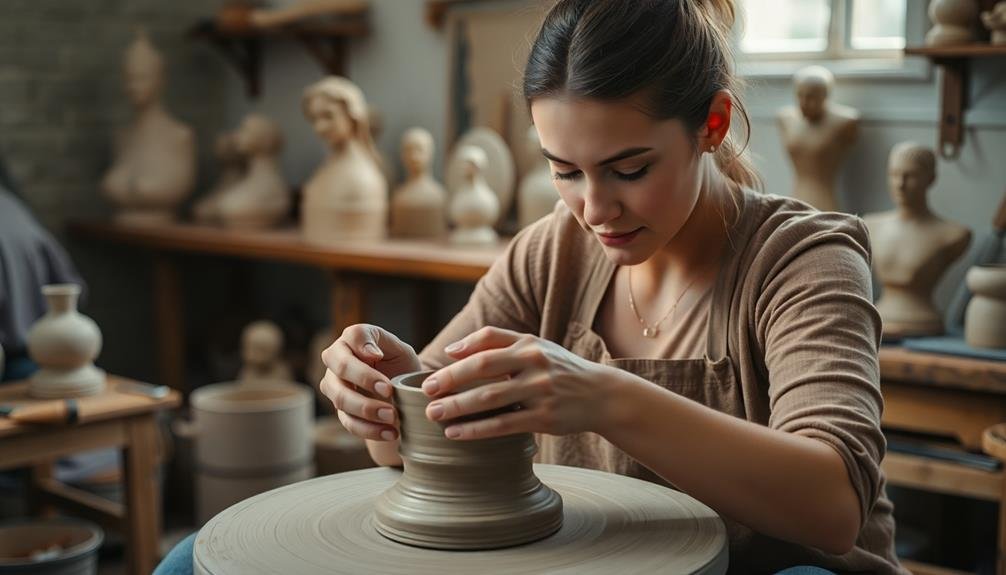
Through the careful manipulation of clay or stone, sculpting offers a unique gateway to mindfulness. As you work with your chosen medium, you'll find your focus narrowing to the present moment, your hands, and the material before you. This intense concentration naturally pushes away intrusive thoughts and worries, allowing your mind to enter a state of flow.
The repetitive motions involved in sculpting, such as kneading clay or chiseling stone, can have a calming effect similar to traditional meditation practices. You'll notice your breathing naturally slowing and becoming more rhythmic as you work. This physical engagement with your art helps ground you in the present, reducing anxiety about the future or rumination about the past.
Sculpting also provides a tactile experience that can be deeply soothing. The sensation of cool clay or smooth stone beneath your fingers creates a connection between your mind and body, fostering a sense of unity and calm.
As you shape your creation, you're not just molding material; you're also shaping your mental state, guiding it towards tranquility and focus.
Tactile Sensations and Grounding
The tactile nature of sculpting offers a powerful grounding experience for those dealing with anxiety. As you work with clay, stone, or other materials, you're engaging multiple senses simultaneously. Your fingers feel the texture and temperature of the medium, while your eyes observe the changes you're making. This sensory immersion can help anchor you in the present moment, pulling your mind away from anxious thoughts.
The physical act of manipulating materials provides a tangible connection to reality. You're not just thinking about creating something; you're actively shaping it with your hands. This concrete interaction can be particularly soothing when anxiety makes you feel disconnected or overwhelmed.
Different sculpting materials offer varied tactile experiences. Soft clay yields easily to your touch, while harder substances like stone require more force and precision.
These diverse sensations can help you become more aware of your body and its capabilities, fostering a sense of control that's often lacking during anxious episodes.
Creative Expression Without Pressure
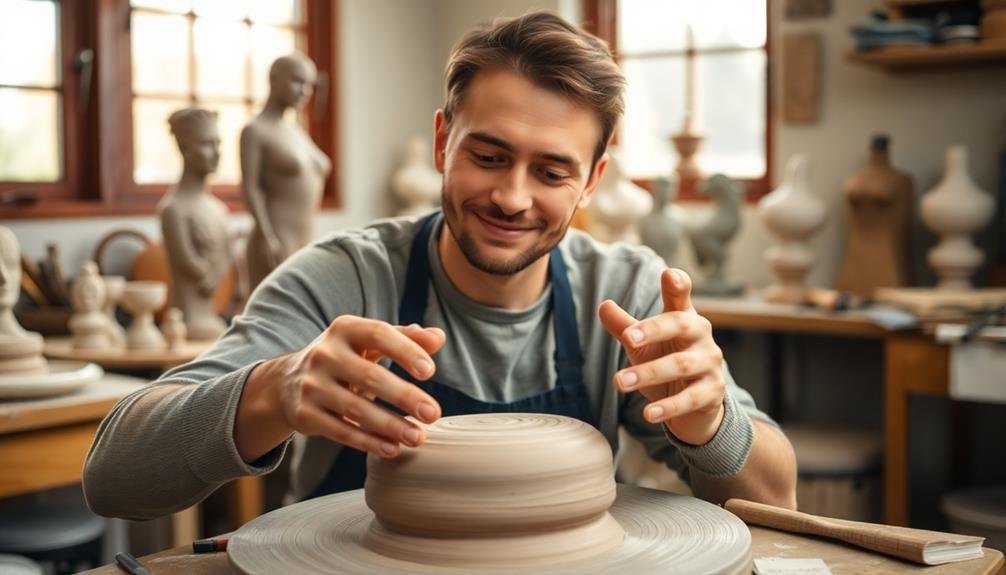
When you approach sculpting as a means of creative expression without pressure, you'll find the freedom to explore without constraints.
There are no right or wrong answers in this form of artistic expression, allowing you to follow your instincts and emotions.
Freedom to Explore
Embracing freedom in sculpting allows you to explore your creativity without the burden of expectations. You're free to experiment with different materials, shapes, and techniques, letting your imagination guide your hands. This unrestricted approach can be incredibly liberating, especially for those struggling with anxiety.
As you sculpt, you'll find yourself trying new ideas and pushing boundaries. You might combine unexpected elements or tackle subjects you've never attempted before. This freedom to explore often leads to surprising discoveries about your artistic abilities and personal style.
The process of exploration in sculpting can also mirror your journey in managing anxiety. Just as you're free to mold clay into any form, you can reshape your thoughts and perceptions. This parallel can be therapeutic, helping you develop a more flexible mindset in dealing with anxious feelings.
Moreover, the freedom to explore in sculpting encourages risk-taking in a safe environment. You can make mistakes, start over, or change direction at any time. This low-stakes creative process can boost your confidence and reduce anxiety about perfectionism in other areas of your life.
No Right Answers
Many artists find solace in the realization that sculpting offers no right or wrong answers. Unlike other pursuits where success is measured by strict criteria, sculpting allows you to express yourself freely without the pressure of meeting specific expectations.
There's no single correct way to shape clay, carve stone, or mold metal. This lack of rigid rules can be incredibly liberating for those struggling with anxiety.
When you're sculpting, you're not competing against anyone else or trying to achieve a predetermined outcome. You're simply creating what feels right to you in that moment. This freedom can help quiet the inner critic that often fuels anxiety.
You're free to experiment, make mistakes, and learn from them without fear of failure.
The absence of right answers in sculpting also encourages mindfulness. As you focus on the tactile sensations and the evolving form before you, your mind naturally shifts away from anxious thoughts.
You're present in the moment, engaged in a process of discovery and self-expression that's uniquely yours.
Process Over Product
Focusing on the process of sculpting, rather than the final product, can greatly reduce anxiety for artists. When you shift your attention to the act of creating instead of worrying about the end result, you'll find that sculpting becomes a more relaxing and enjoyable experience.
This approach allows you to immerse yourself in the tactile sensations of working with clay or other materials, letting your hands explore shapes and textures without judgment.
As you sculpt, try to be present in each moment, observing how the material responds to your touch and how your ideas take form.
Don't fixate on achieving perfection or meeting others' expectations. Instead, embrace the journey of creation and allow yourself to experiment freely.
This mindset can help you overcome creative blocks and self-doubt, as you're no longer burdened by the pressure to produce a masterpiece.
Focusing on the Present Moment
The present moment holds immense power for sculptors grappling with anxiety. As you immerse yourself in the tactile experience of molding clay or carving stone, you're forced to focus on the here and now. This mindfulness practice can effectively silence the anxious thoughts that often plague your mind.
When you're sculpting, you'll find that your attention naturally shifts to the sensations in your hands, the textures you're working with, and the visual changes occurring before you. This intense focus on the present moment can be incredibly calming and grounding.
| Anxiety Symptoms | Sculpting Benefits |
|---|---|
| Racing thoughts | Focused attention |
| Physical tension | Relaxed muscles |
| Feeling overwhelmed | Sense of control |
| Future worries | Present awareness |
Neuroplasticity and Brain Rewiring

Engaging in sculpting doesn't just calm your mind in the moment; it can actually reshape your brain over time. This phenomenon is known as neuroplasticity, your brain's ability to form new neural connections and adapt throughout your life. When you regularly practice sculpting, you're not only creating art but also rewiring your brain.
As you focus on manipulating clay or carving stone, you're activating multiple areas of your brain simultaneously. This includes regions responsible for spatial awareness, fine motor skills, and creativity. Over time, these neural pathways strengthen, potentially improving your overall cognitive function and reducing anxiety.
Sculpting also encourages the production of new neurons, particularly in the hippocampus, which is essential for memory and emotion regulation. This neurogenesis can help counteract the negative effects of chronic stress on your brain.
Additionally, the repetitive, tactile nature of sculpting can increase the production of feel-good neurotransmitters like serotonin and dopamine, further contributing to anxiety reduction.
Stress Relief Through Artistic Outlet
Sculpting offers a powerful outlet for stress relief, allowing you to channel your anxieties into tangible creations. As you mold clay or carve stone, you're engaging in a form of active meditation that can quiet your racing thoughts. The tactile nature of sculpting grounds you in the present moment, helping to break the cycle of worry and rumination.
When you immerse yourself in the artistic process, you're tapping into the flow state, where time seems to stand still and your worries fade away. This creative engagement activates different parts of your brain, providing a much-needed respite from anxiety-inducing thought patterns.
| Benefits of Sculpting | Physical Effects | Mental Effects |
|---|---|---|
| Stress reduction | Lowers blood pressure | Improves focus |
| Emotional expression | Releases muscle tension | Boosts self-esteem |
| Sensory stimulation | Enhances fine motor skills | Increases mindfulness |
Sense of Accomplishment and Control
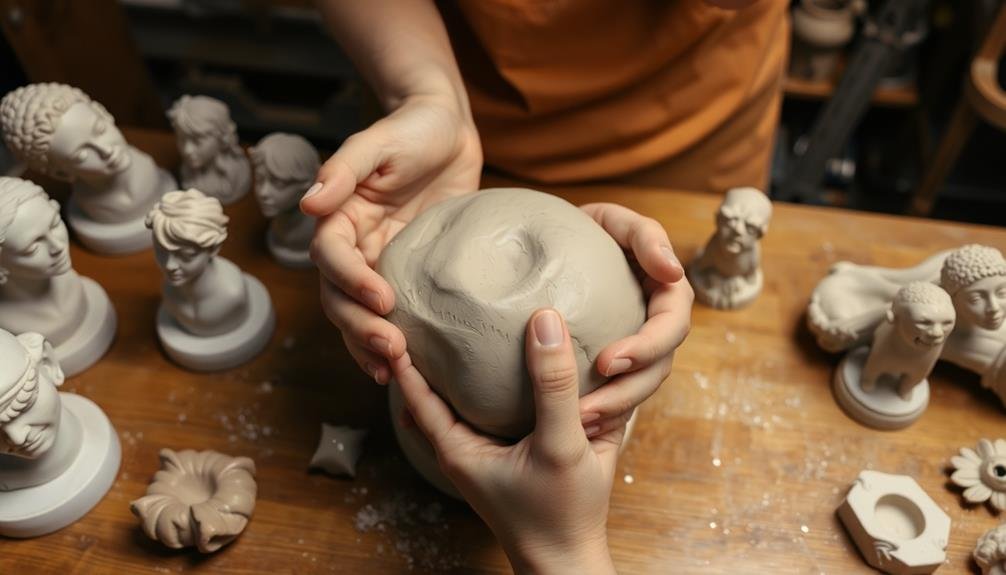
You'll find that sculpting offers more than just stress relief; it provides a powerful sense of accomplishment and control.
As you create tangible results, you'll boost your confidence and witness your skills improve over time.
Tangible Results Boost Confidence
The transformation of raw materials into a tangible artwork provides a powerful sense of accomplishment and control. As you sculpt, you're not just creating art; you're building confidence with every stroke and shape.
Seeing your vision come to life before your eyes reinforces your ability to turn ideas into reality, which can be incredibly empowering for those struggling with anxiety.
Tangible results from sculpting boost your confidence in several ways:
- Immediate feedback: You can see and feel the progress you're making in real-time, providing instant gratification and motivation to continue.
- Physical proof of capability: The finished sculpture serves as a concrete reminder of your skills and creativity, countering self-doubt.
- Measurable improvement: As you practice and refine your techniques, you'll notice your sculptures becoming more sophisticated, offering clear evidence of your growth.
This boost in confidence often extends beyond the art studio, influencing other aspects of your life.
You'll find yourself approaching challenges with a renewed sense of capability, armed with the knowledge that you can create something meaningful from nothing.
Mastering Techniques Builds Self-Esteem
A journey of artistic growth awaits as you explore deeper into sculpting techniques. As you progress, you'll notice a significant boost in your self-esteem. Each new skill you acquire becomes a personal victory, reinforcing your belief in your abilities.
You'll find yourself tackling increasingly complex projects with growing confidence. Mastering various sculpting methods gives you a sense of control over your creative process. You'll learn to manipulate clay, carve stone, or shape metal with precision, translating your vision into tangible form.
This control extends beyond your artwork, helping you feel more capable in other areas of life. The process of learning and improving your sculpting techniques also teaches valuable lessons in persistence and problem-solving.
You'll encounter challenges, but overcoming them will strengthen your resilience. As you refine your skills, you'll take pride in your progress, comparing your current work to earlier pieces.
This sense of accomplishment nurtures your self-esteem, providing a powerful antidote to anxiety. You'll develop a stronger belief in your capacity to learn, grow, and overcome obstacles, both in art and in life.
Creating Order From Chaos
Transforming raw materials into a sculpted masterpiece offers a unique sense of control over chaos. As you mold clay or carve stone, you're actively shaping your environment, bringing order to formless matter.
This process mirrors the way you can take charge of your thoughts and emotions, creating structure where there was once confusion.
The act of sculpting provides a tangible representation of your ability to influence your surroundings. You'll find that this sense of control extends beyond the artwork itself, impacting your overall mindset.
As you progress through your project, you'll experience:
- Increased focus on the present moment
- A growing sense of accomplishment with each step
- The satisfaction of seeing your vision come to life
Social Connection in Sculpting Classes
In spite of the solitary nature of sculpting, group classes offer a unique opportunity for social connection. You'll find yourself surrounded by like-minded individuals who share your passion for creativity. As you work on your projects, you're not just shaping clay; you're molding relationships and building a supportive community.
Sculpting classes provide a unique environment where you can:
| Benefit | Description | Impact |
|---|---|---|
| Share experiences | Discuss techniques and challenges | Learn from others' perspectives |
| Receive feedback | Get constructive criticism | Improve your skills faster |
| Collaborate | Work on group projects | Develop teamwork abilities |
| Build friendships | Connect over shared interests | Expand your social circle |
These social interactions can greatly reduce anxiety by providing a sense of belonging and purpose. You'll find comfort in knowing that others face similar creative struggles, and you'll celebrate each other's successes. The shared experience of creating art can foster deep connections, turning strangers into friends and transforming the sculpting studio into a haven of support and understanding.
Mindfulness Through Repetitive Movements
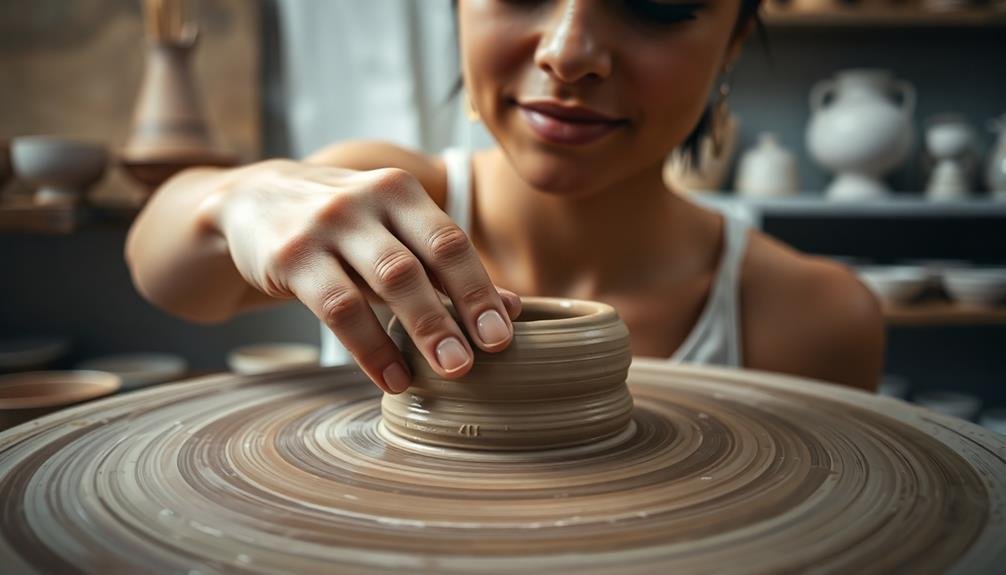
While social connections in sculpting classes can ease anxiety, the act of sculpting itself offers powerful mental health benefits. The repetitive movements involved in working with clay or carving stone can induce a state of mindfulness, helping you focus on the present moment and quiet racing thoughts.
As you engage in sculpting, you'll notice three key aspects that promote mindfulness:
- Tactile sensations: Feeling the texture of the material and the pressure of your hands grounds you in the physical world.
- Rhythmic motions: The consistent, repetitive movements create a soothing pattern that calms your mind.
- Visual focus: Concentrating on the shape and details of your sculpture directs your attention away from anxious thoughts.
These elements work together to create a meditative experience, allowing you to enter a flow state where time seems to slow down.
You'll find yourself fully absorbed in the creative process, giving your mind a much-needed break from worries and stress. The act of sculpting becomes a form of moving meditation, promoting relaxation and mental clarity.
Frequently Asked Questions
Can Sculpting Help With Specific Mental Health Conditions Like PTSD or OCD?
Sculpting can help with PTSD and OCD. You'll find it therapeutic, as it engages your senses and promotes mindfulness. It's a form of creative expression that can reduce anxiety, improve focus, and provide a sense of accomplishment.
How Long Should a Sculpting Session Last for Maximum Anxiety-Reducing Benefits?
You'll want to aim for 30-60 minute sessions to maximize anxiety relief. However, it's important to listen to your body. If you're feeling relaxed and engaged, you can extend your sculpting time as needed.
Are Certain Sculpting Materials More Effective for Anxiety Relief Than Others?
You'll find that clay and playdough are particularly effective for anxiety relief. Their malleability allows you to squeeze, knead, and shape them, providing a tactile experience that's soothing. However, any material you enjoy working with can be beneficial.
Can Virtual or Digital Sculpting Provide Similar Anxiety-Reducing Effects as Physical Sculpting?
Virtual sculpting can offer anxiety-reducing effects similar to physical sculpting. You'll still engage your creativity and focus, but you'll miss out on the tactile sensations. It's a great alternative when physical materials aren't available.
Is Sculpting Equally Beneficial for Children and Adults in Managing Anxiety?
You'll find sculpting can benefit both children and adults for anxiety management. It's effective across age groups, though kids may need simpler projects. You'll see improvements in focus, self-expression, and stress relief regardless of your age.
In Summary
You've discovered a powerful tool for calming your anxious mind. Sculpting isn't just an art form; it's a therapeutic practice that engages your senses, focuses your attention, and rewires your brain. Whether you're working alone or in a class, you're creating something tangible while finding inner peace. So next time anxiety creeps in, pick up some clay. You'll be amazed at how sculpting can transform your mental state and bring you back to center.

Leave a Reply