
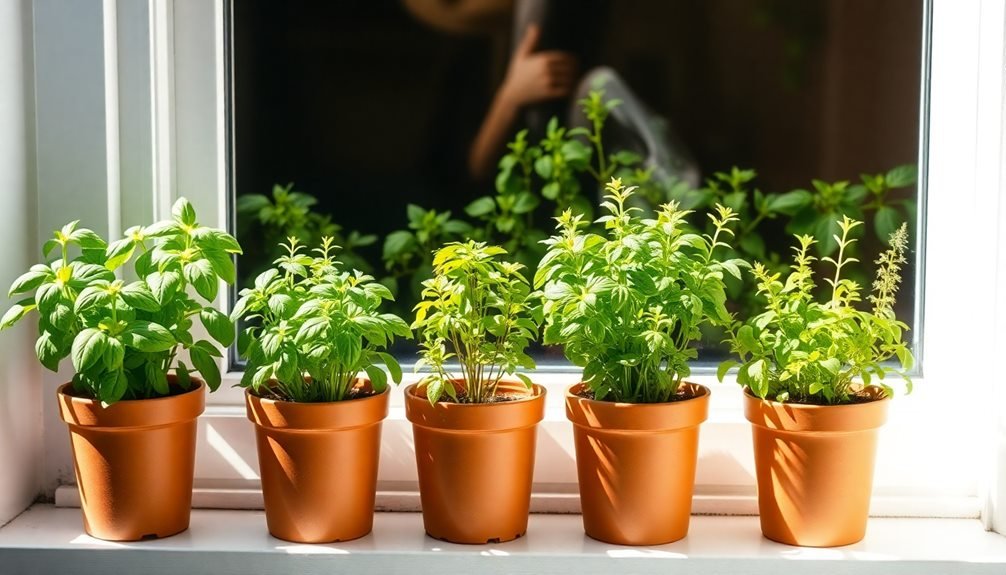
You can easily grow fresh herbs indoors year-round with just a few key supplies and proper care. Start with beginner-friendly herbs like basil, mint, chives, parsley, and thyme in 6-8 inch pots filled with quality potting mix. Place your herbs near south-facing windows for 4-6 hours of direct sunlight daily, or use LED grow lights as a supplement. Water only when the top inch of soil feels dry, and maintain temperatures between 65-70°F. Remember to prune regularly for bushier growth and harvest in the morning for maximum flavor. The more you understand about indoor herb gardening, the more abundant your harvests will become.
Best Indoor Herbs for Beginners
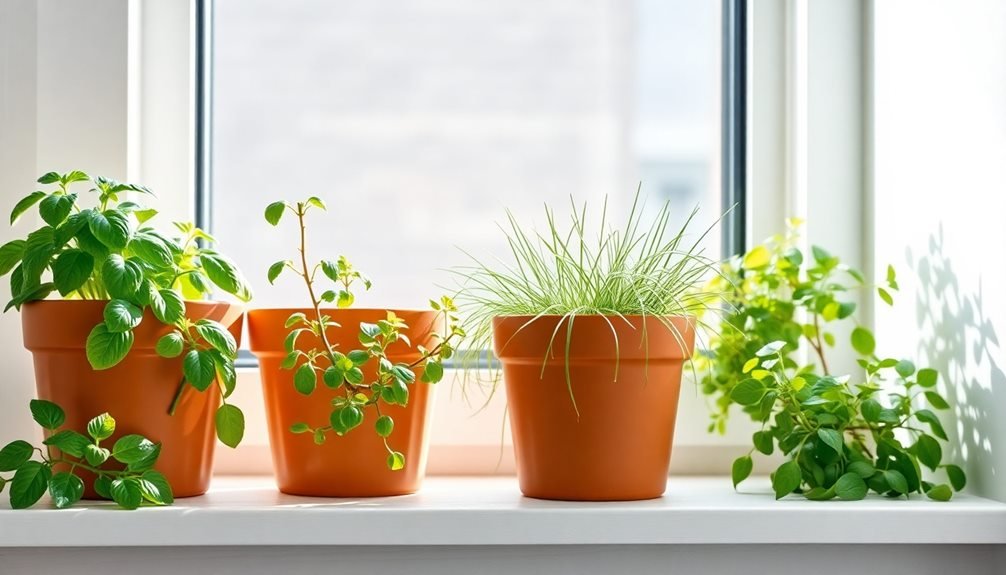
Several herbs thrive indoors and won't give you trouble as a beginner gardener. Start with basil, which grows well in bright windowsills and provides fresh leaves for cooking throughout the year.
Mint also makes an excellent choice, as it's hardy and grows vigorously – just keep it in its own container to prevent it from overtaking other herbs.
Chives deserve a spot in your indoor garden because they're low-maintenance and regrow quickly after harvesting. You'll find that parsley adapts well to indoor conditions, though it requires deeper pots for its long roots.
Thyme grows slowly but steadily indoors, requiring minimal attention while providing aromatic leaves for your dishes.
Consider growing oregano, which thrives in sunny spots and remains compact enough for windowsill gardens. Rosemary can flourish indoors if you provide bright light and good air circulation, though you'll need to water it carefully to avoid overwatering.
These herbs don't just offer fresh flavors – they'll also help you develop your gardening skills while brightening your living space. Remember to place all these herbs in well-draining soil and pots with drainage holes.
Essential Garden Supplies
To start your indoor herb garden, you'll need a few fundamental supplies that guarantee success.
Begin with containers that have drainage holes and matching saucers to prevent water damage to surfaces. Choose pots that are 6-8 inches deep for most herbs, ensuring adequate root growth.
Select a high-quality potting mix specifically designed for containers. Don't use garden soil, as it's too heavy and may contain pests.
Your herbs will need grow lights if you can't provide 6-8 hours of direct sunlight daily. LED grow lights are energy-efficient and won't overheat your plants.
Keep basic gardening tools handy: pruning shears for harvesting, a small trowel for transplanting, and a watering can with a narrow spout for precise watering.
You'll also need plant markers to identify different herbs and a spray bottle for misting. Consider adding a moisture meter to monitor soil dampness and prevent overwatering.
For feeding your herbs, stock up on organic liquid fertilizer with an NPK ratio suitable for leafy growth.
Choosing the Right Location
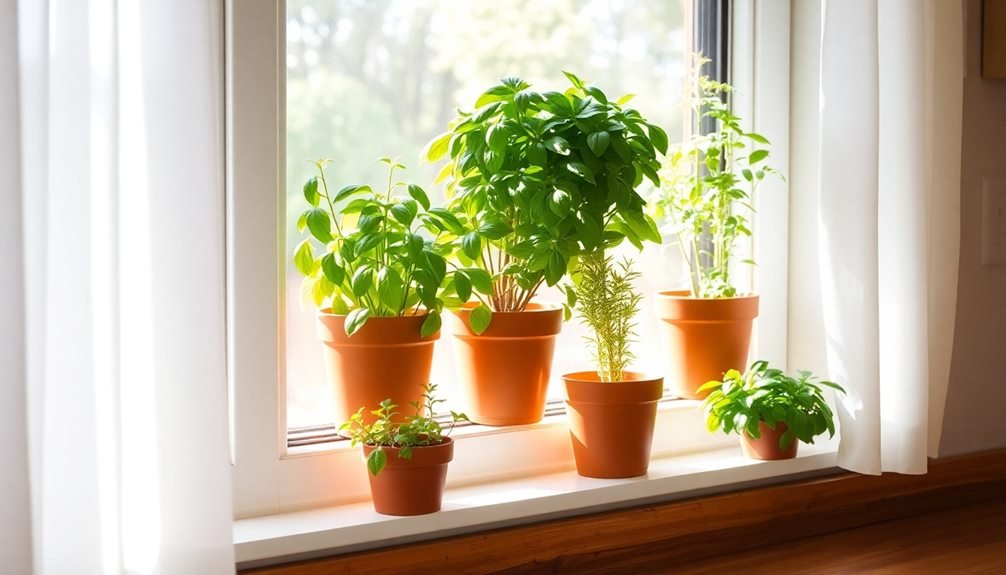
When growing herbs indoors, you'll want to place them near a south-facing windowsill that receives 4-6 hours of direct sunlight and maintains consistent warmth throughout the day.
Your herbs will thrive in rooms that stay between 65-70°F (18-21°C), away from drafty areas or heating/cooling vents that can cause temperature fluctuations.
The kitchen often provides an ideal growing environment since it typically offers adequate light, warmth, and humidity while keeping your fresh herbs conveniently accessible for cooking.
Windowsill Light and Heat
Since most herbs need abundant sunlight to thrive, choosing the right windowsill location can make or break your indoor herb garden. For ideal growth, place your herbs in south or southwest-facing windows where they'll receive 6-8 hours of direct sunlight daily. If you don't have perfect window exposure, consider supplementing with grow lights positioned 6 inches above your plants.
Watch for signs that your herbs aren't getting enough light: leggy stems, pale leaves, or slow growth indicate insufficient sunlight. You'll also need to monitor temperature fluctuations near your windows. Most herbs prefer temperatures between 65-70°F during the day and slightly cooler at night. During winter, move plants away from drafty windows, but maintain their light exposure.
Keep your herbs away from heat sources like radiators or air vents, which can dry them out quickly. If your windowsill gets too hot in summer, use a sheer curtain to filter intense sunlight.
You can also rotate your containers regularly to guarantee even growth, as herbs naturally lean toward light sources. Remember that different herbs have varying light requirements – Mediterranean varieties like basil and oregano need more sun than shade-tolerant plants like mint and parsley.
Room Temperature Sweet Spots
Beyond your windowsill's light conditions, room temperature plays a key role in your herbs' success. Most culinary herbs thrive in temperatures between 65-70°F (18-21°C) during the day and can handle a slight drop at night. You'll want to keep your herbs away from drafty windows and heating vents that can create temperature fluctuations.
Monitor your herbs' location carefully, as temperatures above 75°F (24°C) can cause them to bolt prematurely, while temperatures below 50°F (10°C) can stunt their growth or cause damage. If you're growing Mediterranean herbs like rosemary, thyme, or sage, they'll tolerate slightly warmer conditions than tender herbs like basil or cilantro.
| Herb Type | Ideal Day Temp | Ideal Night Temp |
|---|---|---|
| Mediterranean | 65-75°F | 55-65°F |
| Tender Herbs | 65-70°F | 60-65°F |
| Hardy Herbs | 60-70°F | 50-60°F |
Keep a thermometer near your herbs to monitor temperature changes throughout the day. If you notice your herbs becoming leggy or showing signs of stress, consider adjusting their location or using a humidity tray to maintain more stable conditions.
Best Spots for Growth
The ideal location for your indoor herb garden combines adequate light, stable temperatures, and easy access for regular care. South-facing windows provide the strongest natural light, making them perfect for sun-loving herbs like basil, sage, and rosemary.
If you don't have south-facing windows, east or west-facing locations work well for herbs that tolerate partial shade, such as mint, parsley, and chives.
Keep your herbs away from drafty areas near doors or air vents, which can cause temperature fluctuations and stress the plants. Place them on sturdy surfaces like windowsills, countertops, or dedicated plant stands where they won't get knocked over.
Your kitchen is often the best room choice, as it offers convenient access for harvesting and maintains consistent temperatures from cooking activities.
If natural light is limited, consider setting up grow lights on a timer. Position the lights 6-12 inches above your plants, adjusting the height as they grow.
Remember to rotate your containers regularly to guarantee even growth, as plants will naturally lean toward light sources. Don't crowd your herbs – leave enough space between pots for adequate air circulation and future growth.
Lighting Requirements for Indoor Herbs
Proper lighting makes all the difference when growing herbs indoors. Most culinary herbs need at least six hours of direct sunlight daily to thrive. You'll want to place your herbs near south-facing windows, as these provide the most consistent natural light throughout the day. If you don't have adequate window light, you'll need to supplement with grow lights.
When using artificial lighting, position LED or fluorescent grow lights 6-12 inches above your herbs for best results. You can adjust this distance based on your plants' response – if leaves appear burnt, move the lights higher, and if stems become leggy, lower them. Keep your grow lights on for 12-16 hours daily, using a timer to maintain consistency.
Different herbs have varying light requirements. Basil, oregano, and thyme need the most light, while mint, parsley, and chives can tolerate partial shade.
You'll know your herbs aren't getting enough light if they develop pale leaves, grow slowly, or become spindly. If this happens, either relocate them to a brighter spot or add supplemental lighting to guarantee healthy growth.
Watering Your Indoor Garden
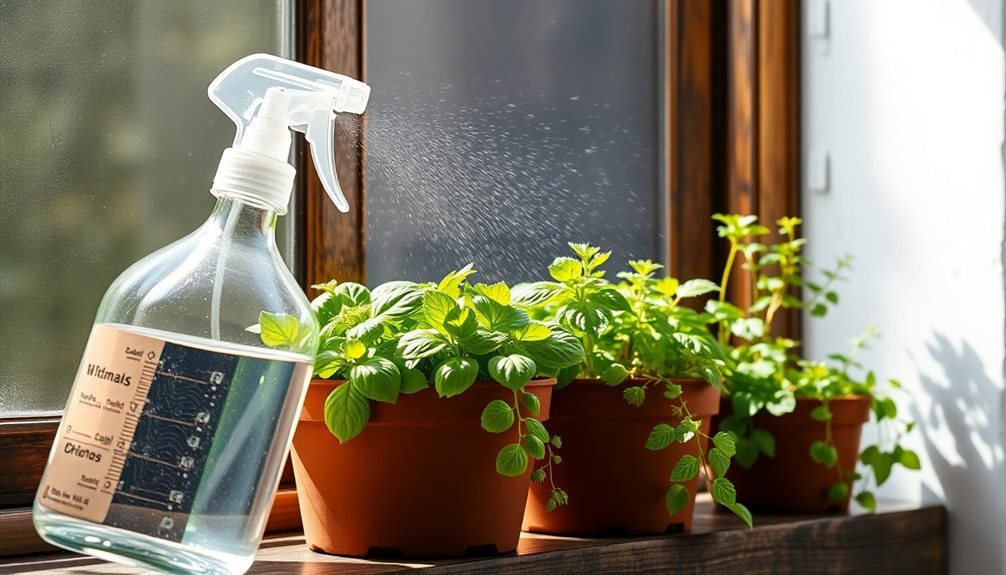
You'll need to master proper watering techniques to keep your indoor herbs thriving, as both overwatering and underwatering can harm your plants.
When watering your herbs, pour water slowly at the base of each plant until it drains from the bottom, and always empty the drainage tray to prevent root rot.
Check your herbs daily by testing the soil moisture with your finger – if the top inch feels dry, it's time to water, though frequency will vary based on your home's temperature, humidity, and the specific herbs you're growing.
Proper Watering Techniques
Maintaining the right moisture balance is essential for your indoor herb garden's success. You'll need to check your herbs daily and water them when the top inch of soil feels dry to the touch. Different herbs have varying water needs, so it's important to understand each plant's specific requirements.
Mediterranean herbs like rosemary and thyme prefer drier conditions, while basil and mint thrive in consistently moist soil.
When watering your indoor herbs, follow these proven techniques:
- Water at the base of the plant rather than from above to prevent leaf diseases and guarantee roots receive moisture directly.
- Use room temperature water to avoid shocking the plant's root system, and always ascertain your containers have proper drainage holes.
- Apply water slowly until it begins to drain from the bottom, then empty the drainage tray to prevent root rot.
- Monitor humidity levels by misting moisture-loving herbs or using a pebble tray filled with water beneath the pots.
If you notice yellowing leaves or wilting, adjust your watering schedule accordingly.
Remember that overwatering is just as harmful as underwatering, so pay attention to your plants' signals.
Water Amount and Frequency
A consistent watering schedule forms the backbone of a thriving indoor herb garden. You'll want to check your herbs daily, but don't water them unless the top inch of soil feels dry to the touch. Most indoor herbs need watering every 3-5 days, though this varies based on humidity, temperature, and pot size.
Mediterranean herbs like rosemary, thyme, and sage prefer drier conditions and require less frequent watering. You'll water these every 5-7 days.
In contrast, basil, mint, and parsley thrive in moist soil and need water every 2-3 days. During winter, you'll reduce watering frequency as growth slows down.
When you do water, provide enough to reach the roots but avoid waterlogging. Add water until it flows from the drainage holes, then empty the collection tray after 15 minutes.
Don't let your herbs sit in standing water, as this leads to root rot. If you're using self-watering containers, fill the reservoir when it's nearly empty and check soil moisture weekly.
You'll need to adjust your watering schedule seasonally and if you notice signs of under or overwatering, such as wilting or yellowing leaves.
Common Indoor Herb Problems
Three major challenges often plague indoor herb gardens: insufficient light, improper watering, and pest infestations. Even with grow lights, your herbs might stretch and become leggy, indicating they're desperately seeking more light.
Overwatering can lead to root rot, while underwatering causes wilting and dried leaf edges. Spider mites, aphids, and fungus gnats frequently attack indoor herbs, especially in warm, humid conditions.
You'll know your herbs are struggling when you notice these common signs:
- Yellow or pale leaves usually indicate either nutrient deficiency or improper light exposure – adjust fertilization and lighting accordingly.
- Brown, crispy leaf edges point to low humidity or inconsistent watering – maintain steady moisture and consider using a humidity tray.
- Wilting despite moist soil often suggests root rot – check drainage and reduce watering frequency.
- Small holes in leaves or sticky residue typically mean pest problems – inspect plants regularly and treat with insecticidal soap.
If your herbs develop powdery mildew, improve air circulation immediately and remove affected leaves.
Most indoor herb problems are preventable with proper care and regular monitoring. When issues arise, early intervention is essential for plant recovery.
Pruning and Maintenance Tips
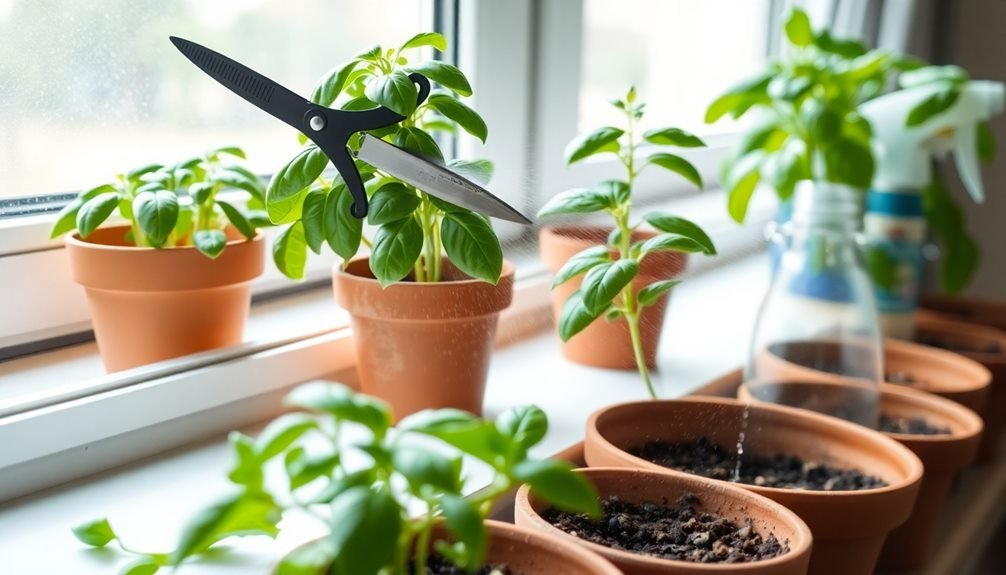
Regular pruning serves as your first line of defense against many common herb problems while promoting bushier, more productive plants. You'll want to pinch off the top sets of leaves regularly, especially when the plant reaches 6 inches in height. This encourages side growth and prevents your herbs from becoming too leggy.
Don't let your herbs flower unless you're specifically growing them for seeds. Once herbs bolt, their leaves become bitter and less flavorful. Remove any yellowing or dead leaves immediately to prevent disease spread and maintain plant health.
| Herb Type | Pruning Guidelines |
|---|---|
| Basil | Pinch above leaf sets weekly; never cut woody stems |
| Mint | Trim aggressively; can cut back to 2 inches |
| Oregano | Harvest top 2/3 when 6 inches tall |
| Thyme | Trim after flowering; don't cut woody parts |
| Rosemary | Light trimming year-round; heavy spring pruning |
Remember to use clean, sharp scissors or pruning shears to prevent damage to the stems. You'll get the best results by pruning in the morning when plants are well-hydrated and their essential oil content is highest.
When to Replant Herbs
Most indoor herbs need replanting every 1-2 years to maintain ideal growth and flavor.
You'll notice when it's time to replant as your herbs will show signs like reduced growth, woody stems, or less vibrant leaves. The root system might also become pot-bound, making it harder for the plant to absorb nutrients and water effectively.
When replanting, choose a container that's 2-3 inches larger than the current pot and guarantee it has proper drainage holes. It's best to replant during early spring or fall when the herbs aren't under stress from extreme temperatures.
Use fresh, well-draining potting soil mixed with organic compost for best results.
Here are clear signs that indicate it's time to replant your indoor herbs:
- Roots are growing through drainage holes or circling the bottom of the pot
- Plant growth has noticeably slowed despite proper care and fertilization
- Soil dries out much faster than usual, requiring more frequent watering
- Stems have become woody and leaves are smaller than normal
Don't wait until your herbs show severe distress – regular replanting helps maintain healthy, productive plants that'll provide fresh flavors year-round.
Harvesting Your Indoor Herbs
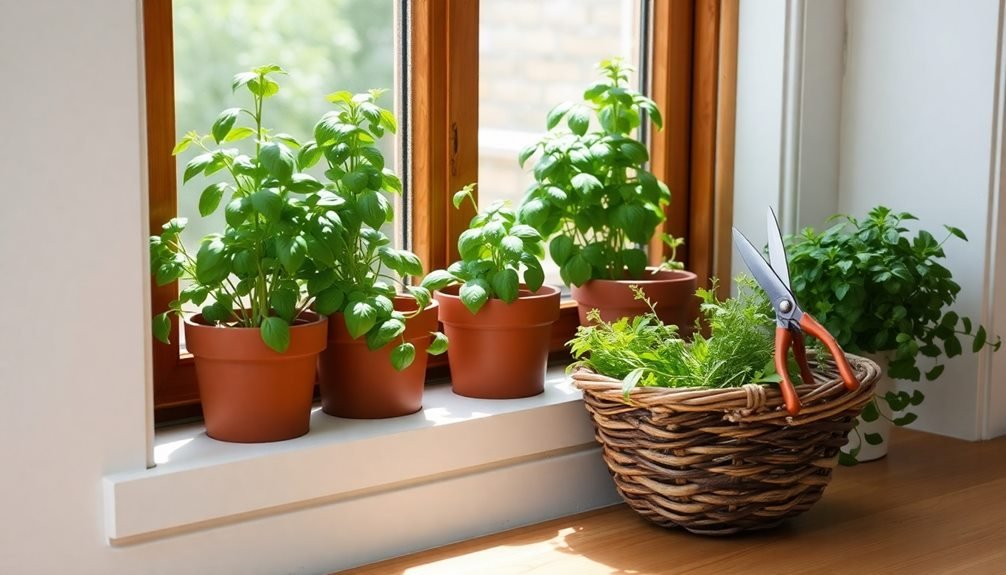
You'll get the most flavor from your indoor herbs by picking them in the morning before the day's heat sets in.
When cutting your herbs, use clean, sharp scissors to remove up to one-third of the plant's growth, making your cuts just above a set of healthy leaves.
To keep your harvested herbs fresh, wrap them loosely in slightly damp paper towels and store them in a sealed plastic bag in your refrigerator's crisper drawer.
When to Pick Herbs
The ideal time to harvest indoor herbs depends on both the plant's maturity and your cooking needs. You'll want to wait until your herbs reach at least 6-8 inches in height before the first harvest, guaranteeing they've developed strong root systems and enough foliage to sustain continued growth.
For most culinary herbs, morning harvesting provides the best flavor, as this is when their essential oils are most concentrated.
- Harvest basil, mint, and oregano just before they flower, when their leaves are most flavorful. If you notice flower buds forming, pinch them off to prevent the plant from going to seed.
- Pick parsley and cilantro leaves from the outside of the plant, allowing the center to continue producing new growth.
- Clip thyme and rosemary stems when they're at least 6 inches long, cutting just above a leaf node to encourage bushier growth.
- Harvest chives by cutting the outer stalks about 2 inches above soil level, leaving the inner growth intact for continuous production.
Remember not to harvest more than one-third of the plant at once to maintain its health and guarantee steady regrowth.
Best Cutting Techniques
Proper cutting techniques guarantee your indoor herbs remain healthy and productive throughout their growing cycle. When harvesting, use clean, sharp scissors or pruning shears to make precise cuts just above a leaf node where two leaves meet the main stem. This encourages new growth and prevents damage to the plant's structure.
For leafy herbs like basil, mint, and oregano, pinch off the top sets of leaves regularly to promote bushier growth. Don't remove more than one-third of the plant at a time, as this can stress the herb and slow its recovery. When harvesting individual leaves, select the largest ones first and work from the outside of the plant inward.
For woody herbs like rosemary and thyme, cut stems at a 45-degree angle about 5-6 inches from the base. This angle prevents water from pooling on the cut surface and reduces the risk of rot.
Never strip all the leaves from a single stem, as this can kill that branch. If you're harvesting for drying, cut longer stems in the morning after the dew has dried but before the day's heat sets in.
Proper Storage Methods
Once you've harvested your herbs using the right cutting techniques, preserving their fresh flavor and aroma becomes your next priority.
Your indoor herbs will maintain their quality longer when you store them properly, preventing waste and ensuring you'll have flavorful ingredients whenever you need them.
For short-term storage, wrap your fresh herbs in slightly damp paper towels and place them in a resealable plastic bag in the refrigerator's crisper drawer.
Don't wash them before storing unless they're visibly dirty, as excess moisture can lead to rapid deterioration.
- Fresh basil and cilantro: Store stems in a glass of water at room temperature, covered loosely with a plastic bag, lasting 7-10 days
- Hardy herbs (rosemary, thyme, sage): Wrap in damp paper towels and refrigerate for up to 2 weeks
- Delicate herbs (parsley, dill, mint): Store in airtight containers lined with paper towels for 5-7 days
- Long-term storage: Freeze chopped herbs in ice cube trays with olive oil or dry them using a dehydrator, maintaining flavor for up to 6 months
Don't forget to label your stored herbs with dates to track freshness.
Winter Care for Indoor Herbs
Maintaining indoor herbs during winter requires four key adjustments to overcome seasonal challenges.
First, you'll need to compensate for reduced natural light by either moving your herbs closer to south-facing windows or supplementing with grow lights for 12-14 hours daily. Position the lights 6-12 inches above your plants to prevent leaf burn while ensuring adequate exposure.
Second, monitor humidity levels closely, as indoor heating can create overly dry conditions. Use a humidity tray filled with pebbles and water, or run a small humidifier near your herbs to maintain 40-60% humidity.
Third, adjust your watering schedule – herbs typically need less water in winter, so check soil moisture with your finger and only water when the top inch feels dry.
Air Quality and Ventilation
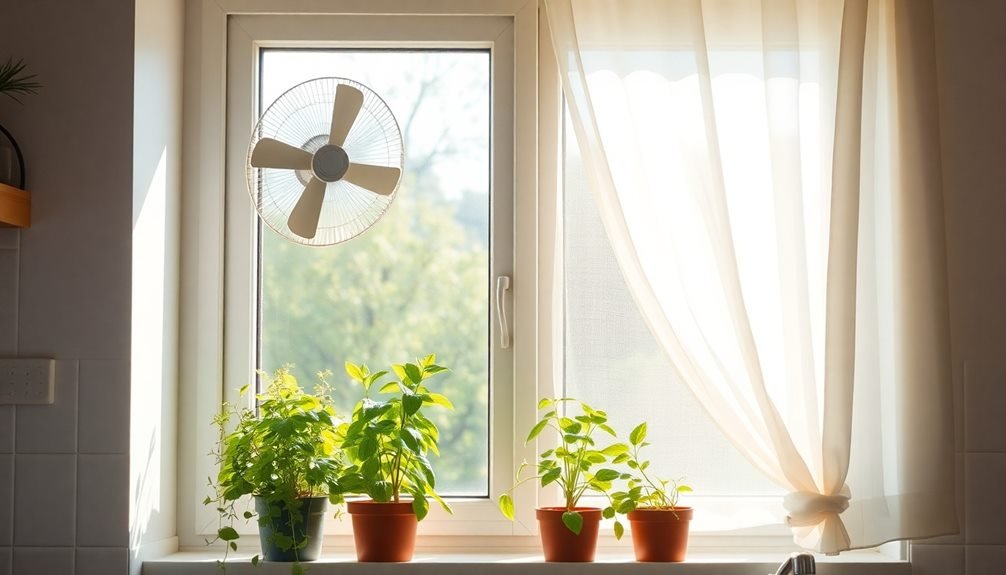
Fresh airflow plays an essential role in preventing disease and promoting robust herb growth indoors. Without proper ventilation, your herbs can develop mold, fungal infections, and other problems that will stunt their growth.
You'll want to guarantee your growing area has consistent air movement to strengthen stems and prevent stagnant conditions where pests thrive.
To maintain ideal air quality for your indoor herbs:
- Position a small oscillating fan nearby to create gentle air movement, but don't point it directly at your plants as this can dry them out too quickly.
- Open windows for 15-20 minutes daily when temperatures permit to exchange stale air with fresh outdoor air.
- Keep your herbs away from heating vents and air conditioning units that can create extreme temperature fluctuations.
- Use a humidity tray filled with pebbles and water to maintain proper moisture levels in the air.
If you're growing herbs in a confined space like a kitchen windowsill, you'll need to be especially mindful of air circulation.
Don't crowd your plants together, as this restricts airflow between them and can lead to disease issues.
Companion Planting for Indoor Success
Just as air circulation affects how your herbs interact with their environment, strategic plant groupings can enhance your indoor herb garden's success. Companion planting isn't just for outdoor gardens – it's equally valuable for your indoor herbs.
You'll want to group plants with similar water and light requirements together to simplify care and maintenance. Pair Mediterranean herbs like rosemary, thyme, and sage since they thrive in similar dry, sunny conditions.
Place moisture-loving herbs such as mint, parsley, and basil in a separate grouping. You'll find that certain combinations actively benefit each other – basil can improve the flavor of oregano, while rosemary helps repel pests that might bother sage.
Don't forget to take into account size and growth habits when arranging your herbs. Tall plants like dill and fennel should go behind shorter ones to prevent blocking light.
Keep aggressive spreaders like mint in separate containers to prevent them from overwhelming their neighbors. If you're growing herbs in a single large container, maintain at least 4 inches between different varieties to prevent root competition and guarantee proper nutrient absorption.
Frequently Asked Questions
Can I Grow Indoor Herbs Using Hydroponic Systems Instead of Soil?
Yes, you can grow herbs hydroponically! It's a great soil-free method that lets you cultivate herbs indoors using nutrient-rich water solutions. You'll get clean, healthy plants and often faster growth than traditional soil growing.
How Do Herbs Grown Indoors Affect Indoor Humidity Levels?
You'll notice herbs release moisture through transpiration, increasing your indoor humidity levels. If you grow several plants, they can help humidify dry rooms, especially during winter when heating systems reduce moisture.
Are Indoor-Grown Herbs as Flavorful as Their Outdoor Counterparts?
You'll find indoor herbs can be just as flavorful as outdoor ones if you provide proper light, nutrients, and care. However, they may need extra attention to develop the intense flavors you're seeking.
Which Herbs Can Trigger Allergies When Grown Indoors?
You'll want to watch out for basil, mint, oregano, and parsley, as they can trigger allergic reactions. If you're sensitive to pollen, these common indoor herbs might cause sneezing and congestion.
Can Indoor Herbs Be Grown From Supermarket-Bought Fresh Herb Packages?
You can grow many supermarket herbs by placing their stems in water until roots develop, then transplanting to soil. Basil, mint, and cilantro often work well, but success isn't guaranteed with all varieties.
In Summary
You'll love having fresh herbs right at your fingertips all year long. With proper lighting, consistent watering, and regular maintenance, your indoor herb garden will thrive regardless of the season. Remember to rotate your plants, monitor humidity levels, and harvest regularly to encourage bushy growth. Don't be afraid to experiment with different herb combinations – you'll soon discover which ones work best in your indoor growing space.



Leave a Reply