
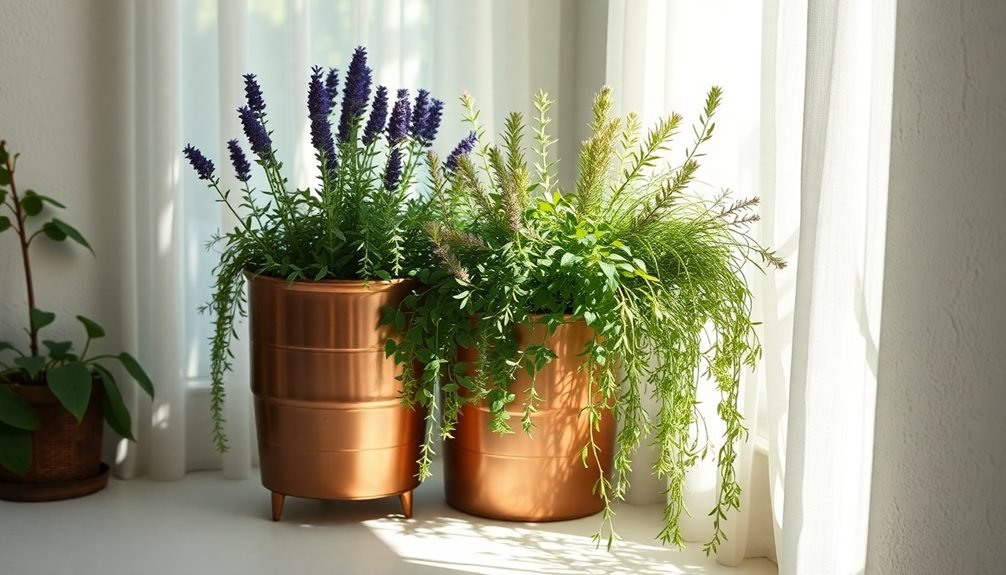
Create your own indoor sensory herb garden by choosing anxiety-reducing plants like lavender, chamomile, and holy basil. You'll need a quiet spot near a window with 6-8 hours of sunlight, well-draining containers, and proper potting mix. Position your herbs at varying heights to engage multiple senses – touch their different textures, inhale their calming aromas, and enjoy their soothing green colors. Water when the top inch feels dry and mist regularly to maintain humidity. Make this your personal sanctuary by adding comfortable seating and natural materials. The journey to your perfect herb oasis has only just begun.
Why Sensory Gardens Calm Anxiety
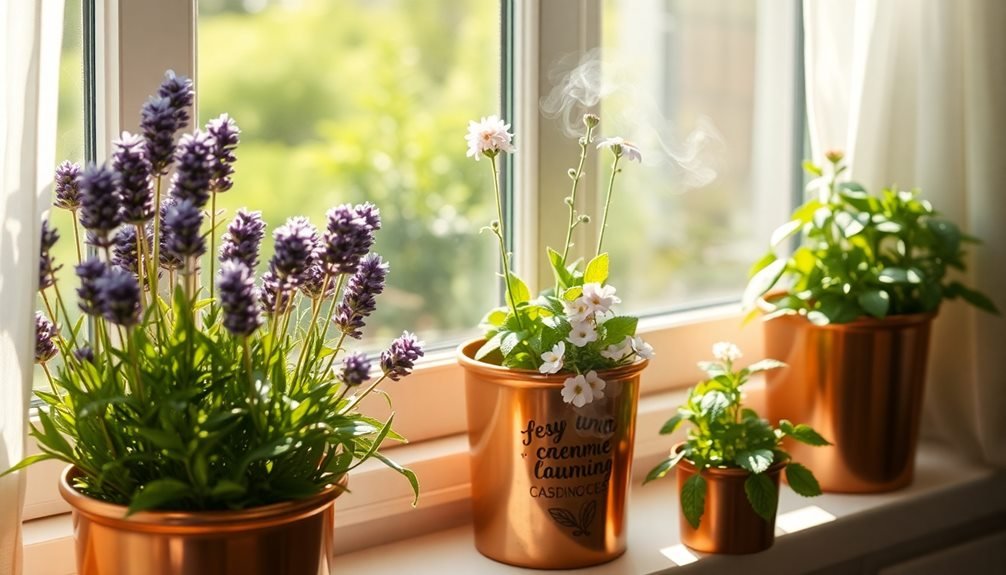
A sensory herb garden engages multiple senses simultaneously, triggering the body's natural relaxation response. When you interact with aromatic herbs, your brain releases calming neurotransmitters that reduce stress hormones like cortisol. The act of touching soft leaves, like lamb's ear or sage, stimulates pressure receptors that send signals to slow your heart rate and lower blood pressure.
Your sensory garden's visual elements work to quiet racing thoughts. The various shades of green create a sense of stability, while watching leaves gently move in the breeze promotes mindfulness. When you brush against fragrant herbs like lavender or rosemary, you'll breathe in compounds that activate your limbic system, improving emotional regulation and reducing anxiety symptoms.
The routine of tending to herbs provides a grounding ritual that shifts focus away from worries. As you prune, water, and harvest your plants, you'll practice mindful awareness of the present moment.
The garden becomes a meditation tool, offering a multi-sensory escape that helps reset your nervous system and create a sanctuary of calm within your living space.
Choosing Your Calming Herbs
When you're ready to select herbs for your sensory garden, start with proven anxiety-reducing plants like lavender and chamomile, which offer both calming fragrances and therapeutic benefits.
You'll want to evaluate each herb's specific growing needs and sensory qualities to create a balanced, harmonious space that speaks to all your senses.
Best Herbs for Relaxation
Selecting the right calming herbs forms the foundation of your sensory garden's relaxation space. You'll want to focus on herbs known for their soothing properties and gentle fragrances that can help reduce stress and promote tranquility.
Lavender stands as the premier relaxation herb, offering a sweet, floral scent that's proven to lower anxiety and improve sleep quality. Chamomile, with its apple-like fragrance, provides natural sedative effects and helps calm nerves. Lemon balm's citrusy aroma can lift your mood while reducing stress, making it perfect for meditation corners.
Consider adding holy basil (tulsi), which helps combat stress and enhances mental clarity. Peppermint's cooling sensation and invigorating scent can ease tension headaches and promote mental alertness. Rosemary not only improves memory but also reduces cortisol levels when you inhale its pine-like fragrance.
For deeper relaxation, incorporate passionflower, known for its mild sedative properties, and valerian, which can help with sleep issues.
These herbs don't just look beautiful; they'll create a multisensory experience that transforms your space into a therapeutic retreat.
Fragrant Lavender and Chamomile
Lavender and chamomile serve as the powerhouse duo in any sensory herb garden, offering complementary fragrances and therapeutic benefits.
You'll find lavender's sweet, floral scent pairs perfectly with chamomile's apple-like aroma, creating a calming atmosphere that helps reduce stress and promote relaxation.
When growing lavender indoors, choose compact varieties like 'Goodwin Creek Grey' or 'Munstead'.
Place your lavender in a south-facing window where it'll receive 6-8 hours of direct sunlight daily. The soil should be well-draining and slightly alkaline.
Don't overwater; lavender prefers dry conditions.
For chamomile, you can grow either German or Roman varieties.
German chamomile grows taller and produces more flowers, while Roman chamomile creates a lovely ground cover.
Both types need moderate sunlight and consistently moist soil.
You'll want to harvest chamomile flowers when they're fully open, typically in the morning after the dew has dried.
To maximize these herbs' aromatic properties, gently brush your hands against them as you pass by.
You can also dry the flowers to make calming teas or sachets for your pillowcase.
Mindful Herb Selection Tips
Success in creating a soothing herb garden starts with choosing plants that match your specific needs and growing conditions. Consider your garden's location, available light, and the amount of time you can dedicate to plant care.
South-facing windows provide ideal lighting for most herbs, while east or west exposures work well for shade-tolerant varieties.
Select herbs based on their sensory benefits and your personal wellness goals. If you're seeking better sleep, prioritize lavender, chamomile, and lemon balm. For stress relief, try holy basil (tulsi), passionflower, and mint.
Don't forget to assess each herb's mature size to guarantee your space can accommodate them comfortably.
When purchasing herbs, examine plants carefully for signs of disease or pest damage. Look for vibrant foliage, sturdy stems, and well-established roots.
You'll want to avoid overcrowded containers or plants with yellowing leaves. Start with 2-3 varieties and gradually expand your collection as you gain confidence.
Remember that some herbs, like mint and lemon balm, grow vigorously and may need their own containers to prevent overtaking neighboring plants.
Essential Garden Setup Requirements
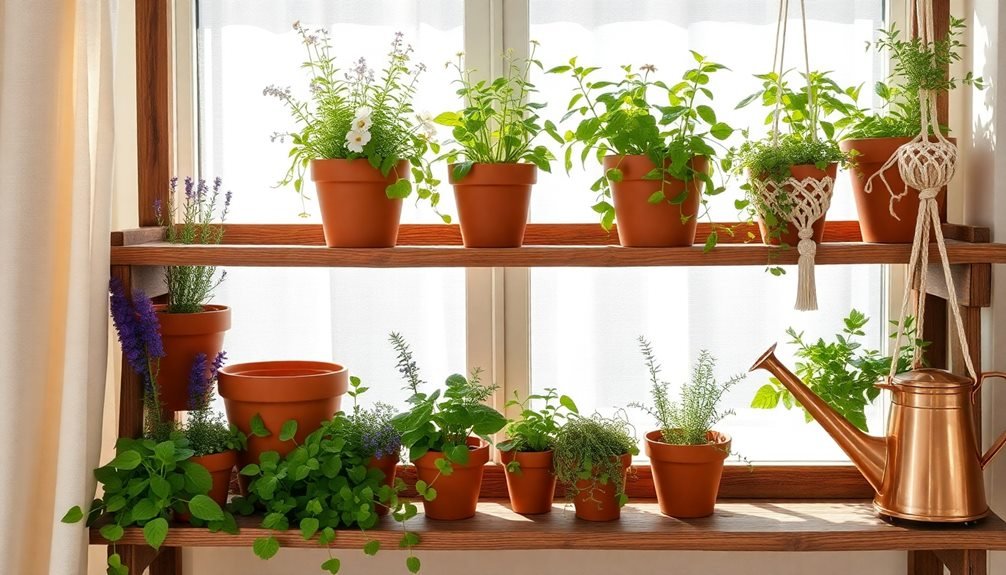
Before creating your sensory herb garden, you'll need several fundamental elements in place. Your growing space must provide adequate light, proper drainage, and consistent temperature control to guarantee your herbs thrive. Select a location that receives 6-8 hours of sunlight daily or invest in grow lights for indoor spaces with limited natural light.
| Requirement | Purpose | Essential Notes |
|---|---|---|
| Containers | Plant housing | Must have drainage holes |
| Potting Mix | Growth medium | Use herb-specific blend |
| Water System | Hydration | Self-watering or manual |
| Temperature | Plant health | 65-70°F ideal range |
| Ventilation | Air circulation | Gentle air movement |
You'll need to maintain proper humidity levels between 40-60% and guarantee good air circulation to prevent mold growth. Install a small fan if necessary, keeping it on low setting to avoid stressing the plants. Your workspace should include a dedicated potting area and storage for essential tools like pruning shears, watering can, and plant markers. Consider installing adjustable shelving to maximize vertical space and accommodate plants of varying heights as they mature.
Engaging The Five Senses
Your sensory herb garden comes alive through carefully chosen plants that engage all five senses at once.
You'll find incredible variety in texture as you run your hands across fuzzy lamb's ear, spiky rosemary, and smooth mint leaves, while fragrant herbs like lavender and chamomile release calming essential oils into the air.
The gentle rustling of tall grasses and the visual appeal of colorful blooms work together to create your own peaceful sanctuary.
Touch and Texture Elements
Through careful selection of plants with varying textures, a sensory herb garden becomes a tactile playground for the hands and skin. You'll want to include plants with distinct textural qualities that invite touch and exploration. Soft, fuzzy leaves like lamb's ear and sage provide a velvety sensation, while rough-textured plants like rosemary offer a more bristly experience.
Consider incorporating plants with different leaf structures. Mint varieties feature crinkled leaves that are smooth yet rippled, while oregano's small, firm leaves create a different tactile sensation.
Don't forget about thyme's tiny leaves and stems that feel delicate between your fingers. For additional textural contrast, add lavender with its woody stems and feathery flower spikes.
You can enhance the touch experience by placing textural herbs at different heights. Position trailing varieties like creeping thyme where they'll cascade over pot edges, making them easily accessible for touching.
Keep taller herbs like rosemary toward the back, allowing you to brush against them as you reach for other plants. Remember to prune regularly to maintain dense growth, which creates more satisfying tactile interactions.
Aromatherapy for Relaxation
While touching herbs engages your sense of touch, their aromatic properties offer an equally powerful sensory experience. You'll discover that certain herbs can trigger immediate relaxation responses through their natural essential oils and fragrances. Lavender's soothing scent helps reduce anxiety and promotes better sleep, while rosemary's invigorating aroma enhances mental clarity and memory.
Place your aromatherapy herbs strategically throughout your indoor garden to maximize their benefits. Position lavender, chamomile, and lemon balm near seating areas where you'll spend time unwinding. Keep stimulating herbs like peppermint and sage in areas where you need to maintain focus and energy. You can release these therapeutic scents by gently rubbing the leaves between your fingers or harvesting sprigs to create dried bouquets.
To maintain aromatic potency, guarantee proper air circulation and avoid overwatering, which can dilute essential oil production. Trim your herbs regularly to encourage bushier growth and stronger scent profiles.
You'll find that different times of day affect fragrance intensity – many herbs release their strongest aromatherapy benefits in the morning sun or when disturbed by a light breeze from an open window.
Sound and Visual Impact
Tranquility extends beyond scent and touch in a sensory herb garden, as the visual and auditory elements create a complete meditation experience.
You'll find that strategically placing plants at varying heights creates visual intrigue while incorporating elements that enhance natural sounds deepens your connection to the space.
To maximize the visual and auditory impact of your herb garden, consider these essential elements:
- Position tall herbs like lemongrass and rosemary behind shorter varieties such as thyme and oregano to create depth and visual interest, much like nature's tiered landscape.
- Add a small tabletop fountain near your herbs – the gentle water sounds will provide white noise while increasing humidity for moisture-loving plants.
- Include ornamental grasses that rustle with the slightest breeze, creating a subtle symphony when placed near a window or fan.
- Choose containers in harmonious colors that complement your herbs' foliage, such as terra cotta or cool blues, to create a cohesive visual story.
You'll notice how these sound and sight elements work together to transform your herb garden into a multisensory retreat that engages your mind and calms your spirit.
Daily Plant Care Rituals
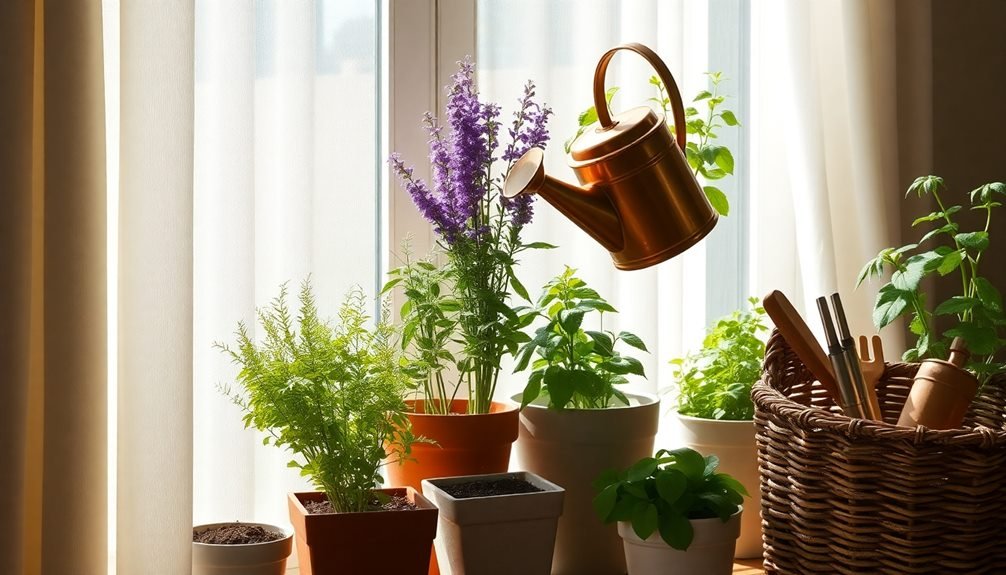
Maintaining a sensory herb garden isn't just about plant health – it's a daily meditation practice. Each morning, take a few minutes to mindfully check your herbs, rotating pots for even sunlight exposure and removing any yellowed leaves. As you tend to your plants, breathe in their calming aromas and observe their subtle changes.
Water your herbs when the top inch of soil feels dry, usually every 2-3 days. You'll want to check moisture levels by gently pressing your finger into the soil. Pour water slowly at the base until it drains from the bottom, being careful not to oversaturate. During this process, notice the therapeutic sound of water meeting soil.
Prune your herbs regularly to encourage bushier growth and prevent flowering. Pinch off the top sets of leaves just above a growth node, using clean scissors or your fingertips. Save these clippings for cooking or tea.
Weekly, dust the leaves with a soft brush and inspect for signs of pests or disease. End your care routine by misting humidity-loving herbs like basil and mint, creating a moment of peaceful reflection as you watch the water droplets catch the light.
Creating Mindful Garden Spaces
Your sensory herb garden deserves a thoughtful, dedicated space that invites daily meditation and connection. Choose a spot near a window that receives consistent natural light, away from high-traffic areas and noisy appliances.
Consider setting up a small table or shelf dedicated solely to your herbs, creating a mini sanctuary that's both functional and peaceful.
To transform your herb garden into a mindful retreat, incorporate these essential elements:
- Comfortable seating that allows you to sit quietly and observe your plants, whether it's a cozy floor cushion or a small meditation stool.
- Natural materials like bamboo trays, terracotta pots, or wooden plant stands that ground the space and connect you to nature.
- A small water feature or fountain that provides gentle background sounds and increases humidity for your herbs.
- Soft, indirect lighting options for evening meditation sessions, such as battery-operated candles or adjustable LED grow lights.
Arrange your herbs at different heights to create visual interest and allow easy access for both care and harvest.
Keep your gardening tools nearby but neatly stored to maintain the space's serenity while ensuring practicality.
Frequently Asked Questions
Can I Grow a Sensory Herb Garden if I Have Curious Pets?
You can grow pet-safe herbs like basil, mint, and sage by placing them on high shelves or hanging planters. Just avoid toxic plants like chives and keep your curious pets from nibbling the leaves.
Do Sensory Herb Gardens Attract Any Unwanted Insects Indoors?
You'll rarely face pest problems if you maintain good air circulation and don't overwater. Some herbs naturally repel insects, but if you spot any bugs, a gentle soap spray will keep them away effectively.
How Long Does It Take for Herbs to Release Noticeable Aromatherapy Benefits?
You'll notice aromatic benefits from herbs within 15-30 minutes of touching or brushing their leaves. For stronger effects, you can gently crush the leaves or steep them in hot water.
Which Herbs Should I Avoid if I Have Young Children?
You'll want to avoid toxic herbs around children, including foxglove, wormwood, pennyroyal, and rue. Keep mint contained as it spreads aggressively. Also skip thorny herbs like rose and borage for safety.
Can Artificial Grow Lights Affect the Therapeutic Properties of Sensory Herbs?
You'll find that quality grow lights won't diminish your herbs' therapeutic properties. In fact, they can boost essential oil production when used properly, enhancing both the fragrance and beneficial compounds of your plants.
In Summary
Your indoor sensory herb garden can become a daily source of peace and mindfulness. You'll find that tending to fragrant herbs, feeling their textures, and watching them grow creates a powerful connection to nature right in your home. By engaging all your senses in this calming space, you're building a personal sanctuary that helps melt away stress and anxiety whenever you need it most.



Leave a Reply