
Transform everyday items into calming DIY projects that'll help you manage stress and find mindfulness. You can create a desktop zen garden using mason jars, sand, and mini plants for daily meditation. Turn empty wine bottles into soothing LED luminaries that cast gentle ambient light. Make textile wall art from fabric scraps using intuitive hand-stitching techniques. Build rustic organizers from pallet wood to bring order to your space. Or craft memory boxes from old books to store your cherished mementos. These five therapeutic projects offer creative ways to upcycle while nurturing your mental well-being.
Mason Jar Zen Gardens
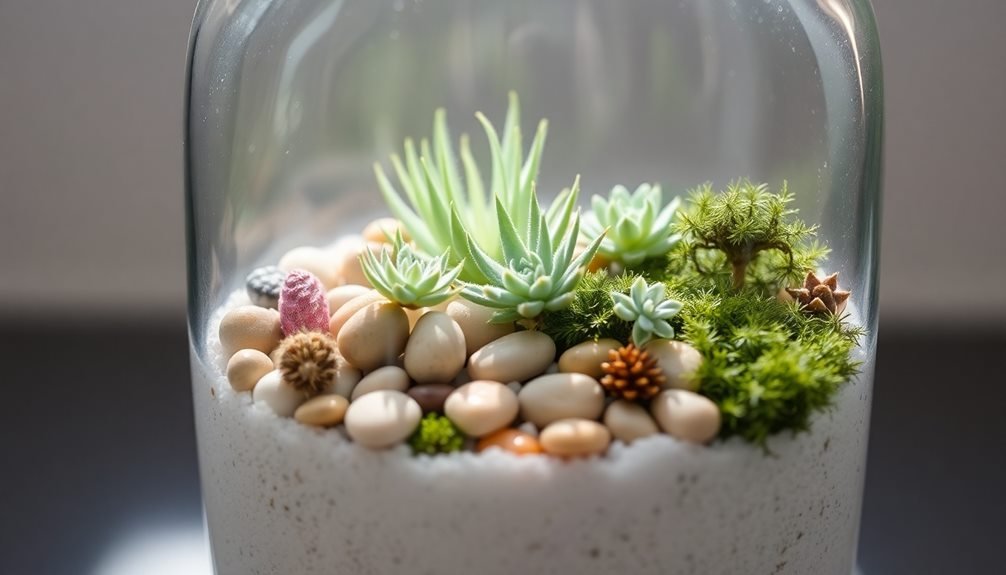
Mason jar mini-gardens offer a peaceful escape from daily stress while repurposing empty containers.
These compact zen gardens combine sand, small rocks, and miniature plants to create a meditative desktop sanctuary that you can personalize and maintain easily.
To create your zen garden, start by thoroughly cleaning a wide-mouth mason jar and letting it dry completely. Fill the bottom third with white sand, creating a smooth surface by gently tapping the jar's sides.
Add a layer of small pebbles or colored glass beads for visual interest and drainage. If you're including live plants like succulents or air plants, position them carefully among the stones. For a low-maintenance option, use artificial mini-plants instead.
Complete your zen garden with mindfulness-promoting elements: a small rake made from a fork or wooden sticks, polished stones, or tiny ceramic figurines.
You'll want to keep a small tool nearby for drawing patterns in the sand – this repetitive action helps reduce anxiety and promotes focus.
Position your finished garden where you can easily access it during stressful moments, like your desk or bedside table.
Mindful Wine Bottle Lighting
While zen gardens bring serenity through sand and stones, empty wine bottles can transform into calming light features that soothe your mind. This project lets you repurpose wine bottles into elegant luminaries that cast gentle, ambient lighting throughout your space.
Start by thoroughly cleaning your chosen wine bottles and removing all labels. You'll need LED string lights, a glass cutting tool, sandpaper, and clear sealant. Create a small opening at the bottle's base using the glass cutter, then smooth the edges with fine-grit sandpaper. Thread the LED lights through this opening, arranging them inside the bottle for an even glow.
For added mindfulness, you can frost the bottles using glass etching cream or paint them with translucent glass paint in calming colors like sea blue or lavender. As you work, focus on each deliberate movement and breathe steadily. You'll find the repetitive nature of painting or etching particularly meditative.
Place your finished bottles on windowsills or shelves where light can dance through them. During evening meditation or relaxation time, these gentle lights will create a peaceful atmosphere that helps quiet your racing thoughts.
Stress-Free Textile Wall Art
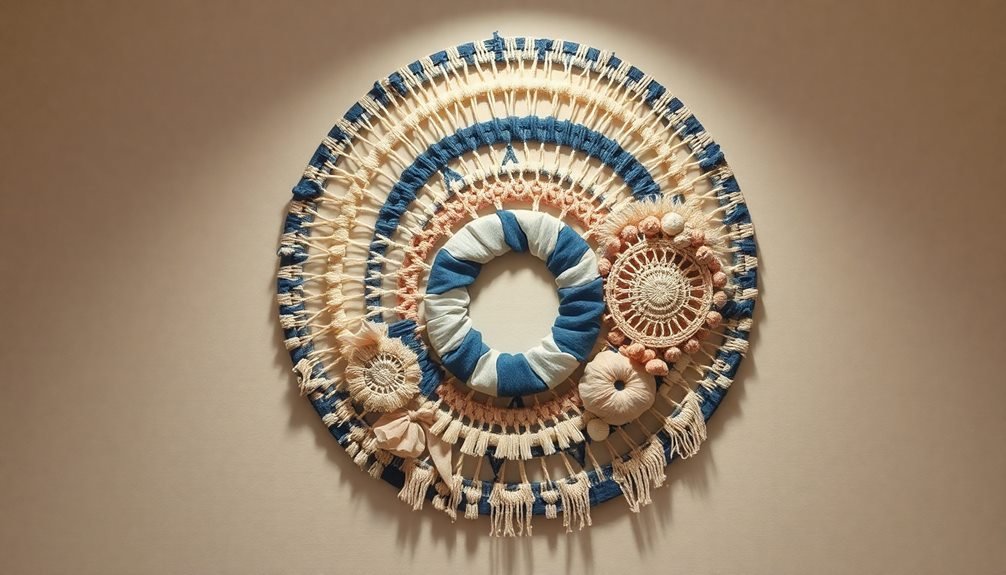
Creating textile wall art out of old fabric scraps offers a therapeutic way to express yourself while transforming unused materials into stunning decor. You'll need fabric remnants, an embroidery hoop or canvas, basic sewing supplies, and any decorative elements like buttons or ribbons you'd like to incorporate.
Start by sorting your fabric pieces by color and texture, which helps calm your mind and organize your creative process. Layer different fabrics to create depth, using simple hand-stitching techniques that don't require precision. There's no need to follow strict patterns – let your intuition guide the design.
Try the "mindful weaving" technique by creating a basic grid with sturdy fabric strips, then weaving contrasting materials through it. You can also experiment with fabric manipulation methods like gentle gathering, folding, or creating soft fabric flowers. These repetitive motions help reduce anxiety while producing unique textural effects.
Don't worry about perfection; embrace the organic nature of handmade art. Secure your finished piece in an embroidery hoop or stretch it over a canvas frame. The result is a personally meaningful piece that brings both visual interest and a sense of accomplishment to your space.
Calming Pallet Wood Organizers
From discarded shipping pallets, you can craft functional organizers that bring both order and tranquility to your space. Breaking down pallets becomes a meditative process as you carefully dismantle each board, sand away rough edges, and reveal the wood's natural beauty.
The repetitive motions of sanding help quiet your mind while preparing the materials for your project.
Start by creating a simple wall-mounted mail sorter with three tiers of pallet slats. You'll need basic tools: a hammer, pry bar, saw, and sandpaper.
Paint the wood in soft, calming colors like sage green or warm gray, or simply seal the natural wood with clear polyurethane. Add small hooks beneath for keys and face masks.
For a desk organizer, arrange shorter pallet pieces vertically to form divided sections for pens, notebooks, and devices. The wood's natural imperfections become unique design elements that remind you to embrace imperfection.
Don't worry about achieving perfect angles – slightly rustic results add character. Include a phone slot at a 45-degree angle for easy viewing, and consider adding small wheels underneath for mobility.
Memory Box From Old Books
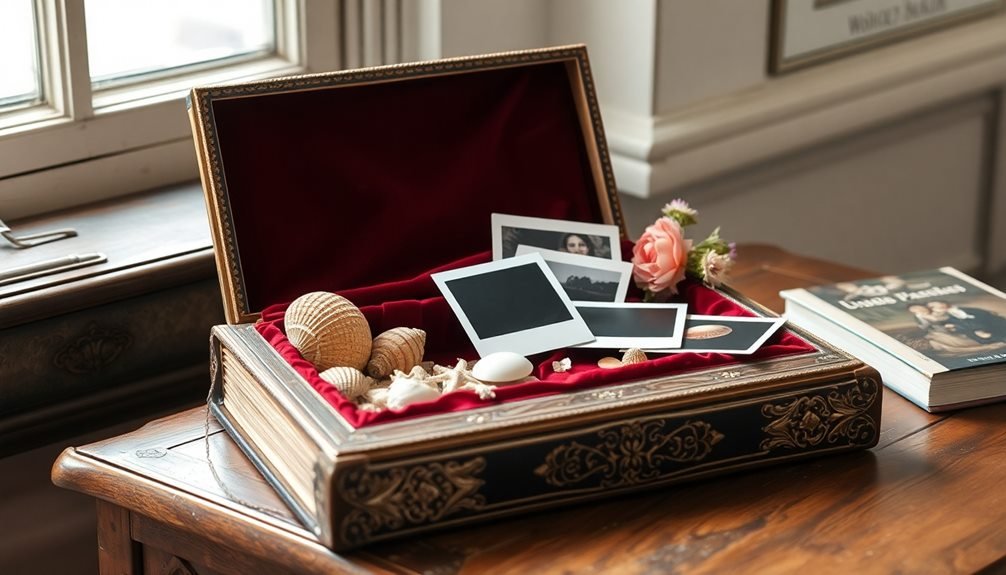
Books that are too worn to read can find new purpose as personalized memory boxes, offering a mindful craft project that preserves both memories and literature.
To create your own book memory box, you'll need a hardcover book, craft knife, wood glue, and clear sealant.
Start by gluing several pages together to create a solid foundation, then carefully cut a rectangle through the pages, leaving about an inch border on all sides. Continue this process until you've reached your desired depth. Seal the inside edges with wood glue, and once dry, apply a clear sealant to protect the paper surfaces.
The therapeutic value comes from both the repetitive cutting motion and the opportunity to customize your box. You can line the interior with fabric, add small compartments, or paint meaningful quotes on the exposed page edges.
Consider creating themed boxes – one for travel memories, another for family photos, or a special box for letters and cards.
Don't discard the cut paper pieces; they're perfect for other crafts like paper flowers or origami, extending the mindful crafting experience and ensuring nothing goes to waste.
Frequently Asked Questions
How Long Should I Spend on Each Upcycling Project to Maximize Stress Relief?
You'll get the most stress relief by spending 30-60 minutes per session on your upcycling projects. Don't rush—work at your own pace and stop when you feel relaxed. It's about the journey, not completion.
Can These Projects Be Done as Group Therapy Activities?
You'll find upcycling projects work great for group therapy. They'll encourage social interaction, spark creativity, and create a supportive environment. You can share ideas, help each other, and celebrate everyone's unique creations together.
Which Upcycling Project Is Best for Beginners With Anxiety?
For beginners with anxiety, you'll find paper crafting most calming and approachable. You don't need special skills, and you can start with simple items like old magazines, creating collages at your own pace.
Are There Alternative Materials for People With Sensory Sensitivities?
You can swap rough materials like burlap for smooth cotton, or use plastic instead of metal. If you're sensitive to textures, try working with foam, felt, or silk-like fabrics that won't trigger discomfort.
What Are the Recommended Safety Precautions for Crafters With Panic Disorders?
You'll want to craft in a calm, well-ventilated space. Keep your phone nearby, practice grounding techniques, and don't rush. Work with a buddy if possible. Take breaks when you're feeling overwhelmed.
In Summary
You'll find that transforming everyday items into beautiful, meaningful pieces isn't just about creating something new – it's therapy in itself. Whether you're arranging stones in your zen garden or weaving fabric for wall art, these projects help quiet your mind and reduce stress. By giving discarded items new life, you're also practicing environmental mindfulness. So grab those supplies and let your creative healing begin.



Leave a Reply